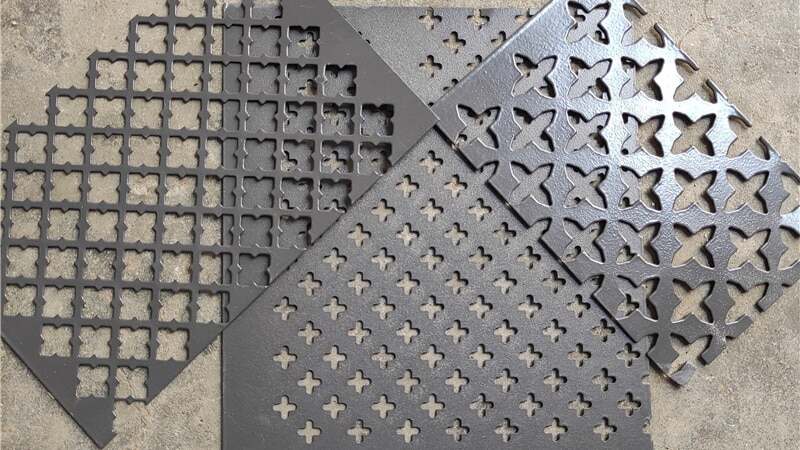
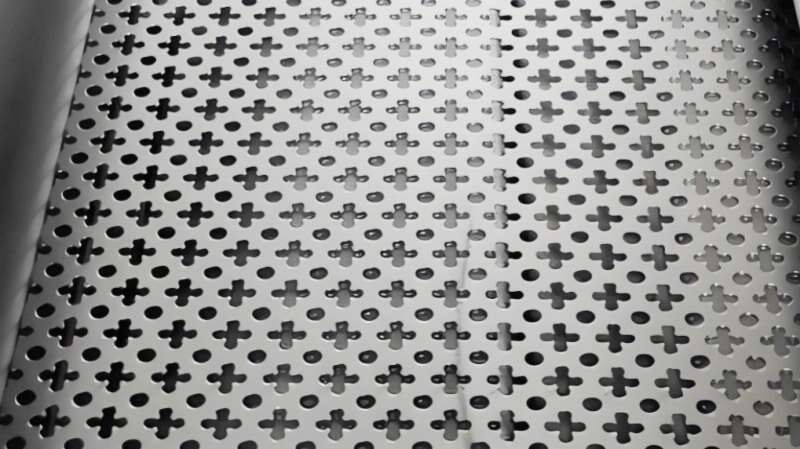
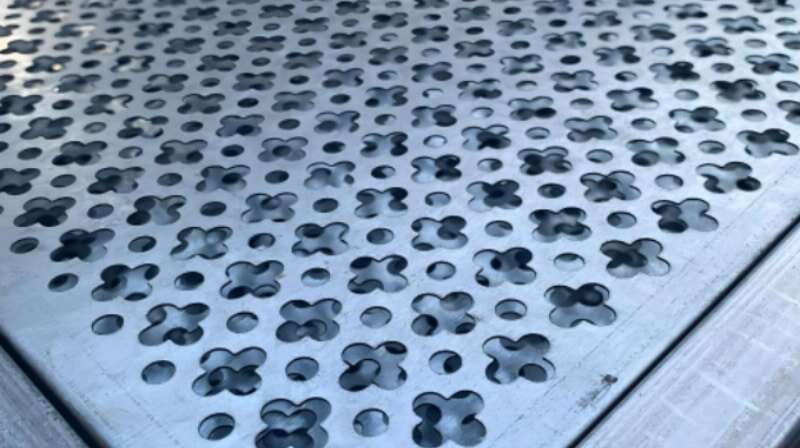
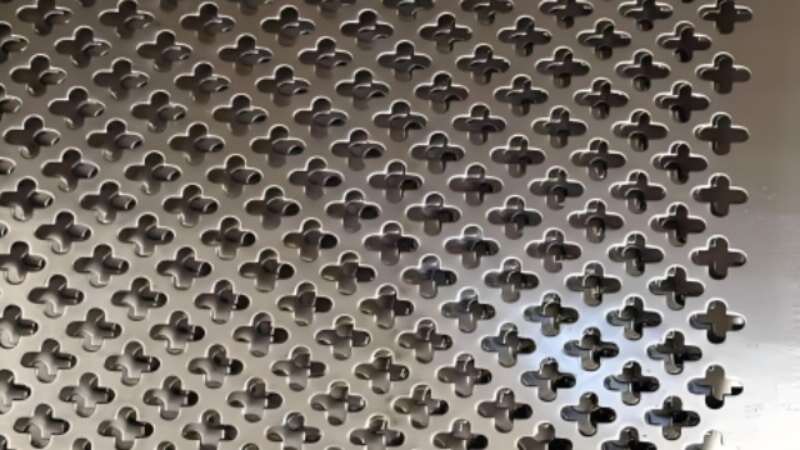
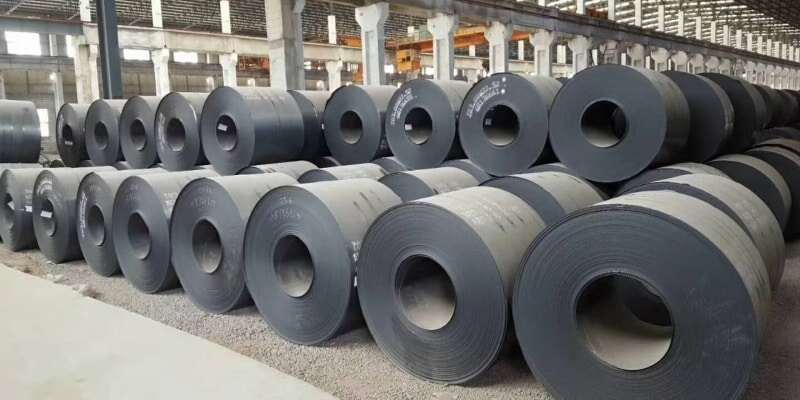
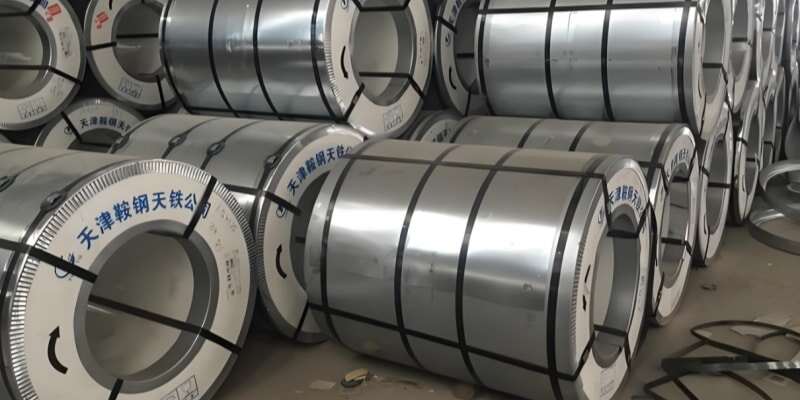
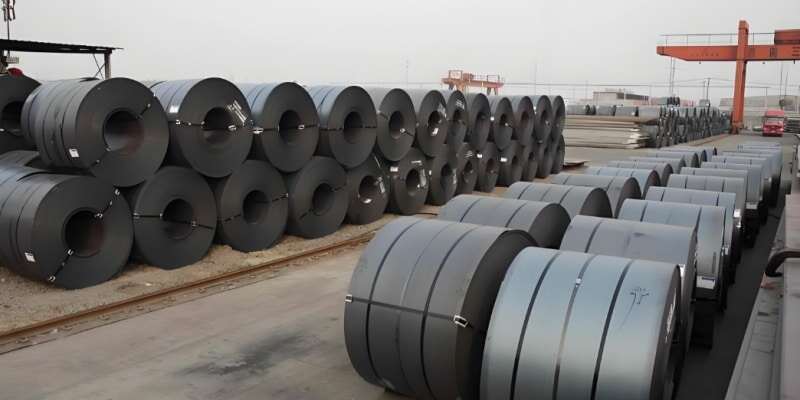
Cold-rolled steel, hot-rolled steel, galvanized steel, manganese steel, aluminum, aluminum alloy, stainless steel, and copper plates (standard metal sheet materials for industrial applications).
Hole types
Cross Hole
Slot width:
0.8–50mm typical; oversized cross openings up to 300mm via laser cutting (by thickness). Feature size depends on material and sheet thickness.
Please email us with your required specifications based on the above parameters. We will provide customized quotes and manufacturing according to your requirements.
We manufacture high-quality cross hole perforated metal sheets with plus-shaped perforations for architectural screening, equipment guards, ventilation covers, and speaker grilles. As part of our custom perforated metal solutions, we produce panels to your drawing and performance requirements. Typical specifications include:
Length: custom up to 4000 mm (standard 2000 / 2440 / 3000 mm)
Width: custom up to 1500 mm (standard 1000 / 1250 / 1500 mm)
Thickness: 0.5 mm — 10.0 mm (common: 1.0, 1.5, 2.0, 3.0 mm)
Hole type: cross-shaped slots (custom arm length, slot width, spacing). Mixed patterns are available. For manufacturability, the minimum slot width and web size depend on material, thickness, and open area. If you share thickness and a DXF, we’ll confirm the smallest reliable feature before sampling.
Feature size: slot width is commonly 0.8–50 mm; arm length, spacing, and orientation are fully customizable. For oversized cross openings (up to about 300 mm), we typically use laser cutting on suitable plate thickness.
Open area: 5% — 70%, optimized for strength, airflow, light transmission, or acoustic needs
Many buyers also call this a “plus hole” or “plus-shaped” perforation—same pattern, different naming in different markets.
Why Cross Hole?
Cross-shaped perforations deliver a distinctive look and structural benefits, including improved directional stiffness at the same open area and more design flexibility than round holes. If you need elongated openings instead of a plus shape, slotted perforated metal sheets may be a better fit for your application.
To avoid back-and-forth during quoting, we recommend calling out the pattern with arm length, slot width, corner radius, pitch (center-to-center), edge margins, and pattern orientation. If you’re still comparing hole patterns for appearance vs. airflow, we can propose a few workable options based on your target open area and panel size.
Cross Hole Perforated Metal Sheets
Key Benefits & Pain Points We Solve
Typical problems our customers face — and how we solve them:
Can’t find non-standard hole geometries? We produce true cross-shaped patterns and non-standard arrays to your exact arm length, arm width, spacing and nesting.
Suppliers limited to round holes? Our CNC turret punches, progressive dies and laser systems handle intricate cross holes and mixed patterns.
Need one provider for secondary work? One-stop fabrication: punching → forming → welding → finishing → assembly.
Worry about corrosion or finish quality? Multiple surface options: powder coat, PVDF/fluorocarbon, anodize (aluminum), galvanize, electroplate, brushing.
Concerned about quality and delivery? Sample approval, in-process inspections, and batch QA reports ensure consistent results.
Cross Hole Perforated Metal Sheets
Custom Fabrication Capabilities
We provide a full service for Cross Hole Perforated Metal Sheet production:
Perforation can introduce internal stress and slight bowing—especially with high open area or heavier gauge. We control flatness with punch sequencing, leveling after perforation, and optional stiffening (frames or ribs) when panels will be framed, welded, or installed as architectural screens.
Perforation: CNC turret punching, progressive die punching, laser cutting for thick plates
Cross Hole Perforated Metal Sheet is widely used in:
It’s a practical choice when you need a clean, modern look with controlled airflow and visibility—common for speaker grilles, ventilation panels, decorative screens, and machine guards.
Furniture elements, partition walls, interior design features
Cross Hole Perforated Metal Sheets
Why Choose Us
Focused expertise: Years producing non-standard and cross-pattern perforated panels.
One-stop shop: From coil to finished Cross Hole Perforated Metal Sheet assemblies—no subcontracting hassle.
Strict QA: Incoming material checks, process inspections, and final reports; COAs available.
Flexible MOQ & quick samples: Small batches welcomed; fast prototype turnaround.
Export experience: Export packaging, documentation and customs support.
Engineering support: We optimize open area, strength and cost based on application.
Final note & call to action
If you’re sourcing cross hole perforated metal sheets for a project, we make it simple: email info@perfsheet.com with your material, thickness, panel size, cross/plus pattern details (arm length, slot width, pitch), finish, quantity, and destination. We’ll confirm manufacturability, offer a sample if needed, and send a clear, competitive quote.
Contact Anping Senchi Metal Wire Mesh Products Co., Ltd Address: Chengdong Industrial Park, Anping County, Hengshui, Hebei, China Email: info@perfsheet.com
Page views:1,767
Q1: What is the minimum and maximum hole size for Cross Hole Perforated Metal Sheets? A1: Typical hole sizes for Cross Hole Perforated Metal Sheets range from 0.8 mm to 50 mm. The exact minimum depends on material and thickness. Thin stainless steel can support finer details, while thick plates or heavy patterns require larger slots. Please provide material and thickness for a precise feasibility check.
Q2: How should I specify a Cross Hole pattern in drawings for perforated sheets? A2: Include arm length, arm width, center-to-center spacing, sheet thickness, material grade, and desired open area (%). Providing a DXF or CAD file speeds quoting and nesting. If you don’t have CAD, a high-resolution sketch with dimensions works for preliminary estimates for Cross Hole Perforated Metal Sheets.
Q3: Can you combine logos or contour cuts with a Cross Hole pattern? A3: Yes. We combine laser cutting for contours and CNC punching for Cross Hole Perforated Metal Sheets. We propose nesting and bridging strategies to maintain structural integrity and recommend support tabs or thicker materials when needed.
Q4: What anti-corrosion finishes do you recommend for Cross Hole Perforated Metal Sheets? A4: For indoor use, powder coating or brushing on stainless steel is common. For exterior or coastal environments, 316 stainless steel or PVDF (fluorocarbon) finishes are recommended. Hot-dip galvanizing suits many industrial uses — we advise based on environment and lifespan targets.
Q5: How do you control warping after perforation of Cross Hole panels? A5: We use matched tooling, controlled punch sequences, stress-relief processes, and leveling/annealing when necessary. For precision applications, we add stiffening ribs, frames, or support backs to ensure flatness.
Q6: What is the typical sample lead time for Cross Hole Perforated Metal Sheets? A6: Samples usually take 3–7 business days depending on complexity, material, and finish. Multi-step finishes or thick plates may extend lead time; confirmed during technical review.
Q7: What minimum order quantity (MOQ) do you accept for Cross Hole Perforated Metal Sheets? A7: MOQ depends on material and finishing. Small runs and trial orders are supported; contact us with your specifications and required finish for a tailored MOQ.
Q8: Do you provide material certificates and third-party testing for Cross Hole Perforated Metal Sheets? A8: Yes. We provide COA / mill test certificates and dimensional inspection reports. Third-party corrosion, salt-spray, or mechanical testing can be arranged on request (may require additional lead time/cost).
Q9: How are Cross Hole Perforated Metal Sheets packaged for export? A9: Export-standard packaging uses wooden crates or reinforced skids, edge protectors, moisture barriers, and clear packing lists/commercial invoices. Packaging is tailored to panel size to avoid deformation during transit.
After perforation, especially for plates with very dense hole patterns, the perforated metal sheets will experience significant deformation. We perform flattening treatment after completing all perforation processes. Below is the video of flattening perforated metal sheets:
After the leveling process, our perforated metal sheets can be precisely laser-cut into any custom shape as required. Below is a production video demonstrating the laser-cutting process:
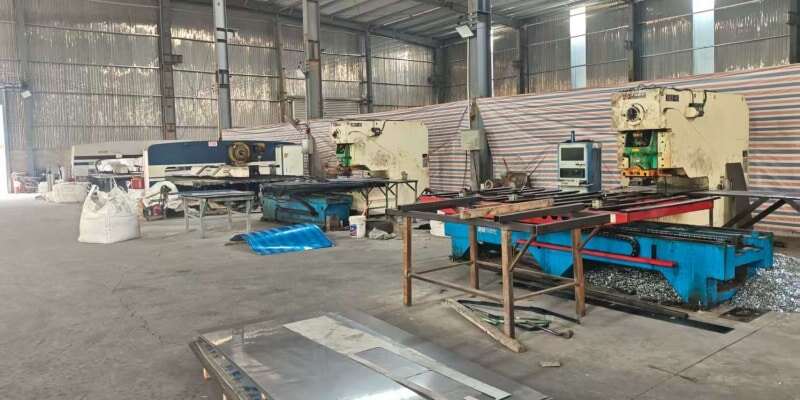
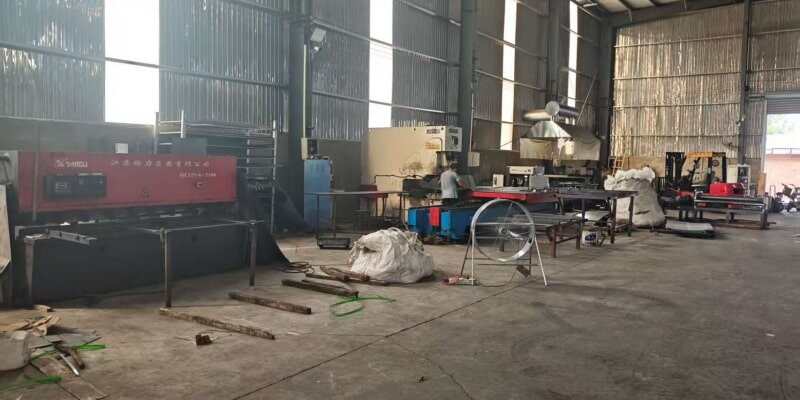
Below are some real-scene displays of our factory
Perforated Metal Sheet Automated Production Workshop Live Footage