
Related Products
Contact-Us
heavy duty perforated plate open area
Open Area vs Strength: Engineering a Heavy Duty Perforated Plate Pattern

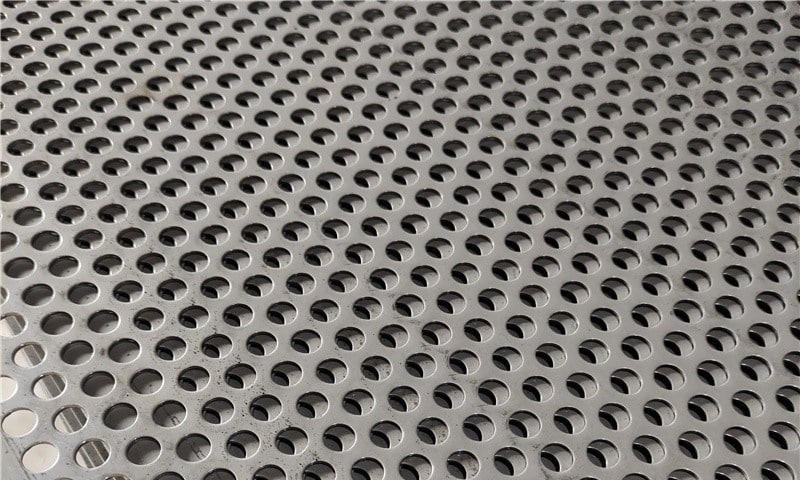
Introduction — why this matters for buyers and engineers In heavy-duty applications (structural grating, machine guards, filtration support, walkways, and heavy equipment panels), the decision about hole pattern isn’t aesthetic — it’s engineering. The tradeoff is always between open area (ventilation, drainage, weight savings) and material bridges (ligaments) that carry loads and resist fatigue. Below […]

perforated carbon steel sheet
SS400 Is a Familiar Spec—But Your Hole Pattern Still Makes or Breaks the Result

Introduction — standards vs. real-world performance Calling out material standards is comforting: SS400 (a common JIS-grade mild steel) tells you about chemical composition and base mechanical properties. But in the world of perforated metal, the material is only half the story. The hole pattern—diameter, pitch, open area, edge margin and punch direction—drives stiffness, flatness, stability […]

Round hole perforated metal screens
Combining Safety and Efficiency with Round Hole Perforated Metal Screens

Why engineers choose round hole perforated metal screens Round hole perforated metal screens are a go-to solution when industrial teams need a single component to do two things well: filter process streams and protect people and equipment. In chemical processing, mining, and heavy manufacturing, designers look for robust, predictable performance. Properly specified round hole perforated […]

perforated sheet pitch
Pitch (Centers) Explained: The Fastest Way to Specify Perforation

Why pitch (centers) matters for perforated aluminum sheets Pitch — sometimes written as “centers” or “c/c” — is the center-to-center distance between adjacent holes in a perforated sheet. For engineers, purchasers, and fabricators this single number controls structural stiffness, open area, flow (air/liquid), and production cost. Get the pitch wrong and a part can fail […]

Steel Walkway Perforated Safety Grating
Why Steel Walkway Perforated Safety Grating is the Standard for Industrial Safety

Introduction: the practical case for steel perforated grating When an industrial plant, refinery, or heavy-manufacturing facility needs a reliable walking surface, the choice often comes down to one balance: durability vs. cost. Steel Walkway Perforated Safety Grating sits squarely in that sweet spot — it gives engineers a high strength-to-weight solution that resists deformation under […]

Stainless Steel Round Hole Perforated Sheets
Optimizing Filtration Accuracy with Stainless Steel Round Hole Sheets

Introduction — why hole consistency matters in industrial filtration In industrial filtration systems, small differences add up fast. Filter performance isn’t just about material choice or open area percentage — it’s fundamentally governed by the uniformity and repeatability of each hole in the media. Precision Stainless Steel Round Hole Perforated Sheets give engineers predictable flow […]

S235JR Perforated Carbon Steel
If Your Project Uses S235JR, Here’s How to Translate That Into a Perforated Panel Order

Quick primer: what S235JR means for a perforated panel S235JR is the everyday structural, low-alloy carbon steel specified in the EN 10025 family. It’s chosen because it’s economical, weldable, and predictable in fabrication—exactly the qualities engineering teams want when they convert structural sheet into perforated elements used in walkways, railings, mounting plates, and many secondary […]

heavy duty perforated plate
Heavy Duty Perforated Plate for Structural Load: How Thickness and Layout Affect Strength

When engineers talk about load-bearing perforated metal, they’re usually balancing two competing demands: keep weight and cost down, while preserving stiffness and safety. I’ve spent years designing and specifying CNC-punched perforated plates for structural and industrial applications, and in practice two variables dominate performance: material thickness and hole layout (pattern + open area). This article […]

430 Stainless Steel Perforated Sheet
Why Choose 430 Stainless Steel for Your Perforated Projects

Overview: a practical choice for price-sensitive, automated applications Ferritic 430 stainless steel is a pragmatic option when you need a balance of magnetic behavior, decent indoor corrosion resistance, and lower material cost. For many B2B buyers — OEMs in appliance manufacturing, display and fixtures makers, and systems integrators working with automated sorting — 430 perforated […]

Serrated Hole Anti-Slip Stair Treads
Reducing Slip Hazards with Factory Walkway Safety Grating

Overview: why anti-slip walkway safety grating matters in factories In busy industrial environments, a slip is rarely just a trip — it’s lost production time, potential injury, and a hit to your safety record. For facility managers, plant engineers, and procurement teams making B2B decisions, choosing the right anti-slip walkway safety grating is a practical, […]