Quick primer: what S235JR means for a perforated panel
S235JR is the everyday structural, low-alloy carbon steel specified in the EN 10025 family. It’s chosen because it’s economical, weldable, and predictable in fabrication—exactly the qualities engineering teams want when they convert structural sheet into perforated elements used in walkways, railings, mounting plates, and many secondary structural parts.
Europe projects — where you’ll see S235JR perforated panels
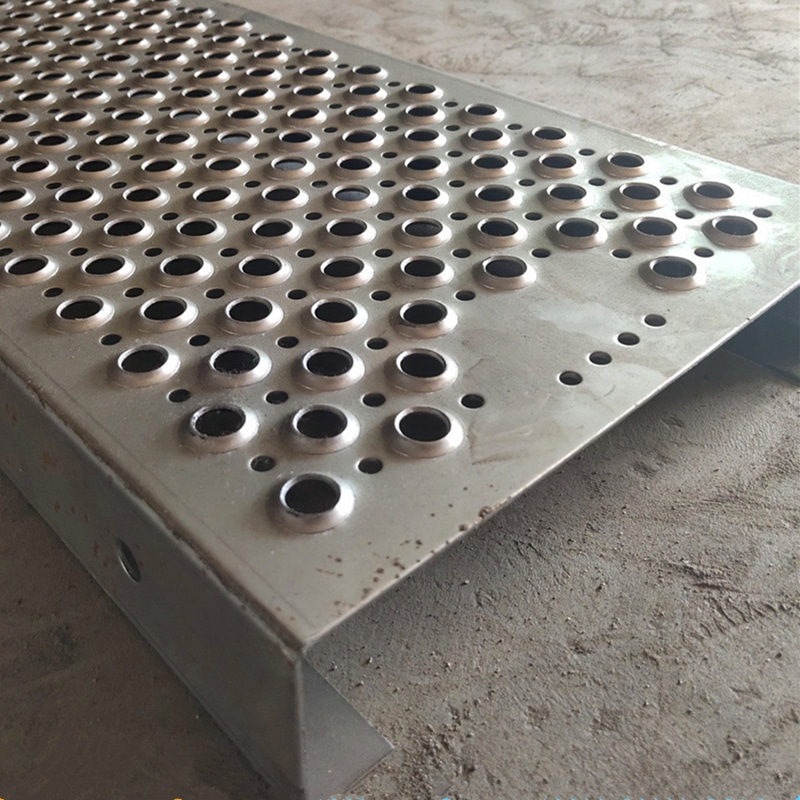
In European infrastructure and building jobs you’ll commonly find S235JR used for platforms, catwalks, light structural brackets and drainage covers. Designers favor it when codes call for a known yield and consistent finishability (galvanizing or paint). If your RFQ comes from a European consultant or contractor, referencing EN material designations (S235JR) is the clearest way to avoid confusion in procurement and inspection.
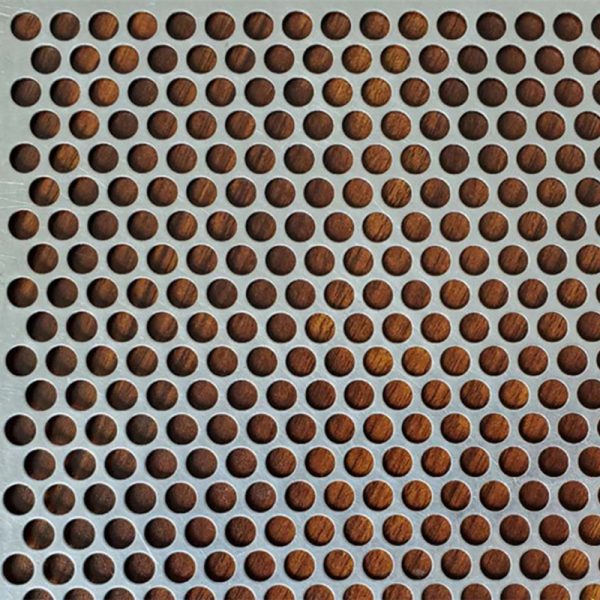
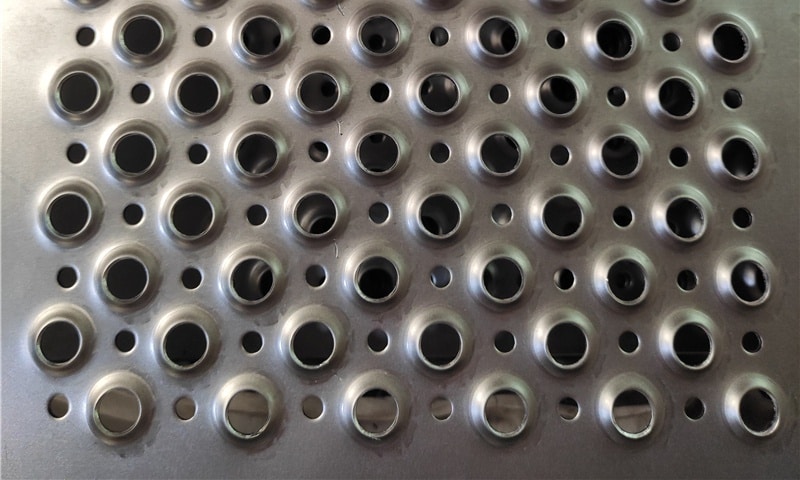
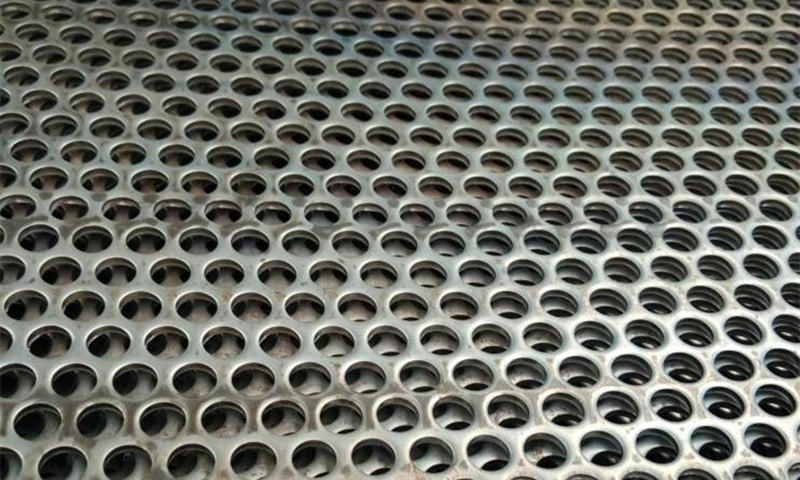
Carbon Steel Perforated Metal Sheets
We work with buyers and engineers who need carbon steel perforated sheets that are practical to manufacture and reliable in use.
If you’re preparing an RFQ or want to confirm specifications before sourcing, a short conversation often saves time on both sides.
Contact us via WhatsApp to talk through the details:
Material properties that matter to punching and perforation
S235JR has a nominal minimum yield of ~235 MPa and a typical tensile range in the 360–510 MPa window—numbers that tell a punch shop how the steel will behave under shear and work-hardening during punching. Those properties help set process variables like punch/die clearance, tooling life estimates, and whether you should specify a secondary deburr or light flattening pass.
Why those numbers change the way we perforate
- Yield & tensile strength influence burr formation and required cutting clearance.
- Ductility affects whether slotted patterns or tight clusters will stretch and distort.
- Surface condition (hot-rolled vs cold-finished) changes how the sheet feeds through a turret or progressive die press.
Practical punching guidance (what to tell your vendor)
Here are the concrete RFQ items that will reduce back-and-forth and get you an accurate quote and clean parts sooner.
Mandatory technical data for an RFQ
- Material grade & certificate required — e.g., S235JR, EN 10025 (state if a mill test certificate is required).
- Nominal sheet thickness — list the thicknesses (e.g., 2.0 mm, 3.0 mm, 5.0 mm).
- Panel size / coil width and finished dimensions (L × W).
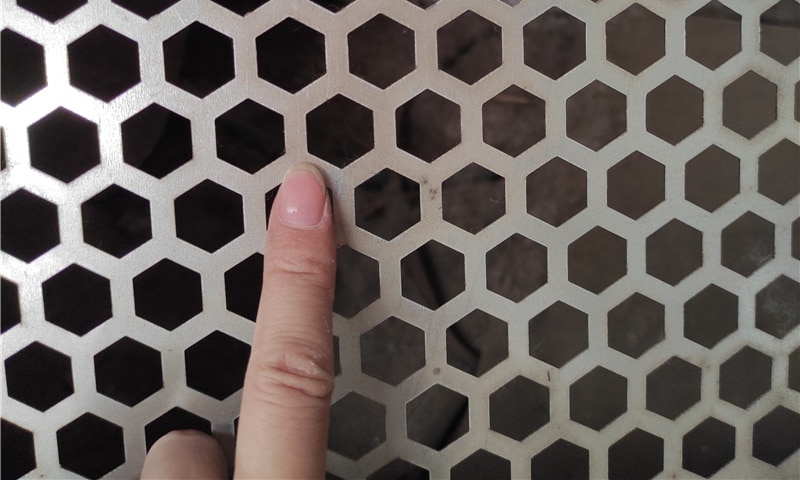
- Hole geometry — round, slotted (show orientation), hex, or custom. Provide drawings or DXF.
- Hole diameter or slot width & length, and pitch (center to center).
- Open area (percent) or required free-area for flow/ventilation calculations.
- Edge margins / border — distance from last hole center to edge; specify if edges must be unperforated for welding or forming.
- Tolerance & flatness expectations — e.g., ±0.5 mm or tighter for machined assemblies.
- Finishing and coating — mill finish, shot-blast, hot-dip galvanize, powder coat (specify pre-treatment).
- Quantity / batching — total m² or pieces and desired lot splits.
- Delivery terms & inspection — include packaging, palletizing, and acceptance tests (visual, dimensional, MTC).

Recommended process notes (for bidders)
- Punch-to-die clearance: for mild structural steels like S235JR, practical clearance settings often fall in the range of about 5–10% of material thickness; higher-strength conditions require a larger clearance. Correct clearance reduces burrs and extends tool life—call this out if you need clean edges or minimal secondary finishing.
- Tooling for clustered holes: if you have a high open-area pattern or very small centers, ask for a vendor capability statement — some patterns are better produced on laser/laser-hybrid or by progressive tooling rather than standard turret punching.
- Thickness vs hole size: very small holes in thicker sheets increase risk of distortion; include an allowable distortion or secondary leveling if flatness is critical.
Design checklist — translate engineering intent into a manufacturable RFQ
- Attach a scaled drawing or DXF with hole layout and callouts.
- Specify whether panels will be welded, folded, or bolted after perforation (this often affects edge margin).
- State environmental exposure (outdoor coastal vs interior) to lock down coating specs.
- Ask for MTC traceability to EN 10025 if the project requires it.
Common buyer questions, answered quickly
- Q: Is S235JR the same as ASTM A36? — They are close equivalents in many cases, but don’t assume interchangeability without specifying certification and chemical limits; list the exact standard you require on the RFQ.
- Q: What thicknesses and hole sizes are realistic? — Standard perforated panels are commonly offered from sub-millimeter thin decorative sheets up to about 6–12 mm for heavier plates; the optimal combination depends on punch tooling, hole diameter, and open area. Provide your desired pattern and the vendor will confirm manufacturability and recommended tolerances.
How we evaluate bids (what separates a usable quote from a time-waster)
- Complete RFQ (material spec, drawings, quantities, surface finish): high-quality bids will quote tooling, cycle-time assumptions, and secondary operations.
- Certs & traceability: reputable suppliers include MTC references and testing options up front.
- Process notes: the good vendors will call out punch clearance, expected burr, and whether parts require deburr, flattening, or leveling.
- Lead-time realism: experienced suppliers show where tooling lead times or coating cycles may add to the schedule.