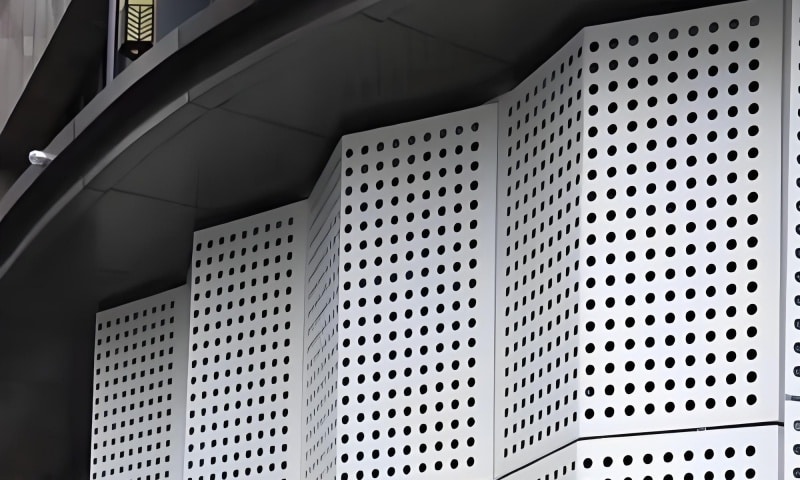
Facades, cladding, ceilings, sunshades, privacy screens, balcony panels and decorative wall systems
Please email us with your required specifications based on the above parameters. We will provide customized quotes and manufacturing according to your requirements.
Custom Architectural Perforated Metal Panels for Building Projects
Architectural perforated metal panels are used when a building project needs both function and visual control. They can create shade, airflow, privacy, light diffusion and decorative texture while keeping the strength and durability of metal.
Perfsheet manufactures custom perforated metal panels for facades, cladding, ceilings, sunshades, balcony screens, privacy panels, railing infill and interior decorative systems. Panels can be produced from aluminum, stainless steel, galvanized steel, carbon steel and other project-suitable materials.
For architectural use, the final result depends on more than the hole pattern. Material, open area, panel size, surface finish, flatness, bending details, fixing holes and packing all affect how the panels look after installation. A good specification should consider both appearance and installation before production starts.
Where Architectural Perforated Panels Are Used
Architectural perforated panels can be used in many parts of a building, from exterior facade systems to interior ceiling and wall panels. Each application has different design priorities.
Facade and Cladding Panels
Perforated facade panels are used to create visual depth, reduce direct sunlight and allow partial airflow. They are often made from aluminum or stainless steel, depending on the required weight, finish and corrosion resistance.
For exterior cladding, open area affects transparency, shade, wind exposure and panel stiffness. The pattern should be selected together with the material thickness and support structure.
Ceiling and Interior Panels
Perforated metal ceiling panels are used in offices, airports, stations, commercial buildings, schools, hospitals and public spaces. They provide a clean surface while allowing airflow, lighting integration or acoustic backing.
When acoustic performance is required, the perforated panel should be considered together with backing material, air space and the ceiling system.
Sunshade and Privacy Screens
Perforated sunshade panels help control light and heat while keeping a degree of visibility. Privacy screens can reduce direct view without fully blocking airflow.
For these applications, hole size, pitch, open area, viewing distance and surface color all affect the final visual result.
Decorative Wall and Partition Panels
Decorative perforated panels can be used for wall coverings, partitions, stair areas, elevator lobbies, railing infill and commercial interiors. Round holes, slots, square holes, hexagonal patterns and custom designs can all create different architectural effects.
Material Options
Aluminum Perforated Panels
Aluminum is widely used for architectural perforated panels because it is lightweight, easy to fabricate and suitable for powder coating, PVDF coating or anodizing. It is commonly selected for facades, ceilings, sunshades and privacy screens.
Stainless Steel Perforated Panels
Stainless steel is used when the project requires corrosion resistance, clean metallic appearance or long-term durability. It is suitable for public buildings, high-end interior panels, railing infill, humid areas and exterior decorative elements.
Galvanized and Carbon Steel Panels
Galvanized steel and carbon steel can be used for cost-sensitive architectural or industrial decorative projects. When used outdoors or in humid environments, the finish system should be confirmed before production.
Hole Pattern Options
Architectural perforated metal panels can be supplied with different hole patterns depending on the visual effect, airflow and privacy requirement.
Common patterns include:
Round holes for a clean and balanced appearance
Slotted holes for directional airflow and modern linear design
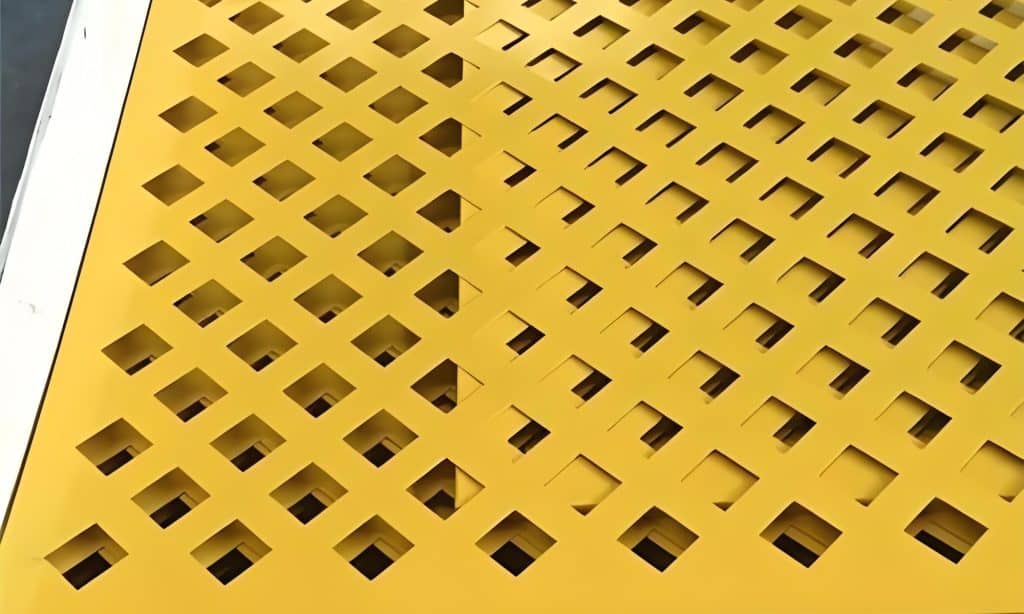
Square or rectangular holes for sharper geometric effects
Hexagonal holes for honeycomb-style visual impact and higher open area
Custom decorative patterns for special architectural projects
For custom patterns, a CAD drawing or clear layout file is recommended. This helps confirm hole spacing, edge margin, pattern alignment and panel-to-panel consistency.
Surface Finishes
The surface finish is one of the most important details for architectural panels, especially when panels are installed side by side.
Available finish options may include:
Mill finish
Powder coating
PVDF coating
Anodizing
Brushed stainless steel
Polished or mirror stainless steel
Galvanized finish
Painted carbon steel finish
For outdoor projects, coating type, color, gloss, exposure environment and packing protection should be reviewed before production. If panels will be installed across a large facade, color consistency should be treated as a project requirement, not a final detail.
Fabrication Options
Many architectural perforated panels require secondary processing after punching. Depending on the drawing, panels can be supplied with:
Cut-to-size edges
Leveling for better flatness
Bent edges or return flanges
Fixing holes or slots
Notches and corner cuts
Welded or framed structures
Protective film and export packing
If the panel needs bending, the distance between the perforated area and the bend line should be checked before production. Holes that are too close to the bend line may distort during forming.
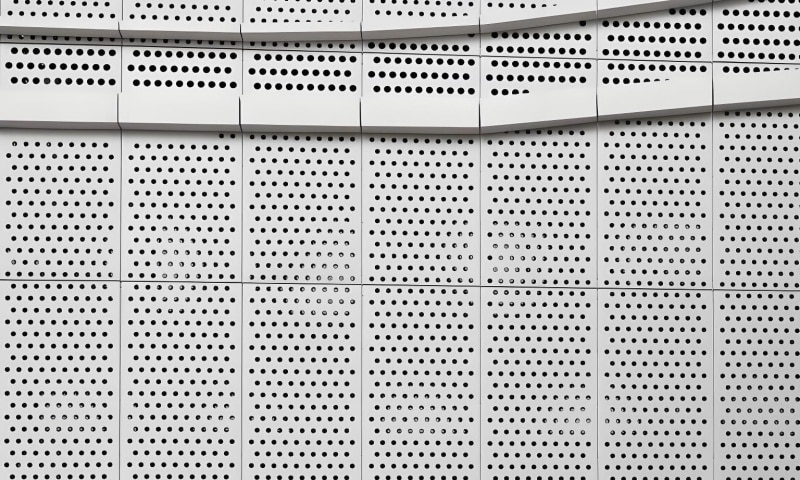
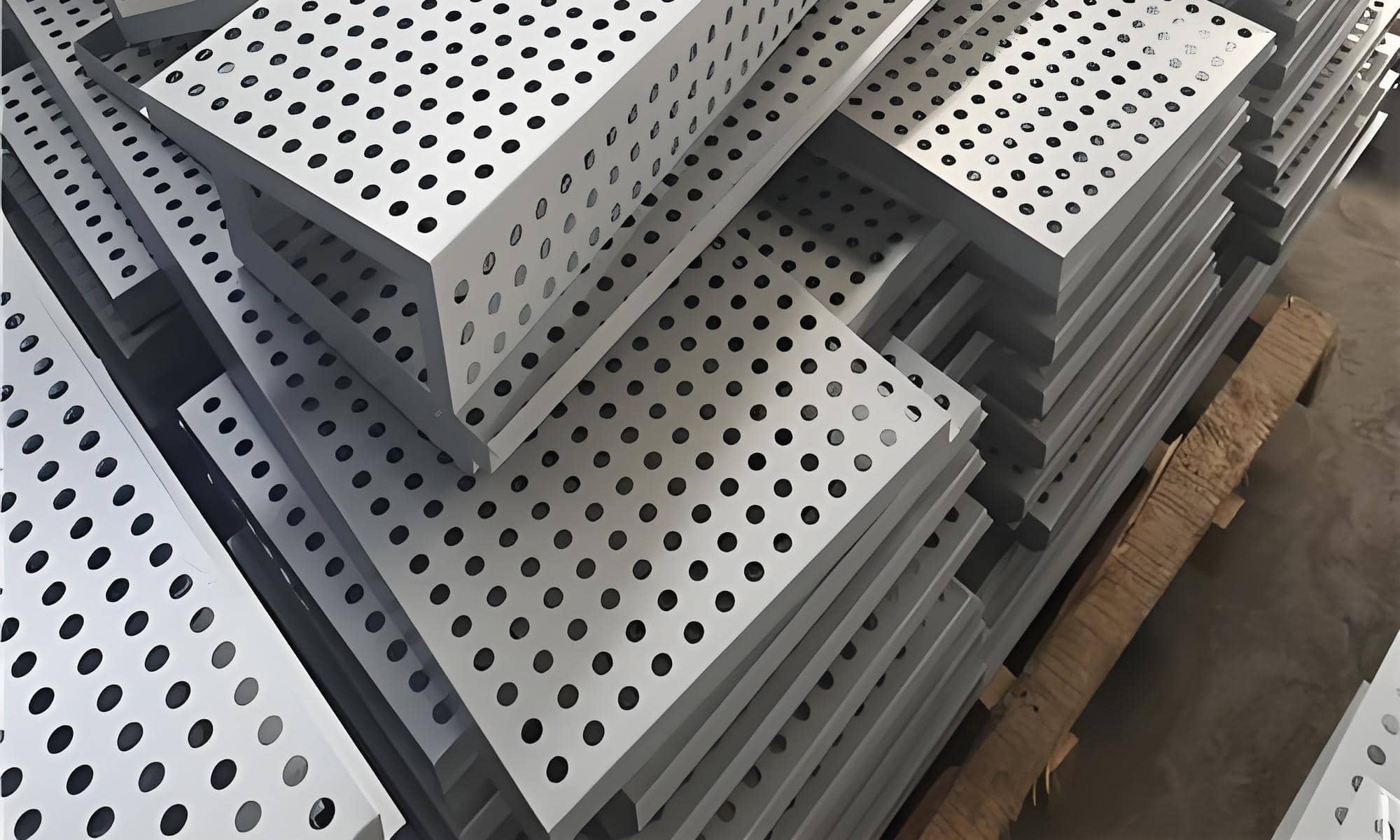
Gray perforated sheet with round holes arranged in a straight line, after being bent
Quality Points for Architectural Projects
Architectural panels are often judged after many pieces are installed together. Small production details can become visible on the building surface.
Important quality points include:
Consistent hole pattern and pitch
Proper edge margin
Panel flatness
Clean hole edges
Stable color and finish
Controlled burr direction
Accurate panel size
Proper protection during packing and shipping
For coated, brushed or polished panels, packing is especially important. Surface rubbing, edge impact and moisture during shipping can affect the final installation appearance.
Related Product Options
Architectural perforated metal panels can be made from different base materials and hole patterns. For lightweight facade and ceiling systems, aluminum perforated metal sheets are often selected. For projects requiring a clean metallic surface or better corrosion resistance, stainless steel perforated metal sheets may be more suitable.
Before production, it is better to review material, thickness, hole pattern, panel size, finish and fixing details together.
What to Provide for a Quote
For architectural perforated metal panels, a clear drawing and basic project details will help the factory check feasibility and pricing more quickly.
Please share the most relevant details for your project, such as material, thickness, hole pattern, open area, panel size, quantity, surface finish, color requirement, bending or framing details and application environment.
If the panels will be used outdoors, near the coast, in a humid area or as part of a visible facade, those conditions should be mentioned before quotation. It is much easier to adjust the design before punching than after the panels have been perforated, finished and packed.
Page views:63
What are architectural perforated metal panels?
Architectural perforated metal panels are perforated sheets or fabricated panels used in building facades, ceilings, cladding, sunshades, privacy screens, partitions and decorative wall systems. They combine visual design with airflow, shade, privacy or acoustic function.
Which material is best for architectural perforated panels?
Aluminum is often used for lightweight facade and ceiling panels. Stainless steel is suitable for corrosion resistance and clean metallic appearance. Galvanized steel or carbon steel may be used when cost and coating requirements are more important. The best material depends on the project environment and design goal.
Are aluminum perforated panels suitable for exterior facades?
Yes. Aluminum perforated panels are commonly used for exterior facades because they are lightweight and suitable for powder coating, PVDF coating or anodizing. The alloy, thickness, finish and panel support should be confirmed based on the project.
How does open area affect architectural panels?
Open area affects airflow, visibility, privacy, shade, weight and panel strength. A higher open area may create more transparency, while a lower open area may provide stronger privacy and visual coverage.
Can perforated metal panels be used for ceilings?
Yes. Perforated metal ceiling panels are used in commercial buildings, public spaces, offices, stations and airports. They can also work with acoustic backing or ventilation systems when required.
What hole patterns are commonly used?
Round holes, slotted holes, square holes, rectangular holes, hexagonal holes and custom decorative patterns are commonly used. The right pattern depends on visual design, airflow, privacy and fabrication requirements.
Can architectural perforated panels be powder coated or PVDF coated?
Yes. Powder coating and PVDF coating are common finish options for architectural panels. Color, gloss, coating type and outdoor exposure should be confirmed before production.
What information is needed for quotation?
A useful RFQ should include material, thickness, hole pattern, open area, panel size, quantity, finish, drawing and application environment. If bending, framing, fixing holes or special packing are needed, those details should also be provided.
Video of architectural facade perforated panels being packaged on an electrostatic powder coating production line
After perforation, especially for plates with very dense hole patterns, the architectural perforated metal panels will experience significant deformation. We perform flattening treatment after completing all perforation processes. Below is the video of flattening perforated metal sheets:
After the leveling process, our architectural perforated metal panels can be precisely laser-cut into any custom shape as required. Below is a production video demonstrating the laser-cutting process:
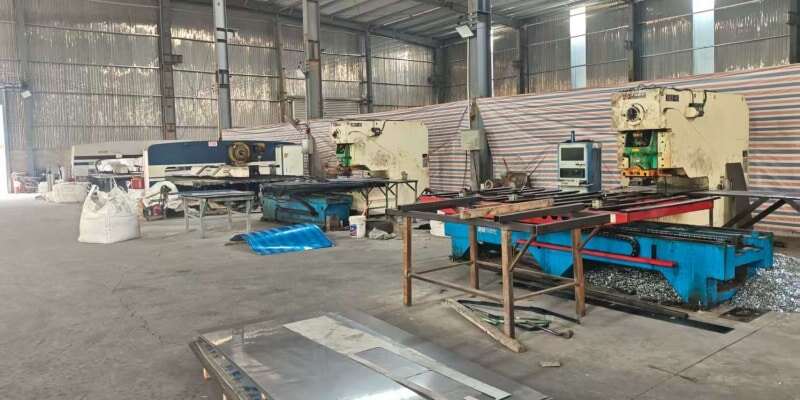
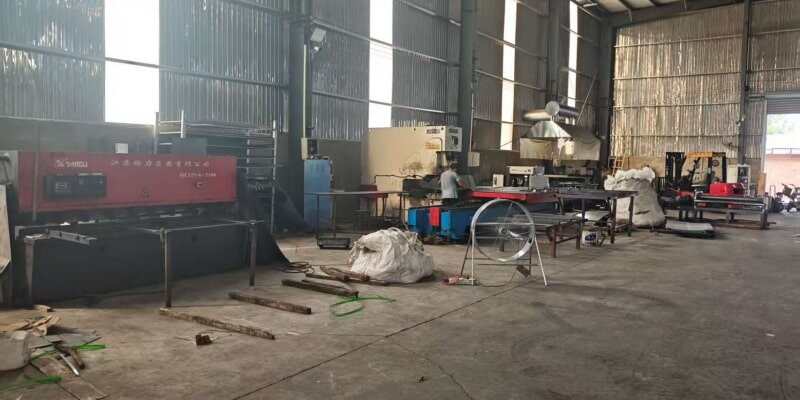
Below are some real-scene displays of our factory
Perforated Metal Sheet Automated Production Workshop Live Footage