Understanding Slotted Hole Orientation in Heavy Duty Perforated Plates
When engineers specify a slotted heavy duty perforated plate, the slot direction is often treated as a simple pattern preference. In actual fabrication and structural applications, slot orientation can influence load distribution, stiffness, and the long-term performance of the plate.
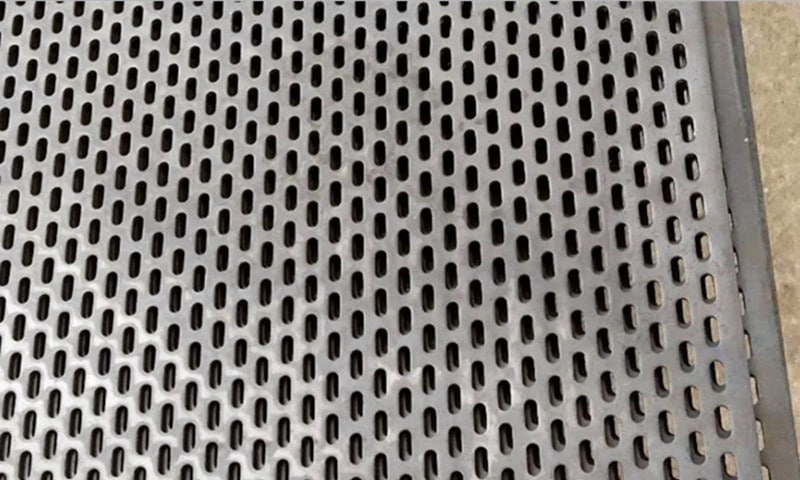
Unlike round holes, slotted holes create an elongated opening that removes more material in one direction. This changes how the remaining metal carries stress. For applications such as walkways, machine guards, filtration supports, screening panels, and heavy equipment platforms, the relationship between slot direction and applied force should be considered during design.
A common engineering approach is to align the stronger material direction with the primary load path. If the plate will experience bending or repeated loading, placing slots incorrectly may reduce rigidity and increase the possibility of deformation around the openings.
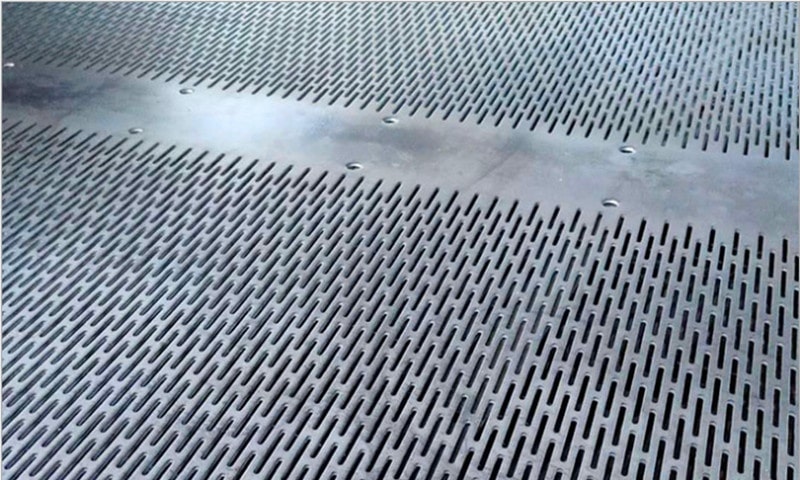
How Slot Direction Affects Plate Strength
Aligning Slots with the Load Direction
The orientation of slots affects the amount of continuous metal left between openings. When slots are arranged parallel to the expected stress direction, the plate may maintain better load transfer because the remaining material bridges are positioned more effectively.
For example, a heavy duty perforated plate used as a support surface typically requires careful consideration of whether loads move across or along the slot direction. The wrong orientation can create weak areas where stress concentrates around the slot ends.
In manufacturing practice, engineers often review slot length, width, pitch, and open area together rather than evaluating the slot shape alone.
Slot Length and Pitch Balance
One of the most common mistakes with slotted perforated plates is selecting slots that are too long or spaced too closely together.
Long slots increase open area, but they also reduce the amount of supporting metal between openings. When the pitch becomes too small, the remaining webs between slots may not provide enough strength for heavy-duty applications.
A balanced design considers:
- Slot length and width ratio
- Material thickness
- Pitch distance between slots
- Required load capacity
- Installation support conditions
Increasing open area is not always an improvement. In many industrial applications, maintaining enough solid material is more important than achieving the highest possible perforation percentage.
Common Design Mistakes with Slotted Heavy Duty Perforated Plates
Choosing Perforation Patterns Based Only on Appearance
A frequent issue during project planning is selecting a slot pattern because it looks suitable without checking structural requirements. A visually open pattern may not perform well under vibration, impact, or concentrated loading.
Heavy duty plates require evaluation of how forces move through the material. The same slot pattern may perform differently depending on whether the plate is installed horizontally, vertically, supported continuously, or fixed at limited points.
Ignoring Manufacturing Limitations
Slotted holes require accurate control during production. If slot dimensions, spacing, or edge distances are not properly maintained, the final plate may have inconsistent strength characteristics.
Manufacturing factors such as tooling condition, material hardness, and forming processes can affect slot accuracy. These details become especially important for thicker plates where deformation control is more challenging.
Selecting the Right Slotted Pattern for Industrial Applications
A reliable slotted heavy duty perforated plate design starts with understanding the actual working conditions. Engineers should consider:
- What type of load will the plate carry?
- Is the load static, dynamic, or impact-based?
- Which direction will forces travel?
- How much open area is actually required?
- Are there limitations on deflection or vibration?
In many cases, a slightly lower open area with optimized slot orientation provides better service performance than an aggressive perforation design.
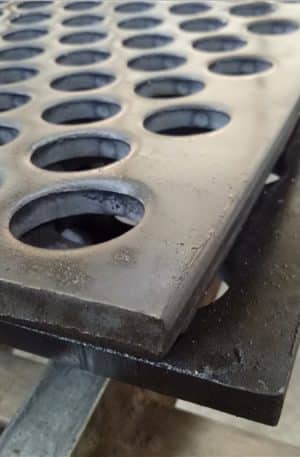


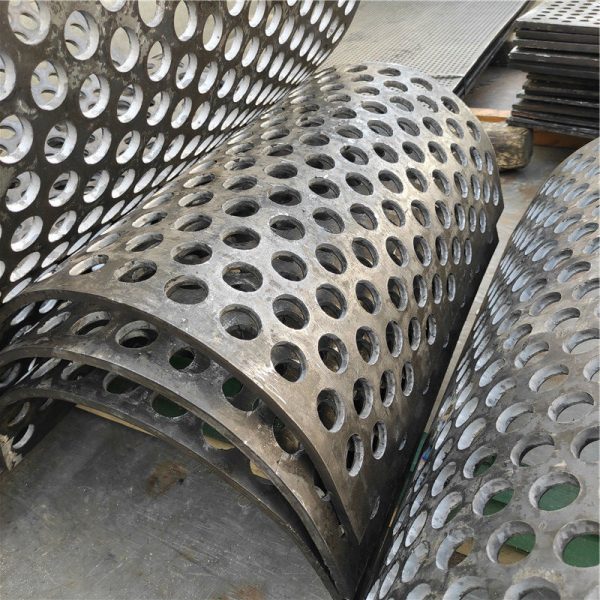
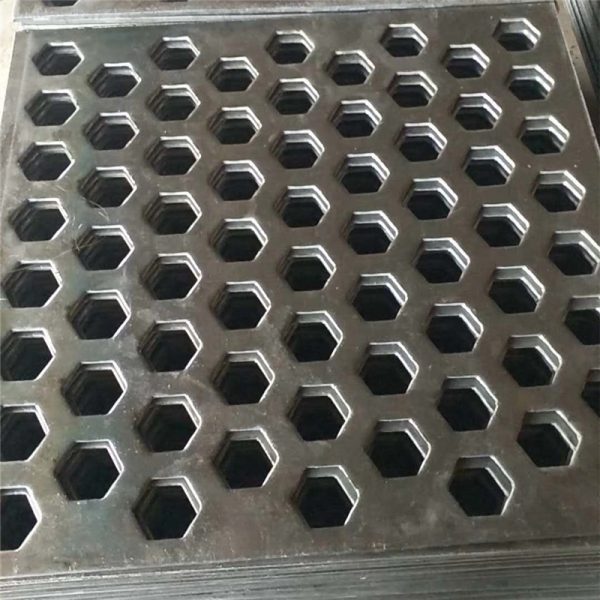


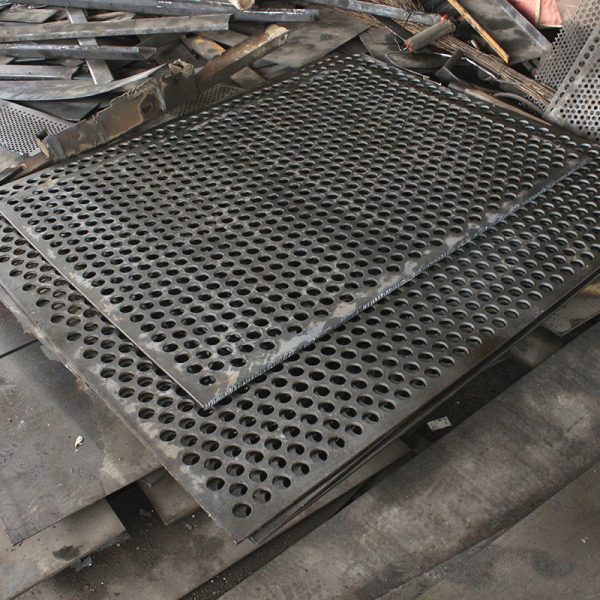
Heavy Duty Perforated Plates
Producing slotted heavy duty perforated plates requires more than creating openings in thick metal sheets. The manufacturing process must maintain consistent slot geometry, accurate pitch spacing, and sufficient material strength between perforations. For heavy gauge plates, our production approach focuses on controlling the relationship between slot dimensions and structural requirements. During fabrication, factors such as material thickness, tooling selection, perforation sequence, and flatness control are considered to reduce deformation and maintain predictable performance. This allows engineers to develop perforated solutions where the hole pattern supports the intended application rather than weakening the plate unnecessarily. By combining practical manufacturing knowledge with application requirements, slot patterns can be adjusted to achieve a better balance between open area, strength, and durability.