Why Acoustic Projects Start with Questions, Not Just Hole Patterns
Micro perforated aluminum is often selected when a project needs both acoustic control and a clean architectural surface.
It is commonly used for:
- Interior wall acoustic systems
- Ceiling absorption panels
- Auditorium wall cladding
- Transportation terminal interiors
- Commercial public space acoustic treatments
However, many RFQs arrive with only one request:
“Need micro perforated aluminum panel.”
In practice, that is rarely enough.
For acoustic applications, panel performance depends on several combined factors. Before production starts, the right technical questions help avoid rework, delays, or panels that do not meet project expectations.
This guide covers the key questions buyers, engineers, and architects should clarify before specifying micro perforated aluminum for acoustic use.
What Acoustic Result Are You Trying to Achieve?
This is the first question.
Different projects require different acoustic behavior.
Sound Absorption
Many interior applications aim to reduce reflected sound and improve speech clarity.
Typical examples include:
- Conference rooms
- Lecture halls
- Airports
- Office ceilings
- Commercial lobbies
In these cases, the panel system is usually designed to absorb mid- to high-frequency sound.
Reverberation Control
Some spaces need to shorten echo time rather than block sound transmission.
This is common in:
- Public atriums
- Transit stations
- Open-plan workspaces
Panel layout and cavity depth often matter as much as perforation pattern.
Decorative Acoustic Integration
In many architectural projects, acoustic treatment must blend into the visual design.
This usually requires balancing:
- Hole visibility
- Surface finish consistency
- Panel flatness
- Acoustic functionality
A pattern that looks excellent on a sample may not deliver the expected acoustic response without the right backing structure.


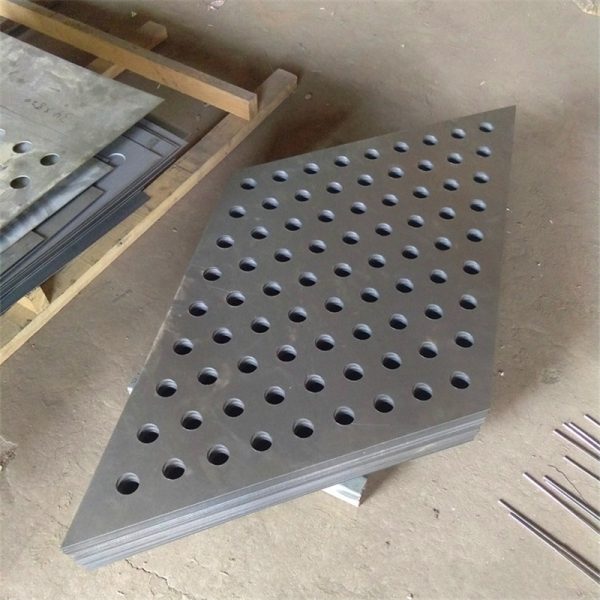

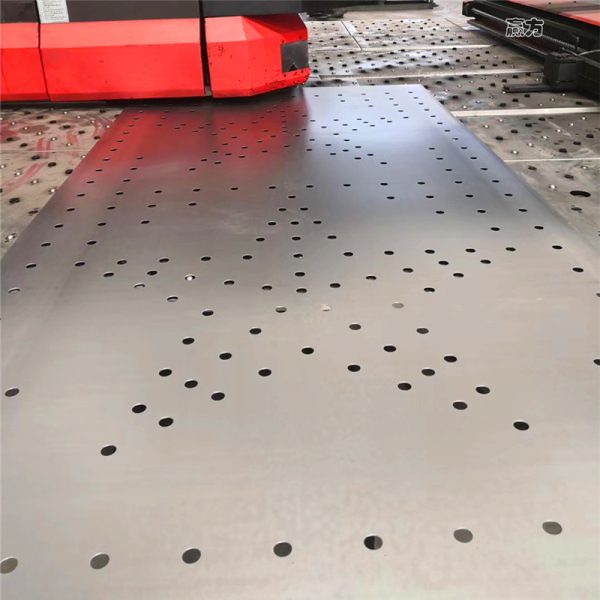

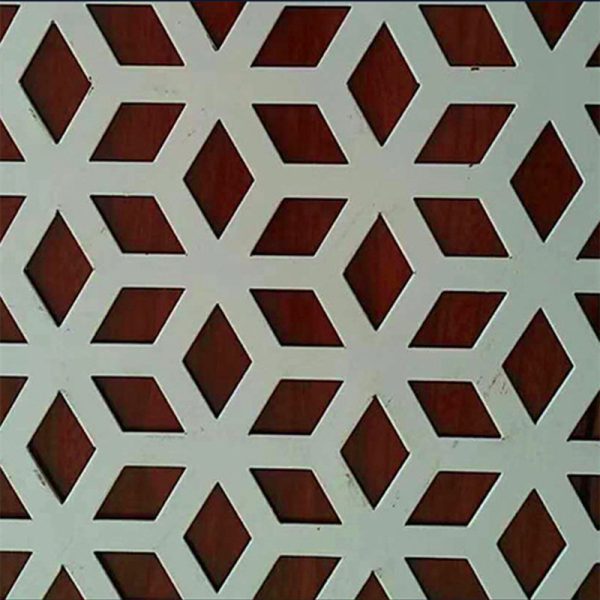

Aluminum Perforated Metal Sheets
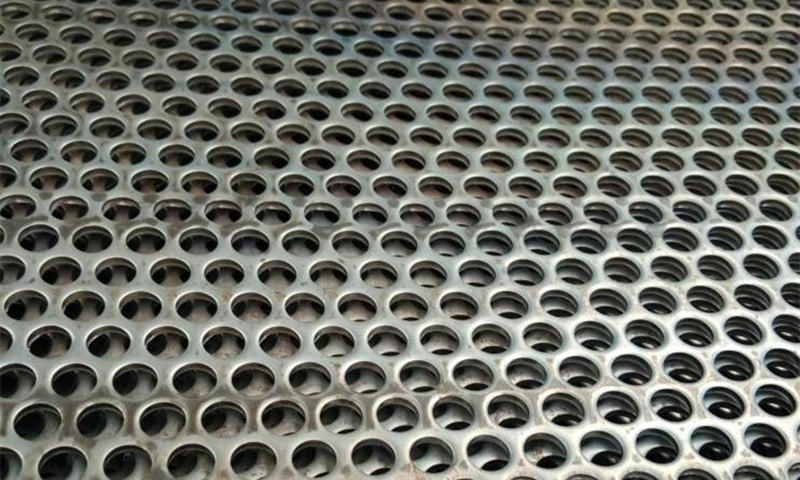
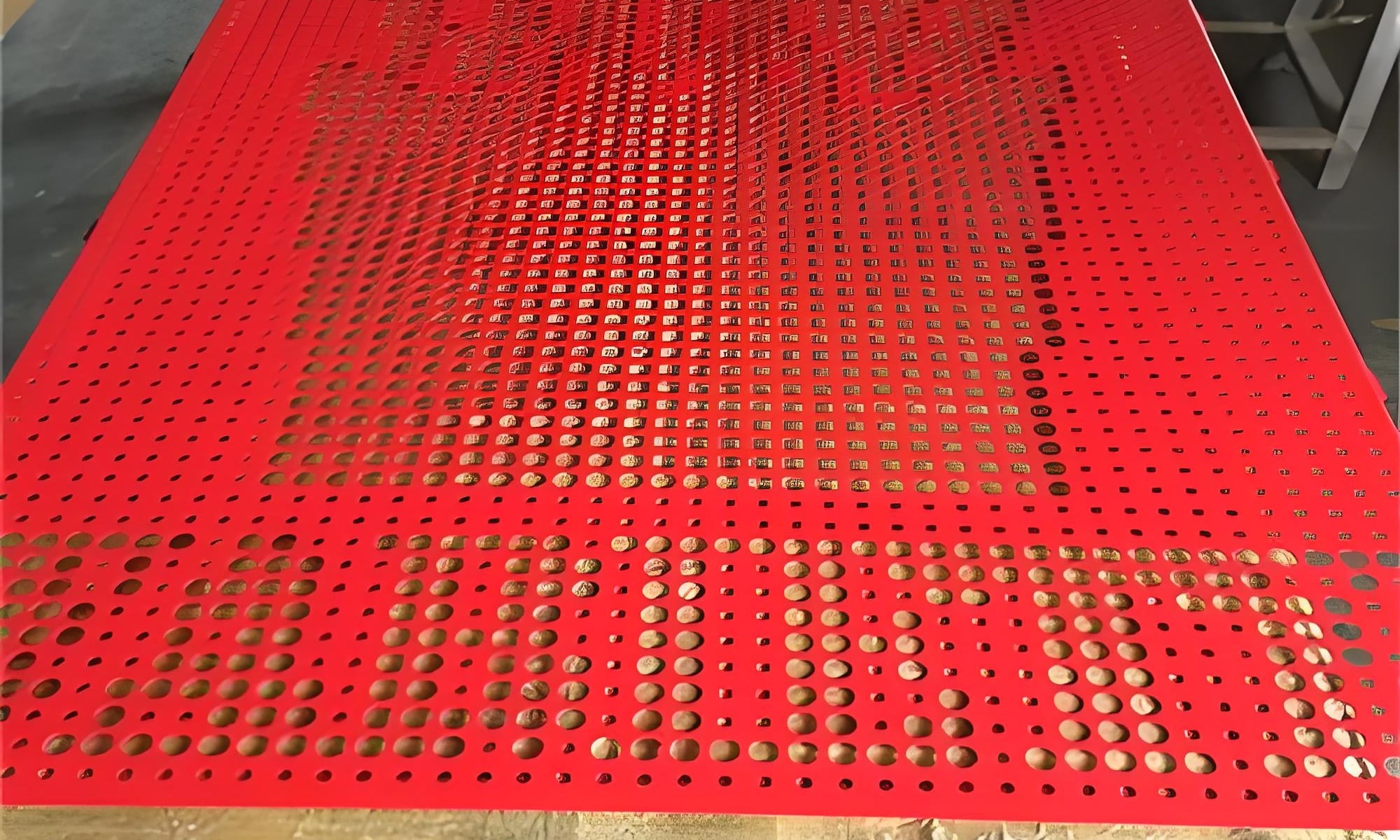
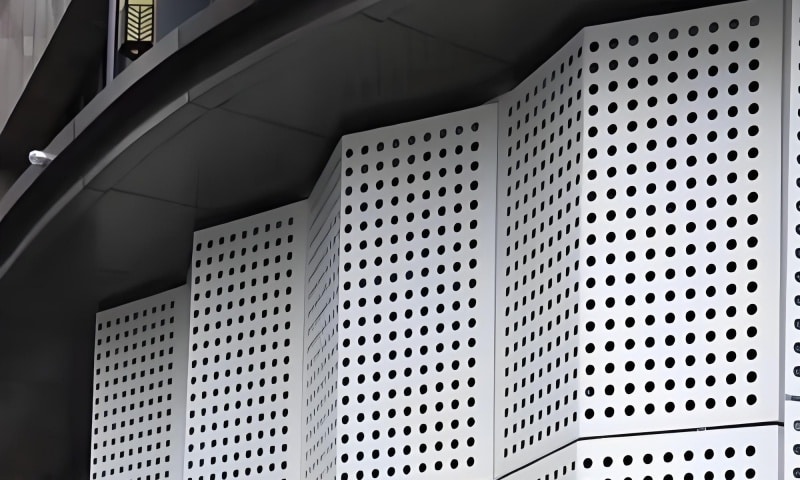
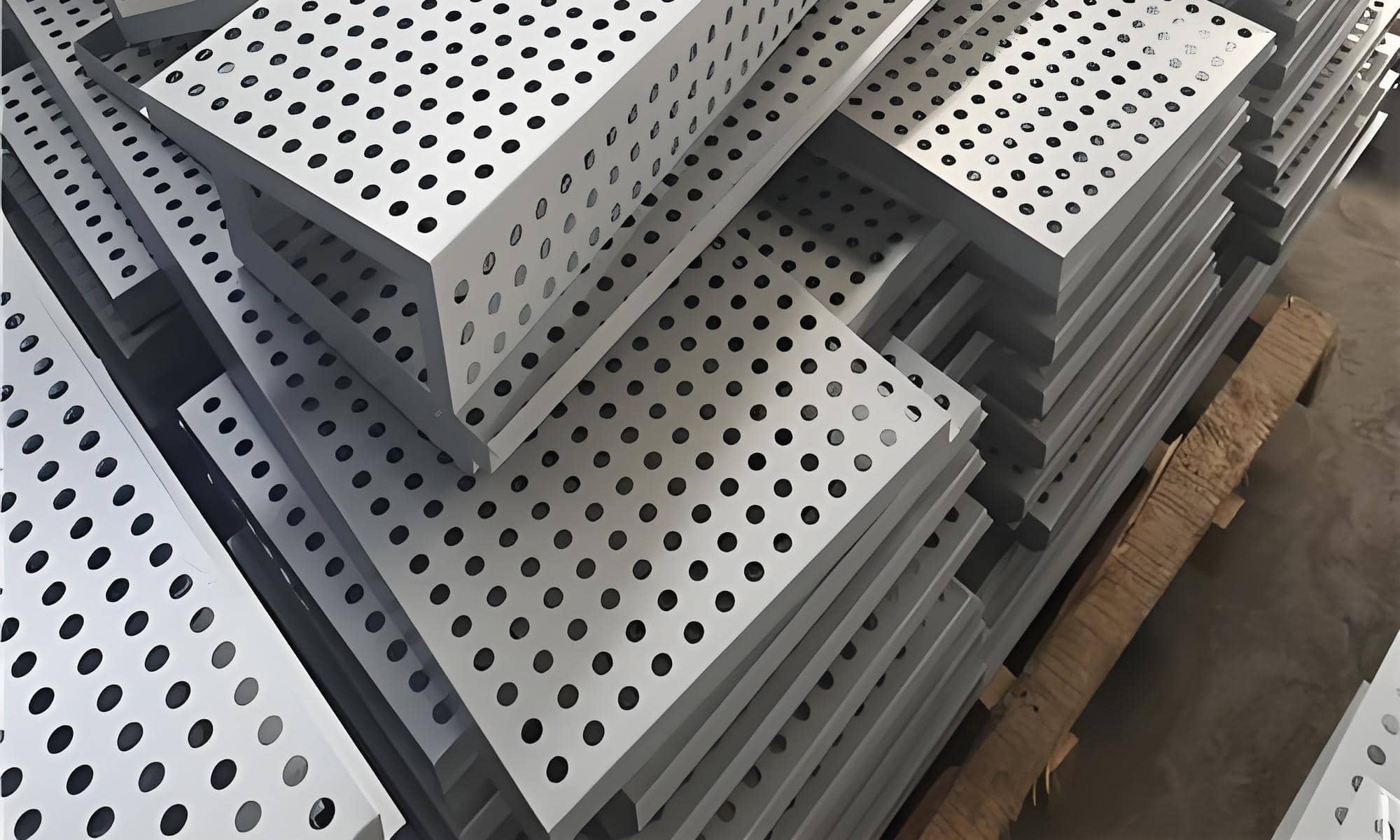
Micro perforated aluminum panels are widely used in acoustic ceilings, wall cladding, and interior architectural systems where sound control and clean visual appearance are both required. Hole diameter, open area, backing material, and installation method all affect acoustic performance. Share your project drawings, target acoustic use, and panel dimensions with Perfsheet to receive practical manufacturing recommendations and production support for your perforated aluminum acoustic panel project.
What Hole Diameter and Open Area Are Required?
This is often the most discussed specification.
For perforated aluminum acoustic panels, acoustic behavior depends heavily on:
- Hole diameter
- Hole pitch
- Open area ratio
- Panel thickness
These variables work together.
Hole Diameter
Micro perforation generally involves very small holes compared with standard architectural perforated panels.
Smaller holes may improve visual smoothness and create a refined appearance.
However, manufacturability depends on:
- Material thickness
- Tooling availability
- Sheet flatness requirements
Very small holes on thin aluminum may require tighter process control during punching.
Open Area Ratio
Open area directly affects airflow and sound absorption characteristics.
Higher open area may improve acoustic performance in some designs, but can also influence:
- Panel rigidity
- Visual opacity
- Fabrication stability
The suitable ratio depends on the complete acoustic assembly.
Pattern Distribution
Even if total open area is correct, distribution matters.
Uniform micro perforation is often preferred for architectural consistency, but some projects require zoned patterns for visual or functional reasons.
This should be clearly shown on drawings.
What Backing Material Will Be Used?
This is one of the most overlooked project details.
Micro perforated aluminum alone does not usually define acoustic performance.
The backing system strongly affects results.
Common backing options include:
Acoustic Non-Woven Fabric
Often used when:
- A clean black shadow effect is required
- Dust control is needed
- Visual concealment behind perforation is important
Mineral Wool or Acoustic Insulation
Used when stronger sound absorption is required.
Performance depends on:
- Density
- Thickness
- Air cavity spacing
These should be defined by the acoustic consultant or system designer.
Open Air Cavity
Some systems rely on cavity resonance.
In these cases, installation depth becomes critical.
Even small dimensional changes can affect final acoustic behavior.

How Will the Panels Be Installed?
The mounting method influences both appearance and acoustic effectiveness.
Typical installation systems include:
Lay-In Ceiling Panels
Suitable for modular suspended ceiling systems.
Important details:
- Edge profile
- Tolerance matching
- Flatness control
Hook-On or Clip-In Systems
Often used for seamless architectural ceilings.
These systems require precise forming after perforation.
Hole position near bends and locking features should be checked during drawing review.
Wall Cassette Systems
Used for large-format decorative acoustic walls.
Attention is usually required for:
- Reinforcement design
- Expansion allowance
- Joint consistency
What Information Should You Send to the Supplier?
A complete inquiry helps reduce revision cycles.
For a micro perforated aluminum acoustic panel RFQ, it is helpful to include:
Panel Information
- Panel dimensions
- Aluminum thickness
- Alloy if specified
- Edge detail requirements
Perforation Information
- Hole diameter
- Hole pitch
- Pattern layout
- Open area target if known
Surface Finish
Examples:
- Powder coating
- PVDF coating
- Anodized finish
Color consistency expectations should be clarified for visible architectural applications.
Acoustic Assembly Information
- Backing material
- Cavity depth
- Installation structure
- Target acoustic use
Even if full acoustic test data is not available, sharing intended application helps guide manufacturability review.
Start with Functional Communication
For acoustic architectural projects, successful manufacturing usually starts with clear technical communication.
Instead of asking only for “micro perforated aluminum,” start by defining:
- What acoustic problem the panel should address
- What visual result is required
- How the panel will be installed
- What backing system will be used
In many cases, these details help identify practical manufacturing adjustments before production begins.
A well-prepared RFQ makes it easier to move from concept to reliable production with fewer revisions.