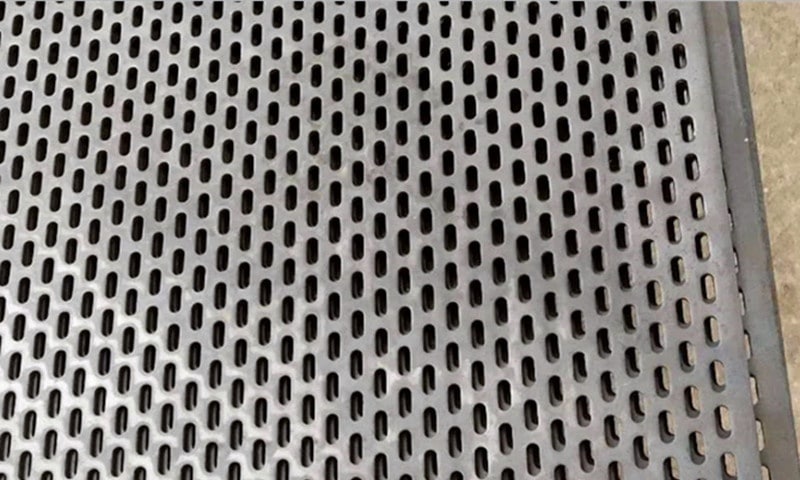
How to Achieve Precision Bends in Perforated Stainless Steel
Perforated stainless steel offers strength, corrosion resistance, and a clean architectural appearance. But once perforation is introduced, bending becomes more complicated.
Many buyers encounter the same issue during project development: the flat sheet looks correct, but after bending, the holes near the bend line distort, stretch, or collapse. This can affect both appearance and assembly accuracy.
For fabricated stainless steel perforated panels, bend quality depends on material grade, perforation layout, open area ratio, and tooling setup.
This guide explains the practical factors that help achieve reliable bending results in real production.


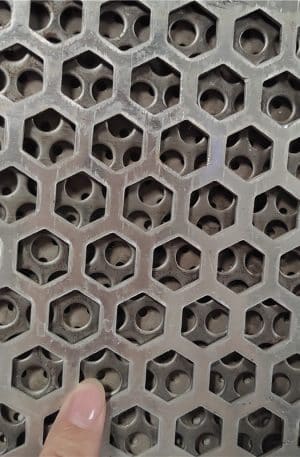
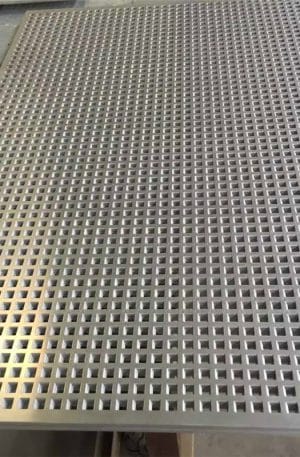


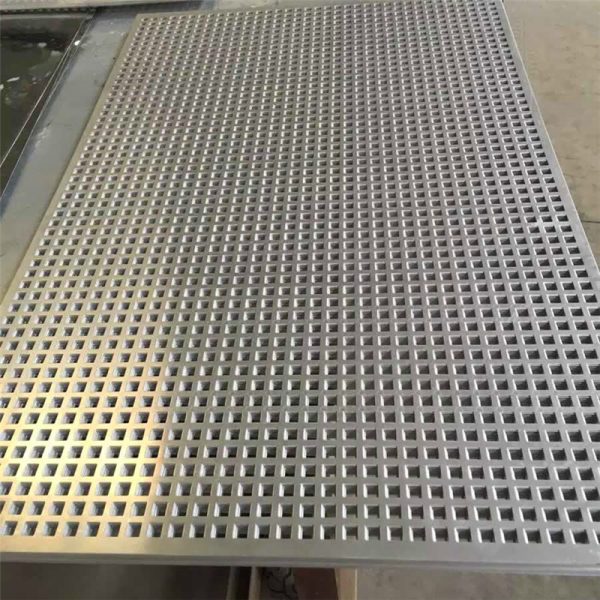


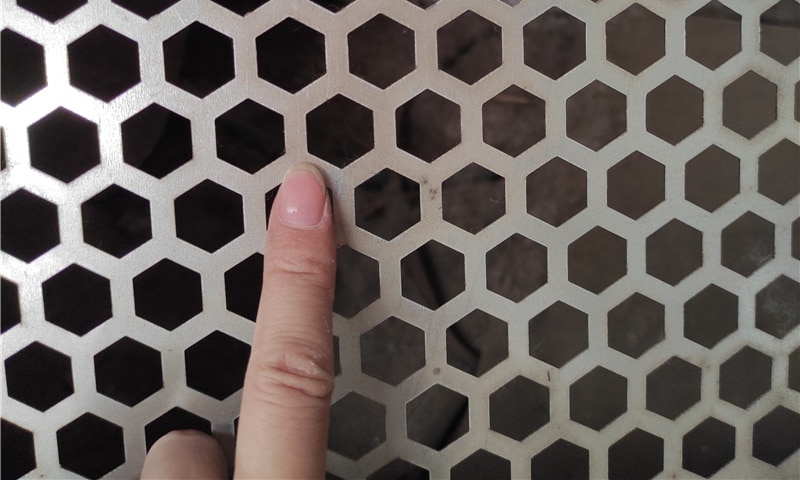
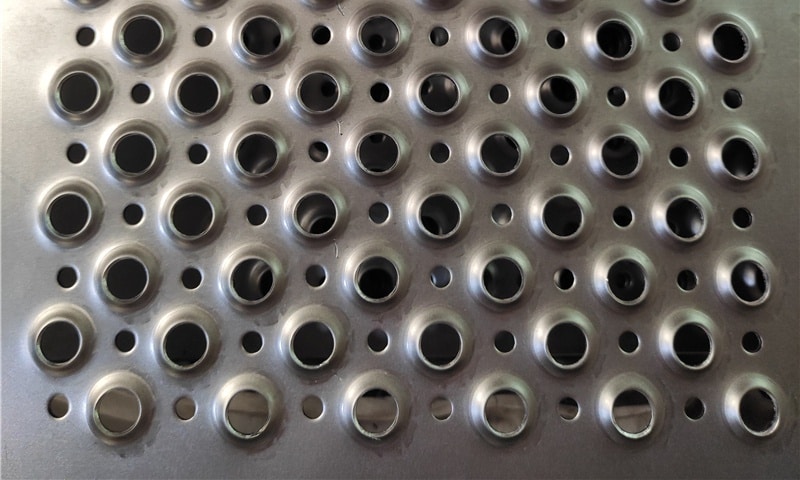
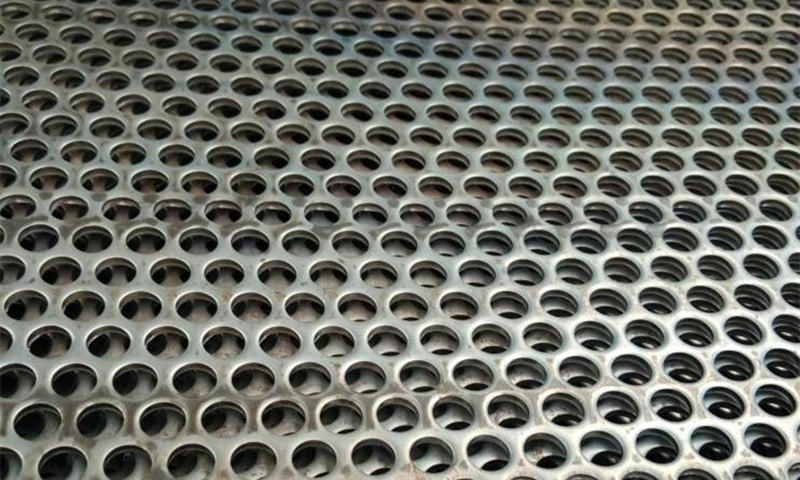
Stainless Steel Perforated Metal Sheets
Need fabricated stainless steel perforated panels with accurate bends and clean hole patterns? We manufacture custom perforated stainless steel components with controlled bending processes, reinforced edge design, frame welding, and drawing-based fabrication support. Send your CAD files or project details for practical production suggestions and RFQ review.
Why Perforated Stainless Steel Is More Difficult to Bend
Unlike solid sheet metal, perforated material has reduced structural continuity.
The holes interrupt force distribution during bending. When pressure is applied, stress concentrates around the perforation pattern instead of spreading evenly across the bend zone.
This often leads to:
- Hole deformation near the bend line
- Surface waviness
- Uneven bend angles
- Micro-cracking in highly hardened stainless grades
- Reduced dimensional consistency
These issues become more noticeable when the perforation pattern has a high open area.
How Hole Position Affects Bend Quality
Keep Holes Away from the Bend Line
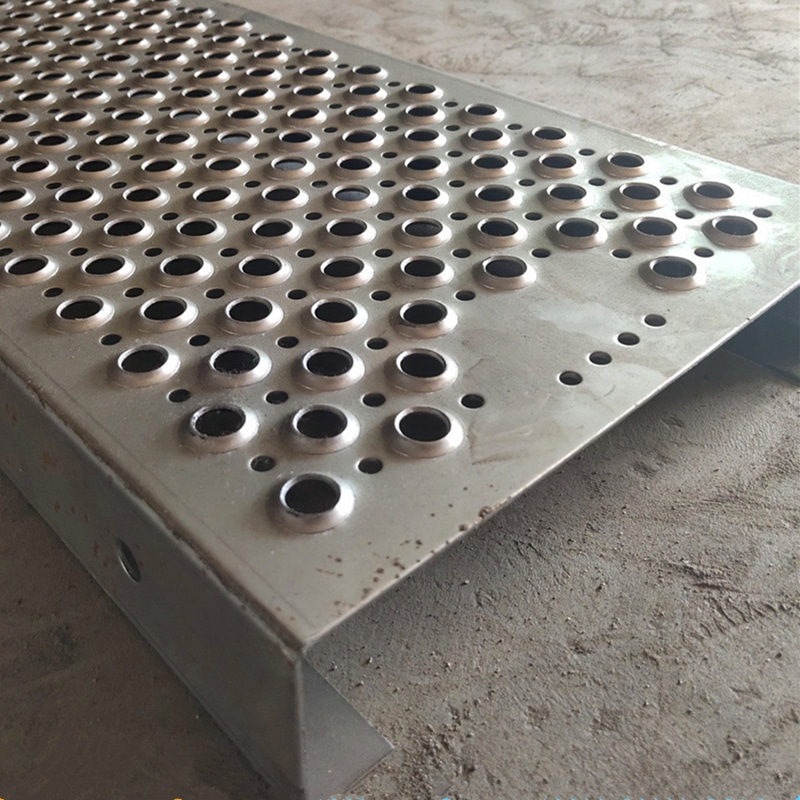
One common solution is leaving an unperforated margin where bending will occur.
This solid area gives the tooling enough material support and reduces deformation risk.
In many fabrication cases, designers leave a blank strip along the bend line. The exact width depends on:
- Sheet thickness
- Hole diameter
- Pitch
- Material grade
- Required bend angle
This approach is especially useful for visible architectural panels where appearance matters.

Consider Hole Orientation
Round holes generally distribute stress more evenly.
Slots and decorative patterns may create directional weakness.
If slots run parallel to the bend line, distortion may increase. Adjusting slot orientation often improves forming stability.
This should be reviewed during drawing evaluation, before tooling is prepared.
How Stainless Steel Hardness Influences Bend Radius
Stainless steel has higher springback compared with mild steel.
Different grades behave differently during bending.
Austenitic Stainless Steel
Grades such as 304 and 316 are commonly used for perforated fabrication.
They offer good corrosion resistance but typically require careful bend compensation due to work hardening.
In many cases, larger internal bend radii help reduce surface stress.
Harder or Work-Hardened Material
If the sheet has already undergone significant processing, forming flexibility may be reduced.
This may require:
- Larger bend radius
- Lower forming speed
- Multi-step bending
- Tooling adjustment
The final setup depends on the actual material condition and drawing requirements.
How Open Area Changes Bending Pressure
Open area has a direct effect on structural stiffness.
A panel with higher open area has less material resisting deformation.
This changes how bending force should be applied.
Lower Open Area
Panels with lower perforation density generally behave closer to solid sheet.
Bending is usually more stable and predictable.
Higher Open Area
High open area panels are more flexible.
They often require:
- Reduced press brake pressure
- Wider tooling support
- Slower forming sequence
- Additional forming trials
Tooling parameters usually need adjustment based on sample testing.
Techniques for Precision Bending
Use Larger V-Die Openings
A larger die opening can reduce localized stress concentration.
This helps minimize hole collapse near the bend zone.
The ideal die selection depends on sheet thickness and perforation pattern.
Apply Step Bending When Needed
For tighter geometry, step bending may improve control.
Instead of applying a single aggressive bend, gradual forming distributes stress more evenly.
This is often used for decorative stainless assemblies.
Control Springback Carefully
Stainless steel often springs back after forming.
Perforation can make this behavior less predictable.
Experienced fabricators usually compensate by adjusting overbend angles after sample validation.
Fabricated Structures: Beyond Simple Angle Bends
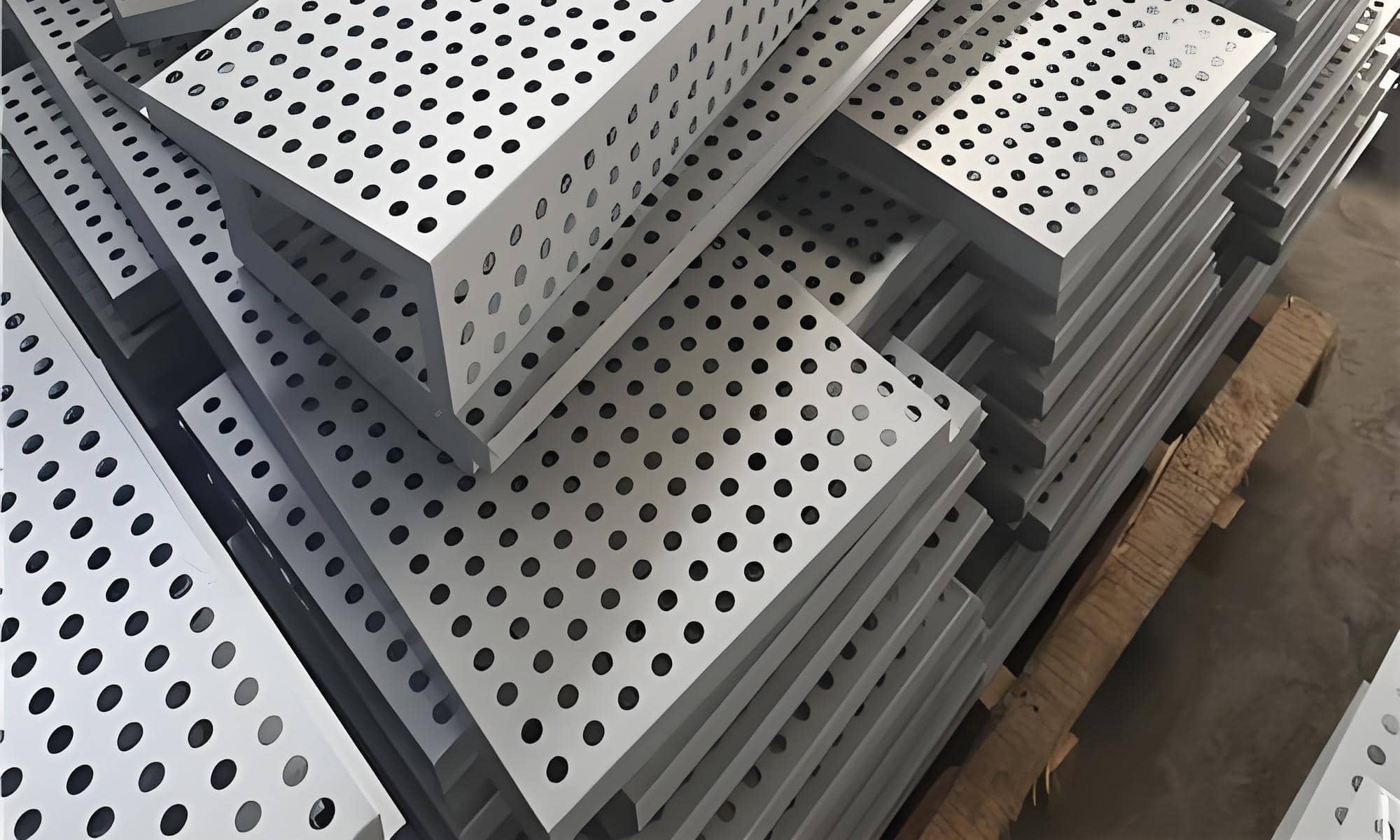
Many fabricated stainless steel perforated panels require more than a single bend.
Common deep-processing structures include:
Framed Perforated Panels
A welded support frame improves rigidity and installation stability.
This is widely used for:
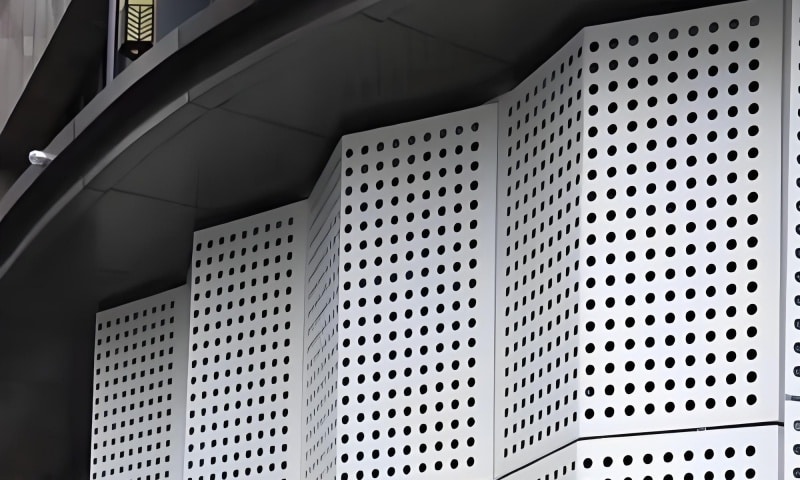
- Architectural facade panels
- Equipment enclosures
- Screening systems
The frame also helps protect perforated edges during handling.
Box-Form Components
Perforated stainless can be fabricated into box structures for:
- Filtration housings
- Ventilation covers
- Machine guarding
These applications require careful bend sequencing to maintain dimensional accuracy.
Reinforced Edge Designs
Adding folded returns or stiffened edges can improve panel flatness.
This is often useful for larger panel sizes where visual consistency matters.
What Buyers Should Provide Before Production
To evaluate bending feasibility accurately, suppliers typically need:
Complete Drawings
Include:
- Flat pattern dimensions
- Bend locations
- Bend angles
- Material grade
- Thickness
Perforation Details
Specify:
- Hole type
- Hole size
- Pitch
- Open area requirement
- Margin zones
Appearance Requirements
If the panel is visible after installation, clarify acceptable deformation tolerance.
This helps the factory select the most suitable forming process.
Early Design Review Prevents Production Problems
Many bending issues can be solved before manufacturing begins.
A practical drawing review often identifies:
- Bend lines placed too close to perforation
- Excessive open area near formed edges
- Radius requirements incompatible with material thickness
- Structural reinforcement needs
Early discussion between buyer and manufacturer usually saves time and reduces revision costs.
For fabricated stainless steel perforated panels, precision bending is rarely only about press brake force. It depends on balancing perforation design, material behavior, and forming strategy.
The most reliable results usually come from production planning based on real fabrication experience.