Introduction
When your project calls for perforated metal that must survive repeated thermal cycling, oxidation, and mechanical stress, material selection and fabrication practice matter as much as pattern geometry. This article draws on decades of industry experience in CNC punching and sheet metallurgy to explain why nickel- and chromium-rich austenitic grades such as 310S and 321 are typically the best starting point for high temperature perforated metal solutions — and what engineering teams should specify to get predictable performance in industrial ovens, heat exchangers, and other high-heat equipment.

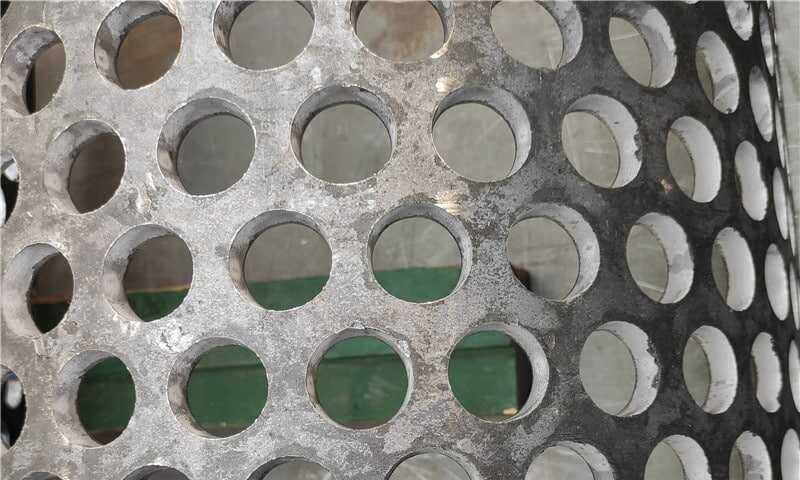
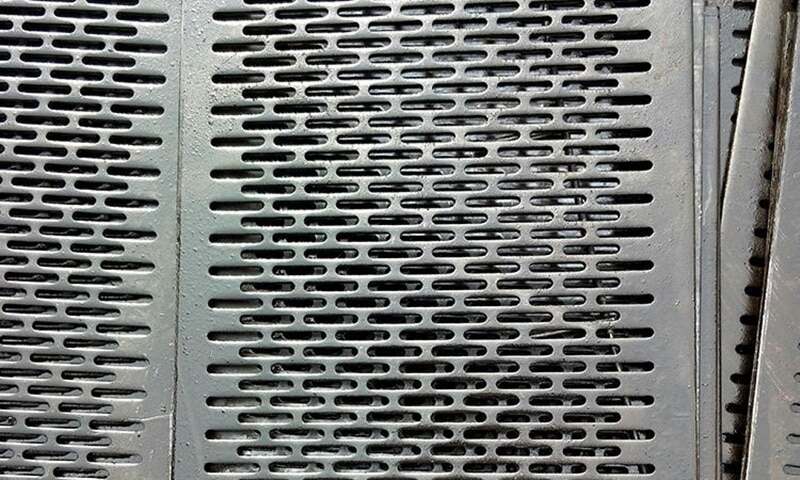
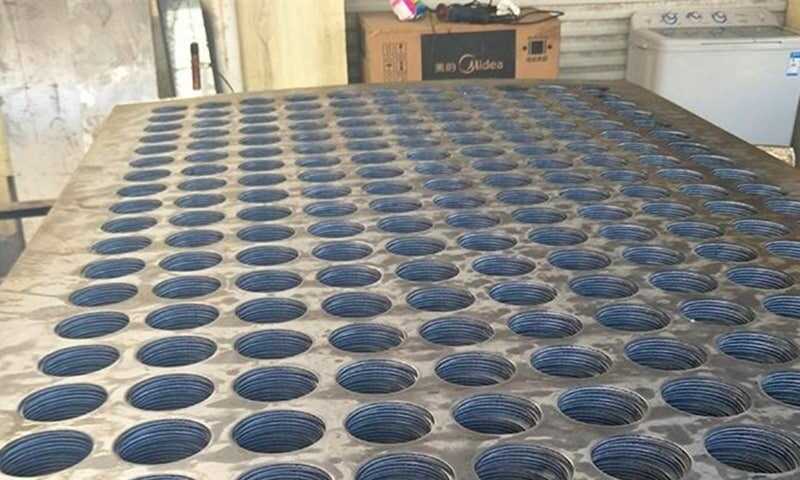
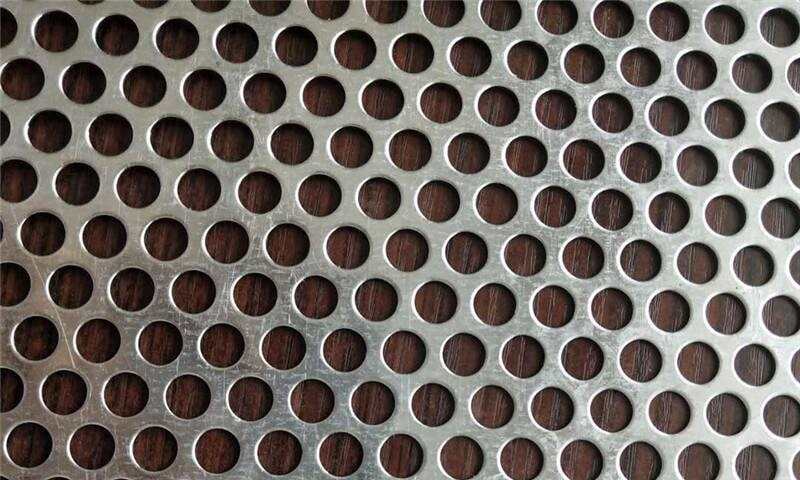
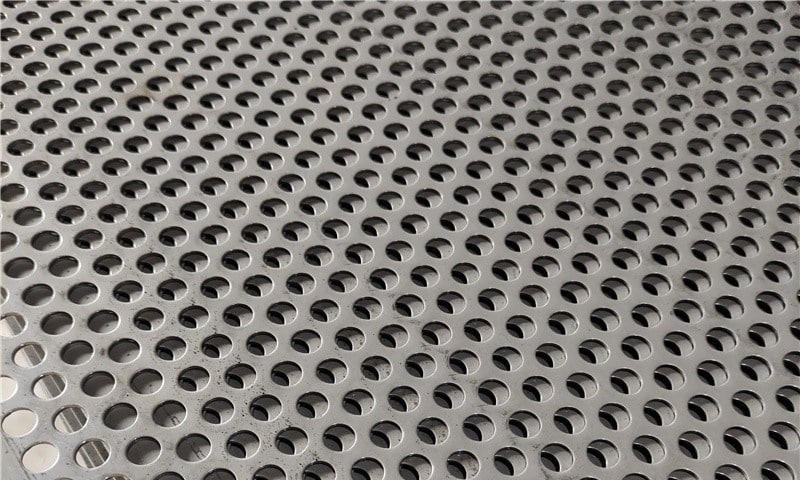
Stainless Steel Perforated Metal Sheets
Stainless steel perforated sheet is a commonly used material in both architectural and industrial applications. It offers stable corrosion resistance and good fabrication flexibility.
Hole patterns, open area, dimensions and surface finishes can all be customized according to project drawings. Typical uses include facades, ventilation and filtration, partitions and equipment protection.
Feel free to view the product details or contact us for samples and pricing information.
Why material choice matters for high-heat perforated plates
Metallurgy in a sentence
Austenitic stainless steels with elevated nickel and chromium contents offer two things manufacturers need most at high temperature: oxidation resistance and retained toughness. That’s why 310S and 321 are commonly used when operating temperatures approach or exceed the limits of standard 304/316 families.
Quick comparison: 310S vs 321 (practical view)
- 310S — High chromium and nickel content gives superior oxidation and scaling resistance in continuous high-temperature environments (commonly specified where sustained service temperatures are high). The “S” low-carbon variant reduces carbide precipitation risk after welding or thermal exposure.
- 321 — Titanium-stabilized austenitic steel that resists intergranular attack after exposure to sensitizing temperatures. Good choice for cyclic thermal environments where welding and localized heating are common.
(For procurement: always refer to mill certificates and ask suppliers for composition and tensile/creep properties at your intended service temperature.)

Thermal expansion and perforation flatness
The mechanism: why perforated arrays warp
Perforated sheets are essentially a repeating grid of removed material. Thermal expansion and contraction act on that grid differently than on a solid plate. Key effects you’ll see in the field:
- Differential expansion between pillars and surrounding web can cause local buckling or bowing of the sheet.
- Pattern anisotropy (directional hole layouts) creates preferential stiffness directions; expansion is not uniform in X and Y, so long spans can develop directional curl.
- Edge constraints (how the sheet is fixed) amplify stresses — clipped or welded edges that don’t allow free movement create localized bending.
Mitigations in design and fabrication
- Choose grades with consistent and predictable coefficients of thermal expansion (austenitic stainless steels are close to each other), and design floating attachments or expansion gaps.
- Increase support frequency (closer clip spacing) along unsupported spans to reduce out-of-plane deformation.
- Favor symmetric perforation patterns (staggered/diamond) when the application expects repeated thermal cycling — symmetric layouts reduce directional stiffness imbalance.
- For very large panels, break the array into smaller panels to allow thermal relief (but plan seam overlap and sealing accordingly).
Applications: industrial ovens and heat exchanger housings
Industrial ovens
In conveyor or batch ovens where temperatures remain elevated for long periods, oxidation resistance and scale prevention are paramount. 310S perforated panels are commonly used for internal baffles, trays, and liners because they:
- Resist scaling at sustained high temperatures.
- Maintain dimensional stability longer than lower-alloyed grades.
Operational tips:
- Avoid sharp corner welds that concentrate heat; use continuous fillets and match filler metal to base alloy.
- If surface emissivity matters (e.g., radiant heating), specify surface finish and consider post-fabrication oxide control.
Heat exchanger housings and ducting
Perforated liners used as flow straighteners or acoustic liners in heat exchanger plenum areas need to manage both thermal and vibrational loads.
- Use 321 where thermal cycles and welded joints are common and intergranular corrosion is a concern.
- Consider thicker webs or smaller hole diameters to preserve mechanical integrity at elevated temperatures while maintaining flow requirements.

Welding and welded joint thermal-fatigue analysis
Why welds are weak links
Welds and the surrounding heat-affected zone (HAZ) change microstructure and mechanical properties. Under cyclic thermal loading, welded joints experience:
- Thermal expansion mismatch between base metal, filler metal, and any dissimilar attachments, producing cyclic tensile/compressive stresses.
- Creep and stress relaxation at sustained elevated temperatures that can accumulate into plastic deformation over time.
- Crack initiation at stress concentrators such as edge of holes near welds or sharp transitions.
Practical guidelines to reduce thermal-fatigue risk
- Use filler metal that matches the corrosion and thermal properties of the base alloy (e.g., matching austenitic filler for 310S/321 applications).
- Minimize restraint and allow for in-service movement: avoid rigid continuous welds that lock panels against thermal movement; consider slotted clips or expansion washers.
- Design weld geometry to reduce sharp transitions; radiused joints lower stress concentration.
- For critical assemblies, specify post-weld pickling or annealing only when metallurgy supports it — for austenitics, stress-relief annealing is not always effective and can introduce unwanted grain growth; consult a metallurgist for high-temperature creep exposures.
- Validate with thermal cycling tests and weld coupons representative of the production process (not just small lab welds).
Fabrication notes for CNC punching and edge quality
Punching vs laser cutting for high-temp parts
- CNC punching is efficient and repeatable for large volumes. Cold work at the perimeter of punched holes hardens the web; this may improve short-term wear but can reduce ductility and affect creep performance at elevated temperatures.
- Laser cutting produces a different HAZ profile and may be preferable when tight tolerances or minimal cold work are required.
Edge quality and finishing
- Deburr and remove embedded tooling residues; inclusions and burrs are stress-raisers under thermal cycling.
- If the part will be exposed to oxidizing atmospheres at high temperature, specify surface finishes and cleaning procedures to reduce early scaling.
Specification checklist for procurement (what to include in the PO)
- Grade and heat-treat state (e.g., 310S, annealed; 321, solution annealed).
- Mill test certificates (chemical composition and mechanical test results).
- Perforation pattern, hole diameter, web width, nominal thickness, and tolerance stack.
- Punching method and tooling clearance, or laser process definition.
- Welding procedures and filler metal specification; required weld inspection (PT, UT or visual) and acceptance criteria.
- Thermal cycling and creep testing requirements (if the component is critical).
- Surface finish and post-fabrication cleaning (pickling/passivation where required).
Final recommendations — balancing cost, longevity, and manufacturability
- For continuous high-temperature service prioritize 310S when oxidation resistance is the dominant requirement.
- For cyclic heating with frequent welding or where intergranular corrosion is a concern, 321 is a strong choice.
- Always design for thermal movement: floating attachments, symmetric patterns, and adequate support spacing significantly reduce in-service distortion.
- Specify representative weld coupons and thermal cycle testing for mission-critical components; don’t rely only on standard tensile reports.