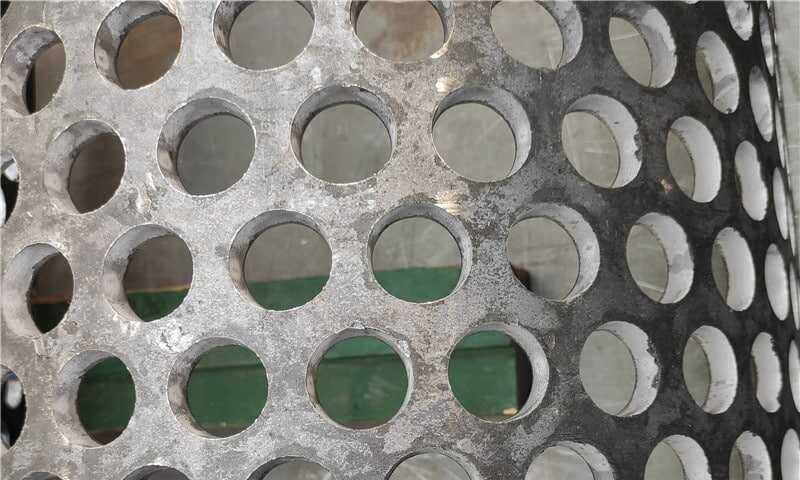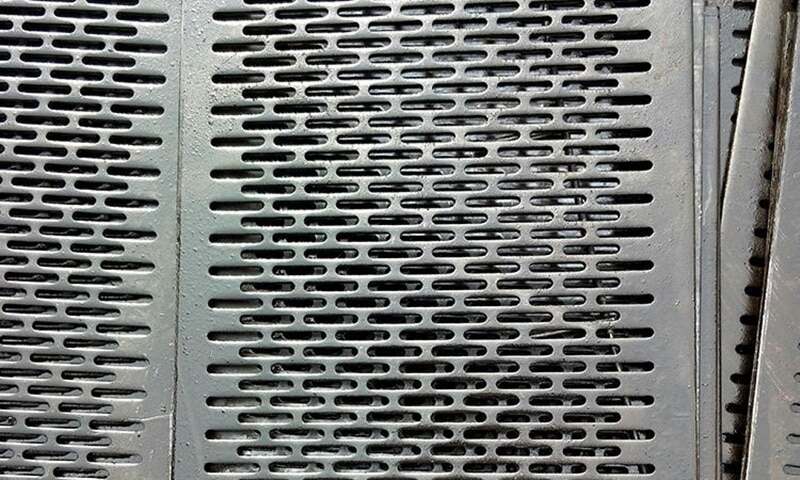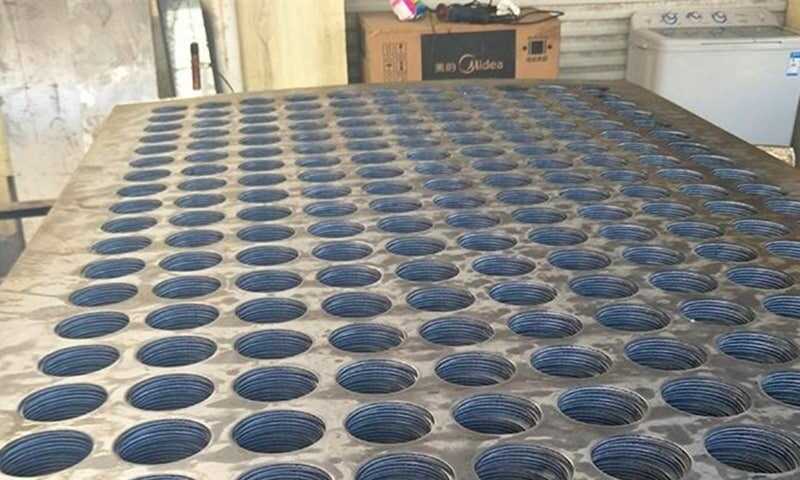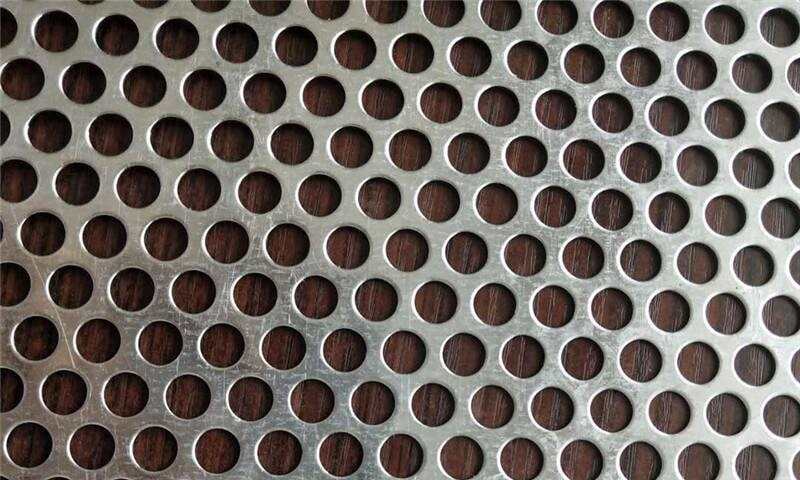
In many RFQs we receive, the layout—straight or staggered—is either pre-defined or left open. On the surface, it looks like a minor detail.
In practice, it affects three things that matter to both engineers and buyers:
- How the plate carries load
- How much usable open area you get
- How the final cost is calculated
If you’re working with heavy duty perforated plates for structural or industrial use, this is one of those decisions worth getting right early.

Heavy Duty Perforated Plates
Need a custom heavy-duty perforated plate?
We offer perforated plates with thickness ranging from 2.75mm to 30mm, and up to 6000×1500mm in size, available in round, square, hexagonal, and slotted patterns.
Additionally, we provide precise cutting, surface protection, and other processing services tailored to meet industrial installation requirements.
Feel free to contact us anytime, and we’ll provide a personalized solution that perfectly matches your project needs.
Straight Layout: When Alignment Drives the Decision
Where It’s Typically Used
A straight (in-line) pattern is usually selected when alignment is not optional.
Common cases include:
- Bolt-through assemblies
- Panels that must match existing hole grids
- OEM parts with fixed mating geometry
In these situations, layout is dictated by design constraints—not performance optimization.
What to Expect Structurally
Under load, straight layouts behave in a more predictable—but less forgiving—way.
Because the ligaments line up:
- Stress tends to concentrate along straight paths
- The plate is more sensitive to bending direction
- Fatigue resistance is generally lower in dynamic conditions
For light to moderate duty, this is often acceptable. For heavier applications, it becomes a limiting factor.

Staggered Layout: Why It’s the Industry Default
What Makes It Different
A heavy duty perforated plate staggered layout offsets each row (typically 60°), breaking the continuity of the ligaments.
That small geometric change makes a noticeable difference in how the plate performs.
What We See Across Applications
In real projects—screening, walkways, guards, support panels—staggered layouts are preferred because they:
- Distribute load more evenly
- Reduce the risk of crack propagation
- Perform better under vibration and cyclic loading
It’s not just a theoretical advantage. It shows up in longer service life and fewer field issues.
Open Area: Not Just About Airflow
Open area is often discussed in terms of airflow or drainage, but for buyers, it also connects directly to weight and cost.
With the same hole size and pitch:
- Straight layout → lower open area
- Staggered layout → higher open area
Higher open area means more material is removed—which leads us to the part that’s often misunderstood.

Manufacturing Cost: Understanding Net Material Cost
One of the most common assumptions we hear is that staggered layouts cost more to produce. In modern CNC punching, that’s not where the difference comes from.
Programming, tooling, and machine time are essentially comparable.
What Actually Changes
Under identical conditions (material, thickness, sheet size, hole diameter, pitch):
- A straight layout:
- Leaves more solid material
- Generates less scrap
- Produces a heavier plate
- A heavy duty perforated plate staggered layout:
- Removes more material
- Generates more scrap
- Produces a lighter plate
Why Scrap Matters in Pricing
In perforated metal manufacturing, scrap is not treated as waste—it has recyclable value.
That means:
- Scrap is collected and sold
- The value is credited back against raw material cost
So:
- Less scrap (straight layout) → lower recycling credit → higher net cost
- More scrap (staggered layout) → higher recycling credit → lower net cost
What Buyers Should Take Away
Two plates with the same specs can price differently simply because of layout.
In many cases:
- Straight layout → higher net material cost per part
- Staggered layout → more cost-efficient over volume
This is especially noticeable in larger sheets or thicker materials.
How We Typically Advise Customers
If layout is not locked in by design, the conversation usually comes down to this:
Go with Straight Layout When:
- You must match an existing hole pattern
- Assembly alignment is critical
- Loads are relatively low
Go with Staggered Layout When:
- Strength and durability are priorities
- The plate will see vibration or dynamic loads
- You want better weight and cost efficiency
- The design allows flexibility
In most heavy duty applications, staggered is the safer and more economical baseline.
A Practical Note from the Shop Floor
Layout alone doesn’t determine performance.
We often see designs where:
- The pattern is correct
- But the ligament (pitch minus hole diameter) is too small
That combination can still lead to deformation or early failure.
If you’re optimizing a design, it’s worth reviewing both together—especially before finalizing drawings.
Final Thoughts
Choosing between straight and staggered layouts isn’t about following a rule—it’s about understanding how the plate will actually be used.
But if your goal is to balance strength, durability, and cost, the heavy duty perforated plate staggered layout is, in most cases, the more practical and reliable option.
Need a Second Look at Your Drawing?
If you’re working on a project and want to validate layout, open area, or cost impact, it’s often easier to review it early than to adjust after production starts.
Sharing a drawing or basic specs (material, thickness, hole size, and spacing) is usually enough to give practical feedback.