Why Hole Pattern Changes the Whole Look
At first glance, perforated metal sheet specs can look straightforward: hole diameter, pitch, thickness, and finish. But in real-world applications, the hole pattern often has a bigger impact than most buyers expect.
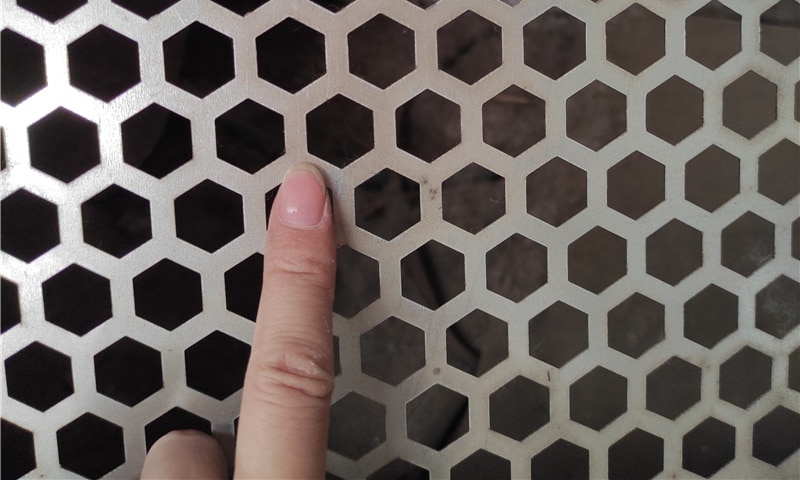
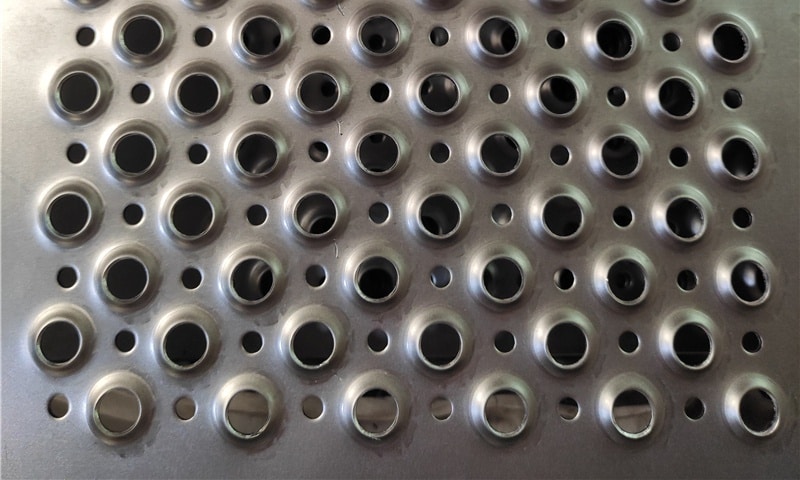
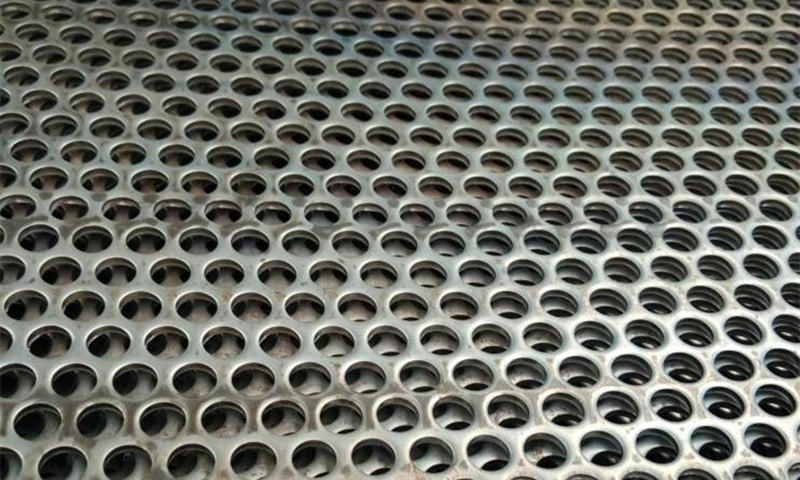
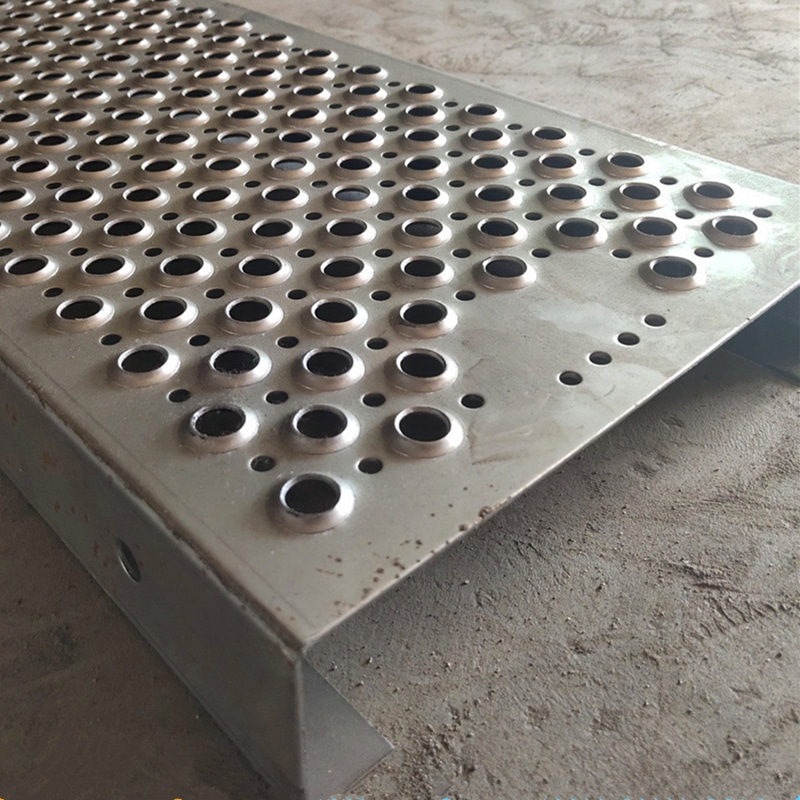
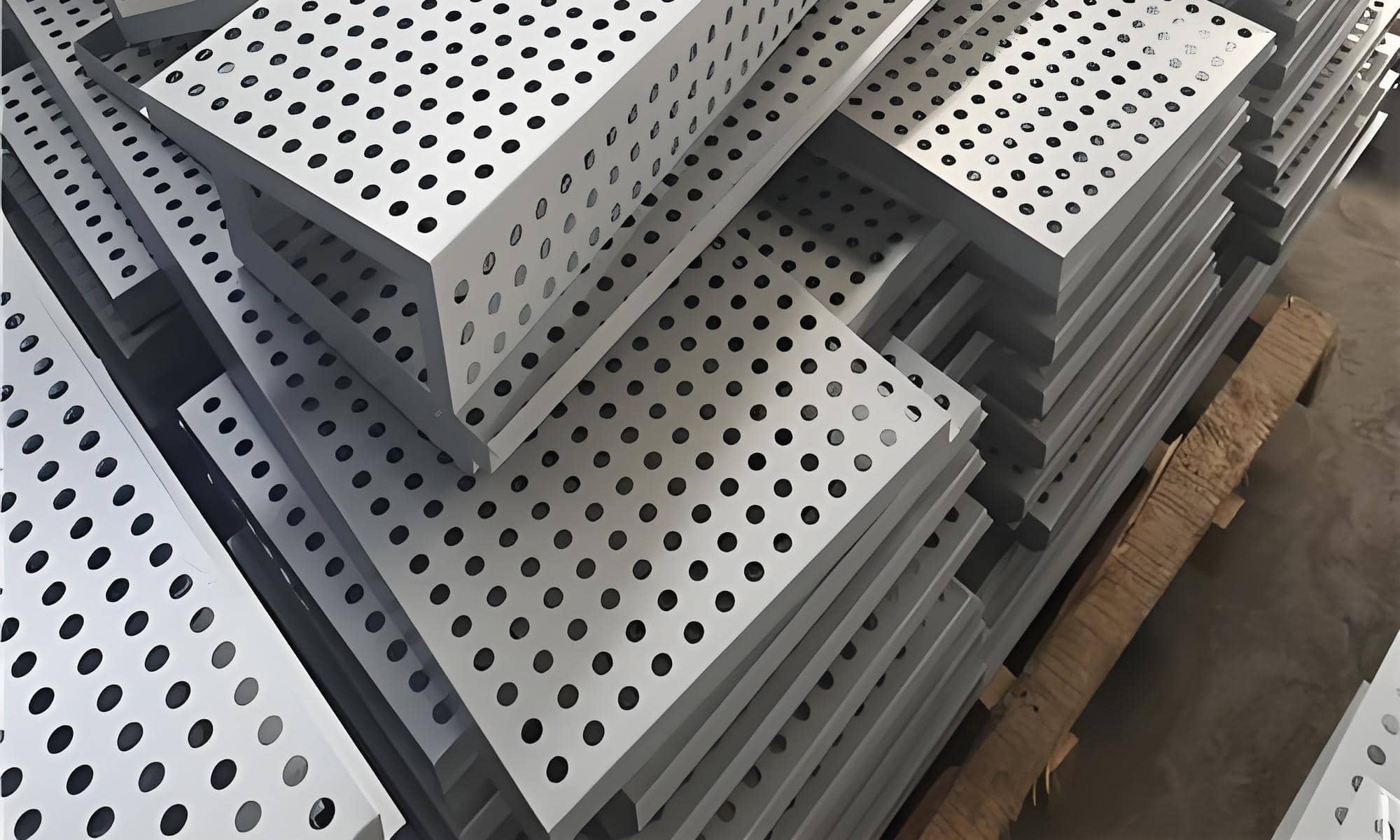
With staggered perforation, holes are offset row by row, creating a more fluid and less rigid visual rhythm. With straight perforation, holes align in clean, orthogonal rows, resulting in a more structured and technical appearance.
For aluminum perforated metal sheets, this distinction matters. Aluminum is frequently chosen not only for its lightweight and corrosion resistance, but also for its visual performance in architectural and exposed industrial applications.

Aluminum Perforated Metal Sheets
Send a Quick Message, We’ll Do the Rest
Tell us what you need. We’ll match the right perforated aluminum sheet and quote it — no back-and-forth.
Fast quote + lead time
Sample before production if needed
Factory direct pricing
Staggered Perforation: Visually Balanced and Widely Preferred
Staggered perforation tends to feel more natural to the eye. Because the holes are offset, the pattern breaks up linear repetition and creates a more balanced surface—especially across large panels.
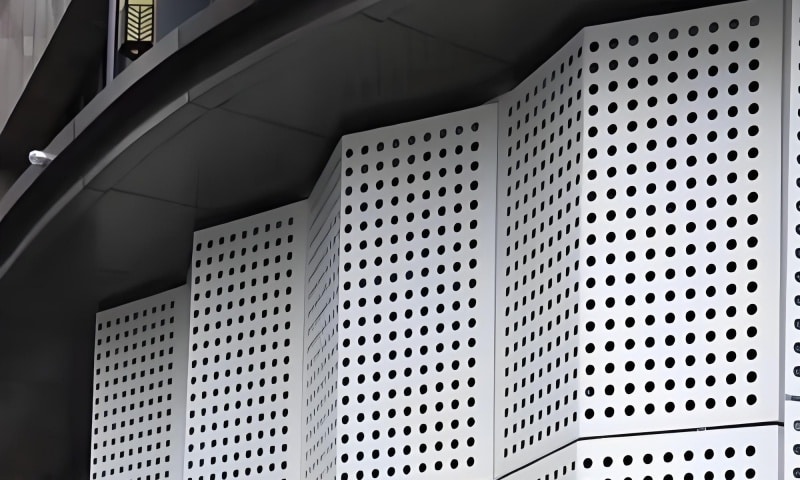
This is one reason staggered perforation is widely used in architectural facades, ceiling panels, sunshades, and decorative screens. It helps reduce visual fatigue and gives the surface a more refined, finished look.
From a design standpoint, it also offers better visual coverage without making the panel feel closed or heavy.
Straight Perforation: Clean, Linear, and Technical
Straight perforation delivers a very different effect. The aligned rows create a clear grid that feels precise and engineered.
This makes it a strong fit for industrial applications such as equipment guards, ventilation covers, and filtration components, where a clean and orderly appearance is preferred.
It also integrates well with structural framing and linear design elements, making alignment and layout coordination more straightforward.

Open Area: A Fixed Advantage of Staggered Perforation
Beyond aesthetics, pattern selection directly impacts performance—especially open area, airflow, and pressure drop.
When hole diameter and pitch are the same, staggered perforation always provides a higher open area than straight perforation. This is not a tendency or approximation—it is a geometric fact based on how the holes are arranged.
Because staggered patterns use a triangular layout, they pack openings more efficiently into the same surface area compared to the square grid used in straight perforation.
Higher open area means:
- Improved airflow and ventilation
- Lower pressure drop across the sheet
- Better light transmission
- More effective acoustic performance in certain applications
This makes staggered perforation the preferred choice for HVAC components, industrial enclosures, acoustic panels, and screening systems where performance matters as much as appearance.
Strength, Edge Distance, and Fabrication Considerations
Hole pattern also affects how the sheet behaves during manufacturing and installation.
The distribution of material between holes influences stiffness, flatness, and structural integrity. While both patterns can be engineered to meet strength requirements, their behavior differs depending on the application.
Staggered perforation distributes stress more evenly across the sheet, while straight perforation creates a highly predictable structure that can simplify alignment and fabrication in certain engineered systems.
For aluminum perforated metal sheets, factors such as alloy, thickness, hole size, pitch, and panel dimensions must all be considered together. Pattern choice should never be made in isolation.
How to Choose for Architectural Applications
In architectural projects, staggered perforation is often the preferred option because of its visual flexibility and higher open area.
Choose staggered perforation when you want:
- A more refined, less rigid appearance
- Better balance between openness and privacy
- Improved airflow and light diffusion
- A modern, design-forward surface
Straight perforation can still work well when the design intent calls for strong geometric alignment or a visible grid structure.

How to Choose for Industrial Applications
For industrial use, the decision often comes down to function, consistency, and integration with other components.
Choose straight perforation when you need:
- Clean alignment with frames and assemblies
- A clearly defined, technical appearance
- Simplicity in inspection and layout
Choose staggered perforation when performance is critical:
- Higher open area for airflow or filtration
- Reduced pressure drop
- Better overall efficiency in ventilation systems
In many cases, even industrial buyers opt for staggered perforation once airflow requirements are clearly defined.
The Bottom Line
The difference between staggered perforation and straight perforation goes beyond appearance.
With the same hole size and pitch, staggered perforation always delivers higher open area—and that directly translates into better airflow and performance.
At the same time, straight perforation offers a cleaner, more structured look that fits well in engineered environments.
The right choice depends on what matters more for your project: visual alignment or performance efficiency. In many aluminum perforated metal sheet applications, the best solution comes from balancing both.
Final Takeaway
Same holes. Same spacing. Different geometry—and different results.
Understanding the difference between staggered perforation and straight perforation early in the design process helps avoid costly changes later and ensures the final product meets both visual and functional expectations.
For deeper specification decisions, it is always worth reviewing pattern options alongside airflow, strength, and fabrication requirements.