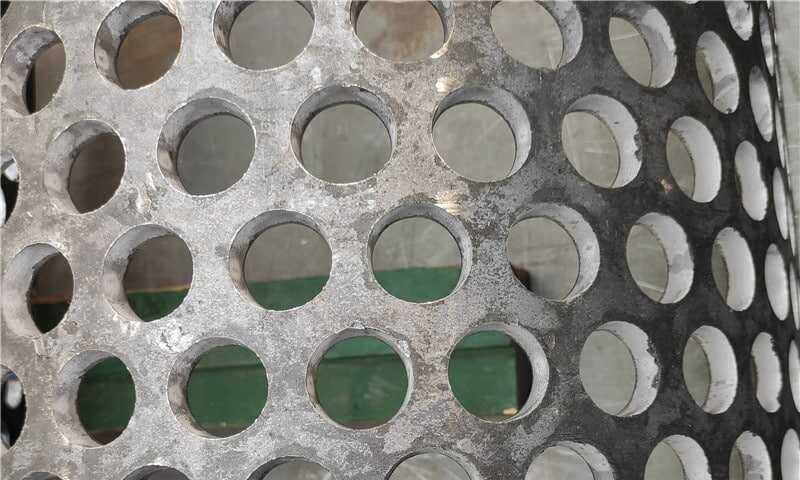
Round Hole Aluminum Perforated Screens are often selected for one simple reason: they need to move air efficiently without sacrificing the mechanical performance of the panel. In HVAC equipment, filtration systems, architectural screens, industrial guards, and enclosure ventilation, the real challenge is not just making holes in metal. It is finding the right balance between open area, airflow, rigidity, and long-term durability.
For B2B buyers, this balance matters because a panel that looks good on paper can still fail in the field if the pitch, hole diameter, or sheet thickness is poorly matched to the application. That is especially true in 60-degree staggered round hole layouts, where small changes in pitch can significantly affect both ventilation performance and structural strength.
Why Open Area Matters in Perforated Aluminum
Open area is the percentage of a sheet surface that is made up of open holes rather than solid metal. In simple terms, more open area usually means better airflow, easier passage for light, and lower resistance to air movement.
That sounds ideal, but open area cannot be treated as the only design target. The more material removed from a sheet, the less metal remains to carry load, resist vibration, and maintain flatness. In real manufacturing and construction environments, that tradeoff is always present.
For Round Hole Aluminum Perforated Screens, the goal is often to maximize airflow while keeping enough metal between the perforations to preserve stiffness. This is why engineers and buyers look closely at hole size, center-to-center spacing, and the layout pattern before approving a specification.
The Role of 60-Degree Staggered Hole Patterns
A 60-degree staggered pattern is one of the most common layouts for round hole perforation. In this arrangement, each row of holes is offset from the next, creating a denser and more efficient packing pattern than straight-line layouts.
This matters for two reasons.
First, staggered layouts typically deliver a higher open area than a comparable straight-row arrangement with the same hole size and pitch. Second, they distribute material more evenly across the sheet, which helps improve performance under load.
In practical terms, a 60-degree staggered pattern can offer a better airflow-to-strength ratio. That is one of the reasons it is widely used in Round Hole Aluminum Perforated Screens for ventilation panels, machine covers, acoustic components, and facade applications.
How Pitch Controls Airflow
Pitch is the distance from the center of one hole to the center of the next hole. It is one of the most important variables in perforated sheet design.
When pitch decreases, holes sit closer together. That increases open area and improves airflow, but it also reduces the amount of solid metal between holes. If pitch becomes too tight, the panel may lose rigidity, deform more easily, or become more difficult to fabricate and install.
When pitch increases, the sheet becomes stronger and more stable, but airflow drops because less of the surface is open.
This is where experience matters. A good specification is not about using the smallest possible pitch. It is about choosing a pitch that matches the panel’s real working conditions. For example, equipment housings may need a different balance than decorative building screens. One is driven by thermal performance and service access. The other may also need visual consistency, wind resistance, and clean architectural lines.
Strength Is Not Just About Thickness
Many buyers assume that thicker aluminum automatically solves the strength problem. In reality, sheet thickness is only one part of the equation.
Panel strength is influenced by:
- hole diameter
- pitch
- stagger pattern
- sheet thickness
- alloy selection
- edge conditions
- finishing and fabrication methods
A thicker sheet with overly aggressive perforation can still perform poorly if the metal ligaments between holes are too narrow. On the other hand, a well-designed perforation pattern can allow a relatively lightweight aluminum sheet to perform reliably in demanding applications.
That is why manufacturers of Round Hole Aluminum Perforated Screens usually work from the full set of technical requirements instead of focusing on one dimension alone.

Choosing the Right Balance for Your Application
Different industries value different outcomes.
In HVAC and industrial ventilation, airflow efficiency is often the first priority. The panel needs to support cooling, air exchange, and pressure management. In these cases, a higher open area may be acceptable if the system does not require heavy structural loading.
In architectural and exterior applications, the panel may need to resist wind load, maintain appearance, and remain flat over larger spans. Here, a slightly lower open area can be the smarter choice because it improves stability and reduces the risk of visible distortion.
In machinery and equipment enclosures, the design must also consider safety, access, and contamination control. The perforated panel may need to provide ventilation while still protecting operators and internal components.
The best Round Hole Aluminum Perforated Screens are not selected by formula alone. They are selected by matching the perforation pattern to the function of the finished product.
Why Aluminum Is a Practical Material Choice
Aluminum is widely used for perforated screens because it combines low weight, corrosion resistance, and good formability. That makes it especially useful in projects where installation efficiency, appearance, or environmental exposure matter.
Compared with heavier metals, aluminum can be easier to handle, transport, and fabricate. It also performs well in applications where corrosion resistance is important, such as outdoor equipment, building envelopes, and ventilation systems.
For buyers evaluating Round Hole Aluminum Perforated Screens, aluminum often delivers a strong value proposition: efficient airflow, manageable weight, and durable performance in one product.
What Buyers Should Ask Before Specifying a Panel
Before placing an order, it helps to define the performance target clearly. A good supplier should be able to discuss:
- required airflow or ventilation target
- expected mechanical load or span
- desired open area percentage
- hole diameter and pitch
- thickness and alloy grade
- finish requirements
- installation method and edge treatment
These details help prevent costly redesigns later. They also make it easier to align the product with the real working environment rather than a generic catalog assumption.
A Practical Design Mindset
The best perforated panel is rarely the one with the highest open area. It is the one that performs consistently in the field.
That is the real value of a well-designed 60-degree staggered round hole pattern. By adjusting pitch with precision, manufacturers can improve ventilation efficiency without giving up too much strength. For engineers, this means better technical control. For procurement teams, it means fewer surprises. For end users, it means a product that does the job without overengineering or premature failure.
When specified correctly, Round Hole Aluminum Perforated Screens deliver a dependable balance of airflow, durability, and clean visual appearance. That balance is what makes them such a practical choice across manufacturing, construction, and industrial design.