Round Hole Perforated Aluminum Sheet: Start with Two Numbers
When buyers ask for a round hole perforated aluminum sheet, the fastest way to move from idea to quotation is usually simpler than they expect. In most cases, you only need to start with two numbers: the hole diameter and the holes on centers.
That is the language fabricators, estimators, and production teams understand right away.
If you give those two numbers clearly, we can usually identify the pattern, estimate the open area, and narrow down the sheet layout much faster. It also reduces back-and-forth, which matters when a project is on a deadline and several teams are waiting on pricing.
What “Holes on Centers” Really Means
Hole diameter is the opening size
The hole diameter is the actual size of each round opening. For example, a 1/4″ hole means the punched opening is 0.250″ across.
Holes on centers is the spacing
“Holes on centers” means the distance from the center of one hole to the center of the next. This is the cleanest way to describe perforated sheet spacing because it tells us the full pattern, not just the opening size.
For a round hole perforated aluminum sheet, these two numbers work together. A 1/4″ hole on 3/8″ centers will behave very differently from a 1/4″ hole on 1/2″ centers, even though the hole size is the same.
Staggered or Straight? That Changes the Pattern
Once the hole size and spacing are known, the next question is pattern layout.
Straight rows
Straight rows line up the holes vertically and horizontally. This is easy to read, easy to specify, and often preferred when the project calls for a clean, orderly appearance.
Staggered rows
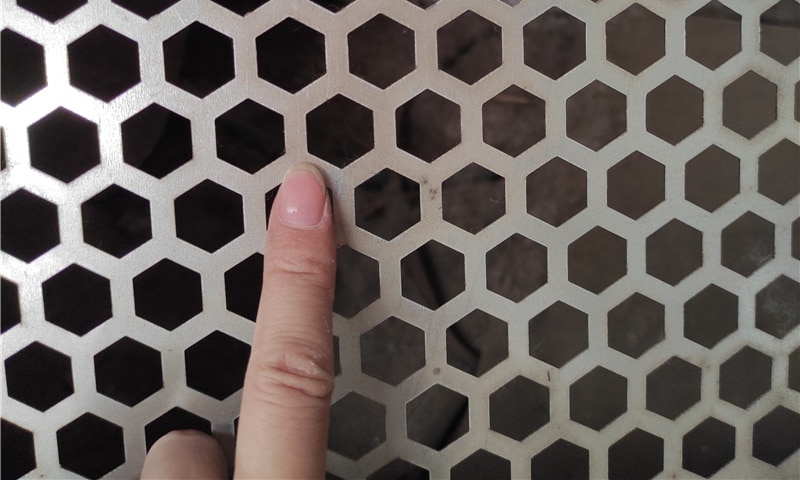
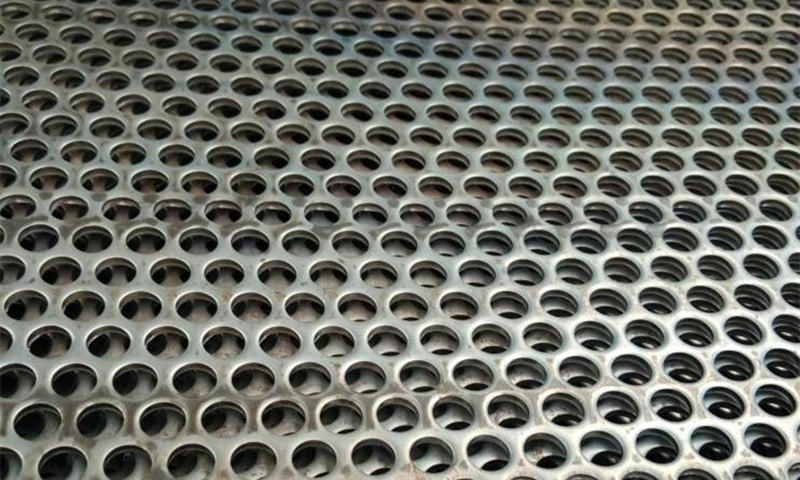
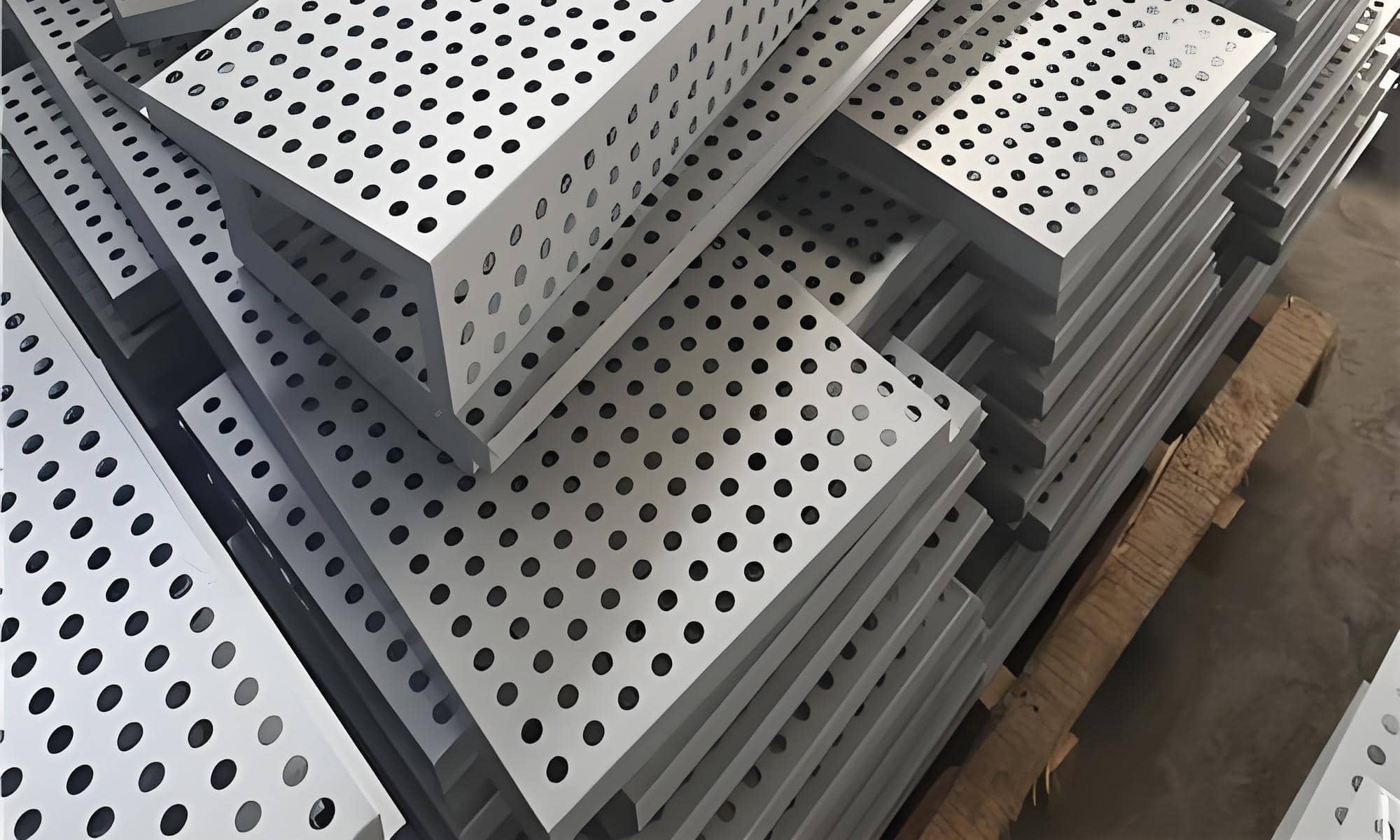
Staggered patterns offset every other row. This usually gives a more balanced open area and can improve the visual feel of the panel. In many architectural and equipment applications, staggered round-hole layouts are the more common choice.
For buyers, the important point is simple: the same hole diameter and center distance can still produce a different look and performance depending on whether the sheet is straight or staggered.

Why Open Area Matters in Real Projects
Open area is not just a catalog number. It affects airflow, light transmission, sound control, screening performance, and even how the finished panel feels in a building or machine enclosure.
That is why engineers often ask for more than a hole size. They want to know how the round hole perforated aluminum sheet will behave in service.
A higher open area may be better for ventilation or drainage. A lower open area may be better when the panel needs more strength, more privacy, or tighter visual screening. In architectural work, the right balance can also influence glare and facade appearance.
Aluminum Is Popular for a Reason
Aluminum remains one of the most practical materials for perforated metal because it combines corrosion resistance, lightweight handling, and good forming characteristics.
For B2B buyers, that usually translates into a few real advantages:
- easier installation on large panels
- lower dead load than steel
- strong performance in many indoor and outdoor environments
- good finish options for architectural and industrial use
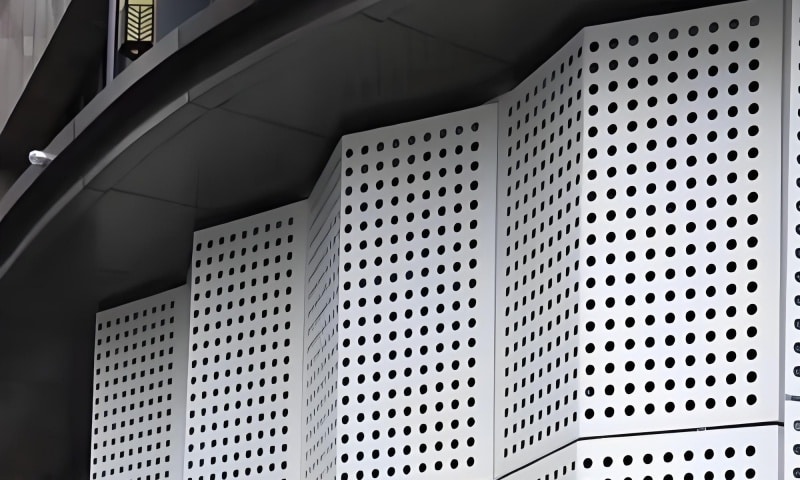
A round hole perforated aluminum sheet is often chosen for equipment guards, HVAC covers, ceiling panels, sunshades, cladding, filtration support, decorative screens, and machine enclosures. The exact application changes the spec, but the reason for choosing aluminum is often the same: it gives designers and fabricators flexibility without adding unnecessary weight.
A Spec You Can Copy and Send
If you only have two numbers, start here:
Round hole perforated aluminum sheet
Hole diameter: 1/4″
Holes on centers: 3/8″
Pattern: staggered
Material: aluminum
Sheet size: as required
Finish: mill finish or specified coating
That format gives sales, engineering, and production teams a practical starting point. If the application has a target open area, airflow requirement, or visual finish requirement, include that too. The more complete the request, the faster the quoting process usually becomes.
What Good RFQs Usually Include
A strong request for quotation does not need to be long. It just needs to be clear.
The minimum details
- hole diameter
- holes on centers
- staggered or straight pattern
- aluminum grade or alloy, if known
- sheet thickness
- sheet size
- finish requirement
- intended application
When these details are included up front, suppliers can recommend the right product faster and avoid misunderstandings later. That is especially important for export orders, repeat production, and projects with tight installation schedules.
Why This Terminology Helps SEO and Sales
Search engines and buyers both respond well to clear product language. A page that uses phrases like round hole perforated aluminum sheet and holes on centers in a natural, useful way helps visitors understand the product without forcing technical jargon.
That matters for B2B content because your audience is usually scanning for one of three things: spec clarity, application fit, or supplier capability. The best product page does all three.
If you are building a catalog page, this kind of explanation also supports trust. It shows that the company understands how perforated metal is actually specified, not just how it is marketed.
Need a Faster Way to Specify the Sheet?
When you are ready to request pricing, send the two numbers first. Then add the pattern, material, thickness, and finish. That simple approach keeps the conversation moving and helps the factory quote the right round hole perforated aluminum sheet the first time.
A clear spec saves time on both sides, and in manufacturing, that is usually where good projects begin.