Why Pitch and Bridge Design Matter More Than Most Buyers Think
When engineers specify a heavy duty perforated plate, they usually start with the obvious questions: What load will it carry? What material should we use? How much open area do we need?
Those are the right questions. But in real-world production, the answer often comes down to something more specific: the relationship between pitch, bridge width, and edge distance.
For heavy-duty applications, perforation is not just about creating holes. It is about controlling how the plate behaves under pressure, vibration, impact, and repeated use. A well-designed pattern keeps the plate strong, stable, and usable over time. A poor layout may look acceptable on paper, but it can weaken the sheet faster than expected once it is installed in the field.
In other words, with a heavy duty perforated plate pitch and bridge design, strength comes first.

Heavy Duty Perforated Plates
Need a custom heavy-duty perforated plate?
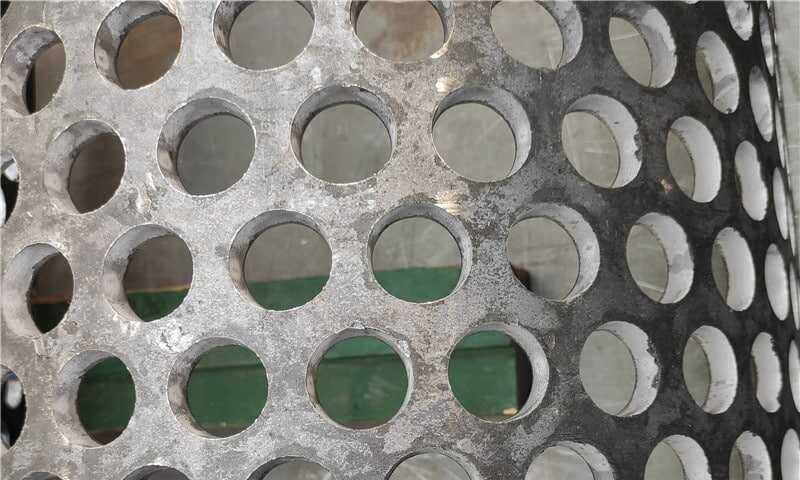
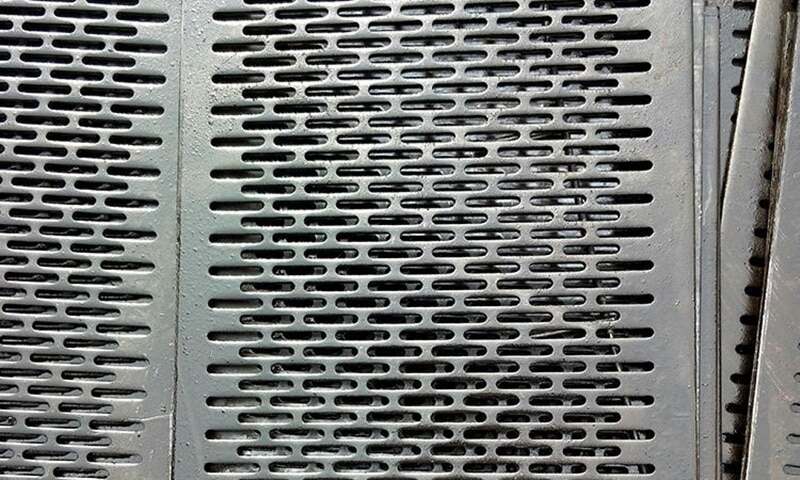
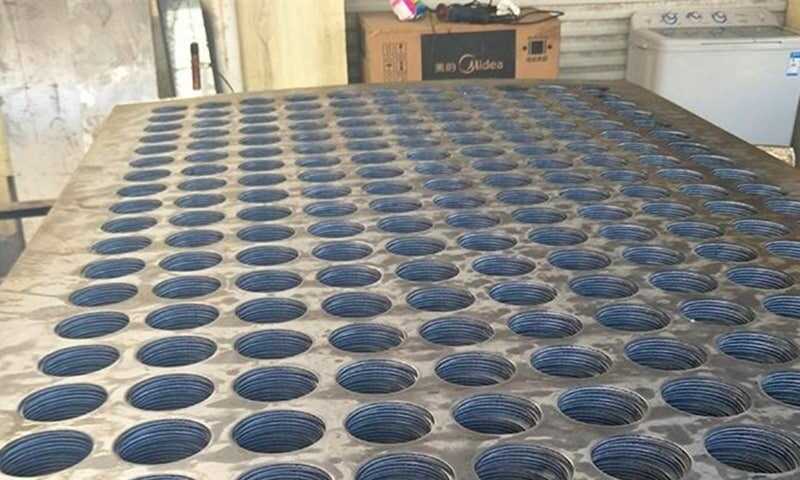
We offer perforated plates with thickness ranging from 2.75mm to 30mm, and up to 6000×1500mm in size, available in round, square, hexagonal, and slotted patterns.
Additionally, we provide precise cutting, surface protection, and other processing services tailored to meet industrial installation requirements.
Feel free to contact us anytime, and we’ll provide a personalized solution that perfectly matches your project needs.
What Pitch, Bridge, and Edge Distance Actually Mean
To make the right design decision, it helps to define the three core terms clearly.
Pitch
Pitch is the center-to-center distance between two adjacent holes. In perforated plate design, pitch directly affects:
- open area
- flow rate
- structural strength
- noise reduction
- resistance to deformation
A tighter pitch usually increases open area, but it also removes more base material. That can reduce stiffness if the layout is not balanced properly.

Bridge Width
Bridge width is the solid metal left between holes. This is one of the most important strength factors in a heavy duty perforated plate.
A wider bridge generally means:
- better load-bearing performance
- improved resistance to cracking
- longer service life in abrasive or high-impact environments
A narrower bridge can increase open area, but it also raises the risk of distortion, especially in large panels or applications exposed to vibration.

Edge Distance
Edge distance is the amount of solid material between the outermost hole and the edge of the plate.
This detail is easy to overlook, but it matters a great deal. If the edge distance is too small, the plate may be more vulnerable to tearing, curling, or installation damage. In heavy-duty use, edge support helps the panel stay flat, secure, and reliable during service.

Straight Row vs. Staggered Pattern
One of the most common design decisions in perforated plate production is whether to use a straight row layout or a staggered layout. Both have their place, but they behave differently.
Straight Row Pattern
A straight row pattern places holes in aligned columns and rows. This creates a clean, orderly appearance and can be easier to inspect and measure.
It is often preferred when customers want:
- simple layout geometry
- predictable spacing
- easier fabrication planning
- a more formal industrial appearance
From a structural standpoint, straight row perforation can provide consistent bridge lines, which may be useful in applications where alignment matters.

Staggered Pattern
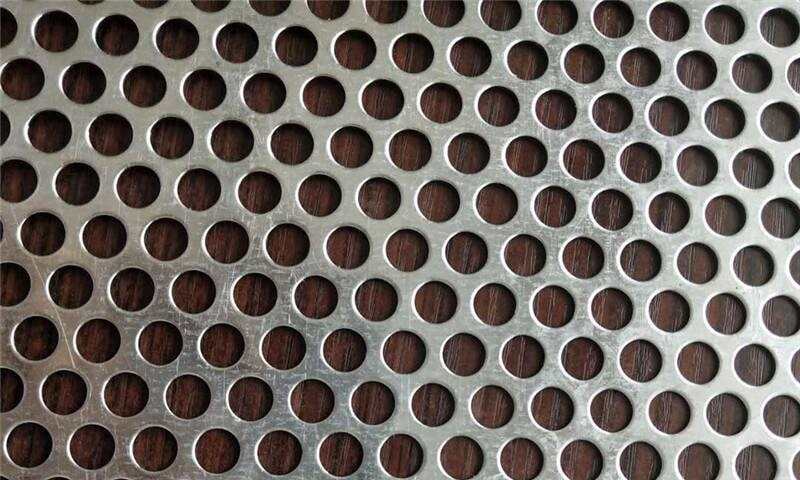
A staggered pattern offsets each row of holes, usually by half a pitch. This creates a denser visual layout and often allows for better distribution of stress across the sheet.
Many engineers prefer staggered perforation for heavy duty perforated plate applications because it can offer:
- stronger overall load distribution
- better balance between strength and open area
- improved resistance to localized weakness
- smoother performance under vibration
In many cases, a staggered layout is the more practical choice when the plate must handle demanding mechanical or environmental conditions.

How to Balance Strength and Open Area
This is where good design really shows.
A perforated plate is always a compromise between maximum open area and mechanical strength. If the holes are too large, too close together, or too aggressive for the base material, the plate may lose the rigidity needed for industrial use.
On the other hand, if the bridges are too wide and the pitch is too conservative, the plate may become stronger than necessary but less effective for airflow, drainage, screening, or noise control.
The best heavy duty perforated plate pitch and bridge design usually depends on the final application:
- For screening and separation, open area may be the priority.
- For flooring, guarding, or structural covers, strength may matter more.
- For acoustic and ventilation uses, the design must balance both performance and durability.
That is why experienced manufacturers do not treat perforation as a one-size-fits-all product. They match the hole pattern to the mechanical demands of the job.
Material Choice Also Changes the Equation
Pitch and bridge design do not work in isolation. Material thickness, alloy selection, and plate size all affect performance.
A thicker sheet can tolerate a more open perforation pattern than a thinner one. A stronger alloy may support tighter spacing under load. A larger panel may need wider bridges or better edge control to maintain flatness during handling and installation.
This is one reason B2B buyers should look beyond the hole size alone. Two perforated plates can share the same hole diameter and still perform very differently in the field if the pitch, bridge width, and edge distance are not designed with the same level of care.
What B2B Buyers Should Ask Before Ordering
If you are sourcing heavy-duty perforated plates for industrial use, these are the questions worth asking early:
- What is the required load or wear condition?
- Is airflow, drainage, screening, or protection the main function?
- Should the pattern be straight row or staggered?
- What bridge width is needed for durability?
- How much edge distance is required for safe fabrication and installation?
- Will the plate be exposed to vibration, impact, or corrosion?
The more clearly these points are defined, the easier it is to produce a plate that performs consistently and ships with fewer revisions.
Strength-First Design Creates Better Results
In heavy-duty perforated metal, attractive geometry is not enough. The plate has to work in the real world, where machines vibrate, materials wear down, and installations are rarely perfectly gentle.
That is why heavy duty perforated plate pitch and bridge design should always be approached from a strength-first perspective. When pitch, bridge width, and edge distance are properly balanced, the result is a plate that is easier to trust, easier to install, and better suited to long-term industrial service.
For engineers, fabricators, and procurement teams, that balance is what turns a perforated sheet into a dependable working component.