Metric vs. Imperial: Why Quoting Mistakes Still Happen
In carbon steel perforated panels, most quoting mistakes do not come from the material itself. They come from the language used to describe it.
One customer says “0.25-inch holes.” Another says “6 mm holes.” A third sends a drawing with 16 gauge sheet thickness, but the panel width is listed in millimeters. On paper, each request looks clear enough. In practice, these mixed units can create expensive assumptions about tooling, layout, yield, and final fit.
For B2B buyers, especially in fabrication, construction, HVAC, and industrial equipment, the safest approach is simple: use one measurement system from the first RFQ to the final approval.
The Real Problem: Mixed Units Create Mixed Expectations
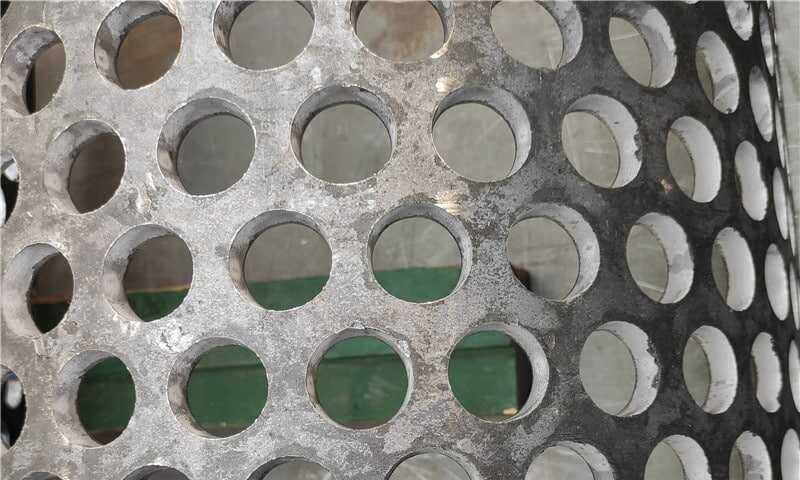
A perforated sheet is not just a flat panel with holes. It is a coordinated set of specifications:
- base material
- thickness
- hole shape
- hole diameter
- center-to-center pitch
- stagger or straight pattern
- open area
- overall panel size
- tolerance
- finish or coating
When metric and imperial units are mixed inside the same request, the chance of misunderstanding rises fast. A 1/4-inch hole is not a 6 mm hole. A 14 gauge carbon steel sheet is not the same as a 2.0 mm sheet. Even small differences can affect press setup, visual appearance, airflow, strength, and material usage.
For buyers, the issue is not just accuracy. It is quote consistency. If two suppliers interpret the same mixed-unit request differently, you are no longer comparing the same product.
Gauge vs. Millimeters: Where Confusion Starts
Gauge is one of the most common sources of confusion in carbon steel perforated panels.
The problem is that gauge is not a direct thickness measurement in the way millimeters are. It is a nominal sheet reference that can vary by material type and industry convention. In purchasing conversations, people often use gauge as if it were universal. It is not.
That is where quoting errors begin.
A customer may ask for “16 gauge carbon steel perforated sheet” and also specify “1.5 mm hole diameter” and “48-inch width.” The supplier then has to determine whether the thickness is truly the intended priority, whether the hole size was written in metric because of a local standard, and whether the panel width must remain imperial for equipment compatibility.
The safest quoting habit is to define thickness in millimeters or inches, not both. If gauge is used, it should be paired with an exact thickness value and confirmed before pricing.
Hole Diameter and Pitch: Two Specs That Must Stay in the Same Language
For perforated metal, hole diameter and pitch are often the most important dimensions on the drawing.
Hole diameter tells you the actual opening size. Pitch tells you the spacing from one hole center to the next. Together, they control open area, airflow, weight reduction, sound attenuation, and appearance.
If hole diameter is listed in inches but pitch is listed in millimeters, the result can be a panel that technically matches neither side’s assumption. That can lead to:
- a different open area than expected
- inconsistent visual rhythm across the sheet
- tooling limitations during production
- avoidable re-quotation
For carbon steel perforated panels, hole diameter and pitch should always be written in the same system. That one habit alone prevents a surprising number of ordering errors.

The Fastest Way to Reduce RFQ Back-and-Forth
The fastest way to avoid quoting delays is to choose one measurement language before sending the inquiry.
If your project is based in North America, imperial may be more natural for the purchasing team. If the engineering team works from metric drawings, millimeters are usually cleaner. The key is not which system you choose. The key is consistency.
A good RFQ should not force the supplier to translate every line item. The more translation required, the more room there is for error.
A Practical Communication Checklist for Buyers
Before sending an RFQ for carbon steel perforated panels, use this checklist:
1) Confirm one unit system
Choose either metric or imperial for the entire request.
2) State thickness clearly
Use mm or inches, and avoid relying on gauge alone.
3) Match hole diameter and pitch
Keep both dimensions in the same system.
4) Define the pattern
Straight line, staggered, or custom arrangement should be stated clearly.
5) Include the sheet size
Overall length, width, and trim allowance matter for production and installation.
6) Note the tolerance requirement
If tight fit-up matters, say so early.
7) Identify the end use
Airflow, screening, acoustic control, façade, machine guarding, or decorative use all affect the recommended specification.
8) Attach a drawing when possible
A simple sketch or CAD file can eliminate most interpretation problems.
Why This Matters in Real Production
A perforated panel is not quoted in isolation. It is produced for a job site, machine, enclosure, façade, or system integration. That means every small spec affects downstream work.
If a buyer orders the wrong thickness because gauge was assumed incorrectly, the panel may fail structural expectations. If hole pitch is misunderstood, the open area may not meet ventilation or acoustic targets. If the panel width is written in millimeters but read as inches, the entire nesting plan can be thrown off.
In other words, unit clarity is not a paperwork issue. It is a production issue.
What Experienced Suppliers Look For
An experienced supplier will usually ask follow-up questions when a request mixes systems. That is not a delay. It is a sign of good manufacturing discipline.
The best suppliers want to confirm:
- exact thickness
- exact hole size
- exact pitch
- exact sheet dimensions
- required flatness or forming allowance
- whether the panel is for laser cutting, punching, or downstream fabrication
If a supplier does not ask clarifying questions, that may feel faster at first. It is often more expensive later.
Keep the Drawing Simple, the Quote Cleaner
The cleanest RFQs are rarely the most detailed. They are the most consistent.
For carbon steel perforated panels, one measurement language, one drawing standard, and one clear set of tolerances usually lead to:
- faster quoting
- fewer revisions
- fewer production misunderstandings
- better price comparison across suppliers
That is why many experienced buyers treat unit consistency as part of procurement discipline, not just drafting preference.
Final Takeaway
If your project uses carbon steel perforated panels, the easiest way to avoid quoting errors is to stop mixing systems inside the same request.
Use metric or imperial, but do not split the difference. Keep hole diameter and pitch in one language. State thickness clearly. Add a drawing. Then ask for the quote.
That small habit saves time, reduces corrections, and helps both sides talk about the same panel from the start.