Introduction — standards vs. real-world performance
Calling out material standards is comforting: SS400 (a common JIS-grade mild steel) tells you about chemical composition and base mechanical properties. But in the world of perforated metal, the material is only half the story. The hole pattern—diameter, pitch, open area, edge margin and punch direction—drives stiffness, flatness, stability under load, and even downstream finishing costs. For B2B buyers in construction, HVAC, manufacturing, and architectural facades, knowing this distinction saves money and avoids late-stage headaches.
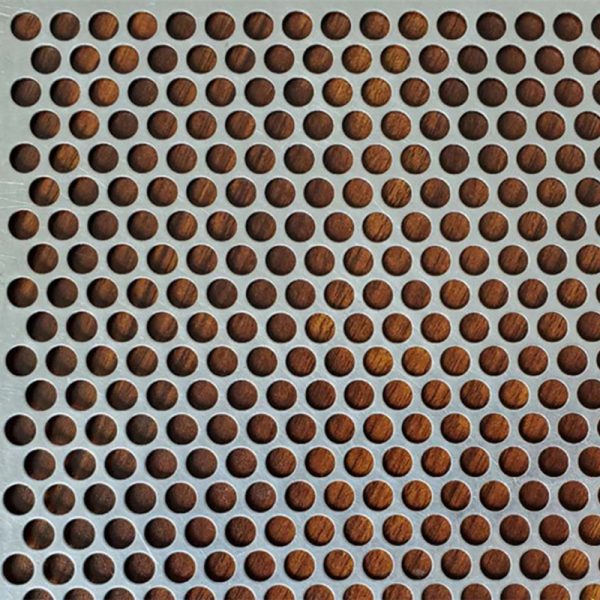
Carbon Steel Perforated Metal Sheets
We work with buyers and engineers who need carbon steel perforated sheets that are practical to manufacture and reliable in use.
If you’re preparing an RFQ or want to confirm specifications before sourcing, a short conversation often saves time on both sides.
Contact us via WhatsApp to talk through the details:
Why hole pattern dominates behavior
Open area and stiffness
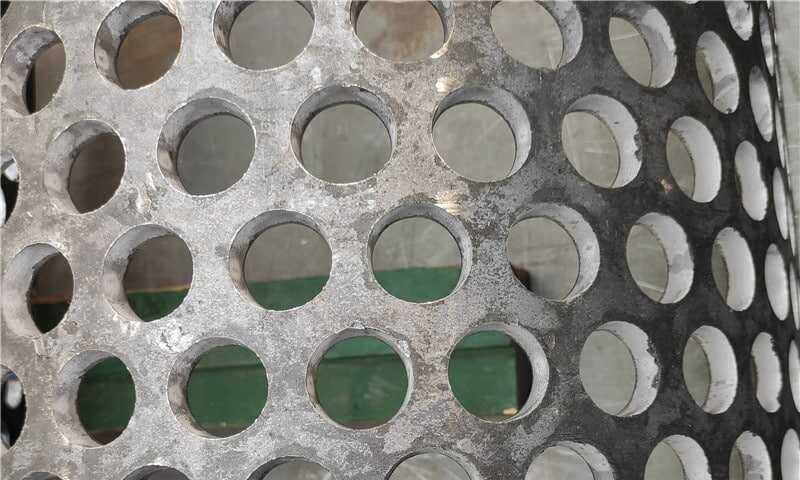
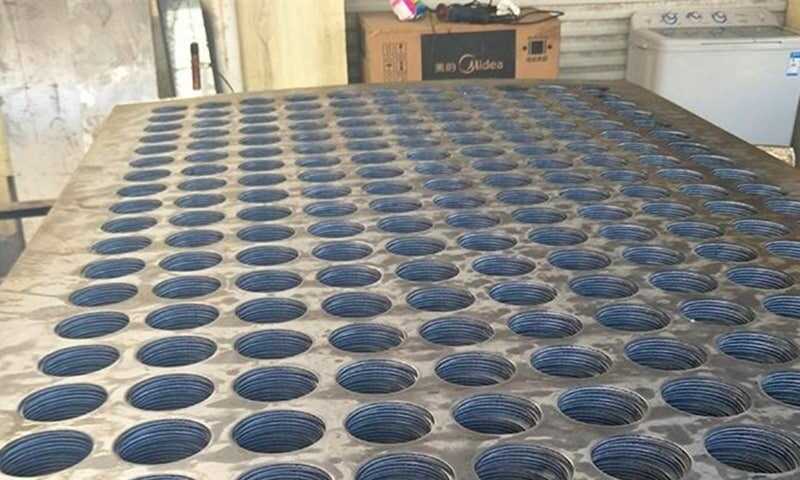
Two panels made from the same SS400 perforated carbon steel sheet and identical thickness can behave very differently if open area differs. Open area (the percentage of cut-out versus intact metal) controls effective stiffness: higher open area reduces bending rigidity and raises the risk of sagging or buckling under even modest loads. When your design leans on a mild steel perforated sheet for structural support, always verify that the open area is compatible with the anticipated loads.
Hole spacing, punch direction, and stress concentration
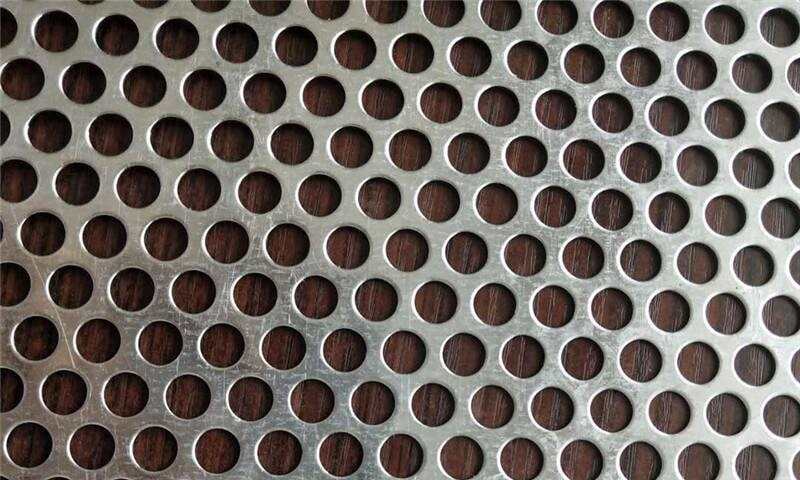
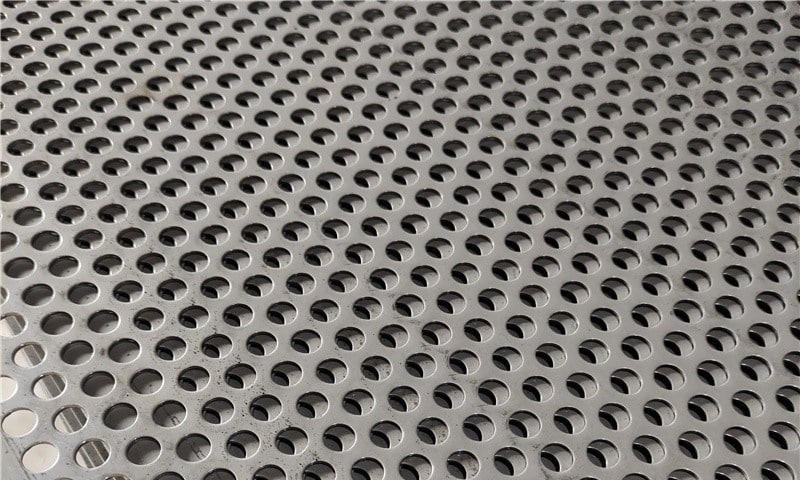
Pitch (center-to-center spacing) and whether holes are staggered or aligned change load paths through the sheet. Close spacing concentrates stress in the remaining ligaments and can cause localized tearing during forming or under fatigue. The punched carbon steel sheet’s punch direction and die clearance also affect burr formation—poor clearance raises burr height and creates assembly/interference issues.
Edge margin and panel integrity
Margins matter. Too-small edge margins (distance from hole center to plate edge) can produce cracked edges, asymmetric deformation during punching, and weakened attachment points. In practice, maintain adequate edge margins relative to hole diameter and sheet thickness—this is often a multiple of the hole diameter, and when in doubt, choose conservative margins or add stiffening at edges.
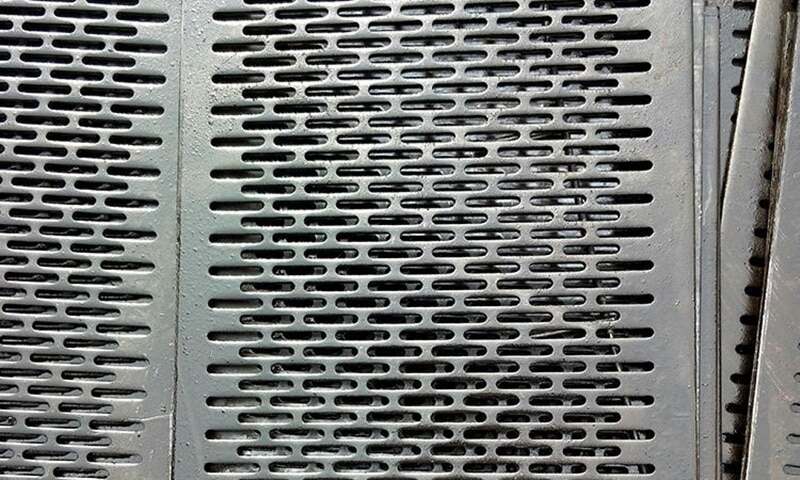
Common failure modes I’ve seen — and how to avoid them
Warping and out-of-flatness
Symptom: a “flat” perforated panel arrives bowed or shows oil-canning under light loads.
Root causes: excessive open area, uneven punching sequences, or thermal stresses from downstream processes.
Mitigation: reduce open area where flatness is critical; specify symmetric patterns or alternating punch sequences; consider post-processing flattening or supporting stiffeners.
Burrs, sharp edges, and poor fit
Symptom: parts won’t assemble cleanly, or the end customer complains about sharp burrs.
Root causes: incorrect die clearance, dull tooling, or insufficient deburring.
Mitigation: define acceptable burr heights in the drawing; specify tumble/vibratory deburring or light grinding; for architectural projects, consider secondary finishing (shot blast + oiling or galvanizing).
Dimensional drift during finishing
Symptom: holes shift or panel dimensions change after galvanizing or painting.
Root causes: coating baths, high-temperature processes, or inconsistent fixture points.
Mitigation: design with post-finish tolerances in mind; use fixtures that clamp at multiple points; discuss thermal effects with your finishing vendor.
Practical guidelines for engineers and buyers
Design-first checklist
- State required open area (%) and maximum allowable deflection.
- Specify minimum edge margin as a multiple of hole diameter—when in doubt, use ≥ 1.5× hole diameter for mild steel perforated sheet designs that will be loaded near edges.
- Call out hole pattern (staggered vs. straight), pitch, hole diameter tolerance, and perpendicularity tolerance for punched carbon steel sheet.
- Define acceptable burr height and deburring method on the drawing.
Manufacturing notes (what to ask your supplier)
- Punch vs. laser: for tight tolerances and minimal thermal effects, CNC punching is economical for standard patterns; laser is better for complex or low-volume shapes but can thermally affect edges.
- Tooling condition: request recent tooling-change records if burr control is important—dull tooling is a silent cause of scrap and rework.
- Batch tracing: ask for batch/coil traceability for material certification (important for E-E-A-T and procurement audits).
Market & cost trade-offs — the buyer’s lens
Cost is not just price per square foot
A sheet with very high open area may be cheaper per kg of steel removed, but the downstream costs—warping correction, added stiffeners, more robust framing, more deburr work—often outweigh initial savings. For B2B procurement, run a simple total-cost comparison that includes finishing, assembly time, and potential rework.
Lead time and scaling
Standard punched patterns produced from SS400 perforated carbon steel sheet scale well and are fast; custom dies or uncommon hole geometries can add lead time and tooling cost. If you plan repeat orders, negotiate die ownership or amortized tooling fees into the quote.
Deburring and finishing — don’t tack them on as an afterthought
Deburring options (manual filing, tumbling, vibratory finishing, or machining) have different costs and outcomes. For architectural or customer-facing panels, a consistent, low-burr finish is non-negotiable. For utility screens or HVAC panels where function leads, a lighter deburr followed by a protective coating (oils, zinc, or paint) may be sufficient.
Quick-spec summary (for procurement sheets)
- Material: SS400 perforated carbon steel sheet (specify thickness and certificate requirement).
- Hole pattern: diameter, pitch, staggered/straight, open-area% (required).
- Edge margin: state minimum (e.g., ≥ 1.5× hole dia. as conservative starting point).
- Maximum flatness deviation: specify mm/inch per length.
- Burr tolerance and deburring method.
- Finish: none / oil / galvanize / paint (include post-finish dimensional allowances).
Closing—standards don’t argue with physics
Standards like SS400 help you pick the right base material, but they won’t stop a panel with an aggressive hole pattern from sagging, distorting, or shredding at the edges. Successful projects treat the perforation pattern as a core engineering variable—one you design for, verify in prototypes, and document in purchase specifications. If you need a short checklist I use with clients (open area target, edge margin, burr spec, finishing route), tell me your panel size and intended use and I’ll convert it into a one-page spec you can add to RFQs.