After two decades working with contractors, fabricators, and specification teams, I can say size is one of the single biggest cost-and-performance drivers for perforated aluminum. The same pattern and gauge that’s inexpensive in a standard sheet can become expensive once you start asking for odd lengths, oversized widths, or many custom cut-to-length pieces. Below I walk through practical size choices, the cutting allowances we use, what creates extra cost and risk, and packaging/shipping tips that save money and headaches.

Aluminum Perforated Metal Sheets
Send a Quick Message, We’ll Do the Rest
Tell us what you need. We’ll match the right perforated aluminum sheet and quote it — no back-and-forth.
Fast quote + lead time
Sample before production if needed
Factory direct pricing
Common size notations and what “standard” looks like
Typical sheet footprints
In the U.S. market, buyers most often request sheets in familiar footprints because they nest well, minimize scrap, and fit standard racks:
- 48 × 96 inches (≈1220 × 2440 mm) — very common for panels and interiors.
- 60 × 120 inches (≈1524 × 3048 mm) — used when larger spans are needed with fewer seams.
- Cut-to-length blanks from mills: customers order coils slit & flattened to specific widths that become sheets.
These sizes are “practical” because they match coil widths and common processing equipment. If your design calls for many panels larger than these, consider panel butt-joins or welded seams — they’re typically cheaper than special rolling or custom mill runs.
Thickness and perforation interaction
Sheet gauge (thickness) affects the usable perforated aluminum sheet size because thicker material resists deformation but needs more aggressive tooling. For the same hole pattern, 0.063″ (1.6 mm) works differently than 0.125″ (3.2 mm) — expect small changes in minimum edge distance and bend radius after perforation.

Cutting allowance and edge zones: how much to leave
Cut-to-length realities
When you ask for cut to length perforated aluminum, remember the machine needs “grip” and the perforation near an edge can cause tearing or burring. Our typical internal rules:
- Leave at least 3–10 mm (≈1/8″–3/8″) of unperforated margin for clean shearing depending on hole size and gauge.
- For fine patterns (small holes, tight pitch) we recommend a larger margin—small holes near the edge increase the chance of distortion.
- If you need a flush perforation to the edge, we can form a clean hem or add a mounting flange but that adds processing time and cost.
Kerf and squareness
Shearing/laser/punch cutting introduces kerf (material removed) and possible small dimensional changes. We dimension parts to finished size and quote accordingly, but tight tolerances (< ±0.5 mm) will increase cost.
Oversize: risks and cost drivers for super-wide or super-long sheets
What makes a sheet “expensive”
- Oversized sheets that exceed standard coil or press bed widths require special runs, re-rolling, or splicing — all of which add to lead time and price.
- Extremely long pieces are harder to handle without sag and can require multi-person handling, specialty fixtures, or transport permits for oversized loads.
- Very fine perforations across very wide sheets increase scrap and tooling wear.
Practical advice
If your project needs long uninterrupted spans, consider specifying stiffening ribs, thicker gauges, or using multiple narrower panels joined on-site. Often that approach reduces total installed cost and logistics risk.
Packaging and transport — the parts people forget about
How packaging influences delivered condition
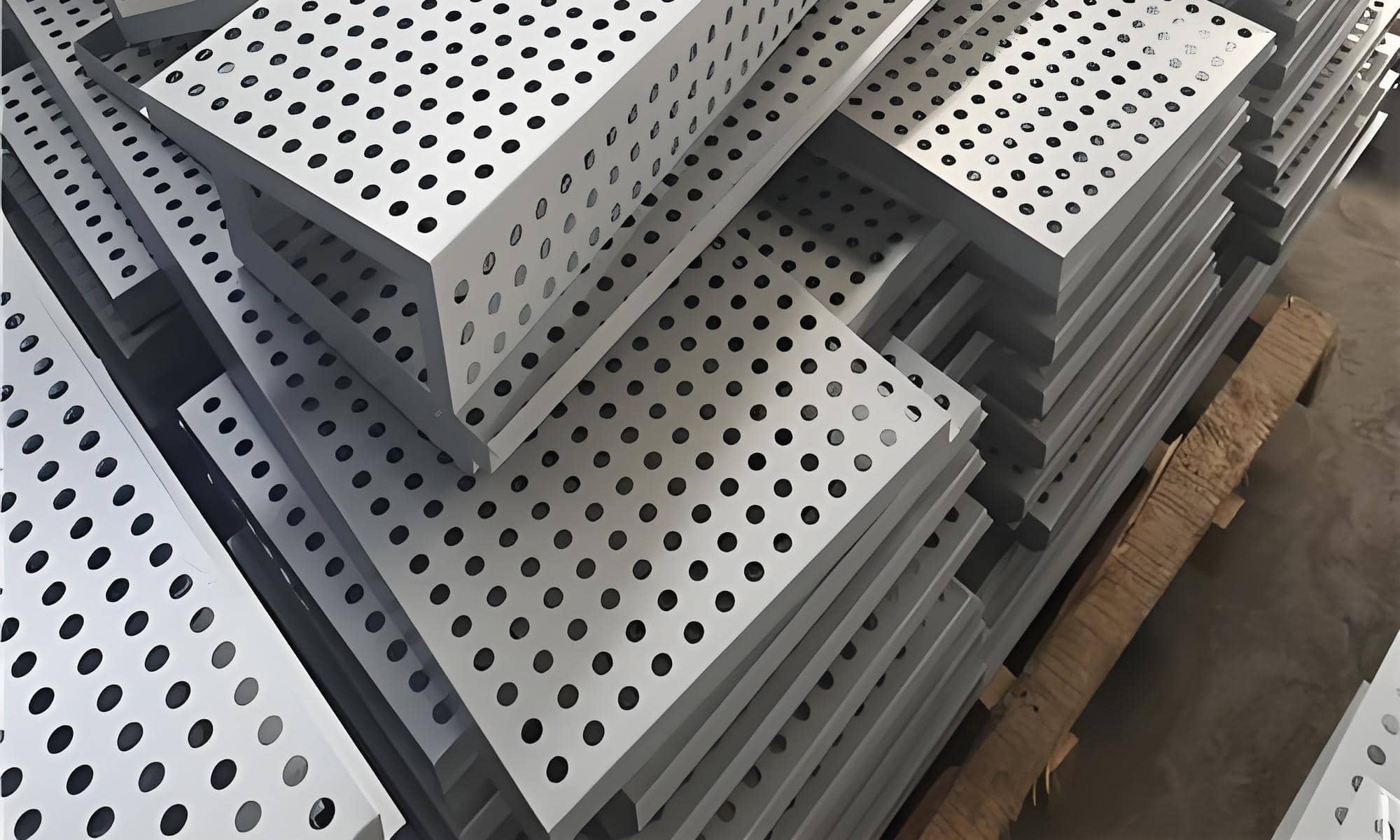
Perforated sheets dent and warp more easily than solid sheet because of reduced stiffness. Good packaging practices we use and recommend:
- Edge protection (corner boards, angle iron) to prevent crushing.
- Palletizing with cross-stacked dunnage to avoid point loading.
- Protective film only when sheets are fully deburred and cleaned — film can trap moisture on certain alloys.
- For overseas or long-haul shipments, crating with sealed edges prevents salt spray or condensation damage.
Freight and handling notes
Oversized panels often move as specialized freight (flat racks, flatbeds). That raises cost and exposure to damage. If your site has lift or clearance limits, tell us up front so we can quote packaging and delivery options that match site logistics.

Quick checklist for writing specs (save time & cost)
- Specify final perforated aluminum sheet size as finished dimensions (not “cut + kerf”).
- Call out gauge, alloy, and surface finish (e.g., 5052-H32, mill finish, anodized).
- State whether holes must run to the edge or require a margin/hem.
- If you need many pieces cut to length, ask for a panelization plan — we’ll optimize nesting to reduce scrap.
- Include installation constraints (lift capacity, transport width limits) so packaging is correct the first time.
Final note from the shop floor
We’ve seen projects where a modest change in the drawing — adding a 1/4″ unperforated margin, or splitting a 10-ft panel into two 5-ft panels — cut the fabrication and freight bill dramatically. Small specification adjustments up front often save more than the raw material cost. If you’d like, our team will review drawings and suggest pragmatic size tweaks to keep your project on budget and on schedule.
For more technical details or to link into product specs, see our perforated aluminum sheet product page.