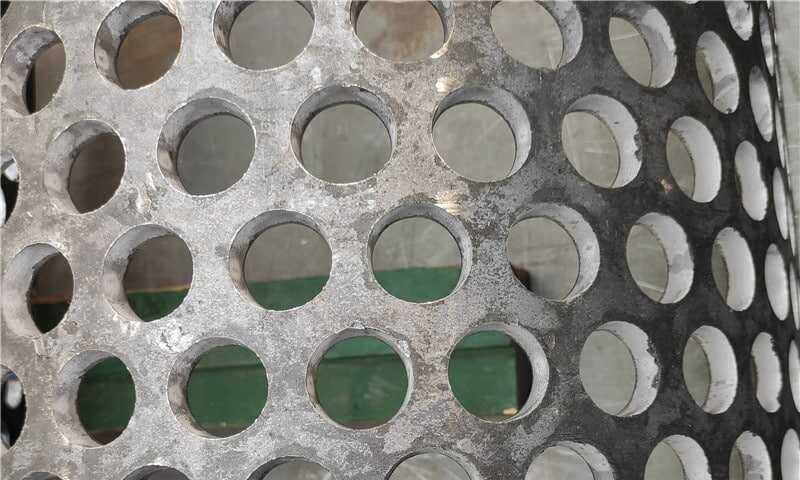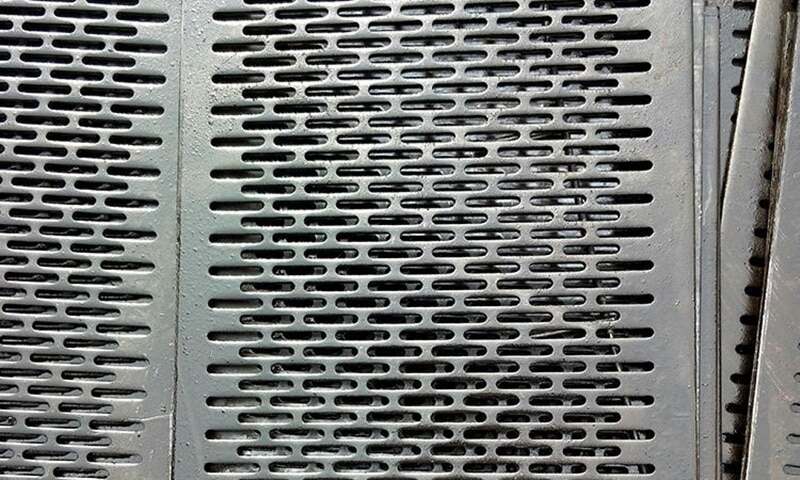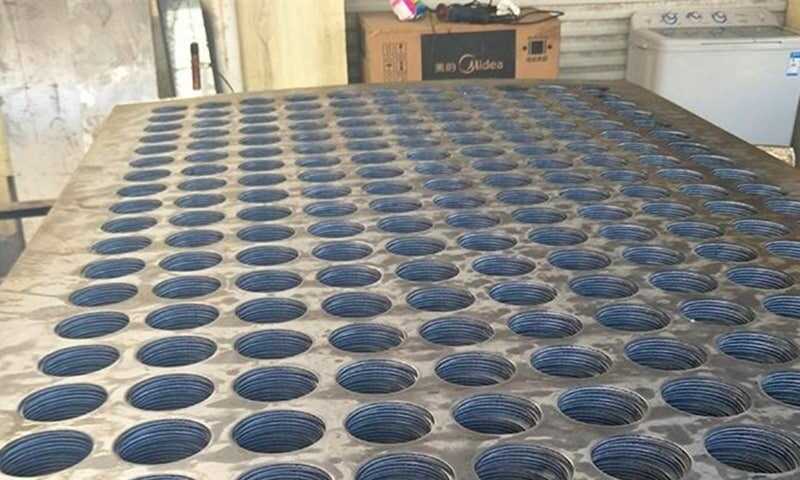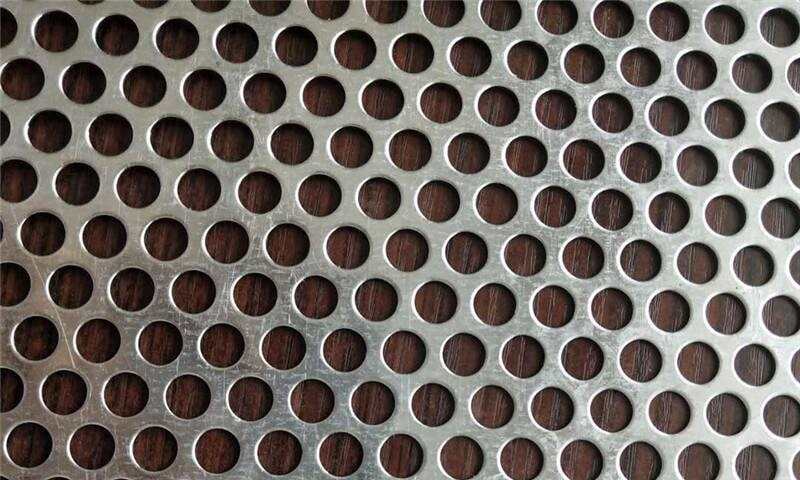
In North America, A36 is often the default answer when carbon steel is involved. We see it in structural frames, brackets, machine bases, platforms—and naturally, in carbon steel perforated plate and sheet applications.
But here’s the practical question many buyers don’t ask:
Does your perforated sheet really need to be specified as ASTM A36 perforated carbon steel sheet… or is “carbon steel + thickness” enough?
After years in CNC punching and supplying perforated metal to OEMs, fabricators, and contractors, we’ve learned that over-specifying can slow down sourcing just as much as under-specifying.
This article is written specifically for North American procurement teams and engineers who want to keep RFQs technically accurate—without making them unnecessarily restrictive.
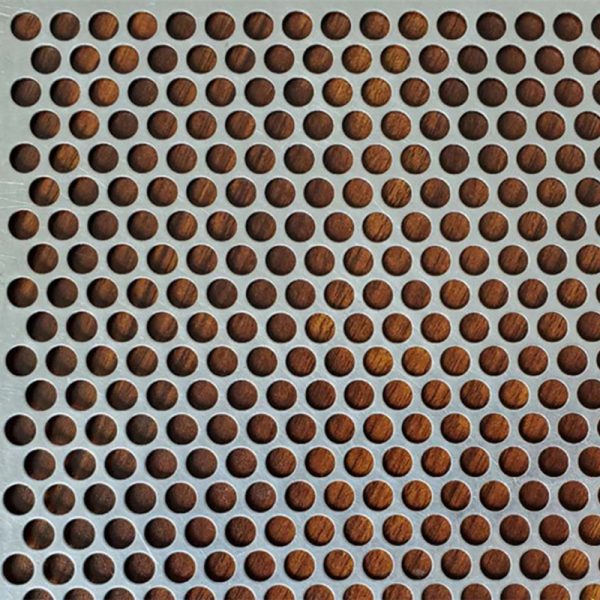
Carbon Steel Perforated Metal Sheets
We work with buyers and engineers who need carbon steel perforated sheets that are practical to manufacture and reliable in use.
If you’re preparing an RFQ or want to confirm specifications before sourcing, a short conversation often saves time on both sides.
Contact us via WhatsApp to talk through the details:
When Specifying ASTM A36 Makes Sense
Let’s start with where ASTM A36 perforated carbon steel sheet is absolutely appropriate.
Structural or Load-Bearing Applications
If the perforated metal will be:
- Used as a structural infill
- Supporting measurable loads
- Integrated into a structural assembly
- Inspected under building code compliance
Then specifying ASTM A36 is meaningful.
A36 provides defined minimum yield strength (36 ksi), chemical composition limits, and standardized mechanical properties. For engineers signing off on safety compliance, that matters.
In industrial platforms, walkway panels, screening systems integrated into frames, or architectural facades tied into structural steel systems—A36 provides documentation traceability and predictable performance.
Projects Requiring Formal Documentation
If your contract requires:
- Mill Test Report (MTR)
- Heat number traceability
- Material certificate perforated sheet documentation
- Third-party inspection
- Government or municipal compliance
Then naming the grade removes ambiguity and protects everyone downstream.
When “Carbon Steel + Thickness” Is Enough
Here’s where we see RFQs get overcomplicated.
For many fabrication-based applications, especially:
- Decorative panels
- Machine guards
- Ventilation covers
- Filtration baskets
- Acoustic panels
- Enclosures and cabinets
The mechanical demands are driven more by thickness and open area than by slight grade differences.
In these cases, specifying:
- Carbon steel
- Thickness (e.g., 11 gauge, 3.0 mm, etc.)
- Hole size and pattern
- Open area requirement
- Flatness tolerance
is often sufficient.
Most commercial carbon steel perforated plate in this category already meets comparable mechanical properties suitable for fabrication, bending, or powder coating.
Adding ASTM A36 unnecessarily may:
- Limit material sourcing flexibility
- Increase cost
- Extend lead times
- Trigger certificate requirements that aren’t truly needed
We always encourage buyers to align the specification with the real engineering requirement—not just habit.
Understanding the Role of Material Certificates in Perforated Sheet Projects
The topic of material certificate perforated sheet supply is frequently misunderstood.
A mill test report (MTR) confirms the base coil or plate chemistry and mechanical properties before perforation. Once the sheet is punched, it is no longer identical to the original plate in mechanical behavior—because perforation reduces cross-sectional area.
That’s an important engineering reality.
What an MTR Does
- Confirms compliance to ASTM A36 (or other grade)
- Provides heat number traceability
- Documents chemical composition
- Confirms minimum yield and tensile strength
What an MTR Does Not Do
- It does not certify structural performance after perforation
- It does not guarantee flatness after punching
- It does not account for forming or welding
Engineers should consider perforation pattern, ligament width, and open area when evaluating performance—not just base grade.

Thickness Often Matters More Than Grade
In real-world CNC punching operations, performance is often governed by:
- Gauge
- Hole diameter
- Pitch
- Percent open area
- Edge margin
For example, a 10-gauge carbon steel perforated plate with 30% open area will behave very differently from a 14-gauge sheet with 50% open area—regardless of whether both are A36.
That’s why experienced suppliers ask clarifying questions during RFQ review. Not to complicate your purchase—but to ensure the sheet performs the way your design expects.
Keeping RFQs Practical and Engineer-Friendly
If you’re sourcing perforated metal for North American projects, here’s a simple way to decide:
Specify ASTM A36 When:
- The sheet is structural
- Code compliance is required
- Full traceability is required
- Project documentation mandates it
Specify “Carbon Steel + Thickness” When:
- Application is non-structural
- It will be fabricated or formed
- The design is performance-based (thickness-driven)
- Budget and lead time are sensitive
Clear drawings, realistic tolerances, and an honest discussion of application always lead to better outcomes than simply adding more standards to a specification.
Final Thought: Clear Specs Build Strong Supply Chains
The goal is not to minimize specifications—it’s to make them relevant.
At the purchasing level, clear alignment between engineering intent and material grade avoids friction in quoting, production, inspection, and logistics.
We’ve supported OEMs, fabricators, and construction firms across North America who needed both full-traceability ASTM A36 perforated carbon steel sheet and straightforward commercial carbon steel perforated plate. Each has its place.
The difference lies in understanding why you’re specifying it.
If your next project requires support evaluating whether a material certificate perforated sheet is necessary—or simply thickness control—we’re always ready to provide practical input before you finalize the RFQ.