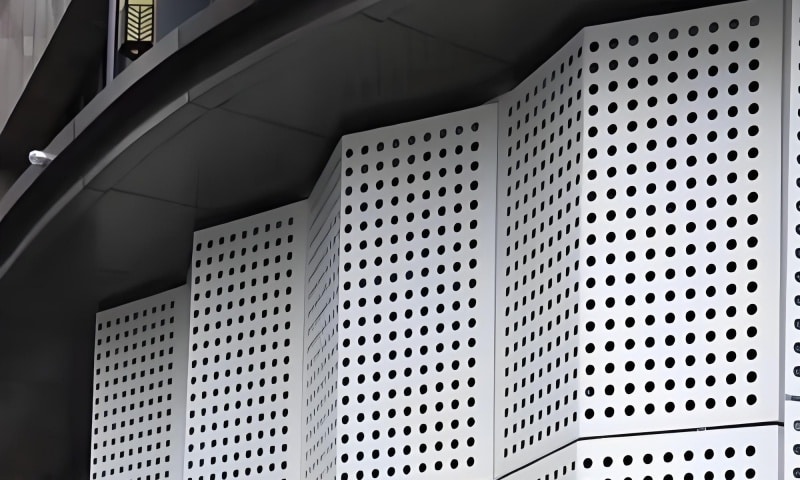
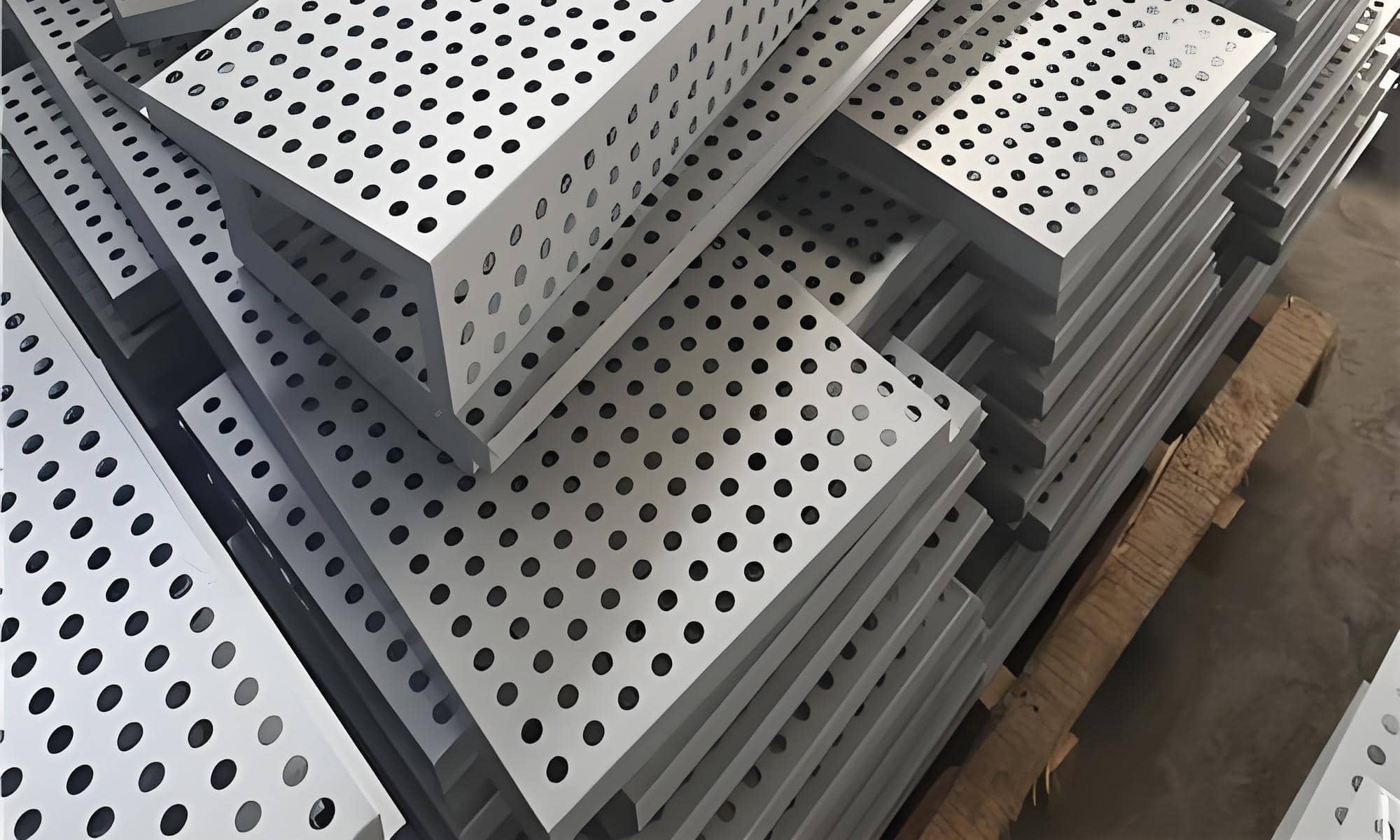
When engineers or purchasing teams ask about perforated aluminum sheet size, the question is rarely just about dimensions on paper. In real manufacturing, sheet size affects flatness, edge quality, production yield, lead time, and cost.
After years of CNC punching aluminum perforated sheets for architectural, industrial, and OEM customers, we’ve learned that what looks simple in CAD can behave very differently on the shop floor. This article breaks down practical size options, cutting allowances, and the hidden risks of oversize panels—so you can spec smarter and budget more accurately.

Aluminum Perforated Metal Sheets
Send a Quick Message, We’ll Do the Rest
Tell us what you need. We’ll match the right perforated aluminum sheet and quote it — no back-and-forth.
Fast quote + lead time
Sample before production if needed
Factory direct pricing
Common Size Expressions in Perforated Aluminum Sheets
In most B2B projects, perforated aluminum sheets are specified in one of three ways:
Standard Sheet Sizes
These are often requested for stock-based or fast-turn projects:
- 1000 × 2000 mm
- 1220 × 2440 mm (4′ × 8′)
- 1250 × 2500 mm
Standard sizes generally offer the best material yield and most stable flatness, especially when paired with common hole patterns.
Cut to Length (CTL) Sheets
For facades, screens, machinery covers, and OEM enclosures, cut to length perforated aluminum is the most common request.
Typical expressions include:
- Fixed width + variable length
- Net size after fabrication
- “Cut after perforating” vs. “Perforate after cutting”
Each method impacts edge quality and tolerance control differently, which we’ll touch on below.
Project-Specific Panels
These often involve:
- Narrow widths
- Long spans
- Custom hole alignment to edges
These panels are absolutely doable—but they should be reviewed early from a manufacturability standpoint, not just a design one.

Cutting Allowances: Why Net Size Isn’t the Whole Story
One of the most overlooked topics in perforated aluminum sheet size planning is cutting allowance.
From a production perspective:
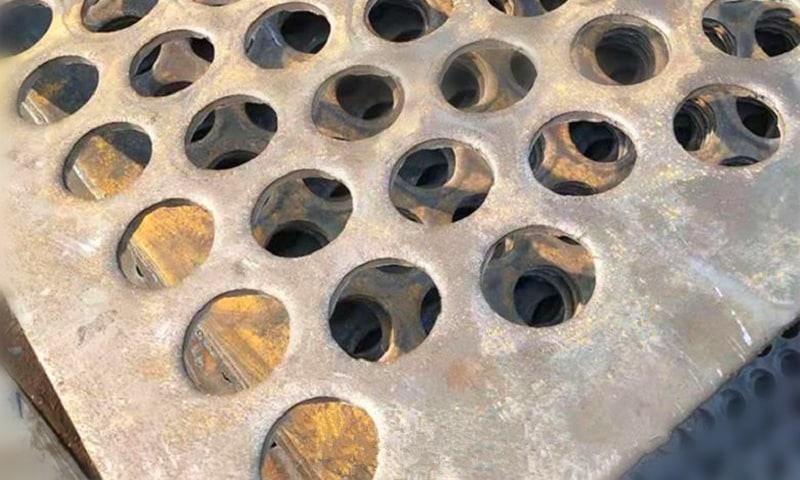
- Perforating introduces internal stress
- Aluminum expands slightly during punching
- Sheet alignment is critical for clean edges
For that reason, most CNC punching workflows require:
- Extra margin on all sides
- Final trimming after perforation
- Edge re-squaring for tight tolerance projects
If your drawing shows only the finished dimensions, always confirm whether the supplier is allowed trimming allowance. This single clarification can prevent warping, uneven borders, or misaligned hole patterns.
Oversize Sheets: Width and Length Risks You Should Know
Extra-Wide Sheets
As width increases, so does:
- Tool deflection risk
- Difficulty maintaining flatness
- Packaging complexity
Wide perforated aluminum sheets are more prone to edge curl and handling distortion, especially with open-area-heavy patterns.
Extra-Long Sheets
Long sheets introduce different challenges:
- Sheet sag during punching
- Alignment drift across length
- Higher rejection risk if tolerances are tight
In many cases, splitting a long panel into modular sections can reduce total project cost—without affecting performance or aesthetics.
Packaging and Transportation: Often Ignored, Always Felt
Size decisions don’t stop at production. They follow the sheet all the way to your site.
For larger perforated aluminum sheets:
- Flat palletization may require custom crates
- Oversize packaging increases freight class
- Long sheets are more exposed to transit vibration
We often advise customers to balance panel size vs. logistics efficiency, especially for overseas shipments. A slightly smaller sheet can significantly reduce total landed cost.

Practical Advice from the Shop Floor
If you’re specifying a perforated aluminum sheet for a real-world project, here are a few field-tested tips:
- Confirm whether dimensions are pre- or post-perforation
- Ask about recommended maximum width for your hole pattern
- Consider modular sizing for long runs
- Align design intent with realistic production tolerances
These conversations early in the sourcing process save time, cost, and frustration on both sides.