



Round hole aluminum perforated screens combine simple geometry with material advantages that suit a wide range of industrial and architectural projects. For engineers, fabricators, and purchasing teams, they deliver a reliable balance of strength, airflow, and visual control—while staying lightweight and corrosion resistant. Drawing on two decades of practical experience in metal materials and B2B manufacturing, this article explains why specifiers choose round-hole aluminum perforated panels and how to select the right configuration for ventilation and sunshade applications.

Round Hole Perforated Metal Sheets
Custom perforated metal sheets with precise hole patterns in various materials: stainless steel, aluminum, galvanized steel, carbon steel, copper, brass, and plastic. Durable and corrosion-resistant.
Perfect for architectural screens, machinery guards, acoustic panels, and decorative elements. Factory-direct pricing with cutting/bending services. Request quote or sample today.
Why aluminum? Material advantages for industrial use
Lightweight strength and handling
Aluminum delivers an excellent strength-to-weight ratio. In façade, sunshade, and HVAC applications, that translates to lower dead loads on supporting structures, smaller mounting hardware, and simpler transportation and installation logistics.
Corrosion resistance and long life
Aluminum alloys naturally resist corrosion; when combined with anodizing or powder coating, service life in exterior and harsh indoor environments improves significantly—important for coastal, industrial, or high-humidity settings.
Fabrication and finish options
Aluminum accepts a wide range of finishes (mill, anodized, powder coat) and is suitable for precision punching, CNC punching, and laser cutting. These options allow manufacturers to meet aesthetic and performance requirements while maintaining repeatable tolerances.
Engineering performance of round hole patterns
Open area, airflow, and pressure drop
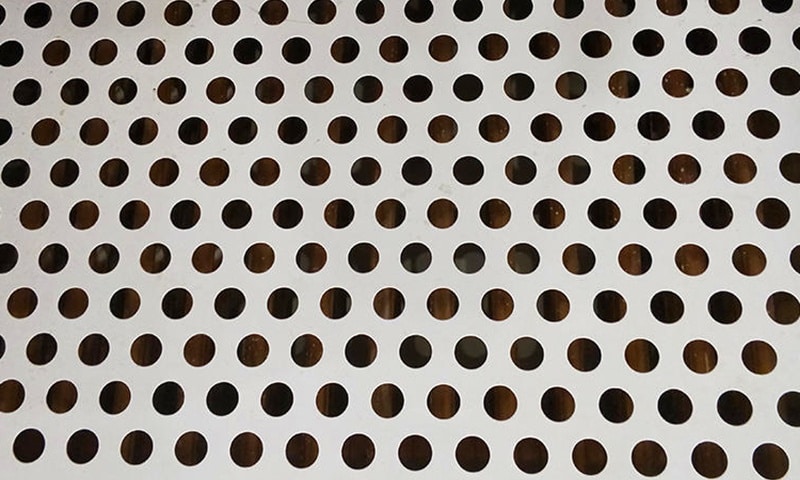
Round hole patterns are highly predictable: open area (the percentage of free area) controls airflow and pressure drop. Increasing open area increases ventilation capacity but reduces shading and opacity. Typical design trade-offs can be optimized by adjusting hole diameter, center-to-center pitch, and material thickness.
Structural behavior and span capability
Perforated aluminum sheets retain much of the parent sheet’s in-plane stiffness. For larger spans or load-bearing cladding, specifiers can increase thickness, add stiffening ribs, or mount panels to secondary framing to meet deflection and wind-load requirements.
Acoustic and light diffusion performance
Round holes provide even light diffusion and predictable acoustic absorption when combined with backer materials. For noise control, pairing perforated panels with absorptive infill yields controllable acoustic performance without heavy mass.
Manufacturing and specification essentials
Common alloys and tempers
For exterior architectural work, alloys such as 3003 and 5005 are common for their formability and corrosion resistance; 5052 or 6061 may be chosen where higher strength is required. Specify alloy and temper when strength, weldability, or finish compatibility is critical.
Typical hole sizes and pattern choices
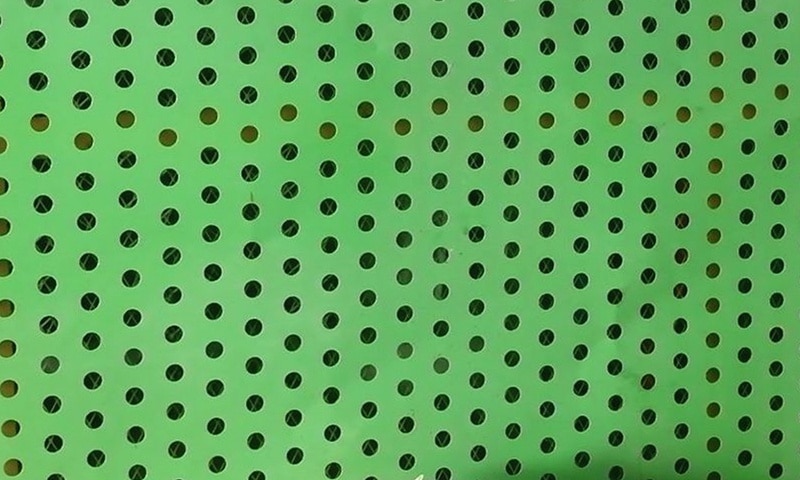
Round hole diameters commonly range from small (≈1 mm) for filtration or fine screening to larger openings (10–25 mm) for façade ventilation and sunshading. Pitch, staggered versus straight patterns, and edge margin affect open area and the final appearance.
Thickness, sheet size, and tolerances
Standard sheet thicknesses used in screens and sunscreens normally fall between 0.8 mm and 6 mm depending on application. Provide required tolerances and edge treatment (sheared, deburred, hemmed) in the purchase specification to avoid costly rework.
Finishes and surface treatments
For exposure to weather, consider anodizing (durable, metallic finish) or polyester powder coating (wide color options and improved UV resistance). Specify surface prep and coating performance requirements in the contract.
Ventilation advantages: why round holes perform well
Predictable airflow with high free area
Because round holes are simple and repeatable, engineers can model airflow and pressure drop easily using open-area percentages. This predictability makes round-hole perforated screens a good choice for HVAC returns, equipment cabinet ventilation, and industrial enclosures.
Debris control and safety
Smaller round holes can keep out larger debris and protect equipment while allowing airflow. When security or particle retention is required, layered solutions (perforated panel plus filter media) offer a compact, serviceable approach.
Sunshades and solar control: practical benefits
Light diffusion with glare control
Round-hole screens break direct sunlight into softer, diffused light, reducing glare on interior surfaces and improving occupant comfort without blocking views entirely when designed with the right open area and mounting offset.
Thermal performance and solar shading
Perforated aluminum sunshades reduce solar heat gain by shading glazing while permitting natural ventilation. Designers can tune the balance of daylight and shading by varying hole size, pattern density, and projection distance from the façade.
Design and installation considerations
Mounting details and wind loads
Specify mounting systems and attachment points that accommodate thermal expansion and anticipated wind loads. Aluminum’s thermal expansion is higher than steel’s—allow for movement with slotted fasteners or expansion joints where necessary.
Cleaning, maintenance, and serviceability
Perforated screens are generally low maintenance; however, consider access for cleaning (especially for fine holes used in ventilation) and choose finishes that allow periodic washing without damage.
Fire safety and regulatory considerations
When specifying panels for enclosed spaces, confirm local fire codes and material classifications. In many industrial contexts, aluminum is acceptable, but finish systems and any composite assemblies should be checked against project fire-safety requirements.
Typical applications (industrial + architectural)
- HVAC louvers, equipment enclosures, and machine guards
- Exterior sunscreens, façades, and parking structure screens
- Acoustic baffles and perforated cladding with absorptive backers
- Decorative architectural panels and interior partitions
- Filtration support screens and light diffusers
How to specify Round Hole Aluminum Perforated Screens — a short checklist
- Define performance goals: ventilation rate, shading percentage, or acoustic target.
- Choose alloy and thickness based on structural and environmental needs.
- Select hole diameter and pitch to achieve the required open area.
- Specify finish (anodized or powder coat), edge treatment, and tolerances.
- Confirm mounting method, expansion allowances, and access for maintenance.
- Include testing or certification requirements (material certificates, dimensional inspection, and coating performance where applicable).
Conclusion
Round hole aluminum perforated screens are a pragmatic choice when you need a combination of lightweight performance, predictable airflow, and effective solar control. For industrial and architectural projects alike, they offer flexibility in design and straightforward fabrication. When you specify them with clear performance goals—open area, alloy, thickness, and finish—you minimize risk and ensure outcomes that meet both engineering and aesthetic objectives.


