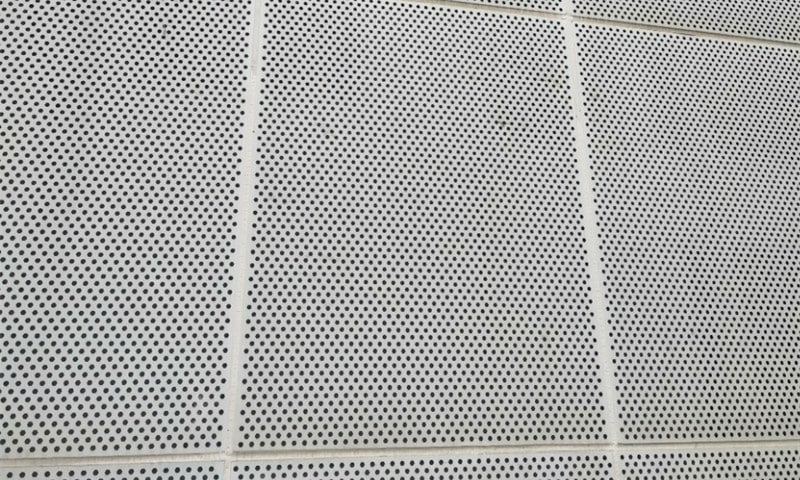
Perforated carbon steel plates are more than just decorative panels — their hole geometry and arrangement play a major role in how air moves through them. For engineers, architects, and product specifiers, choosing the right hole pattern is a balance: you want enough open area for airflow while keeping structural integrity, acoustic behavior, and appearance in check. This article breaks down practical, real-world design choices for optimizing ventilation efficiency with carbon steel perforated plates.
Why hole pattern matters — the basics
At the simplest level, ventilation through a perforated plate depends on open area (percentage of the sheet cut away), hole shape and size, pattern (staggered vs. inline), and plate thickness. These factors determine the pressure drop for a given airflow, the velocity profile across the opening, and how the plate interacts with attached ductwork or a fan.
- Open area controls how much air can pass at low pressure. Higher open area typically means lower fan power for the same flow, but higher open area can weaken the panel.
- Hole shape affects edge drag and turbulence. Round holes are common and efficient; elongated (slotted) holes can increase open area without hugely increasing stress.
- Pattern (staggered vs. inline) changes flow distribution. Staggered layouts generally allow smoother flow at higher open areas.
- Thickness-to-hole-diameter ratio (t/D) influences effective opening. Thick plates relative to hole size can behave like short nozzles, increasing pressure drop.

Common hole shapes and their ventilation traits
Round (circular) holes
Round holes are the industry standard for balanced performance. They are easy to punch cleanly, distribute stress well, and offer predictable pressure-drop characteristics. Use round holes when you need a reliable compromise between strength and airflow.
Slotted (elongated) holes
Slots holes let you reach a higher open area for the same metal area lost, and they direct flow more in one axis — useful when airflow direction is predictable. Keep in mind slots can concentrate stress at slot ends, so edge distance and plate thickness should be checked.
Square and oblong holes
Square holes are visually different and can offer slightly higher open area per punch, but they may produce more turbulence than round holes. Oblong and customized shapes are useful when acoustic or aesthetic performance is also a priority.
Staggered vs. inline patterns — what to choose
- Staggered (triangular) pattern: Holes are offset between rows. This layout tends to yield a smoother velocity profile and often a marginally lower pressure drop for an equivalent open area. It’s a go-to when maximizing airflow while maintaining strength.
- Inline (rectangular) pattern: Rows align vertically; this is sometimes preferred for visual reasons or when indexing holes during production. Inline patterns can channel flow in columns and may show slightly higher localized velocities.
In practice, if ventilation efficiency is the primary goal, a staggered pattern with well-chosen hole diameter often performs best.
Thickness, edge effects, and the t/D rule of thumb
A useful rule of thumb for perforated plates is considering the thickness-to-diameter ratio (t/D). When the plate thickness becomes a significant fraction of the hole diameter, the effective opening behaves less like a simple hole and more like a short duct — increasing friction and pressure drop. For high-efficiency ventilation, prefer hole diameters comfortably larger than the plate thickness, or use countersunk/rolled edges where available to reduce edge friction.
Balancing ventilation with structural strength and aesthetics
Ventilation-focused designs often push open area upward (20–50% depending on application). But increasing open area reduces sheet stiffness and load-bearing capacity. To maintain strength:
- Choose thicker material or add stiffeners if open area is high.
- Use smaller pitch (closer hole spacing) in staggered patterns to spread stress.
- Consider backing frames or boxed edges for large panels.
Aesthetic considerations—visible hole shape, pattern density, and finish (galvanized, painted, or powder coat)—should be factored early since finishes can slightly reduce hole sizes and change airflow at very tight tolerances.
Practical tips for specifying perforated plates for ventilation
- Start with required airflow and allowable pressure drop. Work backward to determine minimum open area.
- Select a hole shape that matches appearance and flow needs: round for general use, slots for directional flow, micro-perforations for diffused air or acoustic control.
- Pick pattern and pitch to balance open area and panel strength. For high open area needs, staggered patterns are often preferable.
- Watch t/D ratio. If using thick plates, consider larger hole sizes or relieved edges.
- Factor corrosion resistance and coatings. Galvanizing or powder coating can protect carbon steel but may slightly change hole edges.
- Request sample panels or a small prototype to measure actual pressure drop in your system before scaling up.
Installation and real-world considerations
Air movement through a perforated plate is affected not only by the panel itself but by how it interfaces with ducts, fans, and nearby obstructions. Minimize added pressure losses by:
- Leaving a small plenum behind the perforated sheet to smooth flow.
- Avoiding tight corners directly behind the panel.
- Sealing edges to prevent leakage paths that bypass the intended airflow route.
For retrofit projects, measuring static and dynamic pressure before and after installation gives practical insight into how a chosen hole pattern performs in situ.
Quick selection checklist (for specifiers)
- Required airflow (CFM) and allowable pressure drop
- Desired open area (%) and visual appearance
- Hole shape: round / slot / square / micro-perf
- Pattern: staggered or inline
- Plate thickness and material finish
- Production tolerance and one-off vs. large batch needs
If you already have a target airflow and dimensions, we can recommend a hole pattern and open area that balances performance and cost. In many cases, standard round patterns work well; for specialized needs, slotted or staggered designs offer clear benefits.
Final thoughts
Choosing the right hole pattern for carbon steel perforated plates is a practical engineering decision, not just an aesthetic one. When you balance open area, hole shape, pattern, and thickness—and consider installation details—you get a ventilation solution that minimizes energy use while keeping your panels strong and attractive.
Call to action
If you’d like a recommendation for a specific project or sample panels to test airflow, contact our team at info@perfsheet.com. Tell us your desired flow (CFM), allowable pressure drop, panel dimensions, and any aesthetic requirements — we’ll suggest hole patterns, open area, and material/finish options tailored to your needs.