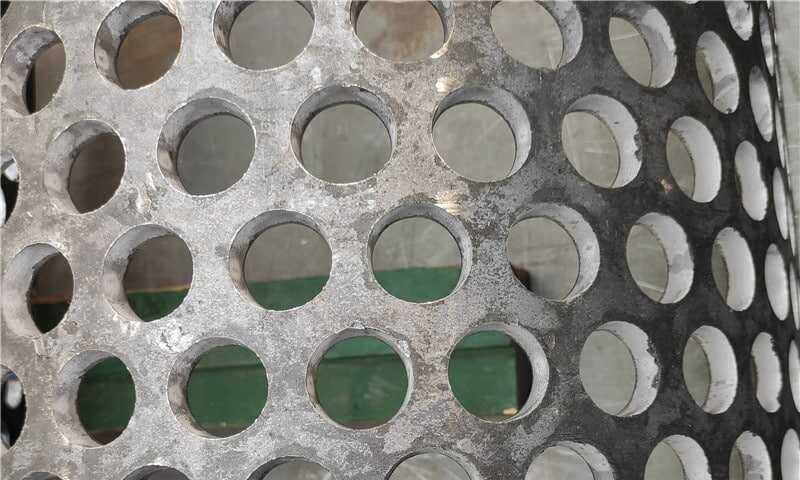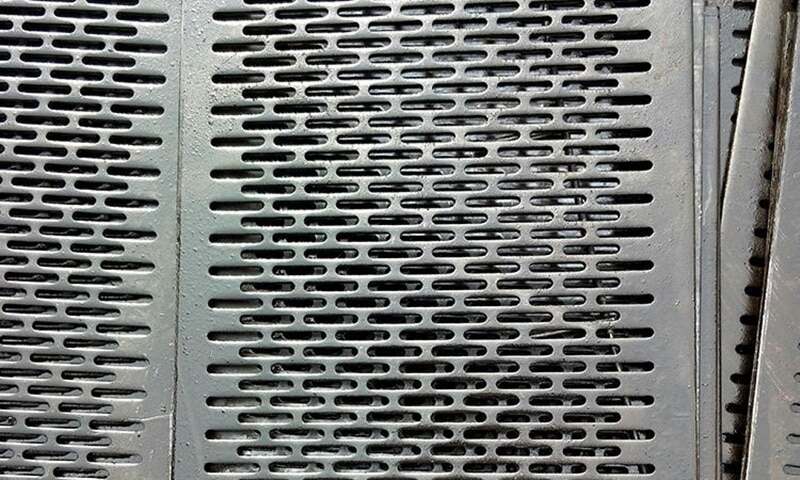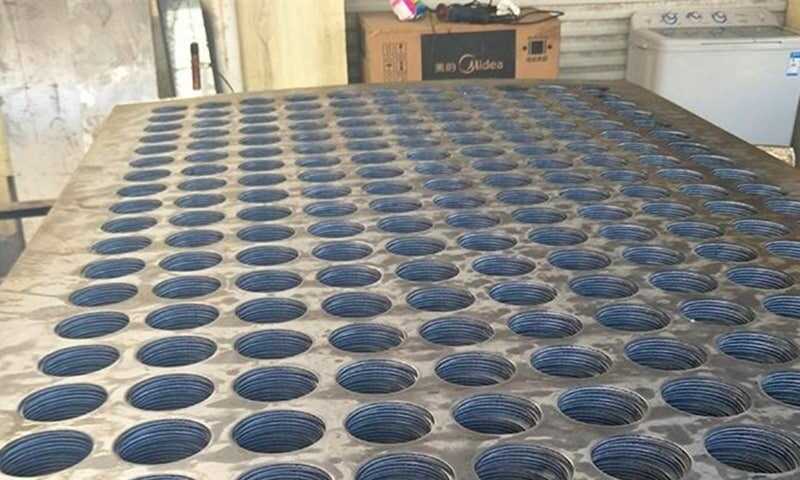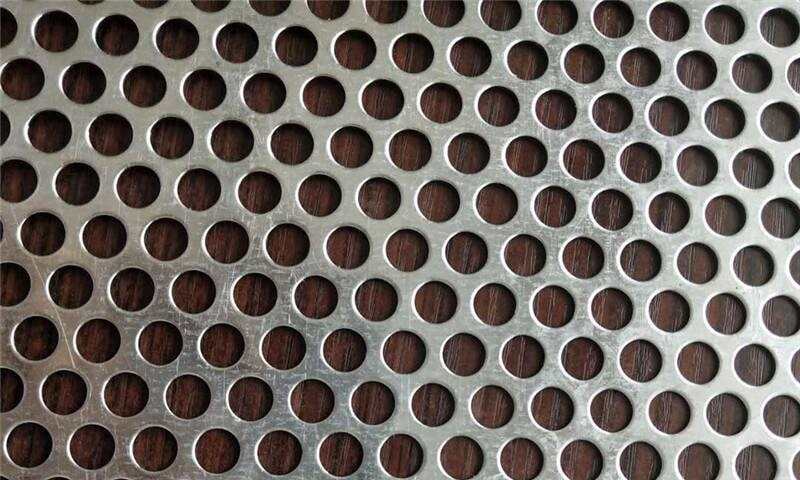
Cold-rolled perforated sheet plays a key role in filtration, ventilation, acoustic control, and architectural applications. While buyers are often focused on hole size, pitch, and open area %, the base sheet thickness tolerance is just as important.
In real production, sheet thickness is never an exact fixed value. It fluctuates within a controlled band defined by mill standards. Understanding what counts as a normal tolerance can help buyers verify material quality and maintain confidence that perforation accuracy will remain stable.
Why Thickness Tolerance Exists in Cold-Rolled Sheets
During cold rolling, the coil passes through multiple rollers. Even with modern equipment, microscopic elastic recovery and mechanical variation make it impossible to hold a perfectly fixed thickness across the full width of a coil.
This variation is expected and accepted. Industry tolerance charts define how much deviation is reasonable for each nominal thickness.
What matters is not achieving the exact number—but keeping thickness variation within an engineered, predictable range.
Typical Thickness Tolerance for Cold-Rolled Sheets Used in Perforation
Cold-rolled coil technology today is highly advanced. For coil intended for perforation, thickness capability is precise and consistent.
For commonly specified thicknesses up to 3.0 mm, the following rule-of-thumb applies:
- Nominal thickness: 1.50 mm
- Expected measured thickness: ≈1.45 mm
- Practical tolerance range: ±0.03–0.05 mm
Meaning:
Thickness between 1.42 mm and 1.48 mm is generally considered normal and compliant for industrial perforation applications.
Important distinction
If a coil labeled “1.50 mm” consistently measures near 1.30 mm, that variance would be far outside any legitimate tolerance. This typically indicates cost cutting rather than natural manufacturing variation.

Thickness Tolerance Does NOT Change Hole Size or Open Area %
There is a common misunderstanding in perforated sheet purchasing:
Thickness tolerance does not alter:
- hole diameter
- pitch spacing
- open area percentage
These dimensions are determined by the perforating tools, not sheet thickness.
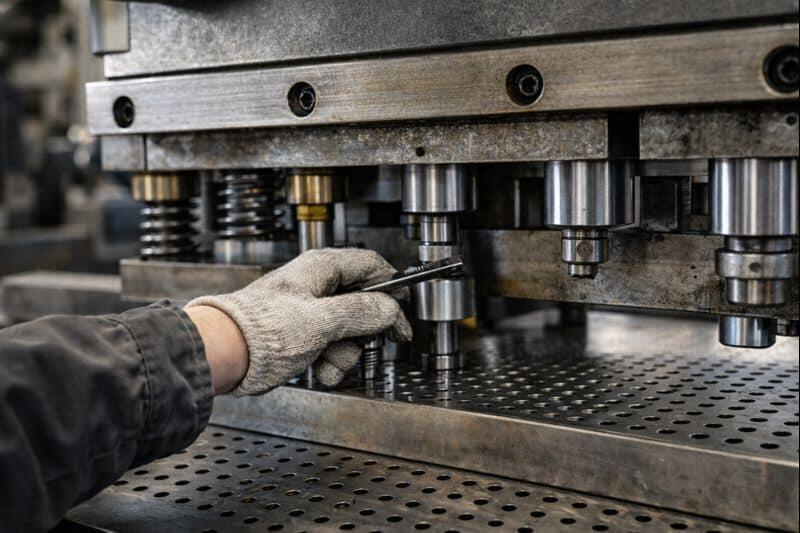
Modern perforating lines automatically adjust punch/die clearance based on measured sheet thickness. This prevents defects such as:
- excessive burr
- tapering inside hole walls
- reduced hole roundness
So thickness fluctuation within tolerance does not compromise hole geometry or open area.
Precision Control in Cold-Rolled Perforation Production
A controlled perforation workflow maintains stable tolerances through:
- incoming coil thickness measurement
- punch/die clearance adjustment
- real-time load sensing
- periodic thickness logging
- sheet flatness and alignment checks
These practices ensure that perforated sheets remain dimensionally consistent even when coil thickness varies slightly inside tolerance.
Thickness Tolerance and End-Product Performance
Consistent thickness tolerance contributes to:
- predictable sheet weight per square meter
- structural stability and performance
- uniform airflow or filtration efficiency
- reliable assembly compatibility
For buyers, verifying thickness tolerance prevents downstream issues in forming, welding, fastening, or panel mounting.
Recommended Inspection Practice for Buyers
When receiving cold-rolled perforated sheet, most buyers use simple QC routines:
- measure thickness at multiple locations
- compare to nominal tolerance band
- document test results per coil or batch
Normal variation inside tolerance should be accepted. Sudden deviations or gradual drift may signal supplier inconsistency.

Applications Requiring Reliable Thickness Tolerance
Precise thickness tolerance is especially important for:
- acoustic panels
- facades and architectural cladding
- HVAC filtration
- perforated tubes and cylinders
- screening and separation equipment
- machine guards and ventilation covers
Whether ordered in small batches or high-volume production, material compliance ensures consistent performance.
Our Cold-Rolled Perforated Sheet Meets Precision Thickness Tolerance Standards
Cold-rolled perforated sheet produced here adheres to the practical tolerance band expected in global manufacturing. Nominal thickness is verified and matched with controlled tolerances before perforation.
By adjusting die clearance to the measured sheet, hole geometry and free area consistency are maintained across the full coil width.
Both small custom runs and mass-production orders follow documented QC routines to maintain predictable thickness tolerance and consistent perforation quality.
Request Pricing or Technical Sheets
Buyers seeking guaranteed tolerances for cold-rolled perforated sheet, customized thicknesses, or coil-based production can request technical documents or quotations.
Contact us anytime:
info@perfsheet.com