Why “food-grade” means more than just stainless steel
When overseas buyers search for stainless steel perforated metal sheets for food processing, they’re usually trying to solve two problems at once:
- Regulatory fit (can this metal legally and safely touch food in my market?)
- Hygienic performance (will this surface stay clean after months of washdown, CIP, and daily production?)
Perforated sheets are a special case because every punched hole creates an edge—and edges are where hygiene problems start if finishing isn’t controlled.

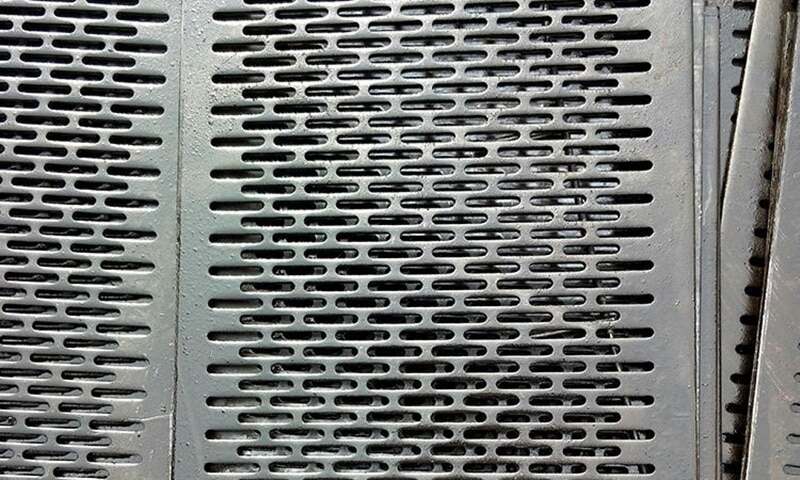
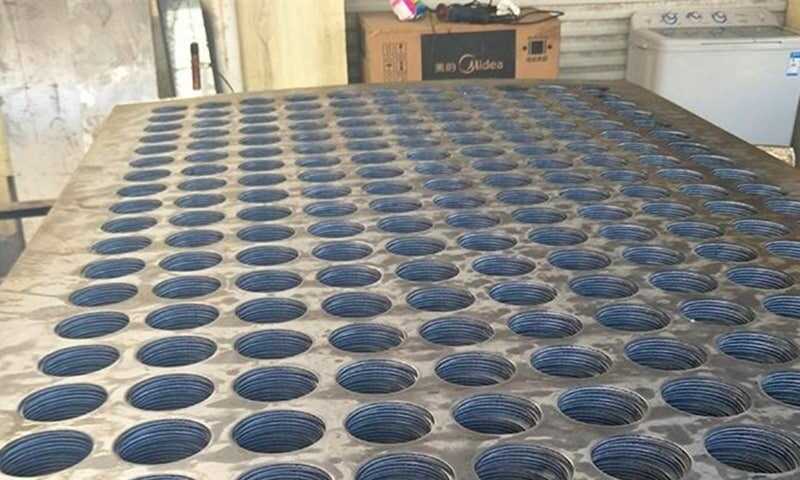
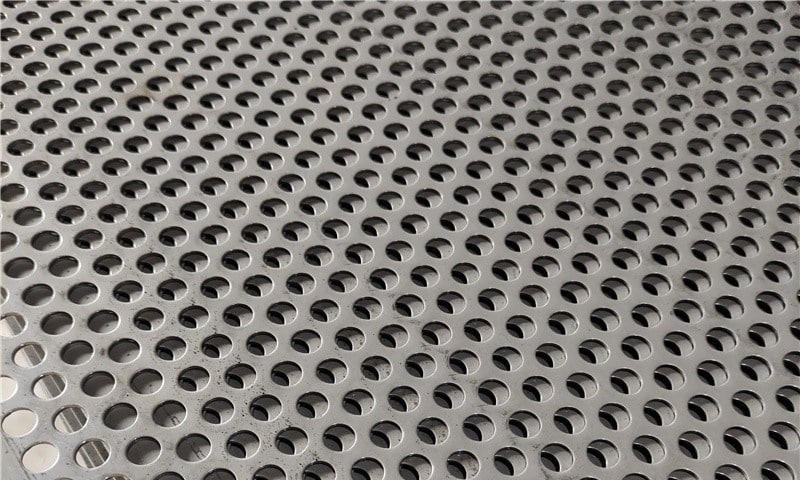
Stainless Steel Perforated Metal Sheets
Stainless Steel Perforated Metal Sheets
Stainless steel perforated sheet is a commonly used material in both architectural and industrial applications. It offers stable corrosion resistance and good fabrication flexibility.
Hole patterns, open area, dimensions and surface finishes can all be customized according to project drawings. Typical uses include facades, ventilation and filtration, partitions and equipment protection.
Feel free to view the product details or contact us for samples and pricing information.
What FDA expectations look like in real projects (U.S.)
In the U.S., the FDA regulates “food contact substances” under the broader “indirect food additives / food contact” framework. Importantly, FDA’s own consumer-facing explanation explicitly includes processing equipment and food preparation surfaces as examples of food contact substances.
What that means for buyers sourcing a sanitary perforated metal screen is practical:
- Stainless steel itself is widely used in food equipment, but the compliance conversation often shifts to the total system: surface finish, cleanability, corrosion behavior, and anything added (coatings, lubricants, welding consumables, etc.).
- If any coating or surface treatment is applied, its food-contact regulatory status matters, because FDA’s approach focuses on the safety of materials used in contact with food under intended conditions.
In sourcing terms: U.S. buyers typically want confidence that your perforated sheet is made consistently, finished correctly, and supplied with traceable documentation—not just “304 stainless” written on a quote.
What EU buyers will ask for (and why it feels stricter)
In the EU, the baseline is the Framework Regulation (EC) No 1935/2004, which sets general safety principles for food contact materials.
On top of that, EU food contact materials must be manufactured under Good Manufacturing Practice (EC) No 2023/2006.
For metals and alloys, buyers and compliance teams often reference guidance aligned with Council of Europe Resolution CM/Res(2020)9 and the EDQM technical guide work around release limits and testing concepts.
Bottom line: EU customers tend to evaluate a perforated sheet supplier on process control + documentation just as much as the metal grade itself.
Deburring is the “hidden” food safety requirement in perforated sheets
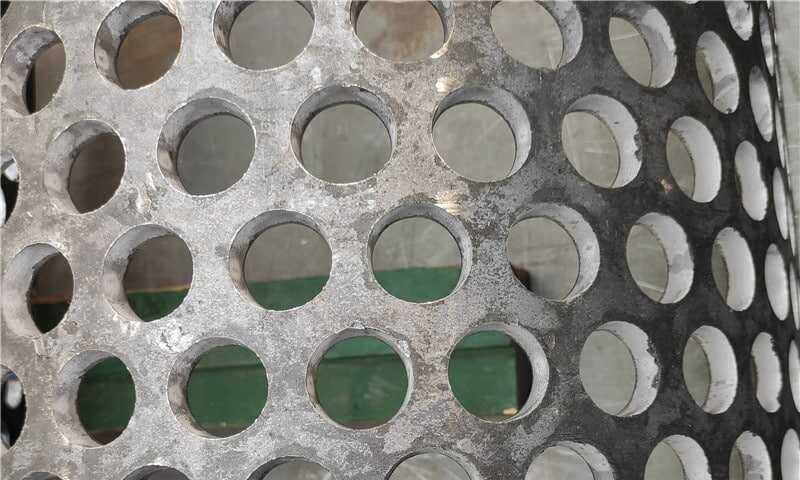
CNC punching is fast and repeatable, but punching can leave micro-burrs and sharp rollover on hole edges. Those tiny defects can:
- trap food fines and moisture (classic harborage points)
- complicate CIP/washdown because detergents don’t fully reach into rough edges
- increase corrosion risk because contamination sits longer in crevices
If your perforated sheet will touch food directly, deburring isn’t cosmetic—it’s a hygiene control step.
Why electropolishing helps (especially after punching)
Electropolishing is frequently used in food, dairy, and pharma supply chains because it improves cleanability by smoothing the surface and reducing small defects. It’s also widely described as a way to remove microscopic burrs/imperfections left by fabrication.
From a buyer’s perspective, electropolishing is often chosen when you want:
- a smoother surface that’s easier to clean
- lower risk of bacteria “holding on” to roughness points
- more consistent sanitary performance across long production runs
A practical roughness target many hygienic specs circle around
Many hygienic design references point to Ra ≤ 0.8 μm (32 microinch) as a common maximum for food-contact surfaces, with smoother finishes used when risk or cleaning difficulty increases.
You’ll also see No. 4 / dairy-oriented finishes discussed in terms of roughness ranges and sanitary expectations.
If you’re buying perforated sheets for food contact, the “right” target depends on product type, soil load, and cleaning method—but having an Ra requirement in the spec is often what separates a decorative sheet from a true sanitary perforated metal screen.

Why round holes are a smart default for food screening and sorting
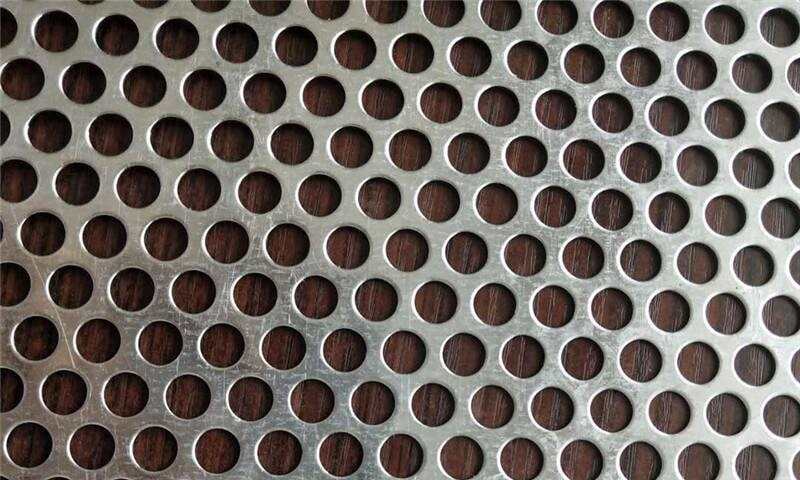
In food processing, round hole perforated stainless steel is popular for one simple reason: it behaves predictably.
Compared with shapes that have internal corners, round holes tend to:
- support smooth flow of product and liquid
- reduce snag points for fibers, skins, and sticky fines
- clean more easily during washdown because there are no sharp internal corners to “hide” residue
Round holes are also one of the most standardized and widely available perforation patterns, making lead times and replacement sourcing easier for maintenance teams.
Where we see round holes work especially well
- produce grading and rinse conveyors
- bakery crumb screening and rework lines
- nut, seed, and grain sorting
- seafood and meat/poultry drainage trays and screens
- powder and seasoning sifting (when thickness + open area are tuned correctly)
304 stainless: excellent in kitchens, but industrial lines change the rules
Buyers often assume “304 = food grade,” and in many cases it is a solid choice. But food safety isn’t only about grade—it’s also about corrosion resistance under your cleaning and product conditions, because corrosion pits can become new harborage points.
Where 304 stainless perforated sheets usually shine
304 is widely used in commercial kitchens and general food equipment because it performs well in normal prep environments and is cost-effective.
Typical fit:
- dry food handling
- general kitchen equipment panels and guards
- moderate washdown without aggressive chemistry
When to rethink 304 for industrial food lines
If your process involves frequent exposure to chlorides (salt/brine), acidic foods, or more aggressive cleaning chemicals, corrosion resistance becomes a bigger deal. Many industry references note that 316 tends to offer stronger resistance in those harsher conditions, especially around salts/chlorides.
In practical procurement language: if your line is a high-salt, high-moisture, high-cleaning-frequency environment, you’ll want to evaluate whether 304 is still the best long-term choice—or whether you should adjust grade, thickness, and finishing (including electropolish).
What to include in a purchase spec for food-contact perforated sheets
If you want quotes that are apples-to-apples (and you want the delivered parts to behave the same across batches), include the details below in your RFQ:
- Material grade (304 / 316, etc.) + required documentation (MTR/heat number traceability)
- Thickness and flatness tolerance (important for screens that mount into frames)
- Hole diameter + pitch (and whether center-to-center is critical)
- Open area target (screening performance depends on it)
- Deburring requirement (both sides? edge radius expectation?)
- Surface finish (mill finish / brushed / electropolished) and any Ra requirement if food-contact
- Cleaning method (CIP chemistry, temperature, frequency) so the grade and finish match reality
- Edge condition (safe handling, no sharp perimeter edges)
The questions we ask before we recommend a finish
When we support food-industry buyers, we usually start with a few clarifying items because they directly impact hygiene performance:
- What product is touching the sheet (wet, oily, sticky, abrasive)?
- Is it a one-pass screen or a reused screen that must survive daily sanitation?
- Are you optimizing for sorting accuracy, flow rate, or cleanability?
- Does your audit team expect EU-style documentation and GMP traceability?
Those answers determine whether a standard deburr is enough—or whether electropolish and a defined surface roughness target should be part of the spec.