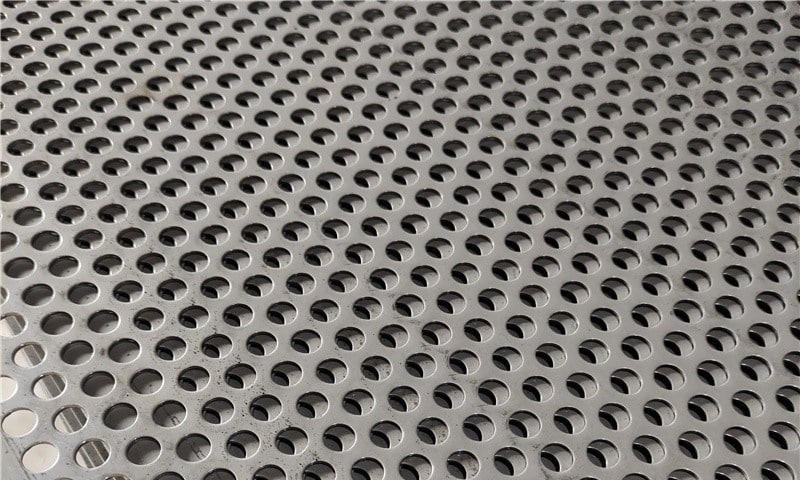
When buyers ask for a “best price” on heavy duty perforated plates, the honest answer is: pricing isn’t a single number—it’s the sum of controllable variables. The good news is that most of those variables are in your hands, and a clear spec can prevent surprises during quoting, production, and inspection.
Below is how experienced CNC punching manufacturers break down heavy duty perforated plate price—so you can tune cost without compromising performance.
Thickness Drives Material Cost and Processing Limits
Thickness is usually the first driver of heavy duty perforated plate price, because it affects more than raw steel weight.
Material usage: weight adds up fast
A small thickness change can move the total tonnage significantly, especially on large plates. More weight means higher material cost, higher handling cost, and often higher freight cost.
Punching and tool load
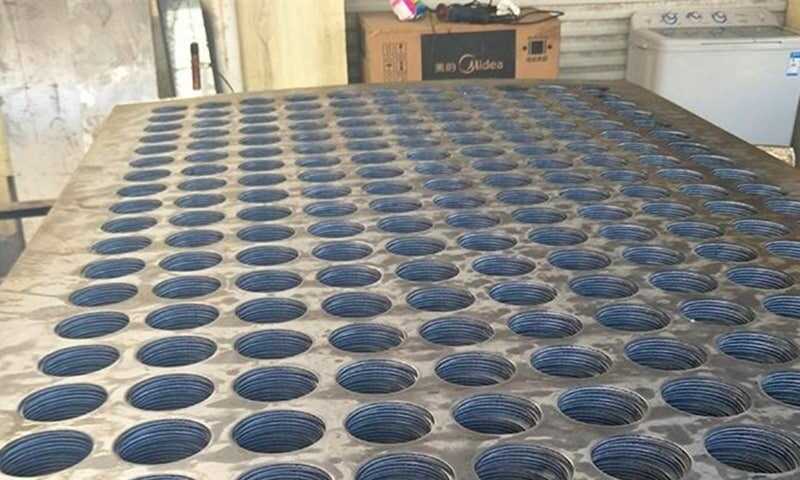
Heavier plate requires higher tonnage presses and tougher tooling strategy. In thick-gauge perforation, tool wear, hit rate, and machine time become real cost factors—not just the sheet price.
Flatness risk increases with thickness
Thicker plates can still distort after punching (especially with higher open area). If flatness matters, plan for leveling or stress relief steps.

Heavy Duty Perforated Plates
Need a custom heavy-duty perforated plate?
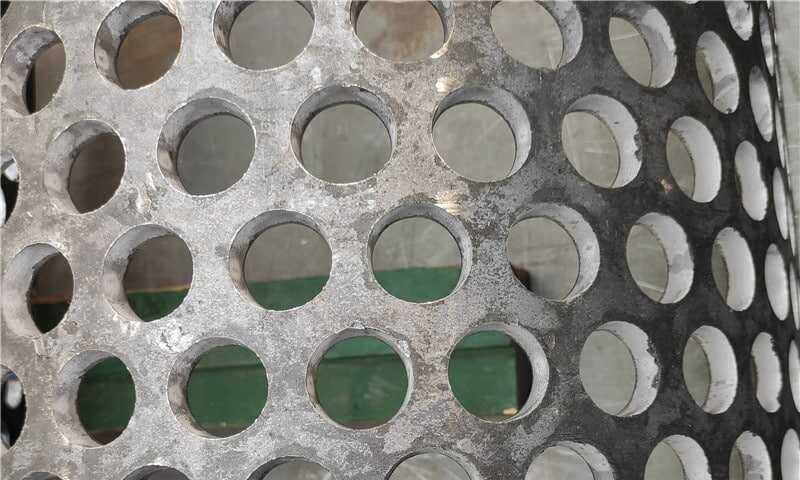
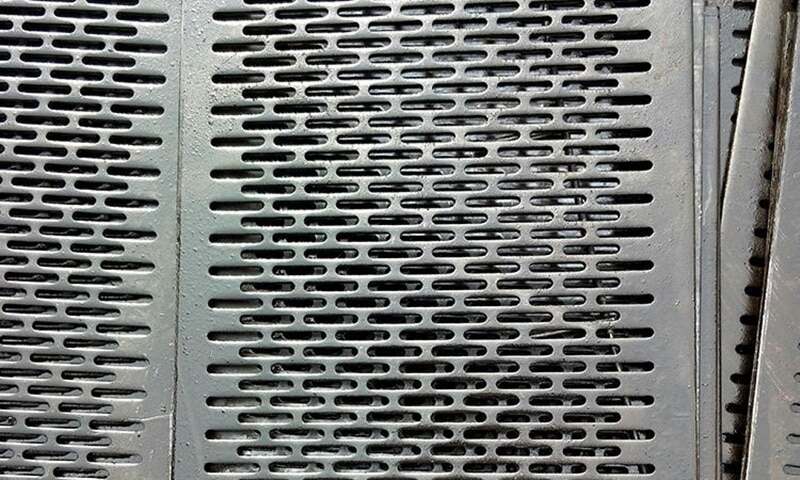
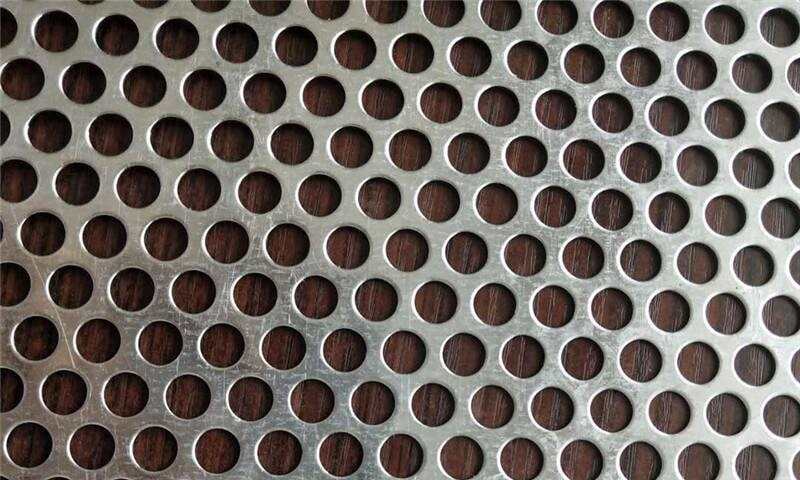
We offer perforated plates with thickness ranging from 2.75mm to 30mm, and up to 6000×1500mm in size, available in round, square, hexagonal, and slotted patterns.
Additionally, we provide precise cutting, surface protection, and other processing services tailored to meet industrial installation requirements.
Feel free to contact us anytime, and we’ll provide a personalized solution that perfectly matches your project needs.
Open Area (Perforation Rate) Changes Cycle Time and Yield
Open area is one of the most overlooked pricing levers. Two plates of the same size and thickness can have very different prices simply because of the number of hits.
More holes = more punching time
Higher open area usually means:
- More strokes (hits)
- More machine time
- More tool wear
- More scrap complexity around margins and edges
That directly affects heavy duty perforated plate price, even if the base material is identical.
Strength vs. cost tradeoff
From an engineering standpoint, you don’t always need maximum open area. If your application allows it, reducing open area slightly can lower cost while improving load capacity and stiffness.

Hole Pattern and Hole Shape Affect Speed, Accuracy, and Tooling
Your perforation pattern is not just a drawing detail—it’s a cost structure.
Round holes are often the most cost-efficient
For many industrial and structural uses, round-hole patterns are efficient to punch and easy to control for consistency.
Slots and special shapes increase complexity
Slot holes, square holes, and custom patterns often require:
- More precise positioning
- Additional tool setups
- Slower punching rates
- Higher risk of burr management issues
If the design can accept it, standardizing the pattern can stabilize lead time and heavy duty perforated plate price.
Edge margins and “no-hole zones” matter
Tight margins, partial holes near edges, and complex blank shapes can force extra steps (micro-joint strategies, slower feed, secondary trimming). Including clear edge requirements in your RFQ helps avoid rework assumptions.
Material Grade Changes More Than Raw Cost
Material choice isn’t only about the price per pound—it changes how the plate punches, finishes, and performs in service.
Carbon steel vs. stainless vs. aluminum
- Carbon steel is often cost-effective and widely available in plate thicknesses.
- Stainless steel adds corrosion resistance but increases material cost and can slow punching depending on thickness and grade.
- Aluminum reduces weight and can be great for specific industries, but pricing depends heavily on alloy and availability.
Real-world purchasing tip
If you’re comparing quotes, make sure everyone is quoting the same grade and standard. A small grade mismatch can look like a “better price” until the plate fails corrosion or strength requirements.
Leveling (Flattening) and Tolerance Requirements Can Be Major Adders
Heavy duty perforated plates are often used in platforms, screens, guards, and structural assemblies—where flatness matters.
When leveling is needed
Perforation introduces stress. If you require tight flatness, or if the plate will be welded/assembled into frames, leveling can reduce fit-up problems later.
Tolerances must match function
Tighter tolerances cost more because they require:
- More controlled processes
- Additional inspection
- Potential secondary operations
A practical approach is to specify only what you truly need: functional tolerances where the plate interfaces with other parts.

Cutting, Edge Prep, and Part Shape Affect Fabrication Time
A simple rectangular plate is faster than a complex profile.
Cutting method changes cost
Depending on thickness and material, you may see:
- Shearing (fast, limited to simple shapes)
- Plasma/laser/waterjet (more flexible, cost varies by thickness and edge quality needs)
- Saw cutting for heavy sections
If your project requires clean edges, deburring, or special edge prep, call that out early—those steps can noticeably impact heavy duty perforated plate price.
Bending, Welding, and Assembly Turn a Plate into a Fabricated Component
A lot of “plate pricing confusion” happens when the buyer wants a finished assembly, but the RFQ reads like a flat sheet quote.
Forming and bending
Bending thick perforated plate requires careful control to prevent distortion and cracking around hole fields. It also requires the right press brake capacity and tooling.
Welding considerations
Welding perforated plate introduces heat distortion risk. If the end-use requires straightness or tight fit-up, additional fixturing and post-weld correction may be needed—especially on heavier gauges.
Best practice for RFQs
If you need bending or welding, treat it as a fabrication quote, not just a perforated plate price. You’ll get more accurate comparisons across suppliers.
Surface Treatment and Finish: Protection, Compliance, and Appearance
Surface requirements can be purely functional—or tied to compliance and customer-facing appearance.
Common surface options
- Pickling/oiling or mill finish (baseline)
- Powder coating/painting (adds protection and aesthetics)
- Galvanizing (common for outdoor/industrial corrosion resistance)
- Brushed/polished finishes (often used when appearance matters)
Each finish adds process steps, handling, and sometimes masking requirements (especially if hole edges must remain sharp or coating thickness is controlled).
How to Get a Fast, Accurate Quote
To avoid delays and back-and-forth, include these details in your RFQ:
- Material grade/standard and thickness
- Perforation pattern (hole size, pitch, open area, layout)
- Overall plate size and tolerances
- Flatness requirement (if critical)
- Cutting profile and edge requirements
- Any leveling, deburring, or surface finish needs
- Whether bending/welding/assembly is required
A complete RFQ doesn’t just speed up quoting—it reduces production risk and helps protect your schedule.
The Bottom Line: Price Is Built from Your Spec
The most controllable way to manage heavy duty perforated plate price is to decide what truly matters for performance (load, flow, screening efficiency, corrosion resistance) and what can be standardized (pattern, finish level, tolerances). With the right balance, you can reduce cost while improving consistency and lead time.
If you want, you can share your thickness + pattern + application, and we can outline which variables typically deliver the biggest savings without changing function.