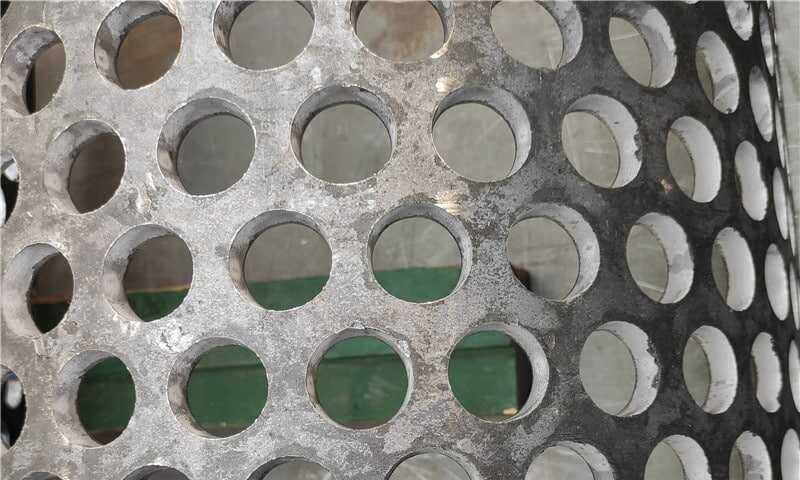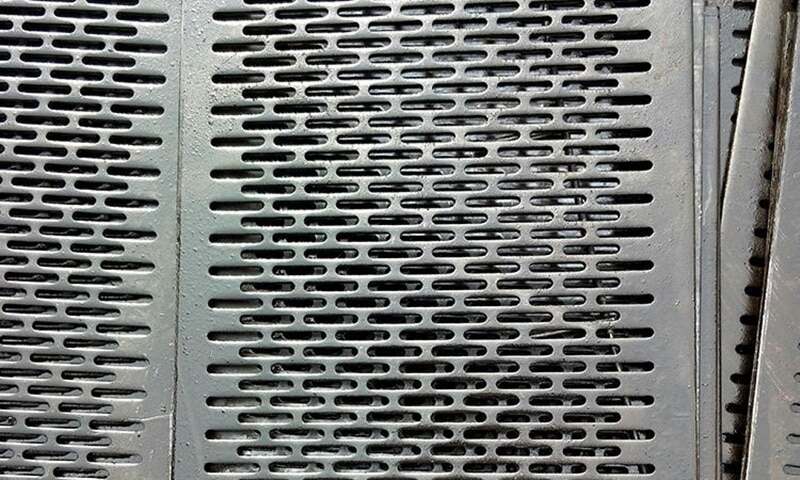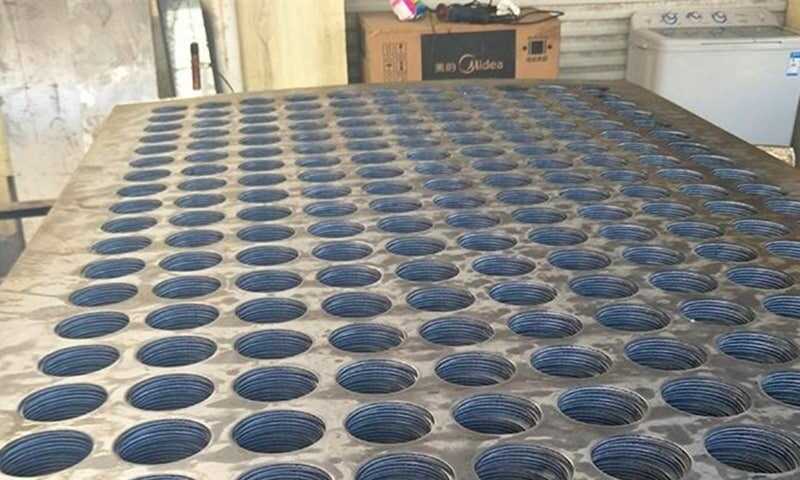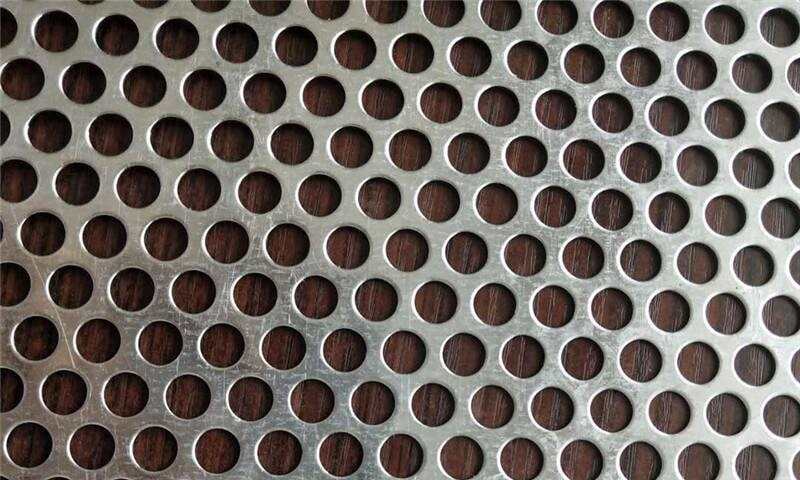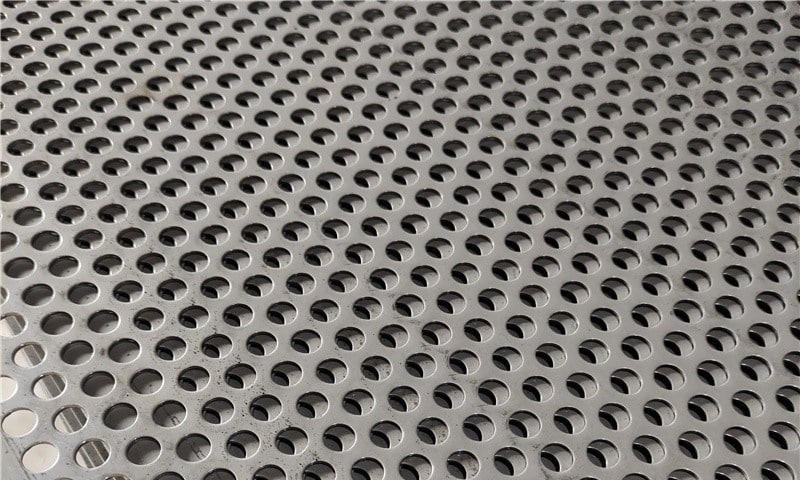
A Practical Starting Point: You’re Buying a “Base Sheet,” Not Just a Hole Pattern
When buyers request carbon steel perforated metal sheets, most conversations start with hole size, pitch, open area, and thickness. That makes sense—those details control airflow, filtration, weight, and visibility.
But the “rolled condition” of the base material still matters, because it affects what you start with: surface expectations, tolerance feel, and how much finishing you’ll need. The key is to keep it real:
- Perforation introduces residual stress regardless of whether the sheet is hot rolled or cold rolled.
- Any sheet—hot rolled or cold rolled—can show distortion after punching depending on open area, layout, thickness, and processing.
- Roll leveling is commonly used after punching to improve flatness and help redistribute residual stress before forming, welding, or finishing.
So the decision isn’t “one won’t warp and the other will.” It’s about choosing the right starting sheet for the job and the finish.
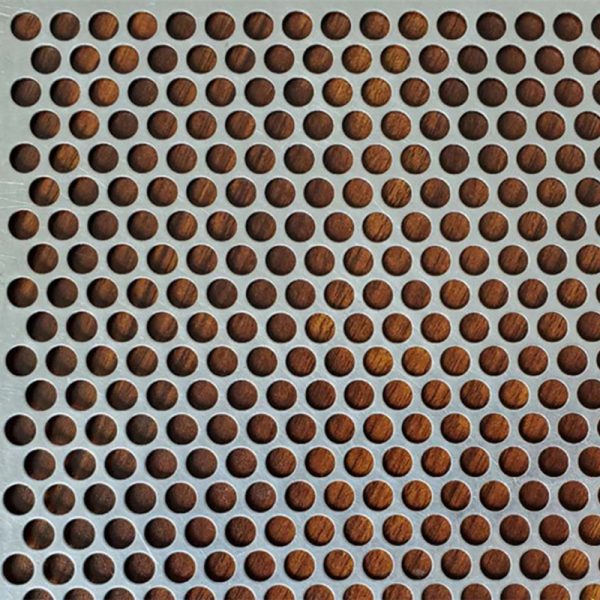
Carbon Steel Perforated Metal Sheets
We work with buyers and engineers who need carbon steel perforated sheets that are practical to manufacture and reliable in use.
If you’re preparing an RFQ or want to confirm specifications before sourcing, a short conversation often saves time on both sides.
Contact us via WhatsApp to talk through the details:
Cold Rolled Carbon Steel: Commonly Used for Thinner Gauges and Cleaner Surfaces
Cold rolled steel is typically selected when the project needs a cleaner-looking surface and more consistent feel in thin gauges. In many supply chains, cold rolled is most commonly seen in thin to medium thickness ranges (often around 0.2–3.0 mm in everyday purchasing), which is why it shows up frequently in decorative, light-duty, and tight-tolerance fabrication work.
Where cold rolled makes sense for perforated panels
- Visible panels and “paint-grade” work: a smoother starting surface helps final appearance after powder coating or painting.
- Tighter fit-up work: when panels need to align cleanly in frames or assemblies, a more uniform starting sheet can reduce surprises.
- Lighter gauge parts: common for acoustic panels, interior screens, HVAC face panels, and equipment covers where appearance matters.
What to plan for
- Surface marks show easier: the smoother the sheet, the more handling marks can stand out—packaging and stacking matter.
- Perforation still creates stress: even with a good starting sheet, high open area or thin gauge can still need roll leveling to hit flatness expectations.
If your customer will see the panel up close—or you want a more “presentation-ready” surface—cold rolled carbon steel perforated sheet is often the straightforward choice.

Hot Rolled Carbon Steel: Commonly Chosen for Thicker Gauges and Cost-Driven Applications
Hot rolled steel is typically chosen when function and cost lead the decision. In many markets, hot rolled is more commonly stocked in thicker gauges (often 1.5 mm and above), which makes it a frequent pick for guarding, protective covers, and industrial applications.
Hot rolled surfaces usually look darker and rougher due to mill scale. That’s normal—not a flaw—just the nature of hot rolled supply.
Where hot rolled fits well for punched sheets
- Industrial guarding and protection: machine guards, safety screens, heavy-duty covers, and rugged enclosures.
- Thicker gauge perforated parts: when you’re punching heavier material and the job is function-first, hot rolled is often cost-effective.
- Downstream fabrication builds: panels welded into frames or assemblies where the sheet is part of a larger structure.
What to plan for
- Surface prep affects finishing: if you’re coating, you may need appropriate prep (depending on your finishing system) to handle mill scale and ensure good adhesion.
- Flatness is still manageable—but not automatic: perforation can introduce distortion on any sheet; roll leveling is a practical step when flatness matters.
If you’re building “workhorse” panels where durability and budget matter more than cosmetic perfection, hot rolled perforated carbon steel is often the practical fit.

The Truth About Punching Stress: It’s Process-Driven, Not “Rolled-Condition Only”
This is where real production experience matters.
What’s always true
A punched carbon steel sheet will experience localized deformation around holes. Residual stress can build across the sheet, especially when:
- the open area is high,
- the gauge is thin relative to sheet size,
- the layout is aggressive (tight pitch, minimal margins),
- or the punching sequence concentrates stress in one direction.
What actually drives distortion risk
In practice, distortion is influenced more by:
- open area and pattern density
- sheet size and thickness
- edge margins and whether you leave unpunched borders
- punch sequence and tool condition
- handling, stacking, and secondary operations
Rolled condition doesn’t “remove” punching stress. What it affects is the starting surface and what kind of finish people expect.
Roll Leveling After Perforation: A Common Step to Improve Flatness
When a job requires flatter panels—especially large sheets, thin gauge, or high open area—roll leveling is commonly used after perforation.
Roll leveling is a practical shop solution to:
- reduce waves or bowing that appear after punching
- improve flatness for forming, welding, and finishing
- help redistribute residual stress so parts behave more consistently downstream
This is one of the main reasons it’s risky to promise “perfectly flat” perforated sheets without understanding:
- open area,
- sheet size,
- thickness, and
- whether leveling is included in the process.
Four Decision Factors Buyers Actually Use: Surface, Flatness Target, Cost, and Downstream Work
1) Surface: Will it be seen?
- Visible decorative panels: commonly lean cold rolled
- Industrial/utility panels: hot rolled is often fine, especially if heavily coated or used in rugged environments
2) Flatness target: How strict is the requirement?
If flatness is tight (especially in large panels), plan for:
- smart pattern design (margins, borders, layout)
- roll leveling after punching
- and realistic acceptance criteria
3) Cost: Are you optimizing material price or total finished cost?
Hot rolled can reduce raw material cost in many thicker applications, but total cost can change if your project needs:
- extra surface preparation
- stricter cosmetic acceptance
- more finishing steps
4) Downstream work: Are you forming, welding, or just installing flat?
- Tight bend consistency and appearance-driven builds: cold rolled is often the safer pick
- Welded frames and rugged builds: hot rolled is widely used
Typical Use Cases (Simple, Repeatable Logic)
Decorative and architectural screens → often cold rolled
- interior panels
- branded screens
- acoustic/perforated wall panels
- paint-grade or powder-coated visual work
Industrial guarding and protection → often hot rolled
- machine guards
- protective covers
- heavy-duty enclosures
- industrial ventilation panels
In both cases: perforation can introduce residual stress. If the job is sensitive to flatness, build roll leveling into the process and design margins accordingly.
What to Include in an RFQ (So You Get the Right Quote and the Right Result)
If you want a supplier to quote accurately and recommend the right starting steel, include:
- sheet thickness and overall size
- hole type, pitch, and open area target
- whether the panel is visible or purely functional
- flatness expectations (and how it will be measured)
- any forming, welding, or framing details
- finishing requirements (powder coat, paint, galvanize, raw)
- whether roll leveling is required after perforation
This helps align material choice, punching strategy, and finishing—before production starts.
Bottom Line: Choose the Starting Sheet That Matches the Finish and the Application
If you want a cleaner surface—especially in commonly thinner-gauge work—cold rolled carbon steel perforated sheet is often the better starting point. If your application is thicker gauge, cost-driven, and function-first, hot rolled perforated carbon steel is commonly selected.
Just don’t let anyone sell the myth that one “has punching stress” and the other doesn’t. Perforation introduces residual stress in both. The difference is how you start, what you expect visually, and whether you build in roll leveling and smart layout to hit flatness goals.