



Why round holes perform reliably in filtration systems
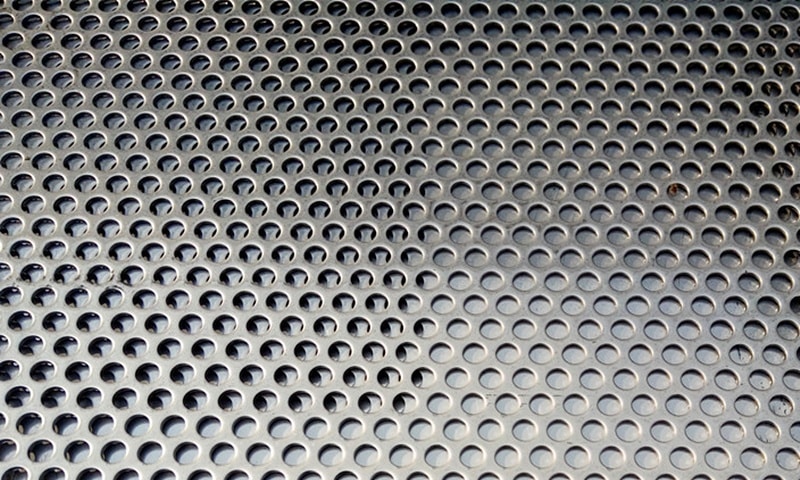
For industrial filtration, the geometry of the opening directly affects flow capacity, fouling behavior, cleaning intervals, and total operating cost. Round hole perforated metal screens deliver stable flow paths and reduced particle hang-up compared to square or slotted openings, making them a dependable choice for filtration and protection duties in industrial and municipal systems.
When solids, fibers, or suspended matter interact with the screen surface, circular apertures eliminate the “corner trap” effect common to square patterns. This reduces bridging and allows for more consistent differential pressure performance throughout the run cycle.

Round Hole Perforated Metal Sheets
Custom perforated metal sheets with precise hole patterns in various materials: stainless steel, aluminum, galvanized steel, carbon steel, copper, brass, and plastic. Durable and corrosion-resistant.
Perfect for architectural screens, machinery guards, acoustic panels, and decorative elements. Factory-direct pricing with cutting/bending services. Request quote or sample today.
Flow dynamics and anti-clog behavior
Round apertures maintain uniform shear and turbulence at the perimeter of the hole. For liquid or slurry filtration, this advantage translates into:
- Less surface blinding under solids loading
- More predictable pressure-drop relationships
- Better cleaning response during backwash or mechanical brushing
- Longer runtime between maintenance events
Engineers appreciate these behaviors because they scale predictably—pressure vs. capacity curves remain consistent when moving from pilot testing to full-scale plants.
Technical specification factors to consider
Choosing the correct round hole configuration involves balancing hydraulic performance with mechanical strength and fabrication constraints.
Hole diameter, pitch & open area
- Hole diameter (D): Typically selected relative to particle size or retention targets.
- Pitch: Staggered patterns (triangular) provide higher open area and lower fouling risk than straight layouts.
- Open area (%): Impacts both capacity and pressure drop; higher open area increases throughput but reduces stiffness.
Plate thickness & rigidity
Screen panels must remain dimensionally stable under differential pressure and handling. Increasing thickness improves rigidity but reduces open area for a given hole diameter. Many filtration applications use structural supports or thicker gauges to achieve the required stability.
Material selection & finishing
- Common alloys: Stainless steels (304/316), carbon steel, galvanized steel, aluminum.
- Considerations: Corrosion exposure, chloride levels, temperature, abrasion, cleaning chemistry.
- Surface finishing: Deburring or polishing reduces fouling points and simplifies cleaning.
Quality and inspection criteria for industrial buyers
Professionals should verify the following characteristics before approving a supplier or production run:
- Hole diameter tolerance
- Pitch consistency
- Edge condition (burr-free)
- Flatness/planarity
- Surface finish condition
- Material and heat certification (if specified)
- Panel/frame fit and fastening compatibility
These factors influence not only hydraulic performance but also operational reliability and replacement intervals.
Typical industrial and municipal applications
Round hole perforated metal screens support a wide range of filtration and protection duties:
- Water & wastewater treatment (inlet screening, pre-filtration)
- Food & beverage (process media, sanitary filtration)
- Oil & gas / petrochemical (separator internals, solids retention)
- Industrial air systems (dust, HVAC protection)
- Mechanical equipment (pump protection, intake screens)
In most of these applications, the decision to use round holes is driven by uptime, maintainability, and predictable cleaning cycles.
Practical specification tips for filtration duty (engineer-focused)
- Match hole diameter to the particle size range or retention target
- Use staggered patterns for increased open area and improved anti-blind performance
- Validate pressure-drop behavior with sample coupons prior to full-scale purchasing
- Confirm plate thickness and support requirements early to avoid rework at installation
- For corrosive media, consider surface finishing or higher-alloy stainless grades to minimize fouling
Buyers guide & procurement checklist
For procurement teams and project buyers, a well-structured specification reduces change orders and rejects. Typical RFQ elements include:
- Material grade
- Plate thickness
- Hole diameter & pattern
- Open area target
- Panel dimensions and tolerances
- Finishing requirements (deburr, polish, passivation)
- Quantity & delivery schedule
- Packaging and export protection (when applicable)
Good procurement specifications align engineering expectations with manufacturing capabilities, shortening lead times and reducing cost of quality.
Summary
Round hole perforated metal screens offer a proven geometric advantage for filtration media where consistency, uptime, and cleanability matter. Their circular apertures resist particle bridging, simplify hydraulic modeling, and respond better to backwash and mechanical cleaning cycles than square or slotted alternatives.
For engineering teams, the decision is not merely about retention size—it is about operational economics and lifecycle performance. When properly specified and inspected, round hole screens can extend maintenance intervals and improve throughput across multiple industrial sectors.


