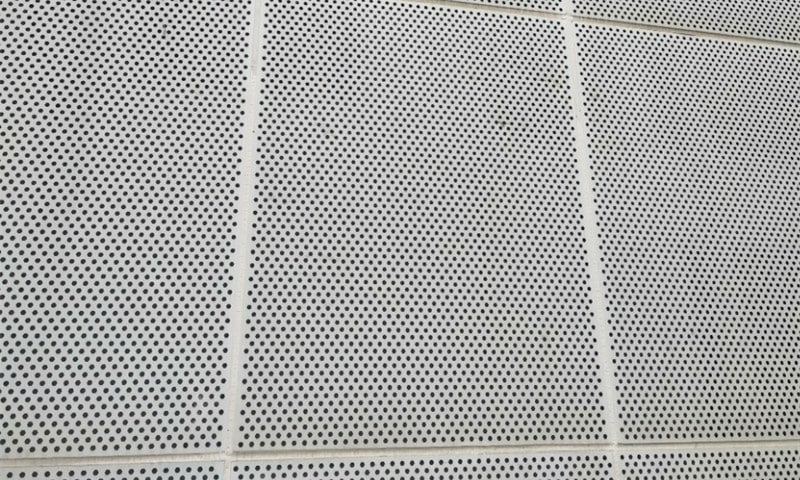
Why Hole Geometry Matters in Industrial Filtration
In industrial filtration systems, performance is rarely determined by material thickness alone. Engineers and procurement teams know that hole geometry plays a decisive role in flow efficiency, clogging resistance, and long-term operating stability.
Among various perforation patterns, round hole perforated metal screens have become a preferred choice across filtration applications involving liquids, slurries, and mixed media. This is not a matter of aesthetics—it is a result of fluid dynamics, maintenance behavior, and real-world production experience.
For filtration systems operating continuously or under high contamination loads, choosing the right hole pattern can significantly reduce downtime and total cost of ownership.

Round Hole Perforated Metal Sheets
Custom perforated metal sheets with precise hole patterns in various materials: stainless steel, aluminum, galvanized steel, carbon steel, copper, brass, and plastic. Durable and corrosion-resistant.
Perfect for architectural screens, machinery guards, acoustic panels, and decorative elements. Factory-direct pricing with cutting/bending services. Request quote or sample today.
How Round Holes Improve Fluid Flow Behavior
From a fluid mechanics perspective, round holes create a more uniform flow profile compared with angular openings.
When liquids pass through round perforations, flow separation at the edges is minimized. This leads to:
- Lower turbulence at the hole boundary
- More stable pressure distribution across the sheet
- Reduced stress concentration on the metal surface
In contrast, square or rectangular holes introduce sharp corners where vortices tend to form. These micro-eddies slow down local flow and encourage particle accumulation—especially when dealing with viscous fluids or suspended solids.
For industrial filtration systems, smoother flow means higher throughput with fewer interruptions.

Reduced Clogging and Slag Buildup
One of the most practical advantages of round hole perforated metal screens is their natural resistance to clogging.
In real-world filtration environments, contaminants rarely behave uniformly. Fine particles, fibrous residues, and semi-solid slag tend to attach themselves at stress points within the opening.
Round holes eliminate sharp internal corners, which are common initiation points for:
- Slag adhesion
- Fiber entanglement
- Progressive blockage
As a result, round hole screens maintain a more consistent open area over time. This translates into fewer cleaning cycles and a longer service interval—an important consideration for industrial plants running 24/7 operations.

Consistent Filtration Accuracy Over Time
Filtration performance is not only about initial specifications; it’s about how the system behaves after weeks or months of use.
With round hole perforation patterns, wear occurs more evenly around the circumference of each opening. This uniform wear pattern helps preserve filtration accuracy longer compared to square holes, where corner erosion can distort the effective opening size.
For industries such as:
- Chemical processing
- Water and wastewater treatment
- Food and beverage filtration
- Mining and mineral separation
maintaining consistent separation thresholds is essential for process stability and regulatory compliance.
Strength, Durability, and Sheet Integrity
Round hole layouts also contribute to better structural performance.
Because stress is distributed evenly around circular openings, round hole perforated metal screens generally retain higher mechanical strength at equivalent open-area ratios. This allows manufacturers to optimize sheet thickness without compromising rigidity or lifespan.
In high-pressure filtration systems or vibrating screening equipment, this structural advantage directly impacts operational reliability.

Engineering and Purchasing Perspective: A Balanced Choice
From an engineering standpoint, round hole perforated metal screens offer predictable flow behavior and easier system modeling. From a purchasing perspective, they represent a reliable, widely standardized solution with consistent quality outcomes.
Key advantages include:
- Easier maintenance planning
- Reduced risk of unexpected clogging
- Broader material availability and customization
- Proven performance across industries
This balance between technical performance and commercial practicality makes round hole screens a default choice for many industrial filtration projects.
Selecting the Right Round Hole Configuration
While round holes provide inherent advantages, optimal performance still depends on correct specification. Hole diameter, pitch, sheet thickness, and material grade must align with the working environment.
When properly specified, round hole perforated metal screens help filtration systems operate cleaner, longer, and more efficiently—without unnecessary complexity.