



Perforated safety grating is a pragmatic, long-lasting choice for industrial stair treads, platforms, ramps and narrow walkways where slip resistance, drainage and load-bearing capacity are essential. This article explains when to specify perforated safety grating, compares common hole patterns, and highlights practical selection, installation and maintenance considerations for engineering teams and procurement professionals.
Why choose perforated safety grating for industrial projects?
Perforated safety grating combines three practical benefits that matter on-site: anti-slip performance, rapid drainage, and predictable structural performance. Compared with plain flat plates or perforated sheets with small decorative holes, purpose-designed safety grating uses engineered hole geometries and raised edges to provide multi-directional traction while maintaining a high open area for water, debris and snow to pass through. These attributes make it a preferred option for heavy-duty walkways, service platforms, and outdoor stair treads.
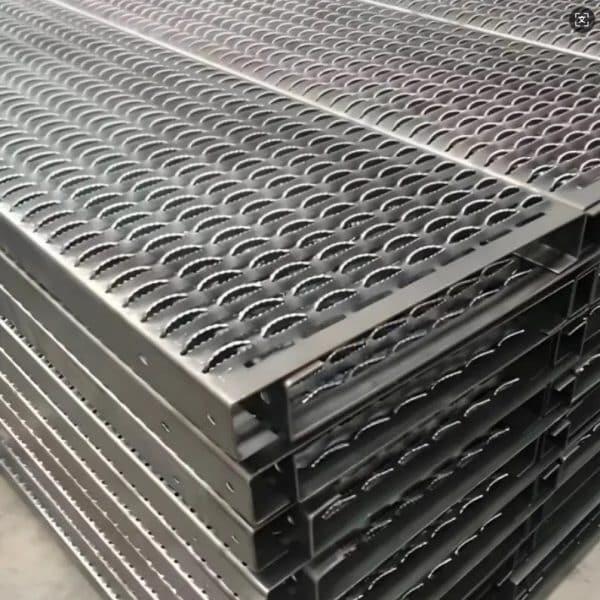
Perforated Safety Grating
Engineered perforated safety grating plate for industrial access systems.
Designed to provide slip resistance, drainage and structural strength in demanding environments such as manufacturing plants, utilities and processing facilities.
Commonly specified for:
- Stair treads and step assemblies
- Elevated walkways and access platforms
- Industrial ramps and service catwalks
Available in multiple metals and custom-fabricated to project requirements.
You can click on the product image to view the specific producible parameters or place an order.
Common hole patterns and their advantages
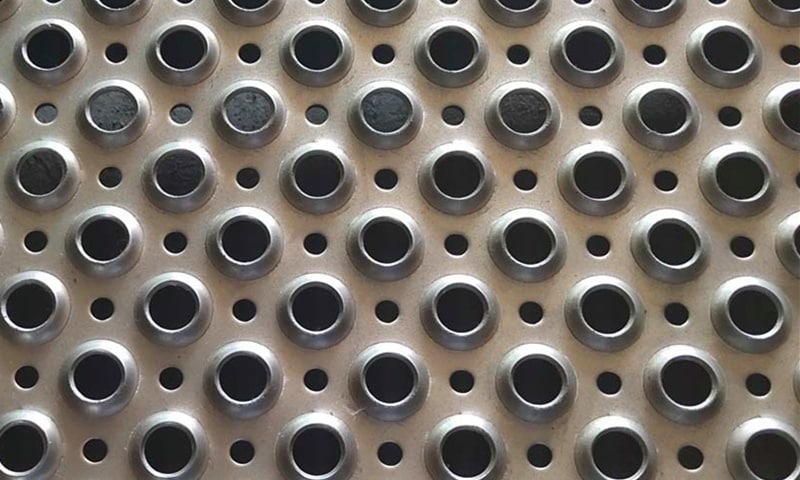
Fish-eye (round dimple) pattern
The fish-eye pattern features shallow, partly dimpled round perforations that generate textured contact points. This pattern is valued for:
- Multi-directional grip, particularly for pedestrian traffic with diverse foot orientations.
- Good self-cleaning behavior—small solids pass through while grit is displaced.
- Lower walking noise and comfortable underfoot feel in lighter-duty pedestrian zones.
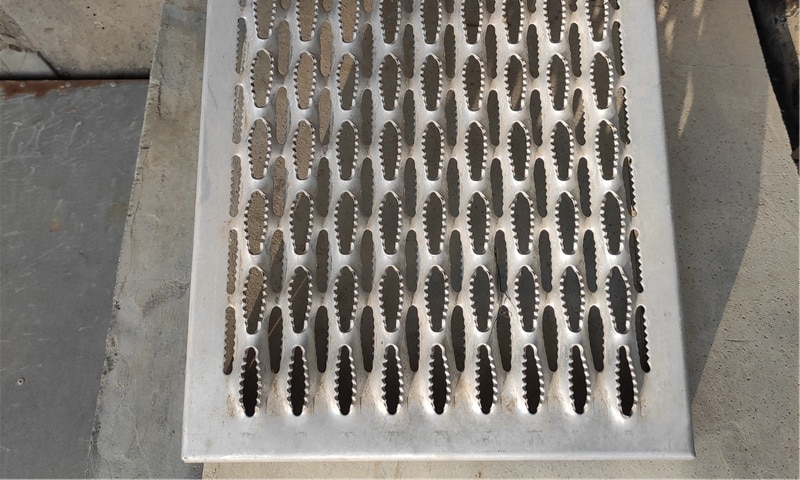
Crocodile-mouth (elongated / serrated) pattern
The crocodile-mouth pattern (also called serrated or slit-style in some markets) offers more aggressive bite and raised edges. Its benefits include:
- Stronger mechanical traction for oily or steeper ramp surfaces.
- Enhanced abrasion resistance under heavy foot or boot traffic.
- Faster water evacuation when combined with a high open area layout.
Material choices and finishes
For industrial environments, metal options are normally limited to steel variants—stainless steel, galvanized carbon steel, and mild steel with protective coatings. Choose materials based on corrosion exposure, required lifespan and budget:
- Stainless steel for highly corrosive or hygiene-critical environments.
- Hot-dip galvanized or zinc-plated finishes for outdoor exposure and cost-effective corrosion protection.
- Thicker gauge steel when increased load-bearing capacity and reduced deflection are required.
When specifying, call out plate thickness, hole pitch, open area percentage, and expected live load to ensure the grating meets structural demands.
Design and specification checklist
- Confirm expected traffic type (foot traffic, light vehicle, forklift) and calculate required load-bearing capacity.
- Select hole geometry (fish-eye vs crocodile-mouth) based on required slip resistance and debris passage.
- Specify exact thickness (gauge) and span between supports to control deflection.
- Decide on finish (stainless grade, galvanized coating, or paint) to match environment and maintenance plans.
- Include edge treatment options—folded edges or welded borders—for safety and rigidity.
Installation tips for reliable long-term performance
- Install grating on evenly spaced support stringers and secure with anti-lift fasteners to prevent movement under traffic.
- Ensure a slight pitch where possible to aid drainage; avoid pockets where water or grit can accumulate.
- Where welding is required, verify that any protective coating or passivation is restored to welded seams to prevent corrosion.
Maintenance and inspection best practices
Routine maintenance keeps safety performance predictable:
- Inspect for wear, corrosion or loose fasteners quarterly in industrial settings.
- Clean accumulated debris that can reduce open area and compromise drainage.
- Replace sections showing permanent deformation or reduced traction—do not rely solely on surface treatments to restore grip.
Specifier notes — common applications
Perforated safety grating is commonly specified for:
- Industrial stair treads and landings
- Equipment platforms and mezzanines
- Outdoor walkways and service ramps
- Catwalks in plants where drainage and foothold are safety priorities
Perforated safety grating is a practical, spec-friendly solution when projects demand reliable slip resistance, effective drainage, and verifiable structural capacity. For detailed product options, material comparisons and custom sizes, see the product page for full technical details: perforated safety grating


