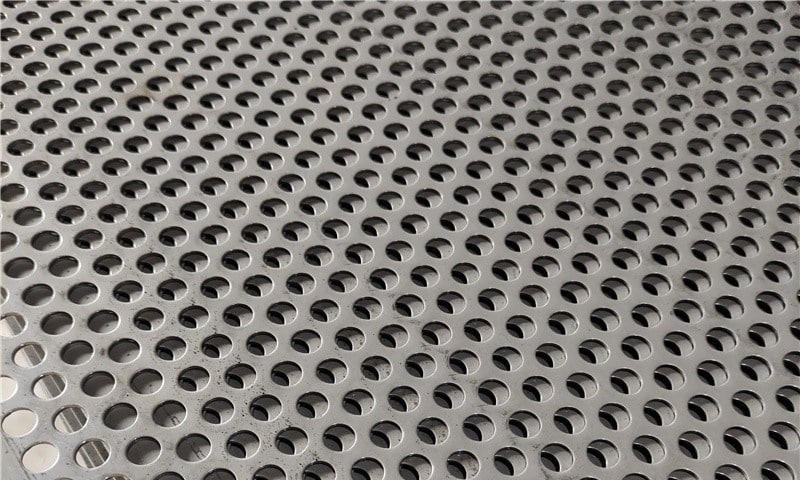
Why Low-Carbon Steel “Behaves Better” on the Punch Press
When customers hear “low-carbon,” they sometimes assume “low strength.” In day-to-day fabrication, we usually see the opposite tradeoff: low-carbon steel is simply more cooperative—especially when you’re punching thousands of holes, keeping tight tolerances, and still needing parts to bend and weld without drama.
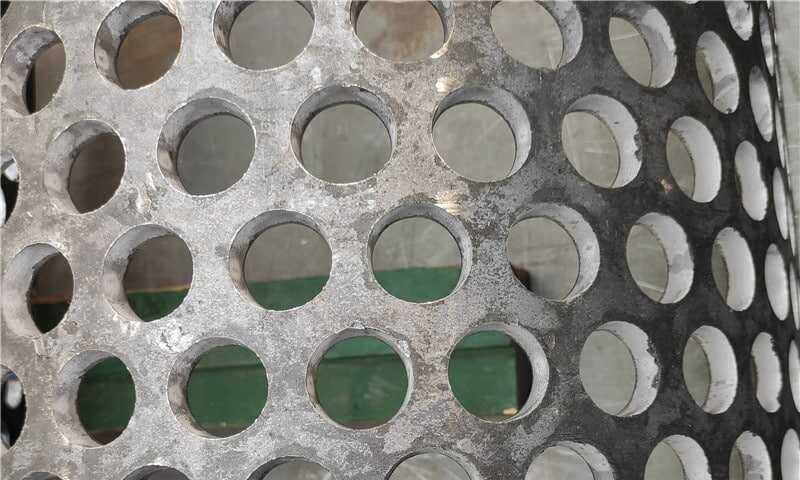
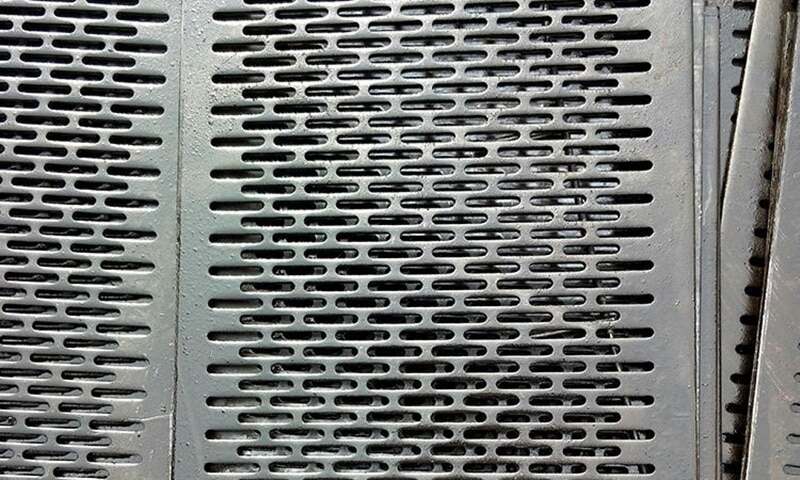
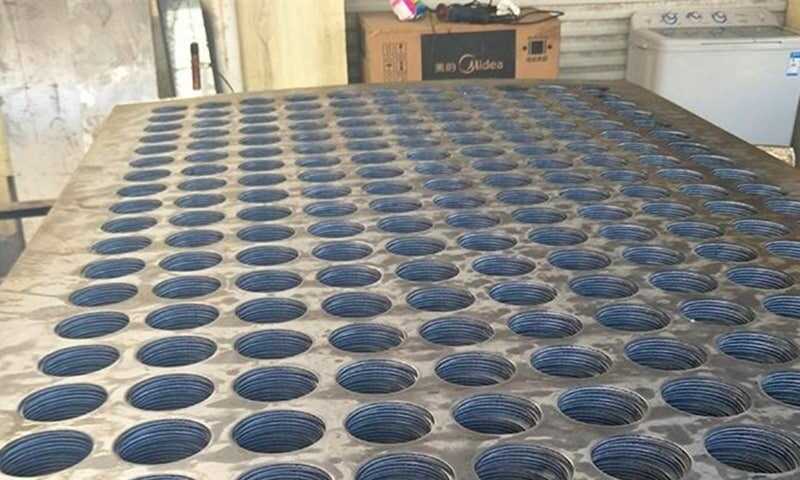
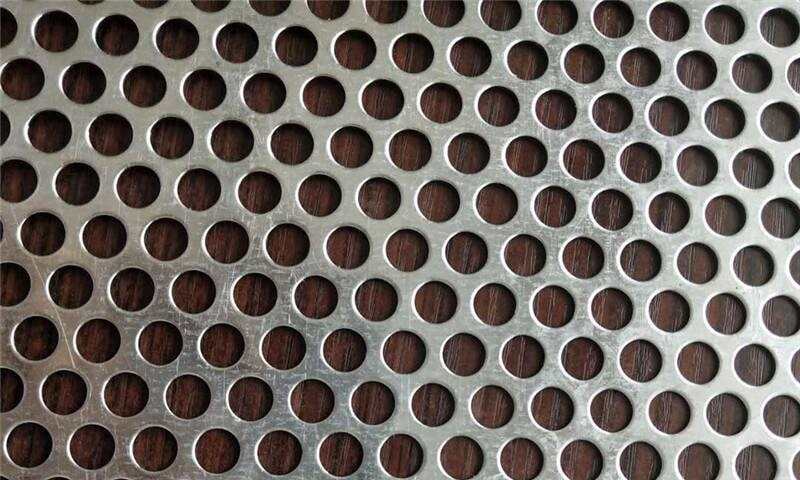
From a CNC punching standpoint, a low carbon steel perforated sheet tends to:
- Punch cleaner with less risk of cracking around tight hole patterns
- Form more predictably (brake bending, rolling, light forming)
- Weld with fewer surprises (less sensitivity to heat-affected cracking vs higher-carbon grades)
- Stay cost-friendly when you’re balancing performance and budget
That combination is why low-carbon options are common for industrial screens, guards, enclosures, partitions, filters, and general fabrication where you want “strong enough” without paying for alloy performance you don’t actually need.
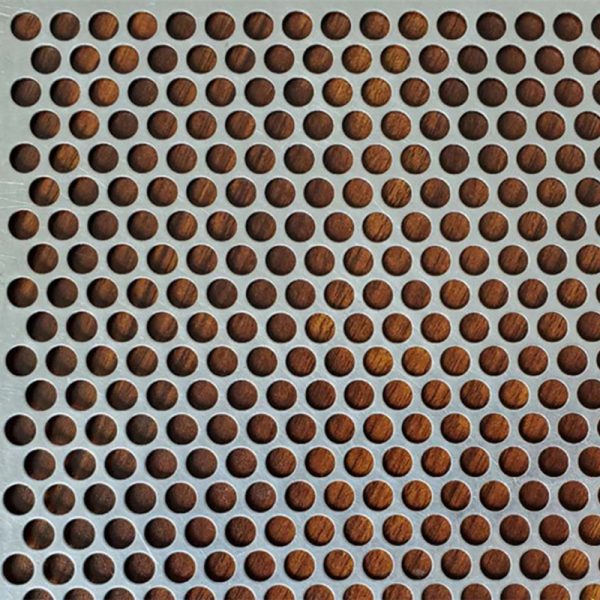
Carbon Steel Perforated Metal Sheets
We work with buyers and engineers who need carbon steel perforated sheets that are practical to manufacture and reliable in use.
If you’re preparing an RFQ or want to confirm specifications before sourcing, a short conversation often saves time on both sides.
Contact us via WhatsApp to talk through the details:
Punching Friendly: What We Notice in Real Production
Cleaner Edges, Less Tool Stress
In punching, the material’s ductility matters. Low-carbon steel typically shears more smoothly under the punch, which helps with:
- More consistent hole geometry across long runs
- Reduced tool wear in many standard patterns (round, slotted, square)
- Better repeatability when you’re pushing higher hits-per-minute
Does that mean burr disappears? No—burr is part of stamping life. But low-carbon steel often keeps burr formation more manageable, especially when tooling is sharp and clearance is set correctly for the sheet thickness.
Better Tolerance Control in Dense Patterns
Dense perforation patterns (small bridges, high open area, tight stagger) are where “processing friendly” becomes real money. Low-carbon steel usually gives you a wider comfort zone before you start fighting micro-tearing, edge distortion, or pattern-driven waviness.
If your design has:
- High open area
- Small hole-to-hole spacing
- Thin webs between holes
…it’s common to see low-carbon steel hold up more gracefully than harder, higher-carbon alternatives.
Bending and Rolling: Why Fabricators Like Low Carbon
Predictable Forming Without Mystery Cracks
A perforated sheet isn’t a solid sheet—holes break up the structure. When you bend it, stress concentrates around hole edges and narrow bridges.
Low-carbon steel generally handles that stress concentration better, which helps when you need:
- Brake-formed panels
- Curved guards and covers
- Rolled cylinders
- Framed perforated inserts
Practical Tip: Match Pattern to Bend Direction
If bending is required, we typically advise designing the pattern so the stronger web direction supports the bend. In plain terms: don’t place the “weakest” bridge orientation directly across your bend line if you can avoid it. A small pattern change can prevent ugly distortion and reduce scrap.
Welding: Low-Carbon Steel Is Forgiving (When You Prep It Right)
A big reason customers pick low-carbon steel is simple: it welds well. It’s commonly used in frames, supports, skids, and fabricated assemblies that need perforated sections.
What Makes Welding Easier
Low-carbon steel is generally less prone to brittle behavior in the heat-affected zone compared with higher-carbon steels. That means fewer headaches when you’re doing:
- MIG welding perforated infill panels into frames
- Stitch welding for guards
- Spot welding in light assemblies
- Tack-and-fixture workflows on production lines
What Still Matters
Even with friendly material, perforation creates edges—and edges create opportunities for contamination and inconsistent fusion if prep is sloppy. For best results, most shops will:
- Deburr where necessary
- Remove oil/scale near weld zones
- Control heat input to reduce warping
- Use fixturing to keep flatness
If you’re building a welded assembly, your supplier should be able to recommend practical thickness ranges and patterns that behave well in fabrication.
“Strong Enough” Has a Boundary—Here’s How to Think About It
Low-carbon steel is not a miracle material. It’s a smart, economical choice as long as you define the job correctly.
Where Low-Carbon Steel Perforated Sheets Excel
A carbon steel perforated plate (low-carbon) is a solid fit for:
- Machine guards and safety panels
- Ventilation panels and acoustic backers
- Industrial partitions and enclosures
- General screening and separation (non-corrosive environments)
- Architectural/utility panels when coated or painted
In these scenarios, strength is usually governed by thickness + support framing, not by whether the steel is high-carbon.
Where You May Need to Upgrade
Consider higher strength steel, thicker gauge, or a different material if you have:
- Heavy abrasion (aggressive bulk solids, constant wear)
- High impact loads or repeated mechanical shock
- Large unsupported spans with high deflection limits
- Fatigue-driven designs (cyclic loading over long periods)
- Corrosive or wet environments (unless coated/treated properly)
If you’re unsure, it’s better to share load conditions and mounting details early. A small change—like thicker material, lower open area, or closer supports—often solves the problem without jumping to a premium alloy.

Cost-Effective Doesn’t Mean “Cheap”—It Means Efficient
A lot of purchasing teams search for cost-effective perforated panels because they want the best performance per dollar, not the lowest sticker price.
Low-carbon steel helps the total cost in several quiet ways:
- Higher manufacturing efficiency (punching speed + fewer defects)
- Simpler downstream fabrication (bending and welding friendliness)
- Easier finishing options (paint, powder coat, galvanizing depending on spec)
- Reliable supply chain for common thicknesses and patterns
If the application allows coatings or controlled indoor use, low-carbon steel can outperform “premium” material choices simply because it’s easier to process and easier to scale.
Choosing the Right Spec: A Quick Buyer Checklist
When customers request a low carbon steel perforated sheet, the questions that lead to the best outcome are usually practical, not theoretical:
Pattern + Performance
- Hole shape (round/slot/square)
- Hole size and pitch
- Target open area (and how much rigidity you can give up)
Sheet + Fabrication
- Thickness and flatness requirement
- Any forming (bend radius, bend direction, rolling)
- Any welding (type, location, distortion tolerance)
Environment + Finish
- Indoor/outdoor exposure
- Corrosion risk
- Finish preference (oiled, pickled, primed, powder coated, galvanized where applicable)
A good supplier will help translate your “what it needs to do” into a pattern and thickness that runs efficiently on CNC punching and behaves well in your fab shop.
The Bottom Line
Low-carbon steel perforated sheets win in the real world because they’re workable. They punch cleanly, form predictably, weld reliably, and hit a sweet spot where the strength is “enough” for a huge range of industrial and manufacturing applications—without paying for material capability you won’t use.
If you’re building components that need to be made efficiently, assembled easily, and delivered at scale, a low carbon steel perforated sheet is often the most practical decision you can make.