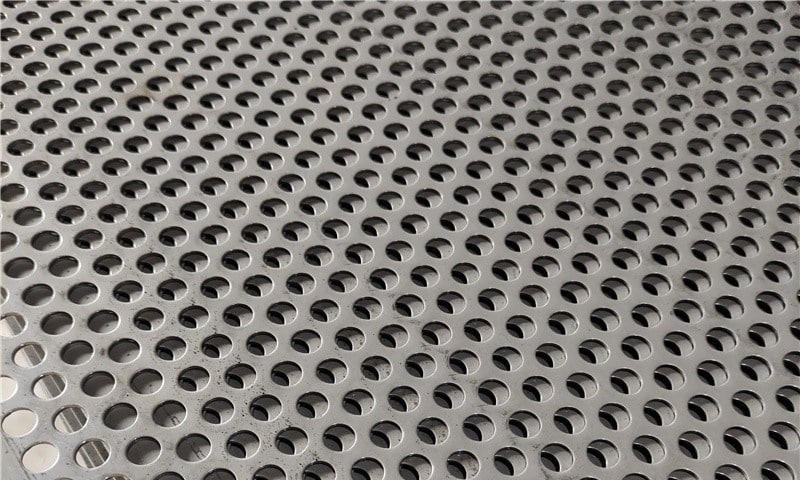
Why Facade Teams Keep Coming Back to Perforated Aluminum
When a facade needs to do more than “look good”—control sunlight, hide equipment, protect airflow, reduce visual bulk, or add a signature pattern—perforated aluminum panels are often the cleanest answer.
From the manufacturing side, these panels look simple until you start chasing consistency across dozens (or hundreds) of sheets. Hole-to-hole alignment, edge margins, flatness after perforation, and finish durability outdoors—those are the things that separate a panel that installs smoothly from a panel that becomes a jobsite headache. The good news: if you make three decisions early, most problems disappear before the first sheet is punched.

Aluminum Perforated Metal Sheets
Send a Quick Message, We’ll Do the Rest
Tell us what you need. We’ll match the right perforated aluminum sheet and quote it — no back-and-forth.
Fast quote + lead time
Sample before production if needed
Factory direct pricing
Decision 1: Open Area vs. Visual Read (You Can’t Optimize Both Without Tradeoffs)
“Open area” isn’t just a spec line. It changes how the building reads from the street and how the system performs.
What open area really controls
- Transparency and privacy: Higher open area = you see through it more, especially with backlighting. Lower open area = more concealment for mechanical screens.
- Daylight and shading: Pattern and pitch can create a shading effect without turning the facade into a solid wall.
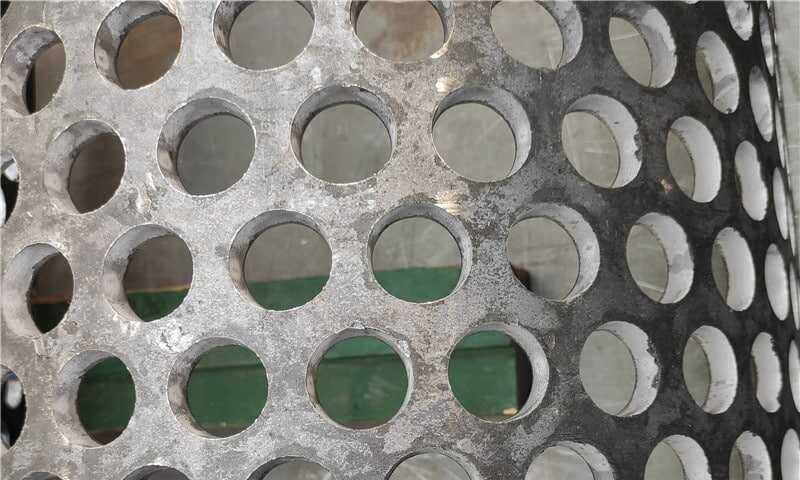
- Visual scale: A 3/16″ hole can feel “fine texture,” while a 1/2″ hole feels bold and architectural—even if open area is similar.
Practical guidance (from the shop floor)
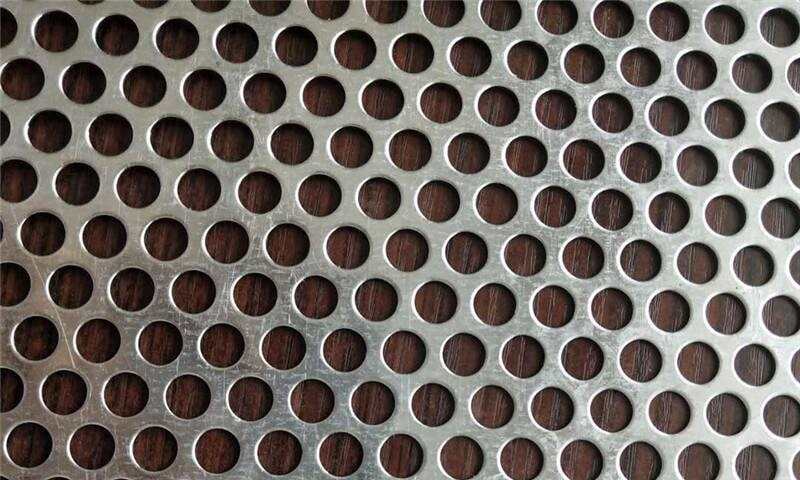
If the panel is part of a repeated facade module, pick a pattern you can keep consistent across batch production. Staggered patterns (like 60°) often look smoother and more “architectural” at distance, but they also make orientation important—flip a panel the wrong way and the eye catches it.
Tip: Decide whether the pattern must “read” the same direction across the facade. If yes, call out orientation in the drawings.
Decision 2: Outdoor Surface Finish (The Wrong Choice Shows Up in 18–24 Months)
Most facade issues aren’t hole-related—they’re finish-related. UV exposure, coastal air, de-icing chemicals, and dissimilar-metal contact will test your finish and your detailing.
Common outdoor finish options for architectural perforated aluminum panels
Powder coating (good, but verify the system)
Powder can be excellent outdoors when the pretreatment and powder system are correct. For exterior architectural work, the spec matters more than the marketing name. Ask for the coating standard level your project requires.
PVDF-style performance (when longevity is the priority)
If you’re working on a high-visibility facade or a harsh environment, higher-performance coating systems are often chosen for color retention and long-term appearance.
Anodizing (clean look, different considerations)
Anodizing can look premium, but you’ll want to align expectations on color range and how edges, bends, and lot variation can appear across large elevations.
Two details that protect the finish in real life
- Edge and cut protection: Edges are where wear starts—especially on panels that slide into frames or clip systems.
- Isolation from steel: Aluminum touching carbon steel + moisture can invite galvanic corrosion. A small isolation detail (tape, gasket, or coated interface) is cheap insurance.
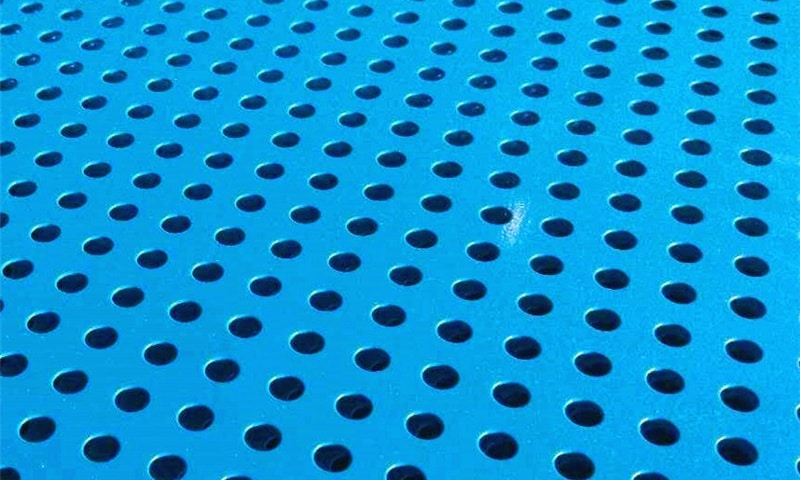
Decision 3: Installation & Edge Margins (Where Most “Unexpected” Problems Come From)
This is the decision contractors feel the most—because it affects drilling, handling, rigidity, and how forgiving the install is.
Stop margins: the hidden key to stable panels
A “stop margin” (unperforated border) gives you:
- cleaner fastening zones
- better edge strength
- improved panel flatness after punching
- less risk of edge distortion during handling
In CNC turret punching, the edge zone is where distortion likes to start if margins are too tight for the thickness and pattern. Giving the panel a reasonable border often reduces waviness and keeps the panel looking crisp on the wall.
Panel stiffness: perforation reduces it—plan for it
Perforation removes material, so stiffness drops. Large panels may need:
- formed returns
- stiffeners
- cassette-style fabrication
- smaller module sizes
If the facade is wind-loaded or spans are wide, treat the perforated sheet like a component in a system, not a standalone decorative skin.
Contractor-Friendly Parameter Checklist (Send This With Your RFQ)
If you want pricing that comes back fast (and comparable across suppliers), include these in your inquiry:
Material & thickness
- Alloy (common choices include 3003 or 5052)
- Temper (if applicable)
- Thickness (e.g., 1.5 mm / 2.0 mm / 3.0 mm)
Perforation pattern
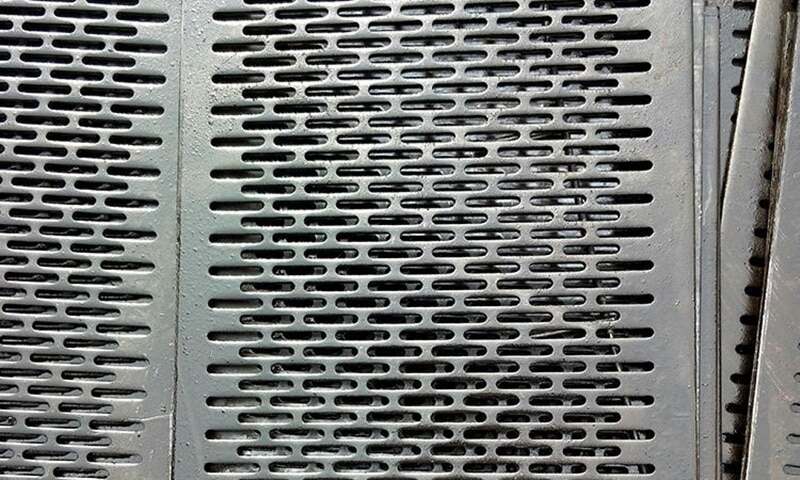
- Hole shape (round / slotted / square / custom)
- Hole size (diameter or slot W × L)
- Pitch / centers
- Pattern layout (straight or staggered)
- Target open area (%)
- Pattern orientation requirements (if any)
Panel geometry
- Finished panel size (W × H)
- Quantity and any lot grouping by elevation
- Stop margin size (top/bottom/sides)
- Corner details / radii
- Flatness or visual tolerance expectations for installed appearance
Finish requirements (outdoor)
- Finish type and performance level required
- Color (RAL / custom match), gloss range
- Protective film needs for shipping/installation
Installation interface
- Mounting method (clips, frames, standoffs, cassette)
- Hole/slot needs for fasteners (if you want them pre-made)
- Any dissimilar metal contact points (so isolation can be planned)
If you want, you can place an internal link near your product block using the anchor text perforated aluminum panels so visitors can jump straight from this news post to the product page.
A Quick Reality Check Before You Lock the Pattern
If your facade is large and repetitive, request a small sample or a first-article check before full production. It’s the easiest way to confirm:
- pattern “read” at distance
- finish appearance under sunlight
- how the margin and mounting points feel in real hardware
That’s a small step that prevents expensive rework—especially on architectural perforated aluminum panels where “close enough” is never close enough once the panels are 30 feet up.