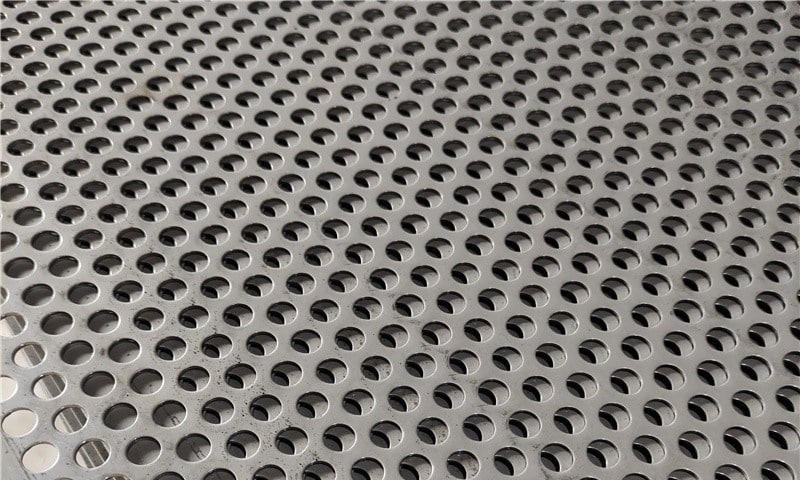
Perforated hot-rolled metal sheets are widely used where strength, airflow, filtration, or visual appearance matter—think protective panels, machine guards, architectural cladding, and safety barriers. Because perforation reduces cross-sectional area and introduces stress concentrators, understanding impact resistance is essential for designers and buyers who need panels that withstand knocks, strikes, or accidental impacts without catastrophic failure.
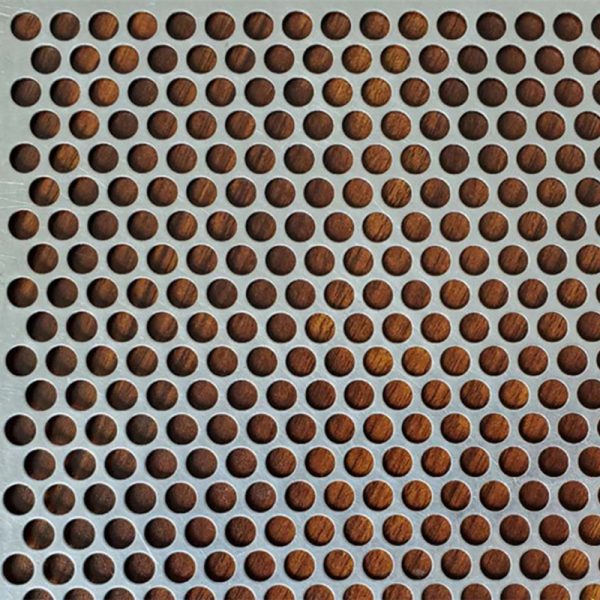
Carbon Steel Perforated Metal Sheets
Carbon steel perforated metal sheets offer a strong, durable solution for a variety of industrial applications. They can be used for structural support, filtration, and more.
Why impact resistance matters for perforated sheets
Impact resistance determines how a panel behaves under sudden loads: does it dent, fracture, deform permanently, or absorb energy and survive? For perforated hot-rolled sheets, impact performance affects:
- Safety: guards and barriers must not fail under accidental hits.
- Durability: repeated impacts accelerate fatigue and cracking.
- Functionality: deformation can block airflow or change acoustic properties.
- Aesthetics: dents and tears compromise visible finishes used in architecture.
Because perforation changes the distribution of material and stress paths, a well-informed selection of material, thickness, and pattern is essential.
How hot-rolled steel properties influence impact performance
Hot-rolled steel has a characteristic surface scale and grain structure produced by rolling at high temperature. Key material factors:
- Toughness vs. strength: tougher steels (higher impact toughness) resist crack propagation but may be lower in nominal yield strength. Selecting a grade with balanced toughness and strength is vital when impact is expected.
- Thickness: thicker sheets provide more load-bearing capacity and energy absorption before failure. Thickness also increases ligament (material between holes) cross-section, which is critical.
- Grain direction and rolling: mechanical properties can be anisotropic. Orientation of the sheet relative to expected load direction matters—designers often align perforation patterns to account for rolling direction.
- Surface condition and residual stresses: hot-rolled surfaces and residual stress from punching or laser cutting will influence crack initiation and impact response.
Perforation parameters that change impact behavior
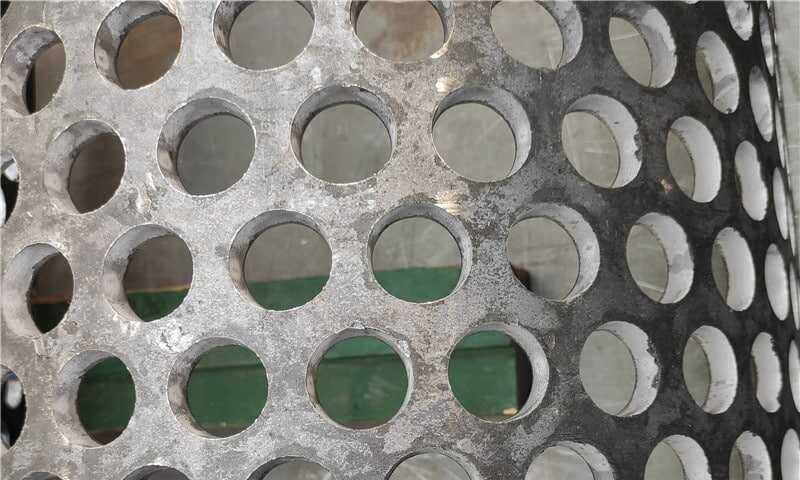
Perforation is not neutral: hole size, shape, pattern, and open area directly affect impact resistance.
- Hole diameter and ligament width: larger holes or narrower ligaments reduce local load paths and create higher stress concentration factors. Maintain adequate ligament width for impact applications.
- Open area (%): higher open area increases weight savings but reduces section modulus and impact capacity. For impact-prone uses, target lower open area or increase base thickness.
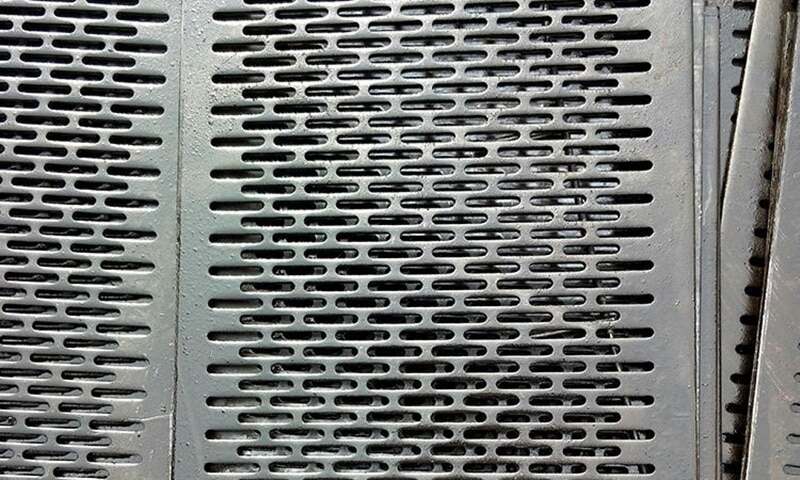
- Hole shape: circular holes distribute stresses more uniformly than sharp-edged shapes. Slots and non-circular holes create stronger local stress raisers and are more likely to initiate cracks under impact.
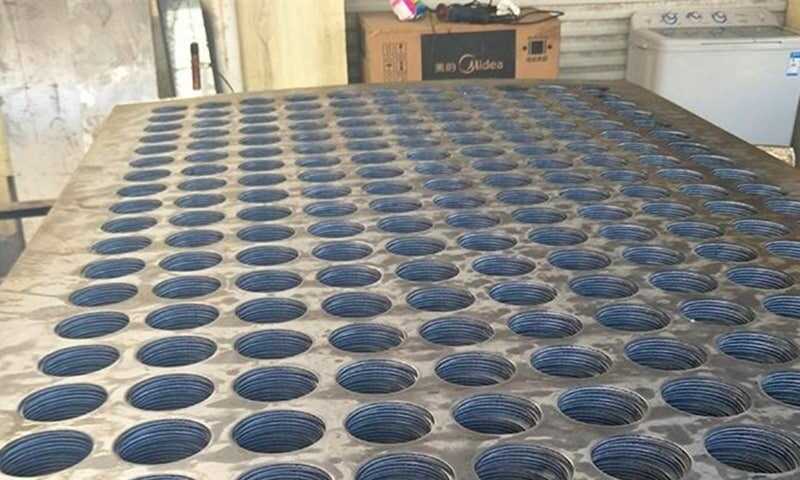
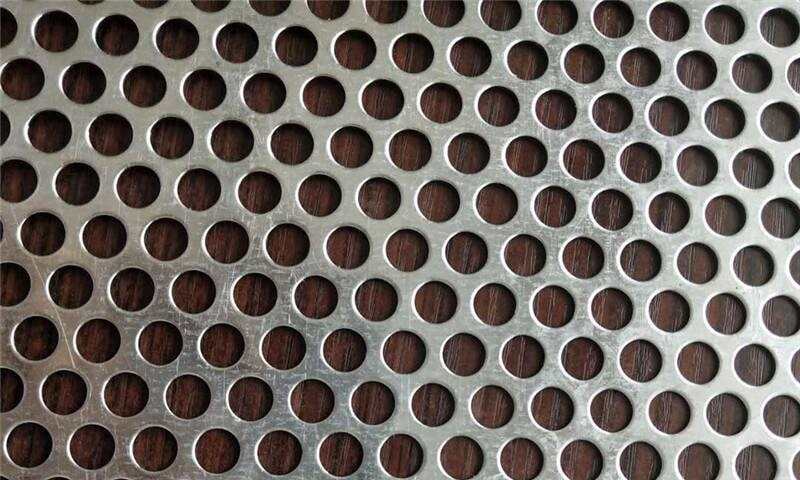
- Pattern (staggered vs. straight): staggered patterns (hexagonal or staggered rows) generally provide more uniform load distribution and better residual strength than straight line patterns for the same open area.
- Edge distance and trimmed borders: holes too close to the panel edge significantly reduce impact resistance at the border and encourage tearing. Keep a safe margin from edges and mounting holes.
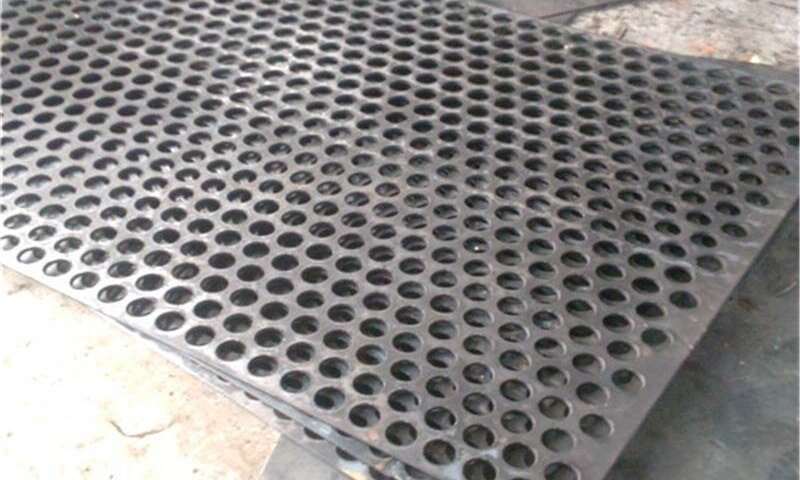
Manufacturing methods and finishing — their effect on impact resistance
How you make and finish a perforated sheet changes outcomes:
- Punching vs. laser/servo cutting: mechanical punching introduces localized cold-working and burrs that can act as crack starters; laser cutting can introduce heat-affected zones. Secondary deburring or smoothing increases fatigue life.
- Work hardening and annealing: punching or cold work can harden ligaments (raising strength but lowering ductility). Controlled annealing restores ductility in critical applications.
- Coatings and corrosion protection: corrosion reduces cross-section and concentrates stresses. Proper plating, galvanizing, or powder coating prevents premature impact failures in aggressive environments.
- Edge reinforcement and framing: adding stiffeners or frames distributes impact loads away from perforated area and dramatically increases panel survivability.
Common test methods and acceptance criteria
While a full materials lab may perform instrumented impact tests, practical approaches for product acceptance include:
- Drop-weight tests: simulate a blunt object impact at set energy levels to see whether the sheet holds, dents, or fractures.
- Charpy-style notched tests on representative ligaments or coupons (for material toughness reference).
- Field trials: mounting a panel in real conditions and subjecting it to representative impacts is often the best way to validate design choices.
- Visual and NDT inspection after test: look for cracking at ligaments, tearing at edges, or through-thickness failure.
Specify acceptance criteria tied to application: for example, “no through-thickness fracture under 8 J drop weight” or “maximum permanent deflection < 3 mm under specified loading.” Agreeing criteria with the buyer avoids surprises.
Practical design recommendations
To maximize impact resistance of perforated hot-rolled sheets while keeping cost and weight reasonable:
- Start with the right grade: choose a steel grade with good notch toughness for impact applications.
- Increase thickness rather than open area reduction when possible: a modest thickness increase gives disproportionate gains in impact capacity.
- Prefer staggered patterns and circular holes where impact matters.
- Maintain minimum ligament width: avoid pushing ligaments below recommended values for the selected thickness.
- Use edge reinforcement: add borders, frames, or folded edges to protect from edge tearing.
- Deburr or smooth cut edges to minimize crack initiation sites.
- Specify coatings suitable for the environment—corrosion protection extends life and preserves impact performance.
- Prototype and test: run drop tests on representative panels and adjust pattern or thickness before full production.
Applications and ready examples
- Machine guards: panels near moving parts should prioritize ligament strength and border reinforcement.
- Acoustic panels: perforation patterns chosen for sound absorption must be balanced with mechanical backing or thicker material if impacts are likely.
- Architectural facades: visual perforation patterns can be preserved while reinforcing critical zones with hidden stiffeners.
- Safety gratings and screens: use lower open area, thicker base metal, and staggered patterns.
Quality control checklist (for buyers and designers)
- Verify material certificates (tensile, yield, elongation, impact where required).
- Confirm actual hole diameter, pitch, and open area on sample panels.
- Inspect ligament widths and distances from edges.
- Check deburring and edge condition.
- Review coating thickness and adhesion tests.
- Run a representative impact/droptest on a mocked-up assembly if the panel is critical to safety.
Conclusion
Perforated hot-rolled metal sheets balance function and form, but perforation changes how the sheet carries sudden loads. By selecting appropriate material grades, keeping sensible ligament widths and patterns, reinforcing edges, and validating performance with prototyping or testing, you can achieve a durable solution that resists impact while preserving the benefits of perforation.
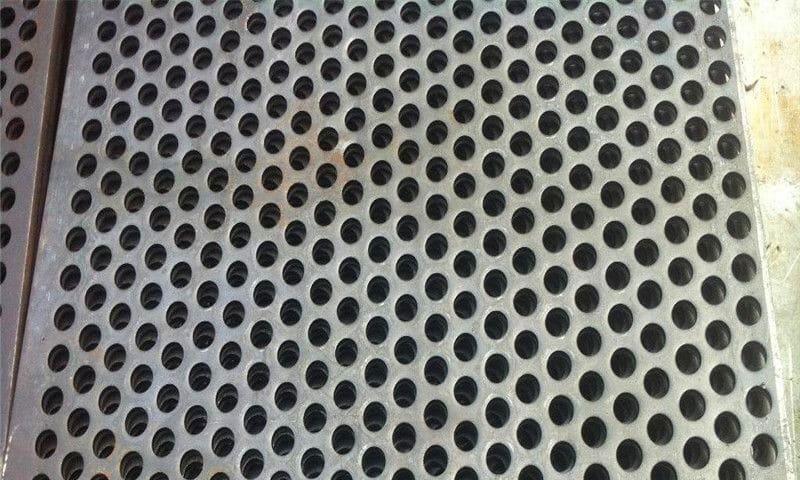
Ready to discuss specifications or request a quote?
If you want a customized recommendation—material grade, thickness, hole pattern, or a tested prototype—we can help provide fast, production-ready options. For project specs, drawings, or a quotation, please contact: info@perfsheet.com.