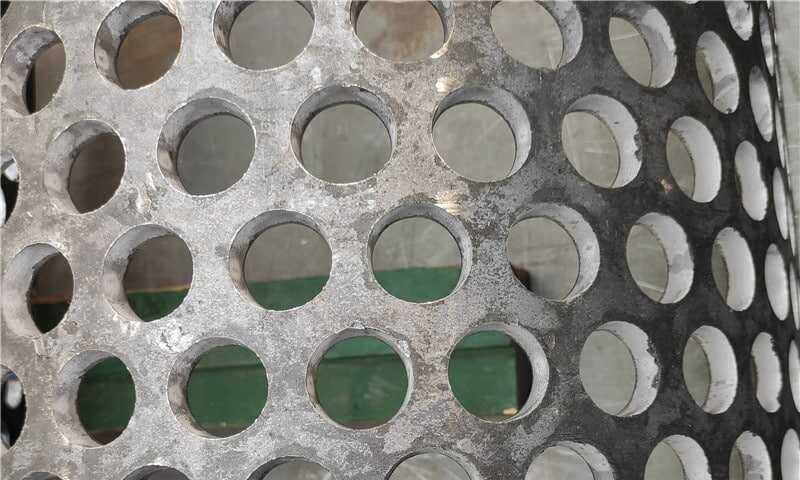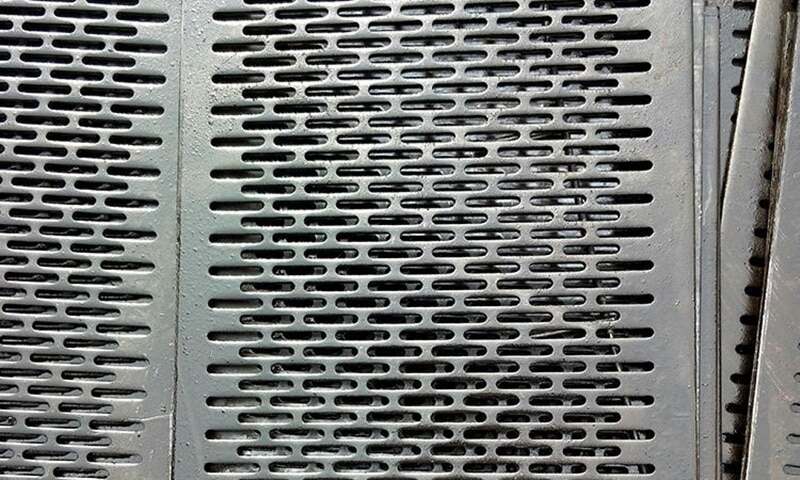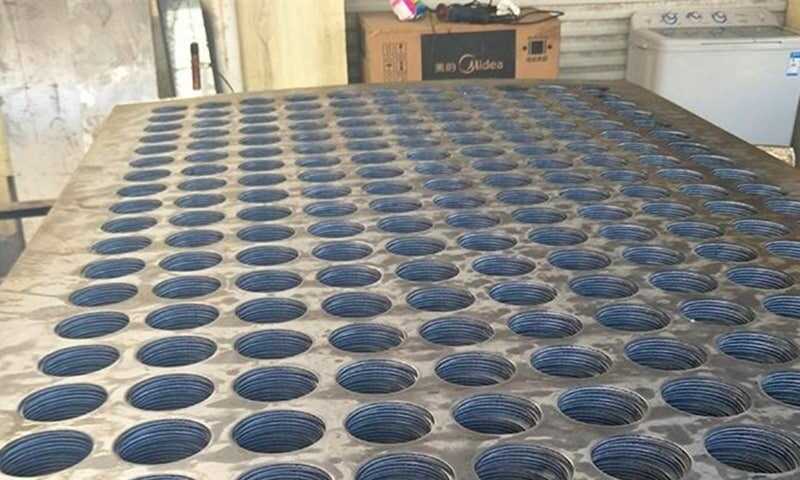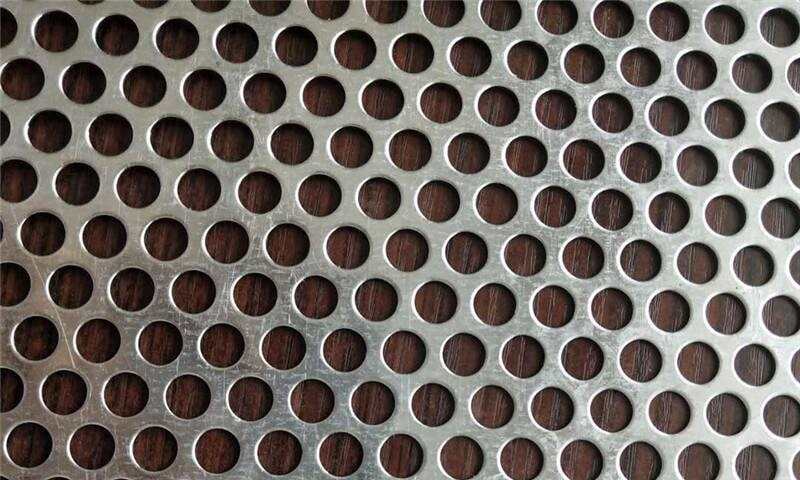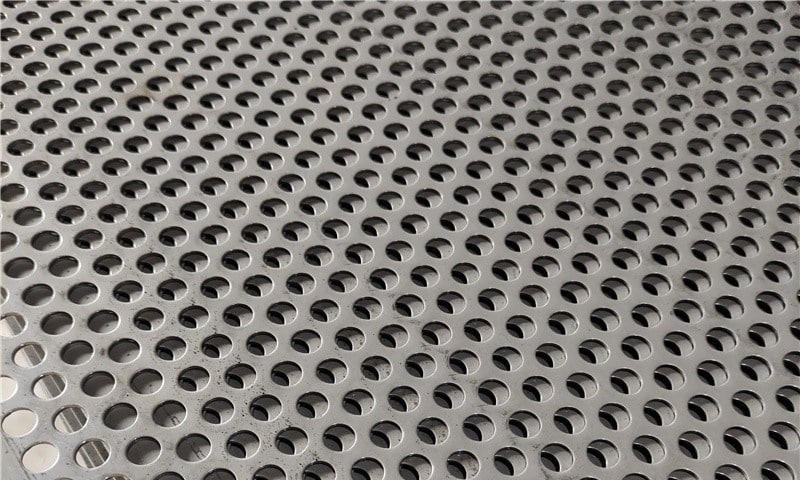
Rectangular-pattern perforated metal sheets are a versatile and cost-effective solution when you need to control airflow, daylight, privacy, and aesthetics at the same time. In this article I’ll explain the key factors that determine ventilation and light transmission for rectangular perforated metal sheet ventilation applications, give practical design rules, show a simple open-area calculation, and offer installation tips that help you meet performance goals without sacrificing strength or finish.
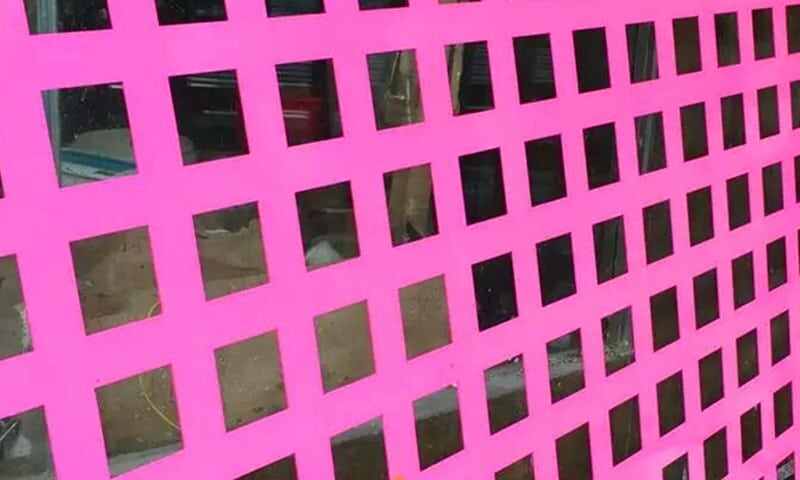
Why rectangular holes?
Rectangular holes give designers extra control compared with round or slot patterns. Because the hole shape has both width and height, you can tune:
- The directionality of daylight (longer dimension can align with sun paths).
- Structural stiffness — narrower widths maintain more metal between holes.
- Visual privacy — rectangular holes can be oriented to reduce sight lines.
- Manufacturing ease — rectangular punching or laser cutting is straightforward for many metals and thicknesses.
All of these affect how much air and light actually pass through the panel in real installations.
Key parameters that control ventilation and daylighting
1. Open area (perforation ratio)
Open area — the percentage of the sheet occupied by holes — is the single most important number for both airflow and light. It’s calculated as:
Open area (%) = (total hole area / panel area) × 100
Example (step-by-step):
- Hole width = 10 mm, hole height = 5 mm → hole area = 10 × 5 = 50 mm².
- Pitch (center-to-center) = 12 mm horizontally × 7 mm vertically → unit cell area = 12 × 7 = 84 mm².
- Open area = (50 / 84) × 100 = 0.595238… × 100 ≈ 59.52%.
That example yields a very high open area — useful for high ventilation and daylight. For many façades or sunshade panels, designers typically target open-area ranges between about 15% and 60% depending on the balance needed between air, light, and screening. (Lower ranges favor privacy and strength; higher ranges favor flow and light.)
2. Hole size and aspect ratio
- Larger holes transmit more light and reduce air resistance, but they also reduce privacy and can weaken the sheet if spacing is small.
- Rectangular aspect ratios (for example 2:1, 3:1) allow directional control — orient the long side vertically to admit streaks of light, or horizontally to admit even daylight.
3. Sheet thickness and material
- Thicker sheets are stiffer and can carry higher loads but slightly reduce effective open area if hole edges are chamfered or rolled.
- Material choice (steel, stainless, aluminum, copper, brass) affects reflectivity (lighting), corrosion performance, and weight.
4. Pitch and edge distance (net metal thickness)
- The spacing between holes (metal net) controls structural strength. Smaller net widths raise the chance of distortion; larger net widths lower open area.
5. Mounting distance and shadowing
- A perforated panel mounted directly against a solid backing will transmit much less light than the panel mounted 1–3 inches away because of shadowing and bouncing of light. For ventilation, mounting distance can also alter flow paths and reduce pressure drop across the panel.
6. Orientation and angle
- The panel tilt relative to predominant wind direction and sun path matters. Tilt and orientation will change both effective airflow and daylight patterns through the holes.
Practical relationships: ventilation vs. light
- Ventilation is roughly proportional to open area and available face velocity. Doubling open area tends to allow significantly more airflow, but real-world flow also depends on pressure differential and blockage from framing or backings.
- Light transmission depends on open area, hole aspect ratio, hole orientation, and distance to the interior surface. Diffuse daylight benefits from larger, more evenly distributed holes; direct sunlight can be “steered” by orienting rectangles.
A useful rule of thumb: if you need maximum ventilation, aim for open area in the 40–60% range. If you want moderate ventilation with more privacy and strength, aim for 15–35%. These ranges are guidelines; final selection should consider structural, acoustic, and aesthetic requirements.
Simple design workflow (practical steps)
- Define performance goals
- Target ventilation rate (m³/h or CFMs, if available) or percent daylighting required.
- Privacy or visual transparency target (e.g., <30% visible from 10 m away).
- Choose a starting open-area range
- Use 40–60% for high airflow, 20–40% for mixed performance, 10–20% for screening.
- Select hole geometry
- Pick rectangle dimensions (W × H) and pitch (Px × Py) that meet open-area target while keeping at least the minimum net metal for strength.
- Check structural constraints
- Verify sheet thickness and net metal width meet wind-load and mounting requirements.
- Mock-up and test
- If possible, order a small prototype (even a single panel) and test light levels and airflow in situ. Pay attention to how mounting distance changes results.
- Finalize finish and material
- Decide on coatings, perforation edge treatments, and fasteners that will not clog holes or reduce open area.
Acoustic and maintenance considerations
Perforated metal can be combined with backing materials (acoustic insulation, filter media) to add sound absorption while still allowing controlled ventilation. Maintenance access is important — larger holes are easier to clean, and coatings should be chosen so dirt doesn’t trap and reduce light or flow over time.
Installation tips to maximize performance
- Leave a small offset (e.g., 1–3 inches / 25–75 mm) between perforated panel and solid backing to improve daylight diffusion and airflow distribution.
- Use continuous support rails rather than point clips when you need even pressure distribution and to reduce visible distortion.
- For coastal or corrosive environments, choose stainless or properly coated aluminum.
- During design handoff, show clear hole-to-hole tolerances and edge distances to avoid mispunching that reduces open area.
Case example (quick): from requirement to layout
Suppose you need moderate ventilation and good daylight but want some screening. You could choose:
- Target open area: ~30%
- Rectangular hole: 8 mm × 6 mm → hole area = 48 mm² (8 × 6 = 48).
- Pitch: 10 mm × 16 mm → unit cell area = 160 mm² (10 × 16 = 160).
- Open area = (48 / 160) × 100 = 30%.
This layout delivers the target open area while keeping net metal (minimum 2 mm around holes in the narrower direction) for strength.
Conclusion
Rectangular-pattern perforated metal sheets offer an excellent combination of ventilation, daylight control, and aesthetics when they’re designed with the right hole geometry, open area, thickness, and mounting strategy. Start with clear performance goals, calculate open area carefully, and prototype when possible to validate real-world results.
Ready to specify a rectangular perforated metal solution for your project? Send your drawings, desired open-area target, and quantity to info@perfsheet.com and we’ll reply with recommended layouts, material choices, and a quick quote. We support single-piece samples and large-scale custom production.