In the world of architectural metal and industrial screening, hole shape is never a minor detail. It directly affects open area, structural stability, airflow performance, and even visual identity. While round holes remain the industry standard, Square Hole Punched Stainless Steel offers distinct engineering and aesthetic advantages that cannot be overlooked.
Over the years, we have supplied stainless steel perforated sheets to fabricators, façade contractors, OEM manufacturers, and agricultural processors across North America and overseas markets. One recurring observation stands out: when higher open area, sharp architectural lines, or precision particle sizing are required, square hole patterns become the better solution.
Let’s examine why.

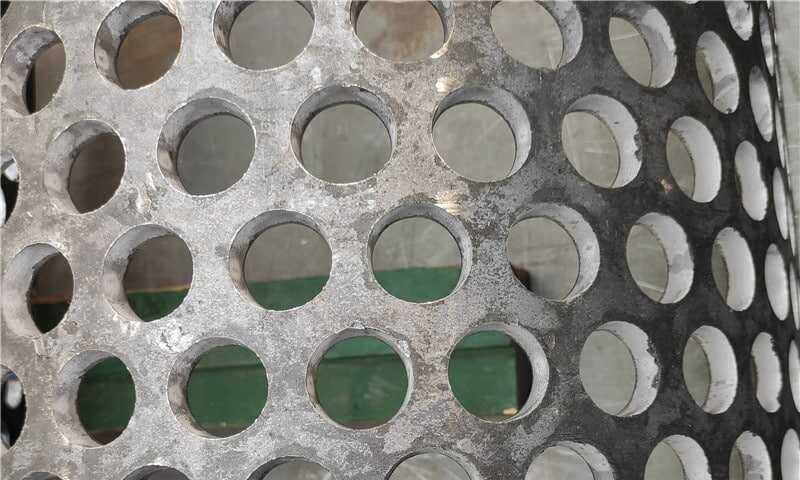
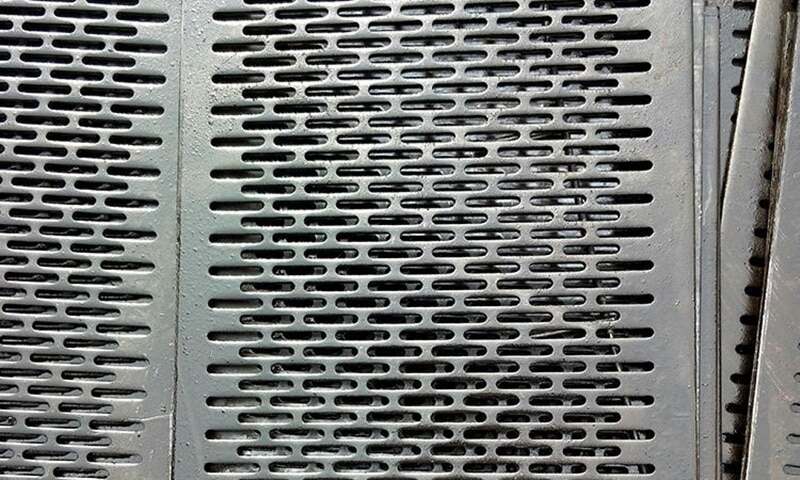
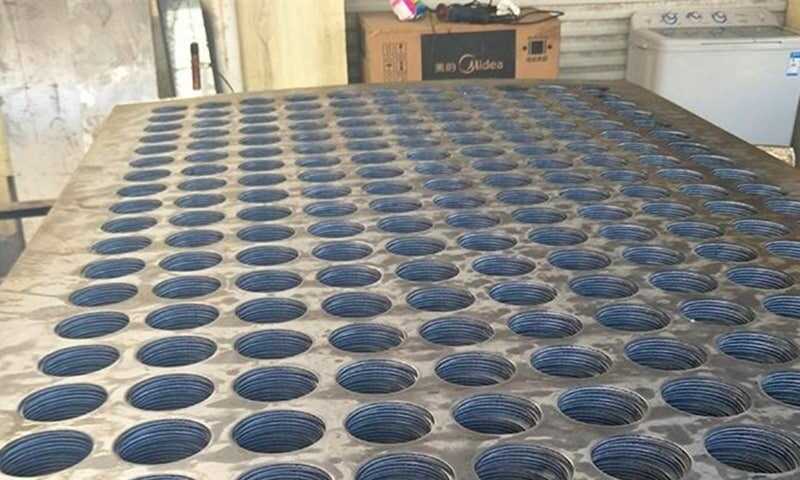
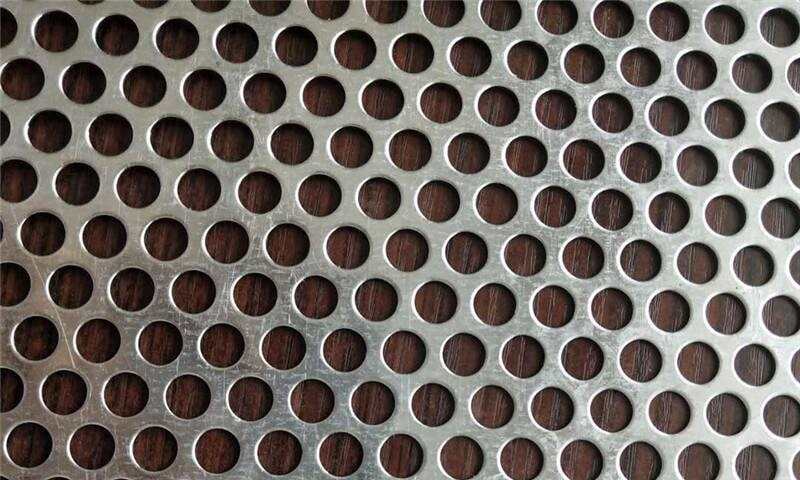
Stainless Steel Perforated Metal Sheets
Stainless steel perforated sheet is a commonly used material in both architectural and industrial applications. It offers stable corrosion resistance and good fabrication flexibility.
Hole patterns, open area, dimensions and surface finishes can all be customized according to project drawings. Typical uses include facades, ventilation and filtration, partitions and equipment protection.
Feel free to view the product details or contact us for samples and pricing information.
Maximizing Open Area Beyond Traditional Limits
Open area percentage directly determines airflow, drainage rate, acoustic absorption, and screening efficiency. In conventional round hole layouts, even with staggered pitch, open area is limited by the geometry of circles.
Square hole configurations, however, allow tighter nesting and edge-to-edge alignment.
Why Square Holes Increase Open Area
- Straight edges allow closer pitch alignment
- Reduced “wasted” corner space between perforations
- Higher material removal rate with uniform load distribution
- Improved airflow and light transmission potential
For designers of ventilation panels or equipment guards where airflow is critical, Square Hole Punched Stainless Steel can deliver a noticeable performance improvement compared to standard round perforations.
In HVAC enclosures and mechanical housings, this often translates into better cooling efficiency without increasing panel thickness. In architectural façade systems, higher open area means improved daylight control while maintaining structural strength.
A Stronger Visual Impact in Modern Architectural Design
Today’s architects and façade engineers increasingly favor linear, modular, and geometric compositions. Round perforations create softness. Square holes introduce rhythm, structure, and sharp definition.
Why Architects Choose Square Patterns
- Clean, grid-based appearance
- Strong alignment with curtain wall mullions
- Contemporary industrial aesthetic
- Enhanced shadow geometry under natural light
Square hole stainless steel sheets are frequently specified for:
- Curtain walls
- Decorative cladding systems
- Ventilation screens
- Sunshade panels
- Interior feature partitions
The crisp edges of square perforations create defined light patterns that shift throughout the day. In commercial façades and retail spaces, this visual sharpness adds character and engineered precision to the building envelope.
When fabricated in brushed or electropolished stainless steel, the pattern reflects light differently from circular perforations, offering a more technical and deliberate architectural statement.
Technical Challenge: Maintaining Corner Precision in Stainless Steel Punching
Square holes may look simple on paper. In production, they are not.
Stainless steel—especially grades such as 304 and 316—presents higher hardness and springback compared to mild steel or aluminum. When punching square patterns, corner integrity becomes the defining manufacturing challenge.
What Makes It Difficult?
- Stress concentration at 90-degree corners
- Tool wear caused by stainless hardness
- Burr control at sharp edges
- Sheet distortion under high punching density
Precision die design, proper clearance control, and real-time tool maintenance are critical. Poorly calibrated tooling leads to rounded corners, micro-fractures, or inconsistent hole dimensions.
For B2B buyers, this matters.
Particle sizing, architectural fitment, and structural tolerances depend on accurate corner geometry. An experienced CNC punching operation must carefully balance tonnage, feed rate, and die sharpening cycles to maintain consistent square hole definition across large production runs.
This is where production expertise separates commodity perforation from engineered perforation.

Unique Application: Nut and Dried Fruit Screening Efficiency
Beyond architecture and ventilation, Square Hole Punched Stainless Steel plays a specialized role in food processing—particularly in nut and dried fruit sorting.
Why Square Holes Work Better for Screening
- More accurate dimensional screening for cube-like particles
- Reduced rolling bias compared to round apertures
- Improved sizing separation consistency
- Hygienic and corrosion-resistant material
In almond, cashew, walnut, and dehydrated fruit processing lines, square apertures provide more controlled size classification. Because the opening maintains consistent width on all sides, screening accuracy improves for irregular-shaped or semi-cubic products.
Combined with stainless steel’s corrosion resistance and sanitary properties, square hole patterns are often preferred in facilities that follow strict food safety regulations.
When Should You Choose Square Hole Stainless Steel?
Choose square hole perforated sheets when:
- Maximum open area is required
- Airflow efficiency outweighs cost considerations
- Modern architectural aesthetics are a priority
- Accurate particle sizing is necessary
- Linear design alignment matters
Round holes remain efficient and economical. But when performance or design intent calls for precision and structural clarity, square patterns offer measurable advantages.
Engineering + Market Perspective
From a manufacturing standpoint, square hole punching requires tighter tolerances and more frequent tooling control. This slightly increases production complexity.
From a market standpoint, square hole stainless steel sheets deliver differentiation—whether in a façade project or a processing plant.
For contractors, this means stronger project identity.
For OEMs, it means improved equipment performance.
For processors, it means better yield control.
In today’s competitive industrial and architectural environments, that difference matters.