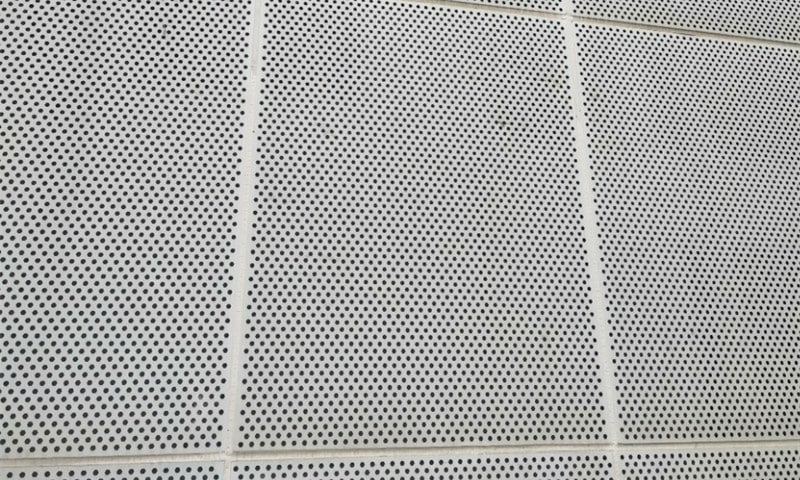
When it comes to selecting the best 304 stainless steel perforated sheets, understanding the material’s properties, cost-effectiveness, and application versatility is crucial. With a range of industrial uses, from construction to appliances, 304 stainless steel offers reliable corrosion resistance and a smooth finish that can withstand harsh environments. In this guide, we’ll explore the key factors that influence the selection of 304 stainless steel perforated sheets, including its corrosion resistance, suitability for different industries, and how to assess its thickness and quality.

Stainless Steel Perforated Metal Sheets
Stainless steel perforated sheet is a commonly used material in both architectural and industrial applications. It offers stable corrosion resistance and good fabrication flexibility.
Hole patterns, open area, dimensions and surface finishes can all be customized according to project drawings. Typical uses include facades, ventilation and filtration, partitions and equipment protection.
Feel free to view the product details or contact us for samples and pricing information.
Why Choose 304 Stainless Steel?
304 stainless steel is known for its excellent resistance to corrosion and staining, making it an ideal choice for a variety of applications. Its composition, which includes chromium and nickel, enhances its durability, allowing it to perform well in environments prone to corrosion. This is especially important for industries like construction, automotive manufacturing, and appliance production, where material longevity is a key consideration.
In addition to its corrosion resistance, 304 stainless steel provides an aesthetically pleasing, smooth surface that’s easy to maintain. These features make it the go-to choice for perforated sheets used in architectural designs, grilles, safety barriers, and even decorative applications.
Corrosion Resistance Benchmark: What You Need to Know
304 stainless steel has long been revered for its ability to resist rust, oxidation, and staining, particularly in environments exposed to moisture or chemicals. This is why it is commonly used in kitchens, chemical plants, and marine environments. However, it’s important to note that 304 steel, while resistant to many corrosive elements, is not entirely immune to more aggressive environments. For highly acidic or chlorinated areas, you may need to consider materials like 316 stainless steel for additional protection.
Understanding the corrosion resistance of 304 stainless steel perforated sheets can help you make informed decisions about where and how to use them. Always evaluate the exposure to corrosive elements and the conditions under which the material will be used.
Cost-Effectiveness in Industrial and Architectural Applications
One of the key advantages of 304 stainless steel perforated sheets is its balance between performance and cost. While it’s more expensive than carbon steel or aluminum, its long-term durability and low maintenance requirements make it an excellent investment. It’s particularly cost-effective in industrial and architectural applications, where durability is paramount.
When compared to other materials, 304 stainless steel perforated sheets offer great value due to their corrosion resistance and high tensile strength, making them ideal for both functional and aesthetic uses. Whether you are using them for ventilation systems, walkways, or facades, their reliability and performance in various environmental conditions make them a smart choice.

Thickness and Hole Size: The Impact on Performance and Manufacturing
The thickness of 304 stainless steel sheets directly impacts both their performance and the manufacturing process. Thicker sheets tend to be more durable and resistant to deformation, but they also present challenges when it comes to perforating. The difficulty of perforation increases with thickness, especially when you require precise, small holes or patterns.
When choosing the right thickness, consider both the structural requirements and manufacturing capabilities. If you require a sheet that can handle heavy-duty applications such as industrial machinery or safety grilles, a thicker gauge will offer greater strength and durability. For decorative or lightweight applications, a thinner sheet may suffice, offering better ease of manufacturing and cost efficiency.
How to Conduct a Magnetic Test for 304 Stainless Steel
A simple yet effective way to confirm the quality of your stainless steel material is through a magnetic test. 304 stainless steel, unlike other steel grades, is non-magnetic in its annealed state. This property can be used as an initial check to ensure that you’re working with genuine 304 stainless steel.
To perform a magnetic test, simply use a magnet to see if it sticks to the surface. If the magnet adheres to the metal, it likely isn’t 304 stainless steel, and you may be dealing with a lower-quality material. Keep in mind that after certain processes, such as cold working or welding, 304 stainless steel can exhibit some magnetic properties, though it will generally remain weakly magnetic.
Conclusion: Choosing the Right 304 Stainless Steel Perforated Sheets
Selecting the right 304 perforated stainless steel sheets depends on a combination of factors, including corrosion resistance, thickness, and the application at hand. Whether you need durable material for industrial use or a more aesthetically pleasing solution for architectural projects, 304 stainless steel offers a reliable, cost-effective option.
Be sure to consider your specific needs carefully and consult with a supplier who can provide guidance on the best materials for your project. With the right choice, you’ll benefit from superior performance and long-lasting quality, ensuring your application stands the test of time.