Why this “simple” rule matters in real production
In heavy duty perforated plates, the relationship between hole diameter and plate thickness isn’t just a design preference—it’s one of the quickest predictors of whether a pattern will punch cleanly, run efficiently, and stay consistent over a long production batch.
The common guideline—hole diameter ≥ plate thickness—is a practical, shop-floor rule that comes from years of CNC punching experience. When the hole is smaller than the thickness, you’re asking the tooling to do something mechanically unfriendly: push a small punch through a deep cut while fighting higher friction, higher heat, and greater risk of slug issues.
For overseas B2B buyers, this rule is especially useful because it helps prevent the most frequent surprises: excessive burr, warped plates, uneven holes, and shorter tool life (all of which show up later as installation problems or field complaints).

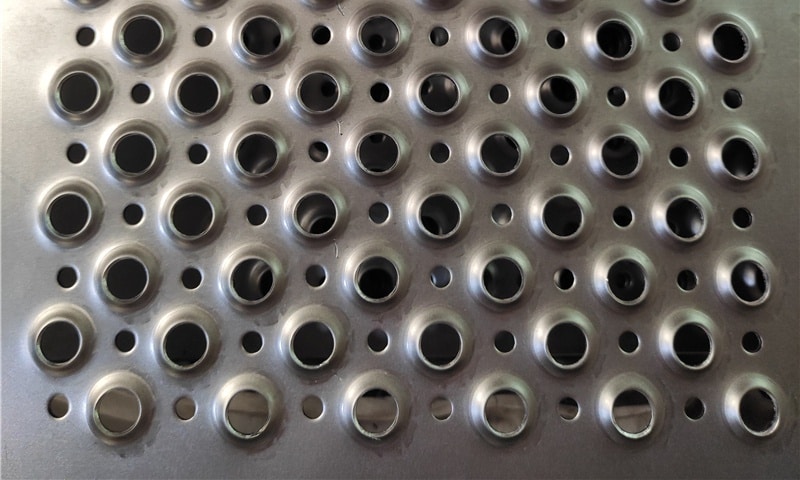
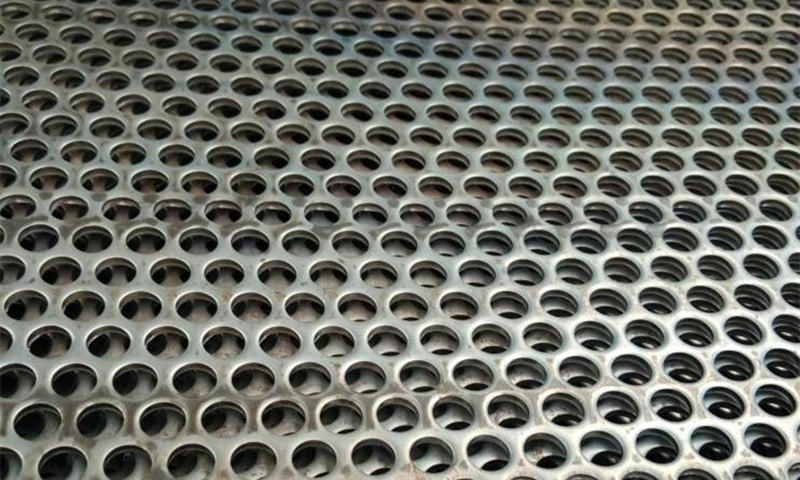
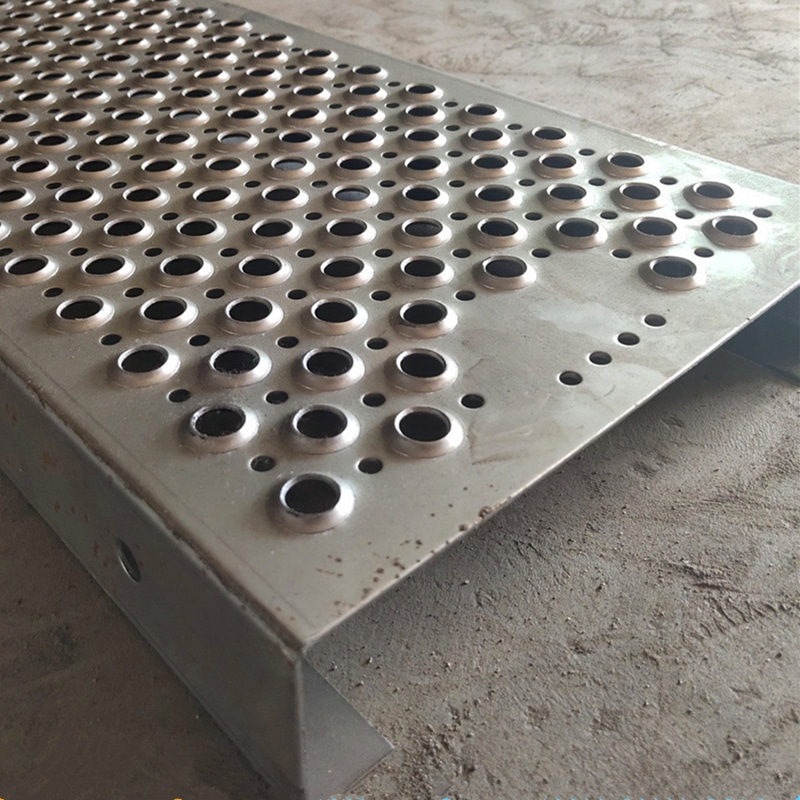
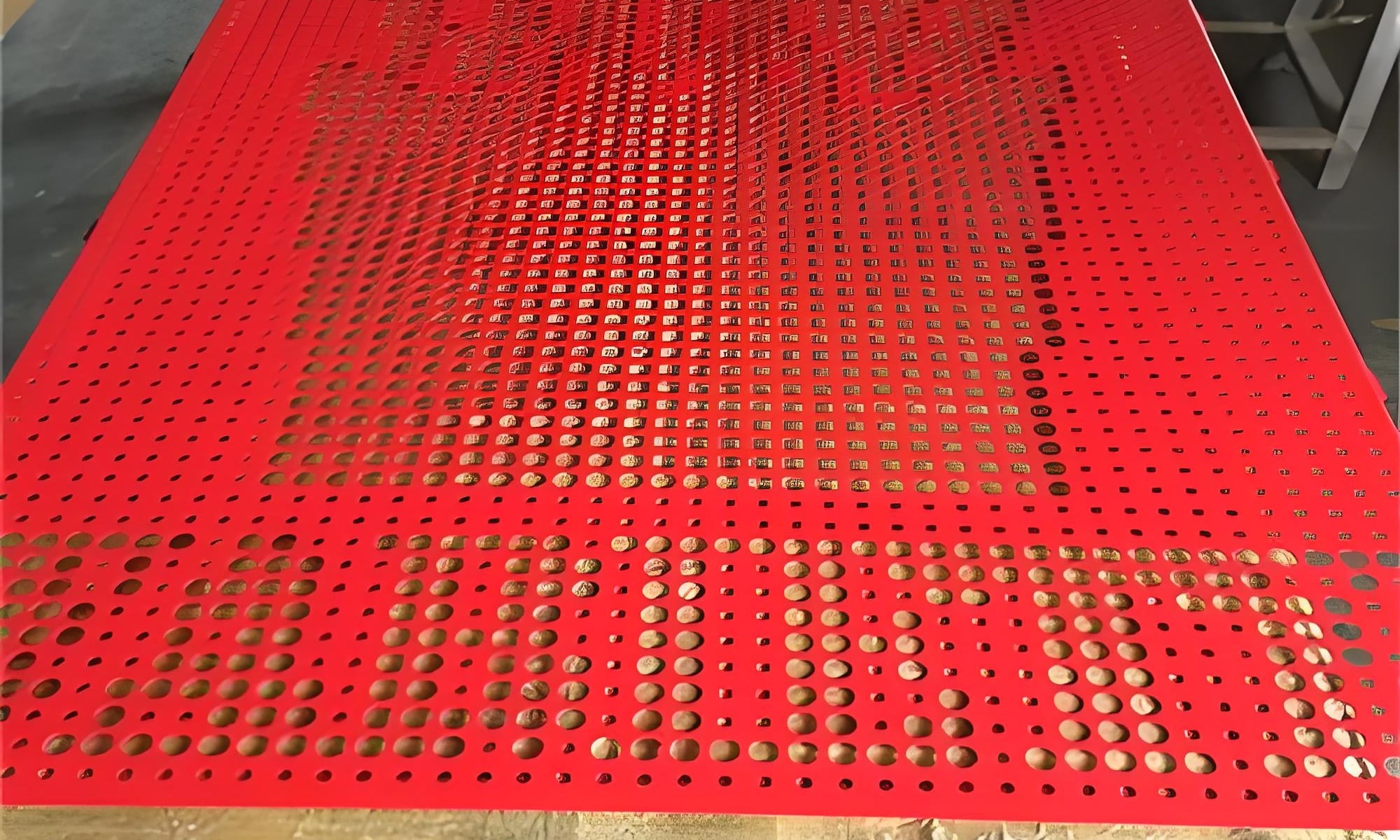
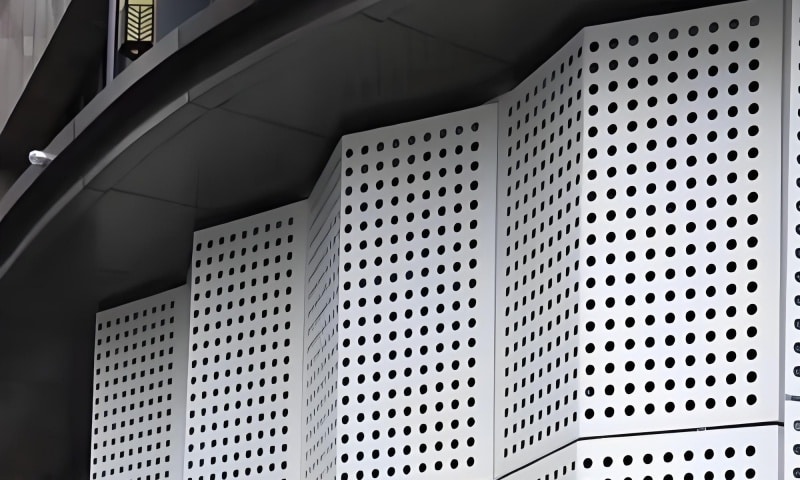
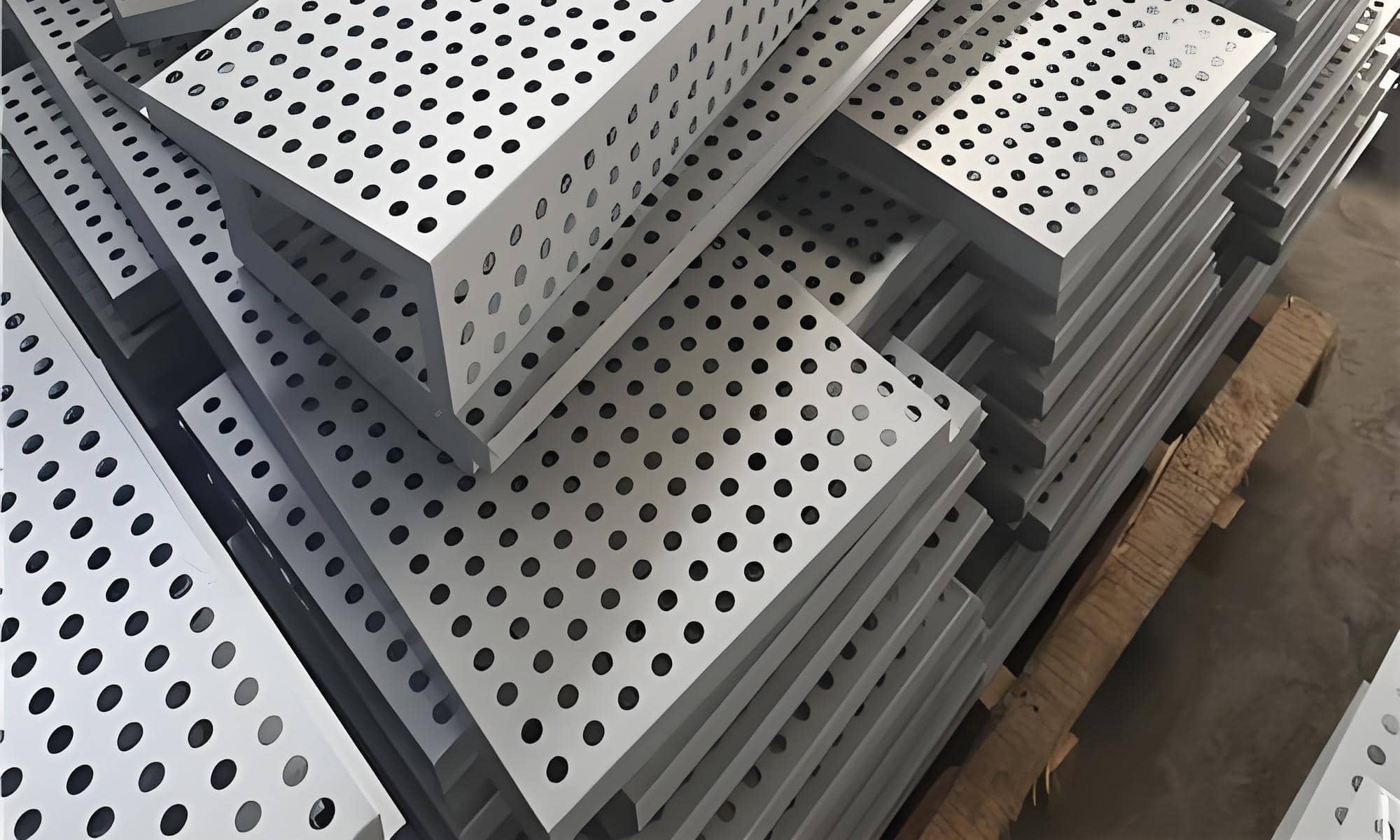
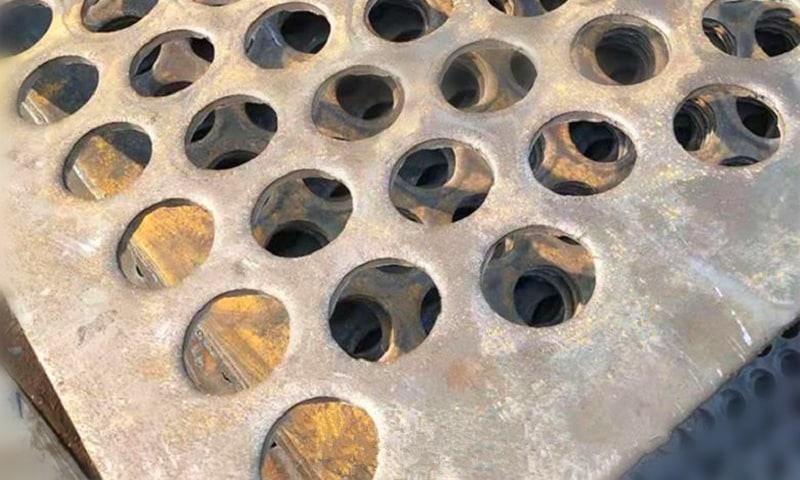
Heavy Duty Perforated Plates
Need a custom heavy-duty perforated plate?
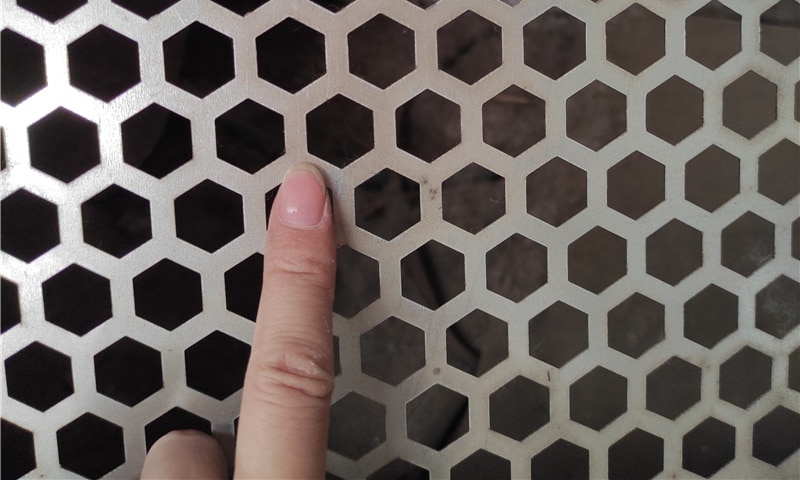
We offer perforated plates with thickness ranging from 2.75mm to 30mm, and up to 6000×1500mm in size, available in round, square, hexagonal, and slotted patterns.
Additionally, we provide precise cutting, surface protection, and other processing services tailored to meet industrial installation requirements.
Feel free to contact us anytime, and we’ll provide a personalized solution that perfectly matches your project needs.
What actually happens when hole diameter is smaller than thickness
When hole diameter < thickness, several manufacturing problems tend to stack up:
Higher punch load and faster tool wear
Thicker plate already requires more tonnage. If the hole is too small, the punch experiences higher resistance and stress concentration. That can accelerate edge wear, increase sharpening frequency, and reduce overall tool life—especially over large quantities.
Slug pulling, jamming, and inconsistent holes
Small holes in thick plate can cause the “slug” (the punched-out metal) to stick, pull back, or jam. This can lead to:
- torn edges or deformed holes
- unexpected downtime
- inconsistent appearance across the sheet
Burr control becomes harder
You can punch thick plate cleanly, but the smaller the hole relative to thickness, the more sensitive the result is to clearance, tool condition, and material hardness. That’s when burr height becomes harder to control and secondary deburring becomes more likely.
Distortion risk goes up
Dense patterns of small holes increase heat and stress in a localized area. On heavy duty perforated plates, that can create plate movement, distortion, or uneven flatness—especially when open area is high or the plate is large.
Engineering logic: why “≥ thickness” is a safe starting point
From an engineering standpoint, this guideline works because it balances three practical requirements:
Stable shearing geometry
A hole diameter at least equal to thickness generally gives the punch enough working area to shear cleanly without excessive binding through the depth of the cut.
Reliable repeatability on CNC punching
Heavy duty perforated plate orders often require repeatable hole quality across many sheets. This ratio supports stable production without constantly chasing burr, slugs, or dimensional drift.
Better value per finished part
Even if “smaller holes” look fine on a drawing, they can increase manufacturing cost through slower runs, more tool maintenance, and more finishing. For B2B projects, the rule often protects the buyer’s budget as much as it protects the quality.
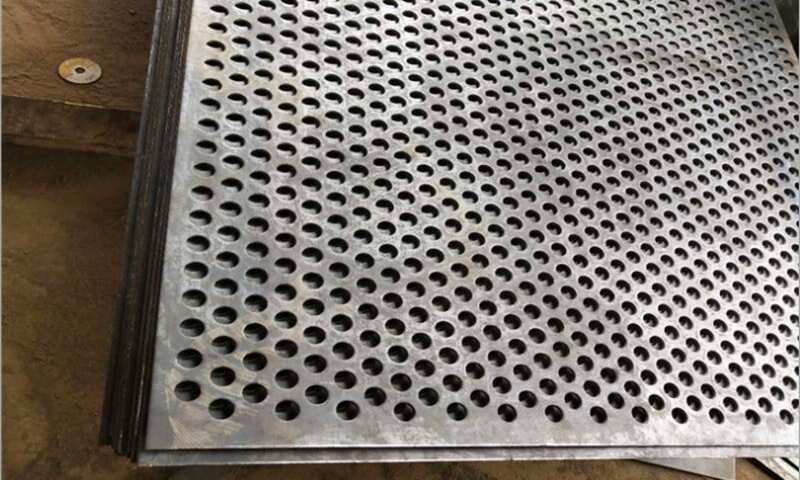
10mm thick plate example: recommended hole diameter range
If you’re specifying a 10mm (≈0.39″) thick heavy duty perforated plate, here’s a practical way to think about hole sizing:
Baseline recommendation
- Minimum: Ø10mm (hole diameter ≥ thickness)
- Common “production-friendly” zone: Ø12–Ø16mm
- More forgiving for flatness + throughput: Ø16–Ø20mm
Why the range? Because “works” and “works well in volume” aren’t always the same thing. In many industrial applications—walkways, guards, screens, ventilation panels, drainage covers—moving from Ø10mm to Ø12–Ø16mm often improves consistency and reduces risk without changing performance in any meaningful way.
Quick examples (10mm plate)
- If the plate is used for drainage / anti-clogging, you’ll often see Ø14–Ø20mm preferred.
- If the goal is strength with moderate open area, Ø12–Ø16mm is a solid middle ground.
- If the design must use Ø10mm, it’s doable—but it should be treated as a tighter-tolerance manufacturing job (material, pattern density, and flatness requirements matter more).
When buyers intentionally break the rule (and what to do instead)
Sometimes a project truly needs holes smaller than thickness—high-security screening, special filtration, or aesthetic requirements. In those cases, you still have options, but you should plan the process intentionally.
Option 1: Adjust expectations and specify what matters
If hole diameter must be smaller, align early on:
- allowable burr level
- flatness tolerance
- edge condition (as-punched vs. deburred)
- acceptable cosmetic variation
Option 2: Consider alternative processes for heavy plate
For certain patterns, laser cutting, drilling, or waterjet may be more suitable than CNC punching—especially when the ratio becomes aggressive or hole quantity is low and precision is critical.
Option 3: Modify the pattern, not just the hole
Sometimes the best fix is design-side:
- increase hole diameter slightly
- reduce open area density
- change pitch to improve plate stability
- use staggered layouts that distribute stress more evenly
A buyer-friendly checklist before you release a drawing
If you’re sourcing heavy duty perforated plates internationally, these small checks can prevent long email threads and costly redesigns:
Confirm the hole-to-thickness relationship
- Is hole diameter ≥ thickness?
- If not, is there a clear reason—and have you discussed the process impact?
Match the pattern to the application
- Are you optimizing for strength, drainage, airflow, noise control, or screening?
- Does the chosen hole size support that goal without creating unnecessary production complexity?
Specify what you’ll inspect at receiving
- hole diameter tolerance
- burr acceptance
- flatness requirement
- edge condition and any finishing needs
Bottom line: the rule protects both quality and schedule
The guideline “hole diameter ≥ plate thickness” isn’t a marketing slogan—it’s a practical production boundary that helps heavy duty perforated plates come out clean, consistent, and on time.
If you’re working with 10mm thick plate, designing around Ø12–Ø16mm is often the best balance of manufacturability and performance. And if your application needs something tighter, treat it as a deliberate engineering choice—then choose the right process and tolerances from the start.