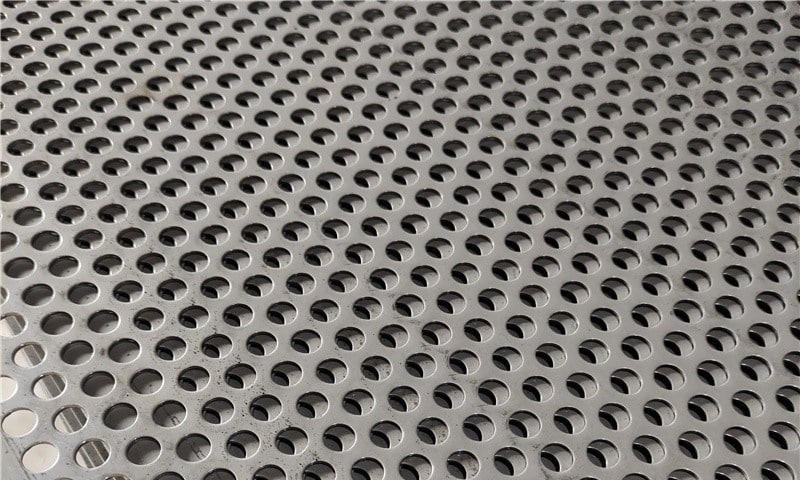
Why Custom Fabrication Matters for Round Hole Perforated Metal
Round hole perforated metal sheets are widely used across architectural, industrial, and manufacturing applications—but in real projects, standard flat sheets are rarely the final form. Engineers, fabricators, and contractors often require precise cutting, edge trimming, and controlled bending to fit exact dimensions, mounting systems, or structural frames.
This is where custom fabrication makes a measurable difference. With the right tooling, process control, and production experience, round hole perforated metal can be cut and formed without distorting hole geometry, pitch consistency, or overall sheet integrity.
Our production team has spent years refining CNC punching-based fabrication methods that balance accuracy, repeatability, and cost efficiency for B2B projects.

Round Hole Perforated Metal Sheets
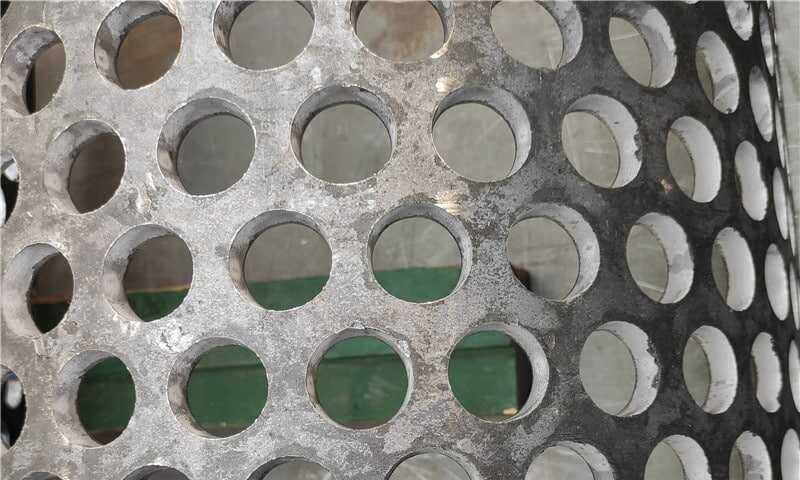
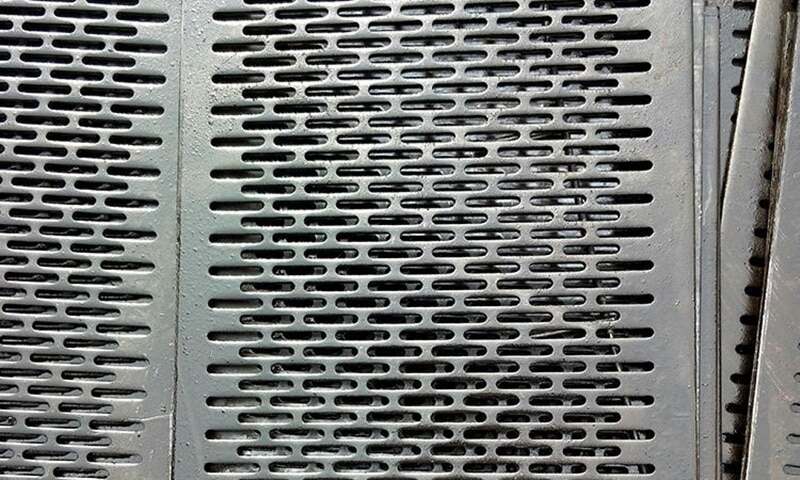
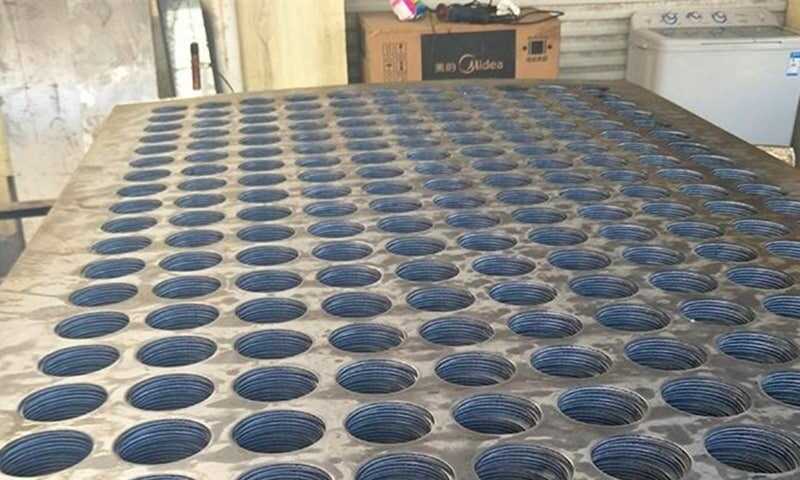
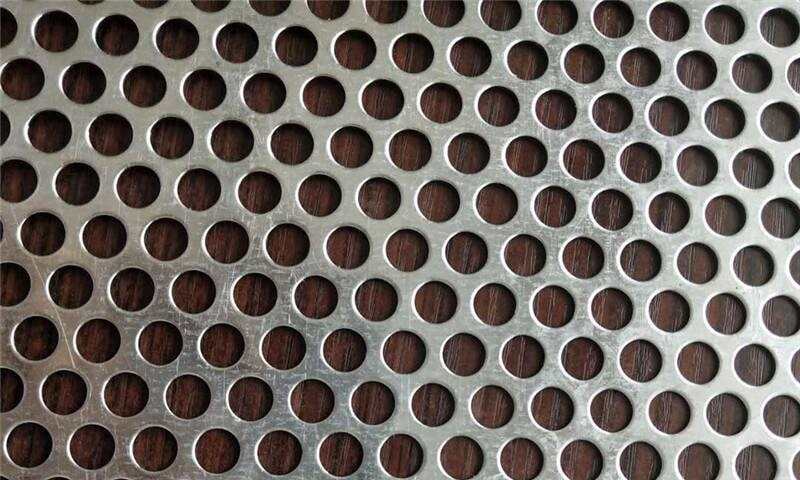
Custom perforated metal sheets with precise hole patterns in various materials: stainless steel, aluminum, galvanized steel, carbon steel, copper, brass, and plastic. Durable and corrosion-resistant.
Perfect for architectural screens, machinery guards, acoustic panels, and decorative elements. Factory-direct pricing with cutting/bending services. Request quote or sample today.
Cutting Accuracy: Maintaining Hole Integrity During Sheet Processing
Cutting perforated metal is fundamentally different from cutting solid sheet. Each round hole weakens the surrounding material, making precision and parameter control critical.
For Custom Round Hole Punched Panels, we typically evaluate the cutting method based on material thickness, hole diameter, and final tolerance requirements:
- Laser cutting is commonly used for external profiling and complex contours, provided heat input is carefully controlled to avoid edge hardening or micro warping around hole patterns.
- Shearing or CNC trimming is applied when straight edges and tight dimensional repeatability are required for modular installations.
- Pre-planning hole margins during CNC punching ensures sufficient edge distance, preventing deformation or tearing during downstream cutting.
By aligning cutting strategy with the original punching layout, the round hole pattern remains visually uniform and structurally consistent—an important requirement in architectural and visible industrial applications.

Bending Round Hole Perforated Panels Without Distortion
Bending is often where inexperienced fabrication introduces problems. Improper tooling or bend allowance calculations can cause:
- Ovalized or stretched holes near the bend line
- Uneven pitch alignment after forming
- Visible surface waviness on thin gauges
Our bending process is designed specifically for perforated sheets, not adapted from solid plate forming.
Key technical considerations include:
- Neutral axis compensation adjusted for open-area percentage
- Dedicated perforated-sheet bending dies that distribute pressure across hole rows
- Controlled bend radius selection based on thickness-to-hole ratio
By managing these variables, we preserve the original round geometry of the perforations while achieving clean, repeatable bends—whether for U-channels, L-angles, enclosures, or façade components.
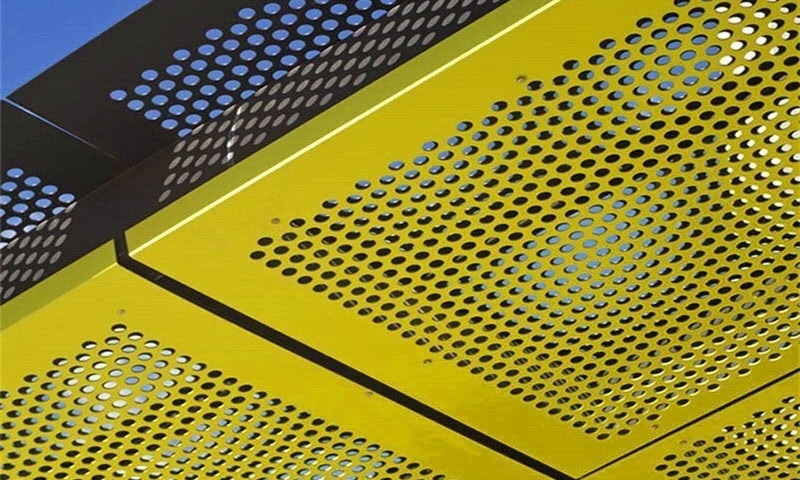
Engineering Support Before Fabrication Begins
One advantage B2B customers value is early-stage technical input. Before any cutting or bending starts, our engineers review:
- Hole diameter vs. material thickness
- Pitch orientation relative to bend lines
- Load-bearing or mounting requirements
- Surface finish considerations after forming
This proactive approach often avoids costly redesigns and ensures the final custom round hole punched panels perform as intended once installed.
From Flat Sheets to Installed Components
Custom fabrication transforms perforated metal from a raw material into a functional component. Typical applications include:
- Architectural screens and façade cladding
- Industrial guards and equipment enclosures
- Acoustic panels with formed edges
- HVAC diffusers and ventilation panels
By integrating CNC punching, precision cutting, and controlled bending in one production flow, we help overseas buyers reduce supplier count, shorten lead times, and maintain consistent quality standards across batches.
Built for B2B Projects, Not Just Prototypes
Unlike prototype-only workshops, our fabrication workflow is designed for repeat orders, scalable production, and export packaging requirements. Every batch follows documented process controls so that dimensional accuracy, hole appearance, and forming angles remain consistent from the first panel to the last.
This reliability is critical for distributors, contractors, and manufacturers who need confidence that replacement panels will match previously supplied material—without requalification.