What we supply: heavy duty perforated plates for industrial projects
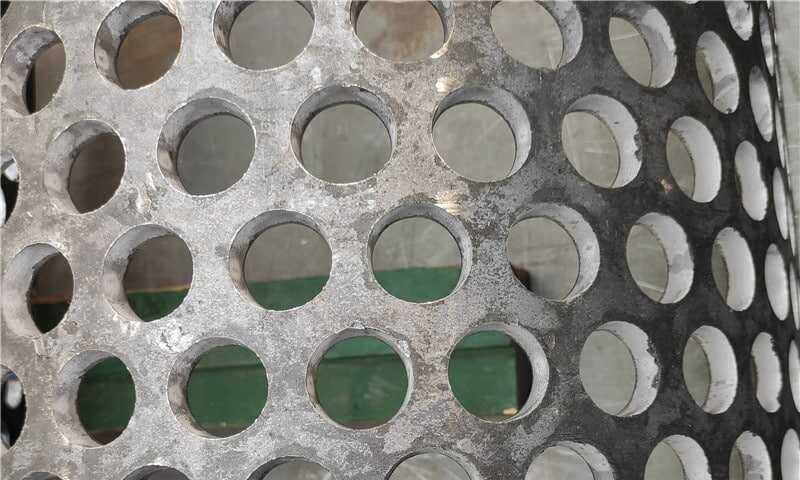
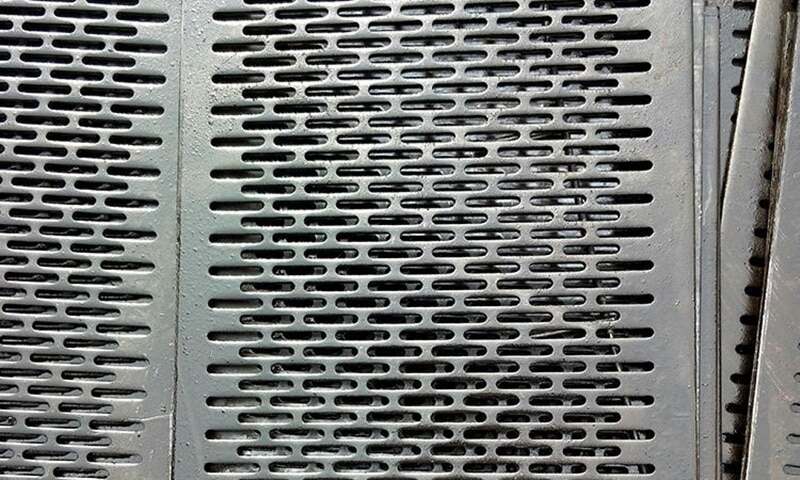
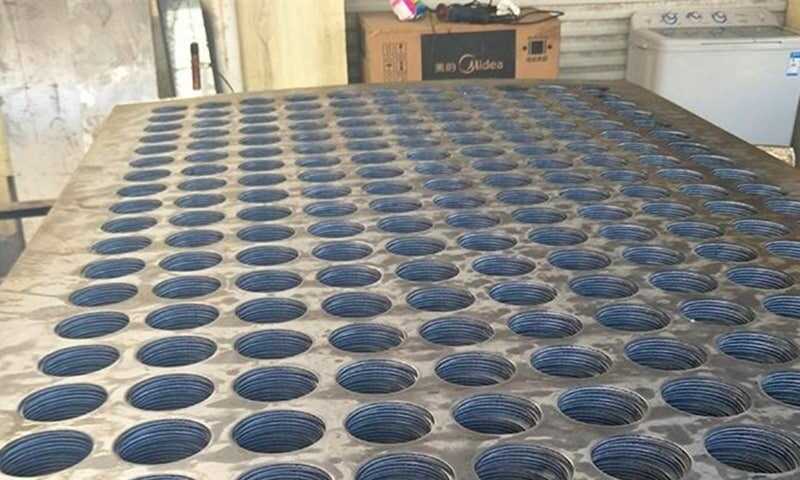
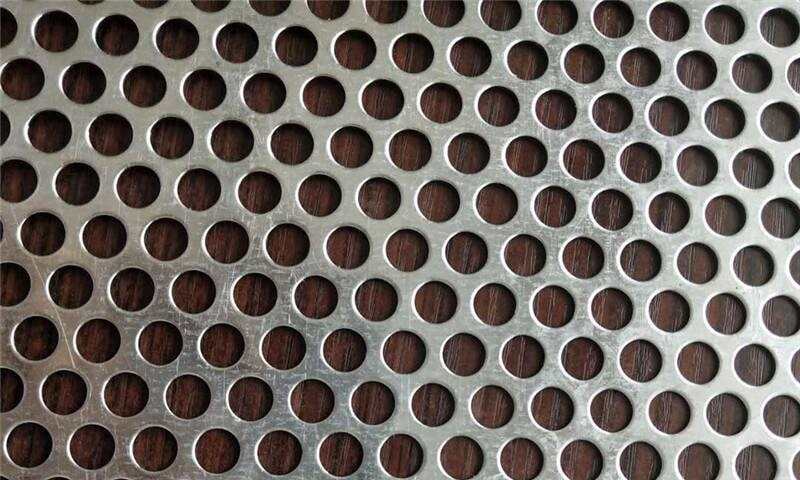
Our factory produces heavy gauge perforated plate designed for structural duty and long-life service in industrial and engineering applications. Typical uses include load-bearing platforms and walkways, equipment guards and enclosures, screening and ventilation panels, and custom fabricated components where high strength and rigidity matter. We manufacture to customer drawings and can deliver punched patterns, post-punch leveling, cut-to-size blanks, formed parts, welded assemblies, and surface protection suitable for outdoor or heavy industrial environments.

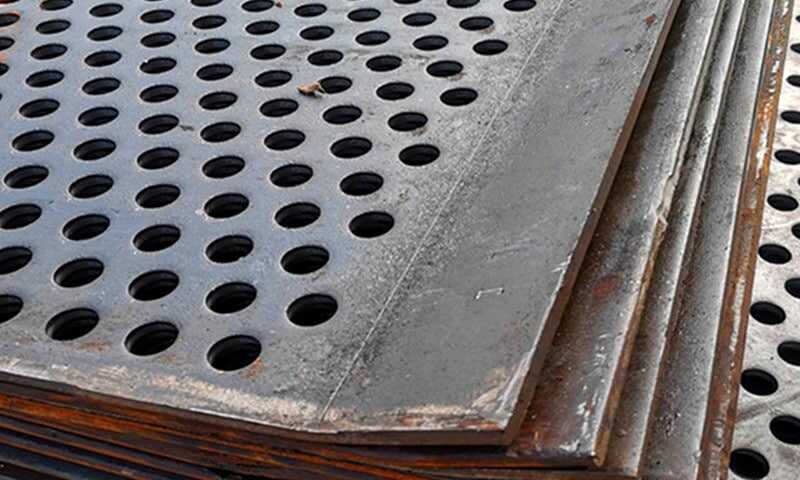
Heavy Duty Perforated Plates
Need a thick perforated plate made to drawing? Our program supports 2.75–30mm thickness, up to 6000×1500mm, with round/square/hex/slotted patterns, plus cut-to-size and surface protection for industrial installations.
Key specifications
Thickness: 2.75–30 mm
Maximum sheet size: up to 6000 × 1500 mm
Materials: Q345 structural steel, mild (low-carbon) steel, stainless steel, aluminum alloy, high-manganese steel
Hole types available: round, square, rectangular, hexagonal, slotted, and bespoke patterns
Hole size range: 3–300 mm
Typical services: custom hole patterns, leveling/flattening after punching, cut-to-size, laser cutting for complex outlines, bending/rolling, welding and assembly, sandblasting and coating or other protective finishes
Production workflow — from order to delivery
- Order review & engineering check — confirm material grade, plate thickness, usable sheet size, hole pattern layout, and any secondary forming or weld-up requirements.
- Material preparation — select and inspect raw plate for mill certification and physical condition.
- Punching / hole forming — plate is punched or pierced per the approved tool layout; for very large holes or complex outlines we stage laser cutting where appropriate.
- Post-punch leveling (flattening) — heavy gauge plates must be flattened to maintain tolerances and ease of downstream forming or welding.
- Cut-to-size and edge preparation — parts are trimmed, deburred, or left with specified edge condition for welding/assembly.
- Forming & welding — bending, rolling, tack/weld assemblies per fabrication drawings.
- Surface protection & finishing — sandblasting, primer/paint, or other protective finishes specified by the buyer.
- Final inspection & packing — dimensional and visual checks; protective packing for shipping.
Design & manufacturability notes
- For thick perforated plates (above 8–10 mm) consider tool life and hole tolerance: larger thickness increases punch force and may require stepped tooling or laser options to preserve hole geometry.
- When specifying high open-area patterns on heavy duty sheets, confirm remaining ligament width to ensure structural integrity under load.
- For panels used as structural elements, supply expected service loads and fixing details so we can recommend appropriate hole layout or unperforated reinforcement zones.
- Choose material grade according to service environment (corrosion, wear, impact). High-manganese steel is an option when high impact and abrasion resistance are required.
Quality control & acceptance criteria
- Visual check for hole integrity (no sheared burrs where critical).
- Flatness and warp control after leveling — plates presented for forming/welding should be within agreed flatness expectations.
- Dimensional verification of hole locations and overall part size against approved drawings.
- Surface condition and coating adhesion checked per buyer specification.
- Traceability: material certificates available on request for steel grades.
Typical lead considerations for procurement
- Tooling and sample approval: if a new punch pattern or custom tool is required, allow time for tool trials and approved first articles.
- Batch sizing: larger production runs reduce per-part tooling and setup costs for heavy gauges.
- Packing and transport: heavy plates require crates or skids and attention to handling to avoid deformation.
Inquiry checklist — what to send us
- Material grade and thickness required (2.75–30 mm).
- Maximum blank size or finished part size (up to 6000×1500 mm available).
- Exact hole pattern (CAD/DXF preferred) — hole type, size, pitch, and open-area requirement.
- Any secondary operations: leveling, cut-to-size, bending, welding, surface finish.
- Expected quantity, batch size, and target delivery window.
- Application notes (load, environment, required certifications).
If you are ready to get a quote, send the checklist above with your drawings and quantities — we can price samples, tooling, and lead time. For detailed capacity and fabrication options, contact our shop for a tailored quote referencing our heavy duty perforated plate manufacturer capabilities, or request specification guidance for a thick-gauge perforated plate.