In industrial access systems such as stair treads, platforms and walkways, both perforated safety grating and traditional welded metal grating are widely specified. While they may appear functionally similar, their structural behavior, failure modes and long-term safety performance differ in important ways that directly affect engineering decisions.
This article compares the two solutions from a practical, engineering-driven perspective.

Perforated Safety Grating
Our factory specializes in the production of perforated safety gratings, which are widely used in damp and slippery areas such as staircase treads and sewage treatment plants. Welcome to click and consult for more information.
Structural integrity: welded joints vs monolithic plate
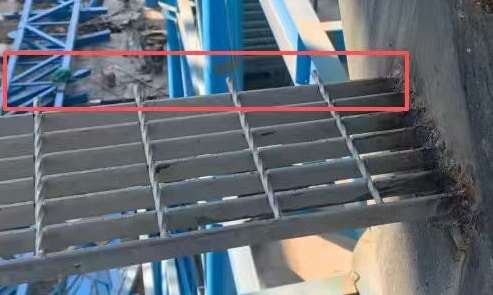
Welded metal grating and weld fatigue risk
Traditional bar grating is typically fabricated by welding bearing bars to transverse bars at multiple intersection points. While this construction can provide high load capacity, it also introduces hundreds or thousands of individual welds across a single panel.
In real-world service conditions—especially in industrial environments with vibration, cyclic loading, temperature fluctuation or corrosion exposure—these welds can become fatigue initiation points. Over time, localized weld cracking or partial weld separation may occur, often without immediate visual indication.
Once a weld begins to fail, load redistribution becomes uneven, increasing the risk of localized deflection or sudden capacity loss, particularly on stair treads and elevated access ways.
Perforated safety grating as a continuous load-bearing plate
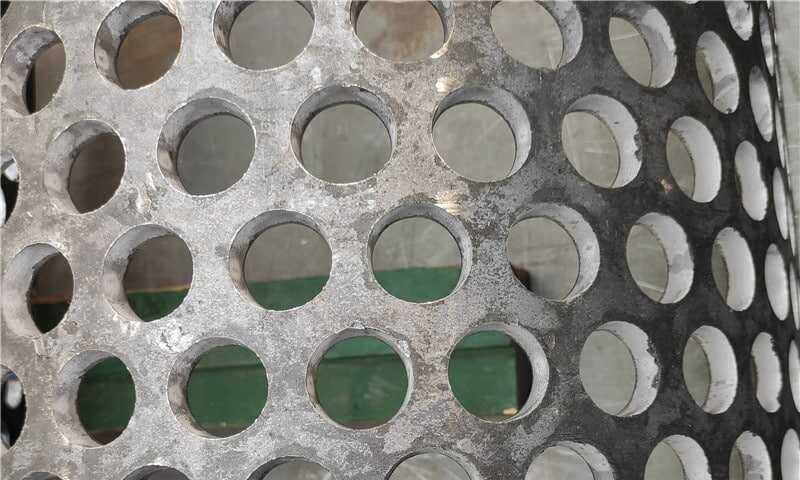
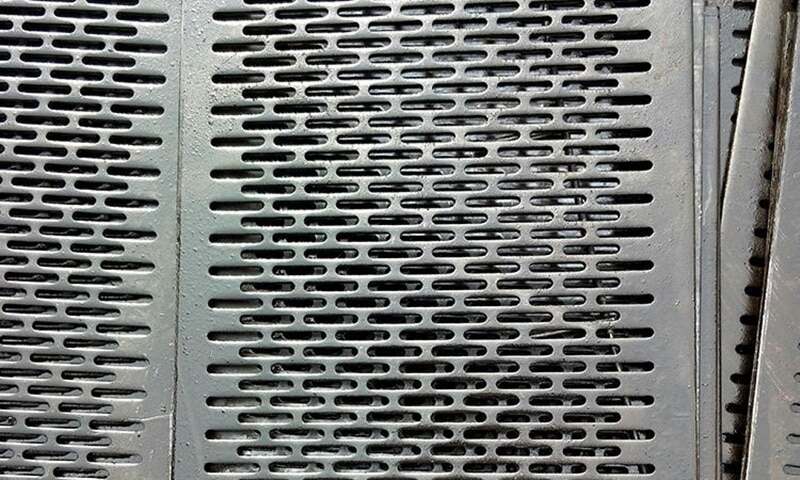
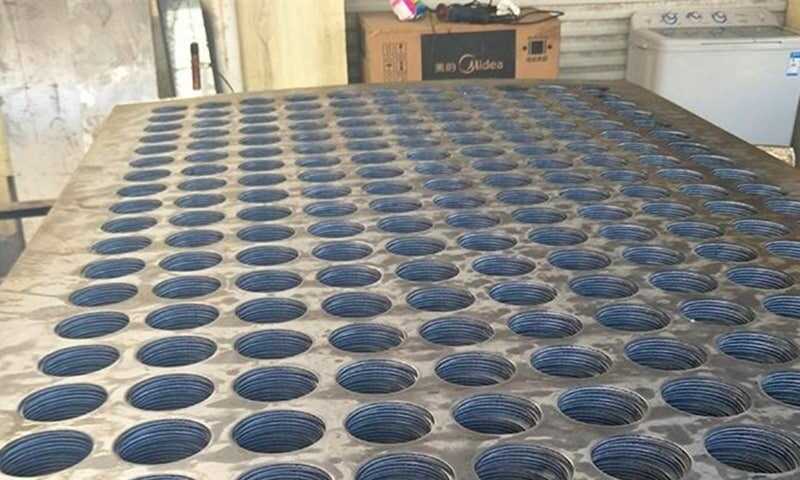
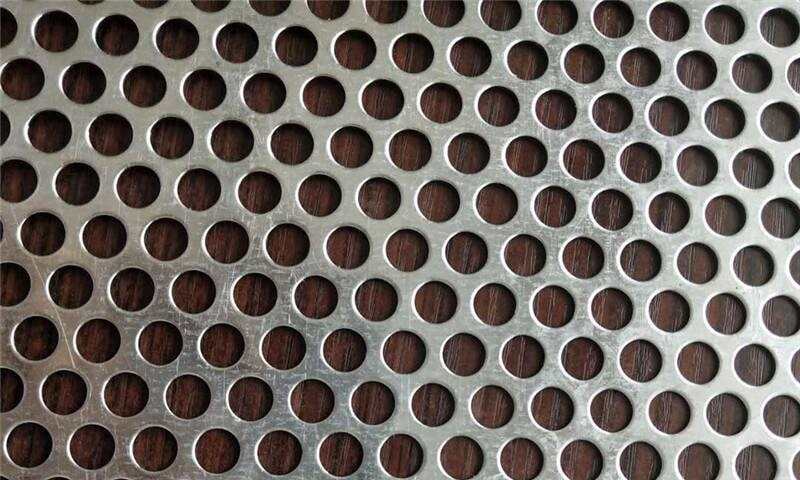
By contrast, perforated safety grating is manufactured from a single, continuous metal plate with punched openings. Load is carried through the plate material itself rather than through discrete welded joints.
This monolithic structure eliminates weld-related failure modes entirely. There are no welds to crack, loosen or separate under long-term service conditions, making performance more predictable over the service life of the installation.
Slip resistance and walking surface safety
Perforated safety grating provides consistent anti-slip performance due to its punched geometry, which creates multiple raised edges and surface texture. This design is particularly effective in environments where water, oil mist or light process residues are present.
Welded bar grating relies primarily on bar spacing and surface serration for traction. While effective in some applications, larger openings can introduce heel safety concerns and less consistent contact for foot traffic.
For personnel access areas governed by EHS requirements, a continuous, heel-proof walking surface is often preferred.
Drainage behavior and debris control
Both systems offer drainage capability, but they behave differently:
- Welded grating allows large volumes of liquid and debris to pass through, which can be beneficial in heavy washdown zones.
- Perforated plates can be engineered with a controlled open-area percentage, allowing effective drainage while preventing small tools, fasteners or components from falling through.
This balance is especially important on maintenance platforms and catwalks above operating equipment.
Load capacity and span considerations
Welded bar grating is often selected for very long spans and high point loads due to its directional strength along bearing bars.
Perforated safety grating, when properly specified with appropriate plate thickness, material grade and edge reinforcement, comfortably meets load requirements for most industrial stairs, ramps and access walkways. For many projects, load capacity is not the limiting factor—long-term structural reliability is.
Material options and corrosion performance
Both systems are available in carbon steel, galvanized steel, stainless steel and aluminum. However, corrosion interacts differently with each design.
In welded grating, corrosion often initiates at weld heat-affected zones, accelerating weld degradation. In perforated plates, corrosion behavior is more uniform and easier to predict, simplifying inspection and maintenance planning.
Specification and procurement considerations
When specifying safety grating for industrial projects, engineers and buyers should evaluate:
- Expected dynamic and cyclic loading
- Presence of vibration or mechanical movement
- Corrosion exposure and inspection access
- EHS requirements for heel-proof and anti-slip surfaces
- Long-term maintenance strategy and replacement planning
When perforated safety grating is the safer choice
Perforated safety grating is particularly well suited for:
- Stair treads and personnel access routes
- Elevated walkways where weld inspection is difficult
- Facilities with vibration, thermal cycling or corrosive atmospheres
- Projects prioritizing long-term safety over initial material cost
By eliminating weld-related failure risks and providing a continuous load-bearing surface, perforated plates offer a structurally conservative solution for many industrial environments.
Final takeaway
Choosing between perforated safety grating and welded metal grating is not only a question of load capacity or drainage—it is a question of failure modes and risk control. Understanding how each system behaves over time allows engineers and procurement teams to specify access systems that remain safe, reliable and compliant throughout their service life.