Why Material Selection Shapes the Performance of Machinery Guards
In heavy industrial environments, safety guards must resist impact, vibration, and continuous exposure to moving parts. While the guard’s design matters, the chosen material often determines how well it performs over time. Among available metal options, Q355B perforated plate has become a practical choice because it provides a balanced mix of strength, ductility, and cost-efficiency.
To understand why, it’s important to look at the mechanical behavior of Q355B and how its characteristics translate into real-world guarding performance.
What Makes Q355B Suitable for Guarding Applications?
Q355B is a structural-grade steel well-known for its reliable yield strength and its ability to absorb impact without sudden fracture. For guards that must withstand accidental contact from tools, components, or flying debris, this toughness is a key advantage.
Other material attributes include:
- Good weldability for frames and brackets
- Stable flatness after perforation
- Consistent formability suitable for bending or folding
- Competitive cost for custom and large-size panels
These strengths make Q355B perforated panels dependable for equipment enclosures, drive covers, access panels, and other forms of industrial shielding.
Practical Advantages of Using Perforated Q355B Plates
A guard must do more than simply act as a barrier; it must allow airflow, visibility, cleaning access, and sometimes acoustic control. Perforated Q355B steel helps achieve these goals by offering:
- Impact resistance and rigidity, especially at medium to thick gauges
- Customizable hole geometry, allowing engineers to fine-tune visibility and ventilation
- Wide compatibility with protective coatings, such as paint or powder coat
- Scalable production, from single custom parts to large-volume fabrication
Engineers frequently select this material when the mechanical load is high but specialized corrosion resistance is not the primary requirement.
Designing Q355B Perforated Guards: Choosing Holes, Open Area & Thickness
Selecting the correct perforation pattern directly affects performance.
Hole Geometry
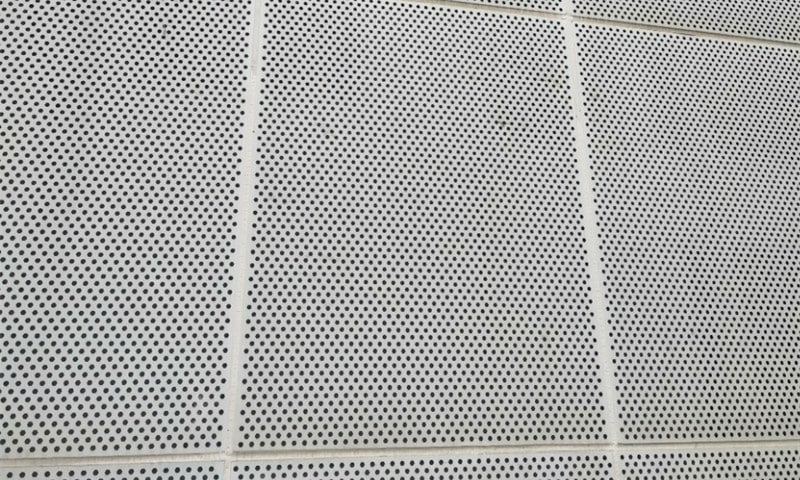
- Round-hole panels provide balanced strength and airflow, ideal for general guarding.
- Square-hole patterns work well for applications where visibility matters.
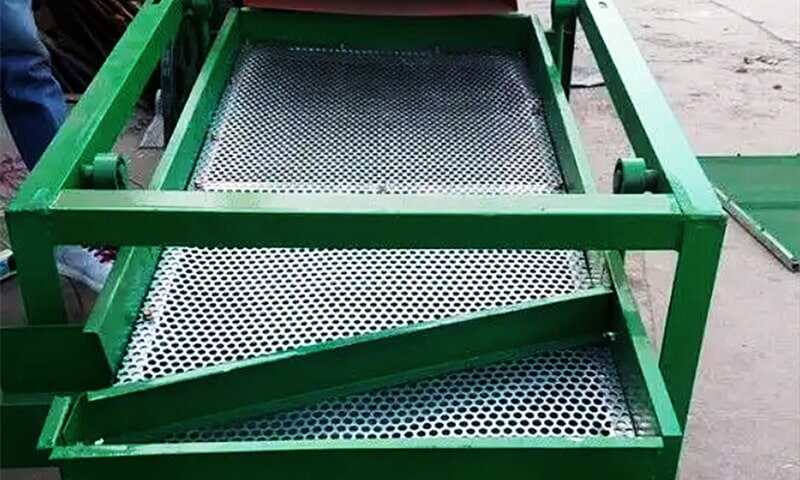
- Hexagonal perforations provide high open area without compromising integrity.
- Slotted openings can improve ventilation along one direction.
- Micro-perforations are suitable for fine dust control or acoustic shielding.
Open Area Ratio
- Low open area (10–25%) → increased strength and impact protection
- Medium open area (26–45%) → balanced airflow and safety
- High open area (46%+) → max ventilation but reduced structural stiffness
Plate Thickness
For heavy-duty machinery guards, many users choose thicknesses between 3 mm and 8 mm, depending on span and expected impact. Thicker plates reduce vibration and improve long-term dimensional stability.
Selecting the Right Metal: Q355B vs. Other Perforated Materials
Different machinery environments require different metals. Below is a natural comparison based on typical industrial use:
Carbon Steel Perforated Panels
Cost-effective, strong, suitable for painted finishes.
Galvanized Perforated Steel
Ideal for environments exposed to humidity or outdoor conditions.
Stainless Steel Perforated Plate
Excellent corrosion resistance and used in hygienic or chemical environments.
Aluminum Perforated Panels
Lightweight, corrosion-resistant, great for ventilation covers.
High-Manganese Steel Perforated Plate — Not for Guards
This material is extremely hard and wear-resistant, making it suitable for:
- Mining screening plates
- High-impact perforated wear panels
- Crusher and quarry screening applications
However:
High-manganese steel is not suitable for perforated safety grating or formed-embossed panels, because its high hardness and low ductility cause tearing during forming.
This distinction helps buyers select materials accurately based on their end-use environment.
Common Applications of Q355B Perforated Machinery Guards
Q355B is frequently used in:
- Conveyor covers and drive protection
- Mechanical press guards
- Access doors with perforated viewing areas
- Fan and ventilation protection
- Industrial equipment enclosures
While stainless steel or galvanized steel may be chosen for corrosion-prone settings, Q355B often remains the preferred choice for heavy mechanical protection where cost and strength must be balanced.
What to Specify When Ordering Custom Q355B Perforated Panels
To ensure accuracy in production, include the following details:
- Material grade: Q355B
- Plate thickness and tolerance
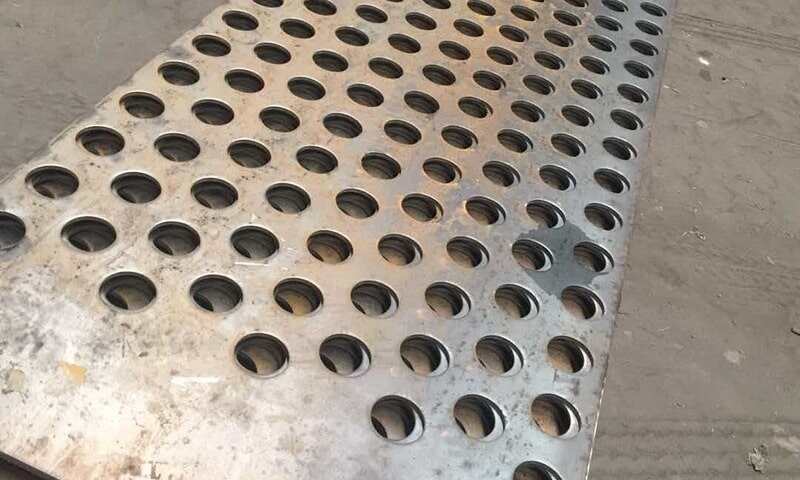
- Hole shape, size, pitch, and open-area ratio
- Final panel dimensions
- Edge finishing (deburring, chamfering)
- Coating requirements (paint, powder coating, etc.)
- Quantity: one-off prototypes or bulk orders
- Needed fabrication: cutting, bending, welding, frame assembly
Providing a simple drawing or sketch significantly reduces lead time and ensures consistent quality.
Final Thoughts — Is Q355B Right for Your Guarding Needs?
For industries seeking a durable and economical guard material, Q355B perforated plate performs reliably across a wide range of mechanical protection scenarios. It offers strong impact resistance, design flexibility, and predictable fabrication behavior—making it a smart choice for heavy-duty equipment guarding.
If your project involves corrosive environments or highly specialized requirements, pairing Q355B with a coating or selecting another metal may be the better option. But for structural guards requiring strength at a reasonable cost, Q355B continues to be a proven solution.
Need Engineering Support or a Custom Quote?
Whether you require a single prototype, a full production run, or help optimizing your design, you can reach our technical team any time at:
📧 info@perfsheet.com
Simply send your requirements, drawings, or application details to receive a quick response.