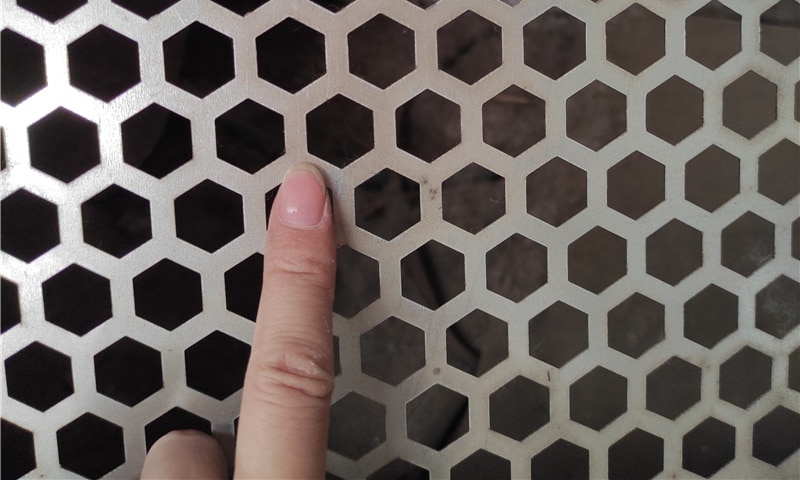
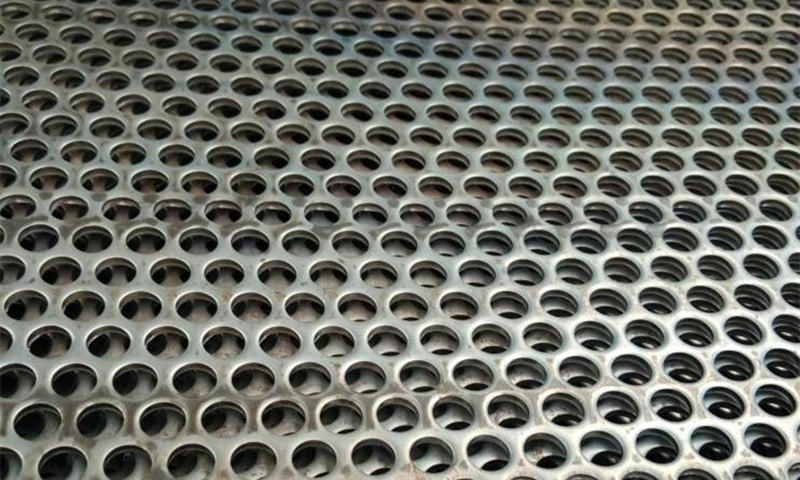
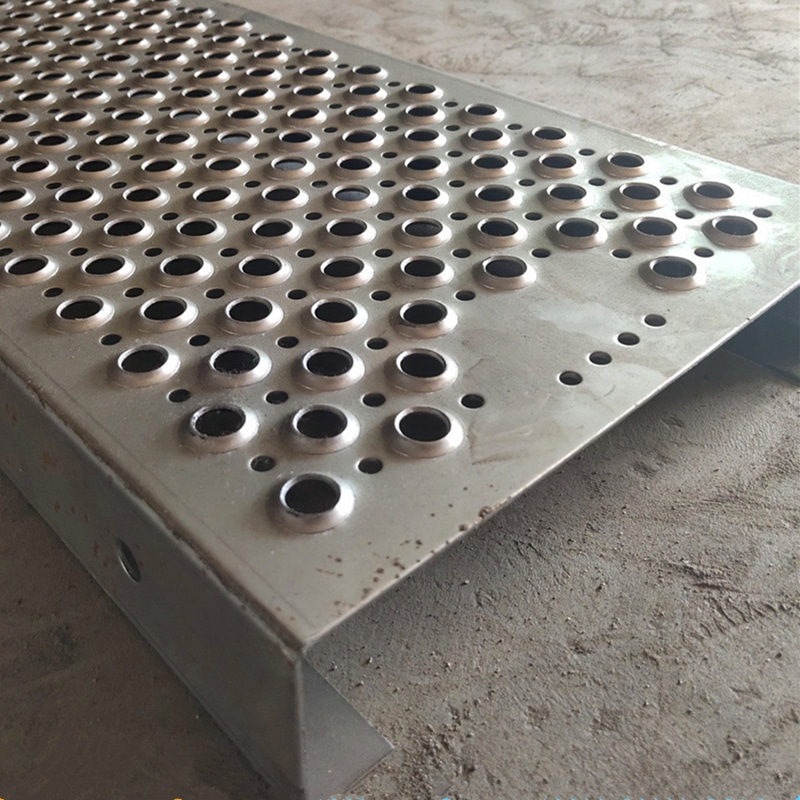
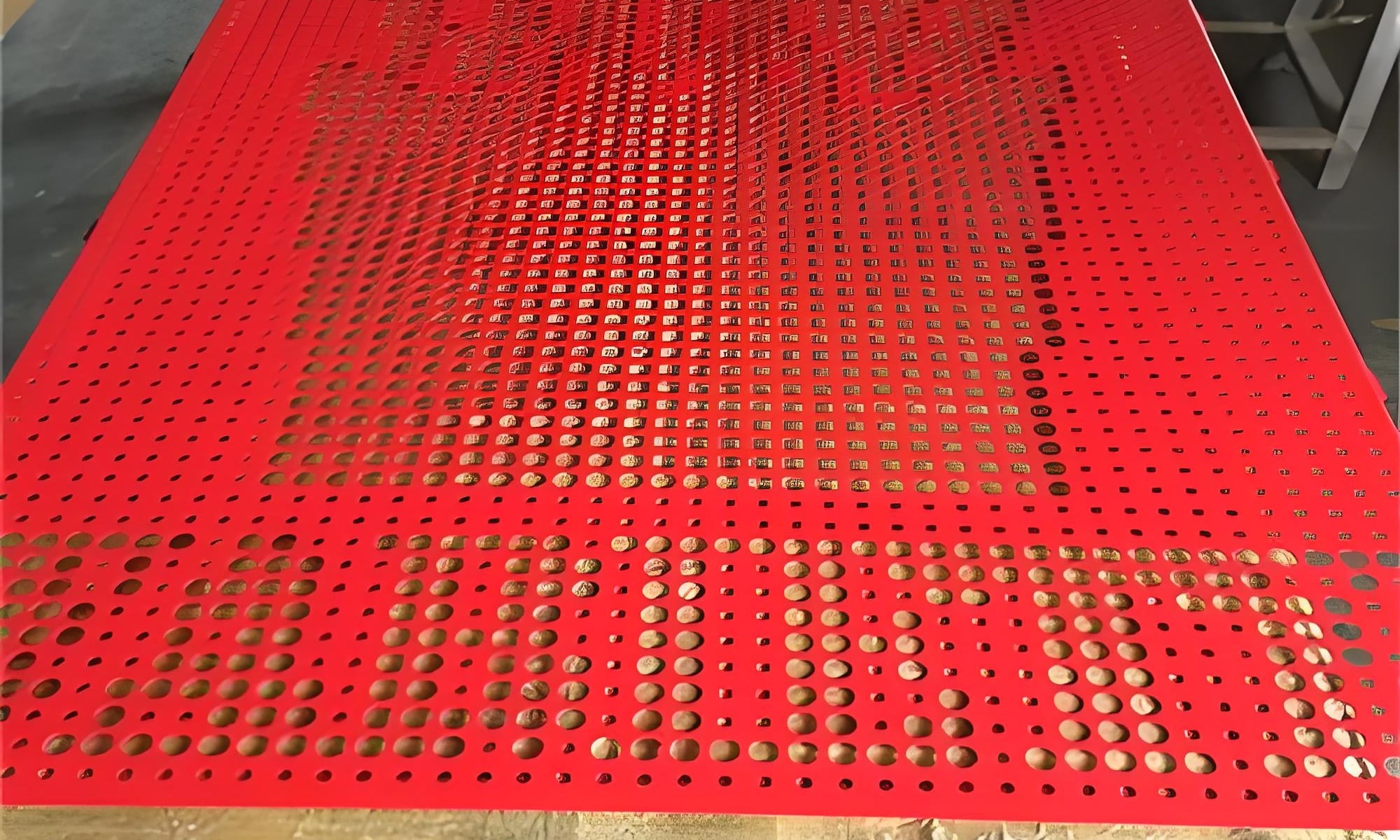
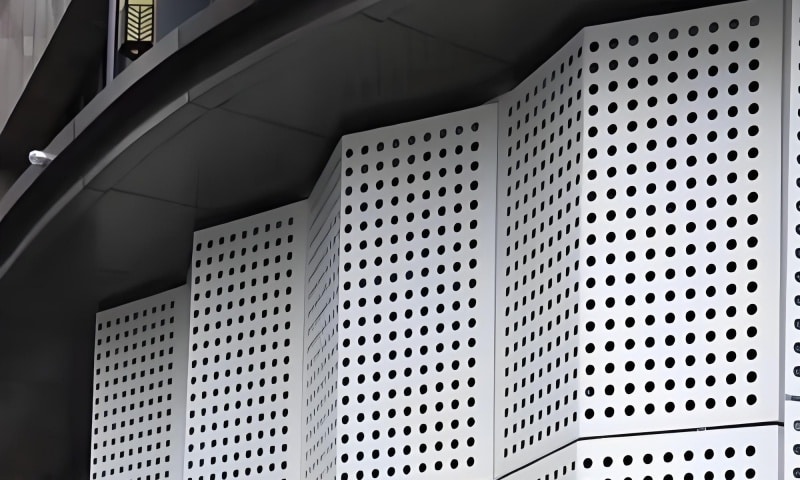
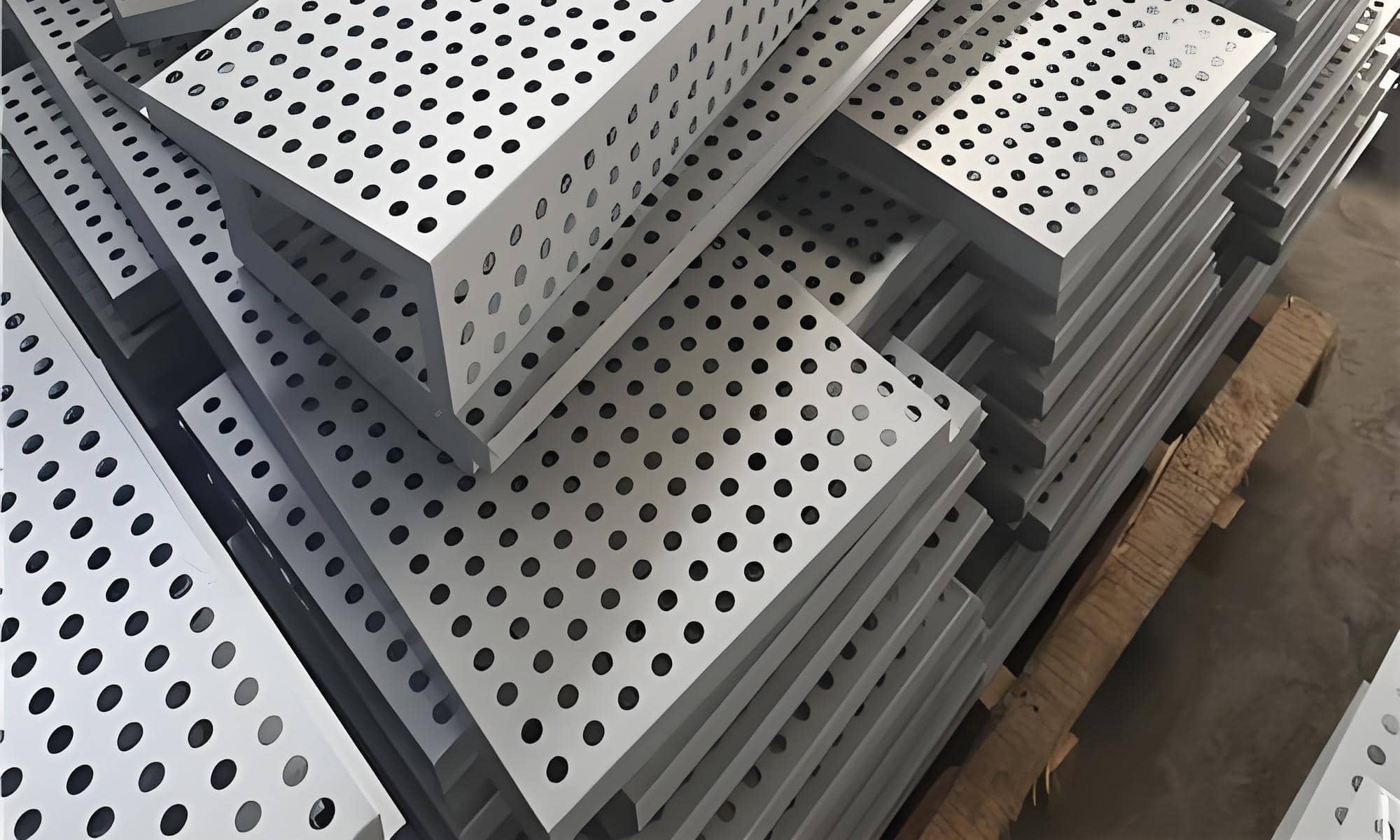
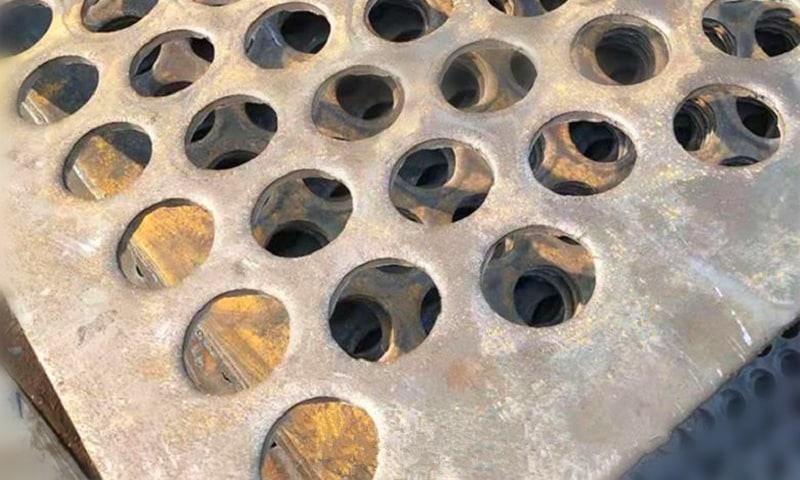
Anti-slip perforated stair treads are widely used in industrial plants, outdoor walkways, machinery platforms, and any environment where water, grease or dust can make steps slippery. What truly defines the performance of a tread is not only its material or thickness, but the hole type and the way each hole is formed.
In practical applications, three hole designs dominate the market because of their reliable traction and long service life:
- Obround flanged holes
- Serrated embossed safety holes
- Round raised holes
These patterns offer a combination of grip, drainage, and structural strength that works across a wide range of industries.
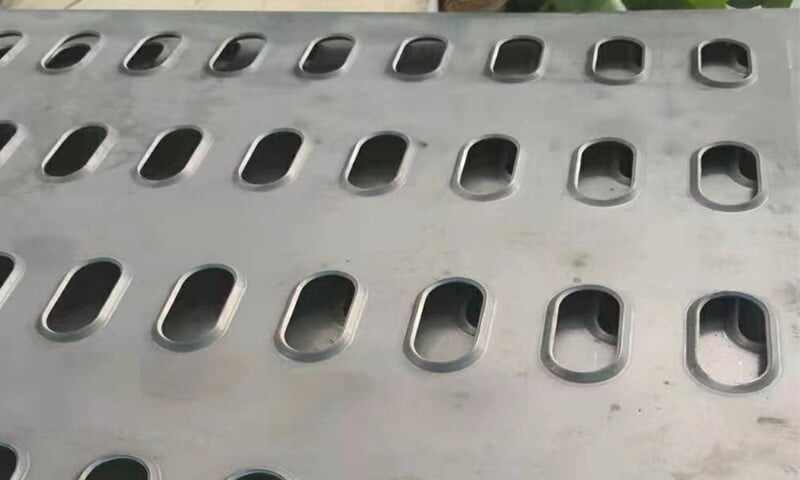
1. Obround Flanged Holes — Smooth Drainage with Structured Grip
Obround flanged holes are shaped like elongated ovals, but the key feature is the raised, flanged edge created during punching. This flanging process increases the stiffness of the panel and adds a naturally curved grip surface.
Key features
- Elongated oval openings improve drainage and reduce the chance of clogging.
- Flanged edges add rigidity without requiring thicker material.
- The raised lip provides stable underfoot traction while remaining comfortable for regular foot traffic.
Best-suited applications
- Outdoor stairs exposed to rain or mud
- Machinery walkways that require consistent drainage
- General-purpose industrial platforms where balanced comfort and anti-slip performance are needed
2. Serrated Embossed Safety Holes — Maximum Bite for Harsh Conditions
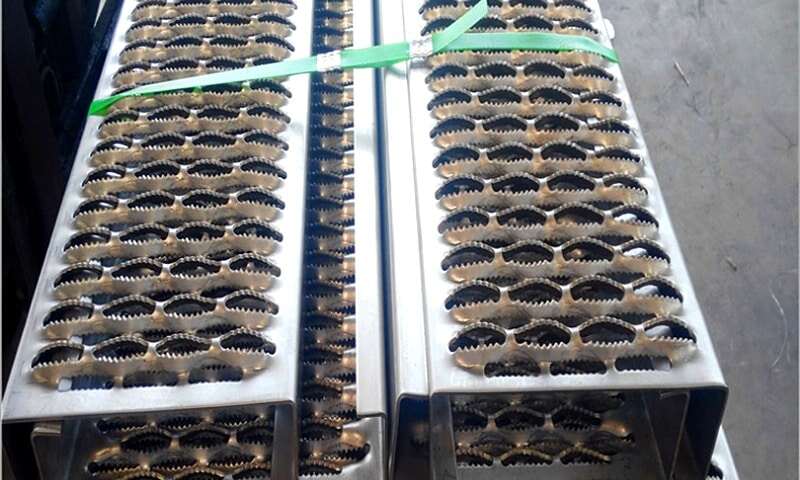
Among all anti-slip patterns, serrated embossed holes deliver the strongest traction. Each opening is surrounded by saw-tooth–like serrations, which aggressively grip shoe soles and prevent slipping even when surfaces are wet, oily, or covered in fine dust.
Key features
- Deep serrations provide exceptional anti-slip effect in all directions.
- Raised edges increase friction even with worn-out soles or contaminated surfaces.
- The design is strong enough for heavy-duty industrial use.
Best-suited applications
- Oil & gas facilities
- Chemical plants & food processing lines
- Vehicle repair pits and maintenance stations
- Outdoor industrial stairs prone to ice or snow
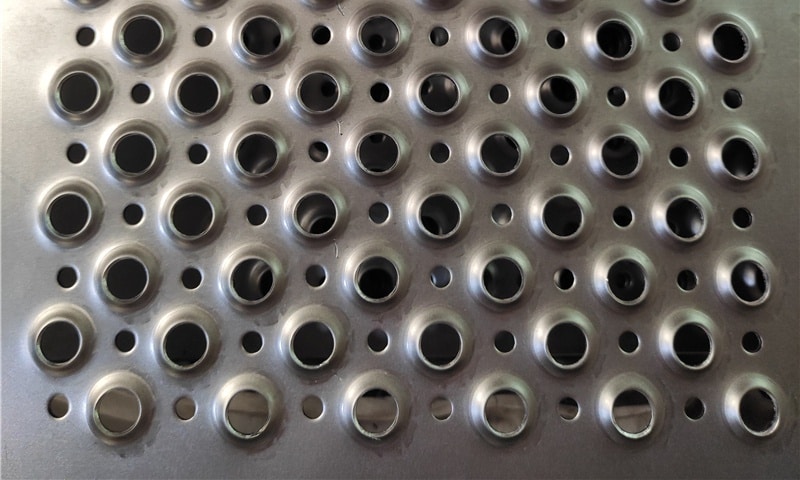
3. Round Raised Holes — Even, Stable Grip for High Traffic Areas
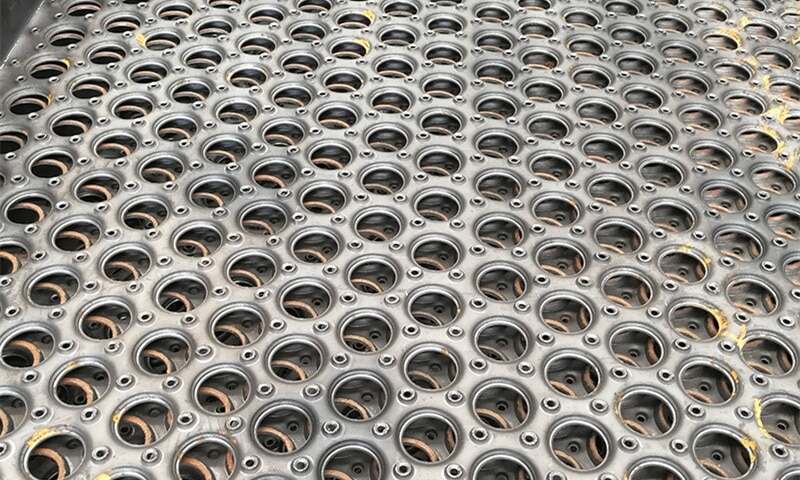
Round raised holes are widely used for applications where even traction distribution is needed. Each hole is punched and then slightly embossed upward, creating a round traction point that grips from all angles.
Key features
- 360° traction from the raised circular lip
- Balanced open area for efficient drainage
- Uniform distribution of grip points, ideal for long walkways and large platforms
Best-suited applications
- Public-access walkways
- Production line maintenance platforms
- Outdoor ramps and staircases
- High foot-traffic areas requiring consistent slip resistance
Material Options — Matching Durability with Environment
Anti-slip treads can be manufactured in a range of materials to meet performance, weight, and corrosion-resistance requirements:
- Galvanized steel — economical, strong, and suitable for general outdoor installations
- Stainless steel (304 / 316) — excellent for corrosive environments and hygienic facilities
- Aluminum — lightweight and corrosion-resistant for architectural or portable structures
Choosing the right material ensures a longer service life and reduces long-term maintenance costs.
How to Select the Right Hole Type for Your Project
Here is a practical comparison to help you choose the most suitable tread pattern:
| Hole Type | Anti-Slip Strength | Drainage | Comfort | Typical Use |
|---|---|---|---|---|
| Obround flanged | Medium-high | Excellent | High | Outdoor stairs, general walkways |
| Serrated embossed | Very high | Good | Medium | Heavy-duty industrial, oil/chemical areas |
| Round raised | High | Medium-high | High | High-traffic access platforms |
Use this comparison when planning your stair or platform layout, especially if your project must meet specific safety or maintenance standards.
Installation and Maintenance Tips
- Always use countersunk or recessed fasteners to keep step surfaces smooth.
- Allow proper drainage direction—avoid trapping water near supports.
- For serrated patterns, inspect teeth periodically; replace panels if serrations wear smooth.
- Clean debris regularly to maintain full traction and open drainage.
Conclusion
Whether used on industrial stairs, outdoor walkways, or machinery platforms, anti-slip perforated stair treads offer a dependable solution to safety challenges. By choosing the right hole pattern—obround flanged, serrated embossed, or round raised—you can achieve the ideal balance of traction, drainage, and durability for your working environment.
If you need help selecting a design or want a quote for custom sizes, materials, or hole configurations, feel free to reach out.
Contact Us
For drawings, specifications, or quick pricing, email us anytime at:
info@perfsheet.com