A concise checklist that helps engineers, buyers, and contractors get faster, more accurate quotes for heavy duty perforated plates. Provide the items below in your initial RFQ so suppliers can price, confirm lead time, and verify manufacturability without repeated follow-ups.

Heavy Duty Perforated Plates
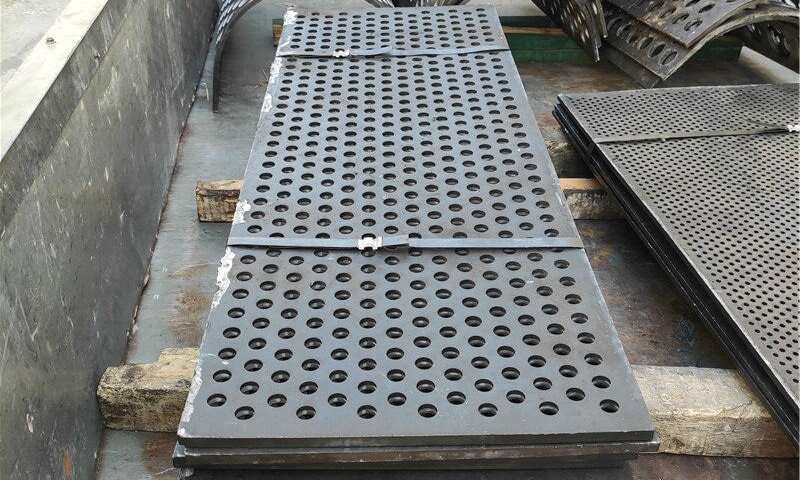
Need a thick perforated plate made to drawing? Our program supports 2.75–30mm thickness, up to 6000×1500mm, with round/square/hex/slotted patterns, plus cut-to-size and surface protection for industrial installations.
1. Application & Service Conditions — Why it matters
- Brief description of the application (e.g., vibrating screen deck, crusher grates, wear liners, structural panels).
Why: purpose dictates material choice, hole type, and tolerances. - Operating environment (abrasive/impact, corrosive, temperature range).
Why: determines material grade, required surface treatment, and expected lifecycle.
2. Material Grade & Mechanical Requirements
- Material requested (e.g., high-manganese steel — specify grade if known, stainless 304/316, carbon steel).
Why: impacts punchability, weldability, lead time and price. - If relevant, required hardness, toughness, or wear resistance.
Why: avoids mismatched expectations (some heavy alloys need special heat treatment).
3. Plate Thickness (gauge) and Flatness
- Exact thickness in mm or inch (not just “thick”). State tolerance if critical.
Why: thickness is the principal cost driver and affects tooling, punching force, and bending. - Maximum acceptable bow/flatness for your application.
Why: heavy plates can warp; some jobs require straightness controls.
4. Hole Type, Size and Pattern
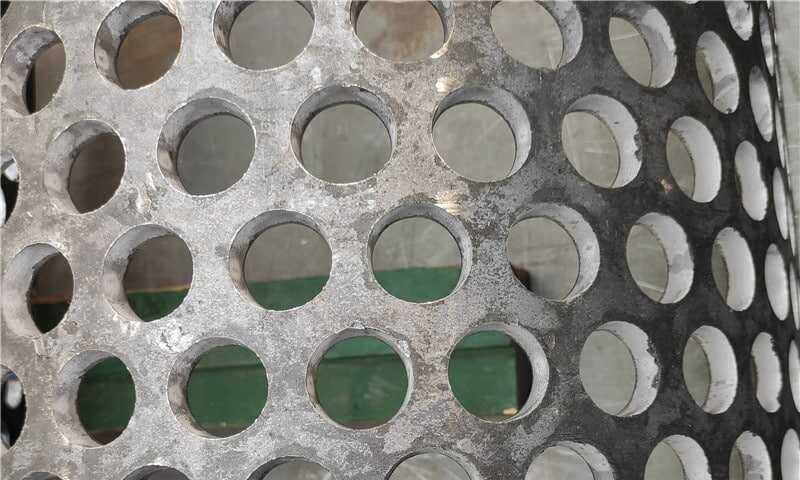
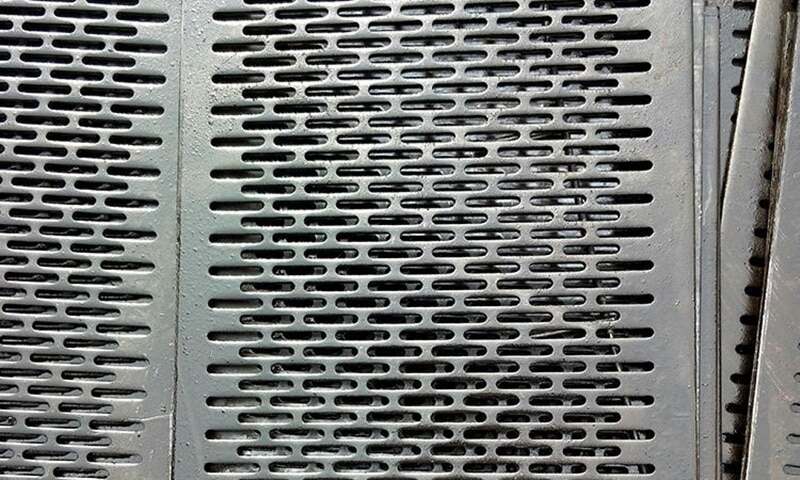
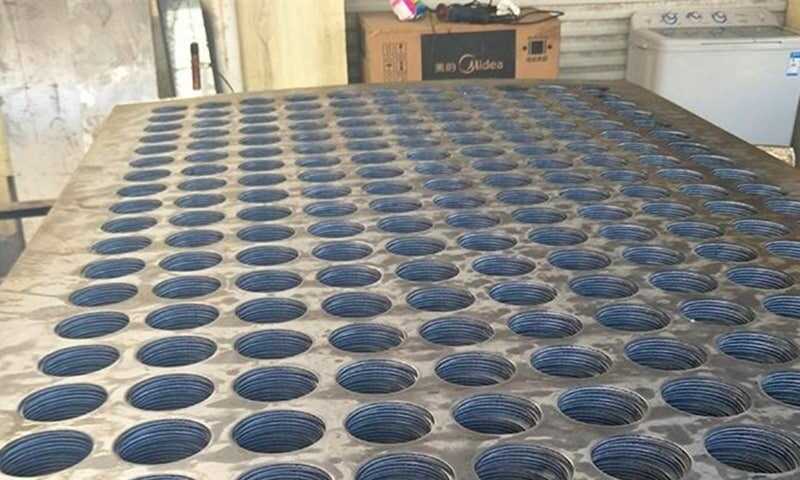
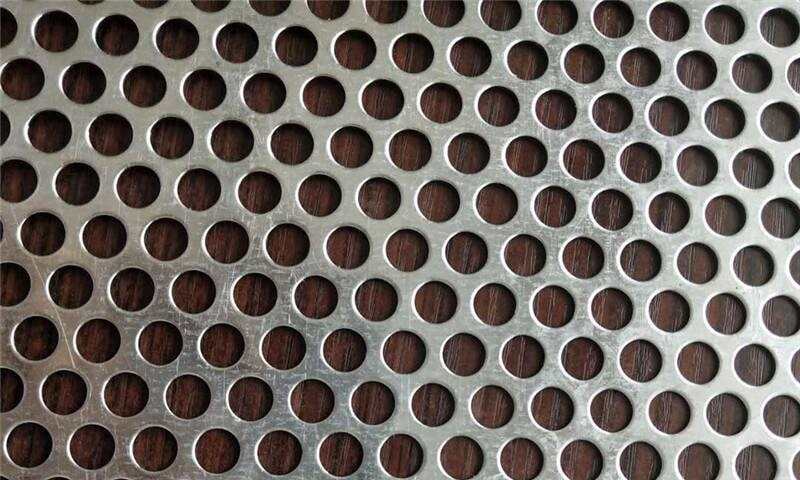
- Hole shape (round, slot/elongated, hex, oblong), hole diameter/size, and center-to-center pitch. Indicate whether pattern is straight or staggered.
Why: tooling, open area (%), and structural stiffness depend on pattern geometry. - If slot or hex, provide orientation (long axis direction) relative to plate edges.
Why: affects flow, strength and stamping feasibility.
5. Open Area / % Free Area (if important)
- Specify required open area or acceptable range.
Why: many spec decisions (hole size vs. pitch) are driven by needed flow or screening area.
6. Edge Condition & Plate Size
- Finished panel dimensions (width × length) and whether edges should be trimmed, hemmed, or left raw.
Why: large heavy plates may need to be supplied in full sheets or cut panels. Edge finish affects installation and safety.
7. Quantity & Delivery Schedule
- Order quantity (pcs) and any serial production forecast (monthly/yearly). Required delivery date and acceptable shipment terms (FOB, CIF, EXW).
Why: tooling and production planning (and price breaks) depend on volume and delivery urgency.
8. Fabrication & Secondary Operations
- Required secondary ops (e.g., CNC cutouts, bending, welding, countersinking, tapping). Include weld prep details.
Why: secondary work changes cost and may require different tolerances or materials.
9. Tolerances & Inspection Criteria
- Dimensional tolerances, hole location tolerance, and acceptable reject criteria. State inspection standard (e.g., 100% inspection, sample).
Why: defines QA effort and potential rework liabilities.
10. Certifications, Testing & Documentation
- Request for material certificates (e.g., EN/ASTM mill test report), heat treatment records, or third-party inspection.
Why: many industrial buyers require traceability and compliance documentation.
11. Drawings, Files & References (critical)
- Attach a clear drawing (PDF or DWG), mark critical dims, and include a part number or reference sample. If you have a production reference or photos, include them.
Why: drawings eliminate ambiguity and are often required before a firm quote can be issued.
12. Packaging, Labeling & Logistics Notes
- Any special packaging needs, palletization, lifting points, or handling instructions. Preferred carriers or shipping constraints.
Why: heavy plates have significant shipping and handling costs that should be priced up front.
How to format your RFQ (short template)
- Project name and contact (name, phone, email)
- Application & environment summary
- Material + grade + mechanical requirements
- Plate thickness, finished dimension, and quantity
- Hole type, size, pitch, pattern orientation, open area (%)
- Tolerances, secondary ops, certifications required
- Attachments: drawing (DWG/PDF), photos, sample part number
- Delivery terms and required delivery date
Two example RFQs (copy and paste, edit for your project)
Example RFQ A — Round Hole (mining screen deck)
- Project: South Pit Trommel Replacement
- Contact: John Doe, procurement, +1-XXX-XXX-XXXX, john.doe@company.com
- Application: Vibrating screen deck with heavy impact and abrasive wear.
- Material: High-manganese steel (please propose acceptable grade; state if heat treated).
- Thickness: 10 mm ±0.3 mm.
- Plate size: 1200 × 2400 mm finished (2 edges trimmed).
- Hole pattern: Round holes, Ø25 mm, staggered pattern, C/C 37.5 mm. Open area target ~35% (confirm).
- Quantity: 50 pcs initial order, then 200 pcs/year.
- Secondary ops: Edges trimmed, countersunk holes for bolting (provide bolt hole pattern).
- Tolerances & inspection: Hole location ±0.5 mm, 100% visual, sample dimensional check. Provide MTRs.
- Delivery: FOB port, 8–10 weeks ARO. Attach DWG and photo of existing deck.
Example RFQ B — Elongated / Hex Hole (crusher grate)
- Project: Primary Crusher Wear Plate Replacement
- Contact: Sarah Kim, buyer, +1-XXX-XXX-XXXX, sarah.kim@company.com
- Application: High impact, intermittent loading; moderate corrosion.
- Material: Carbon steel or high-manganese (please advise pros/cons).
- Thickness: 16 mm ±0.5 mm.
- Plate size: 1500 × 3000 mm, supply full sheet (no further cutting).
- Hole pattern: Hexagon holes, across flats 30 mm, pitch 36 mm, straight row orientation. (If hex tooling not feasible, propose equivalent slot 28 × 8 mm.)
- Quantity: 20 pcs.
- Secondary ops: Shot blast and primer coat. Two edges bevelled for welding.
- Tolerances & inspection: Hole geometry ±0.8 mm; provide MTRs and paint certificate.
- Delivery: CIF site, 10 weeks ARO. Attach DWG with bolt locations.
Quick tips to speed quoting and improve accuracy
- Always attach a drawing (DWG/PDF) — this alone cuts clarifications in half.
- State whether the part must be manufactured from a single full sheet or can be welded/assembled.
- If surface coating is required, indicate expected environment so vendors can recommend appropriate coatings.
- For first-time buys, expect suppliers to request a short technical call — be prepared with answers above.
Next steps — where to find the spec sheet and request a quote
- Check the product page for the full spec sheet and typical manufacturing capabilities (search the page for the specification table or mechanical data). Use the text heavy duty perforated plate specifications where you place the internal link to your product page so buyers can jump straight to dimensions and available patterns.
- When you’re ready to request a formal quote, send the RFQ using the template above and reference the product family — for example, request a quote for heavy gauge perforated plates — and attach your drawing. Include preferred shipping terms and any acceptance tests so the vendor can give a firm price.
By giving suppliers a clear, complete RFQ up front you minimize back-and-forth, shorten lead times, and get accurate bids you can compare apples-to-apples.