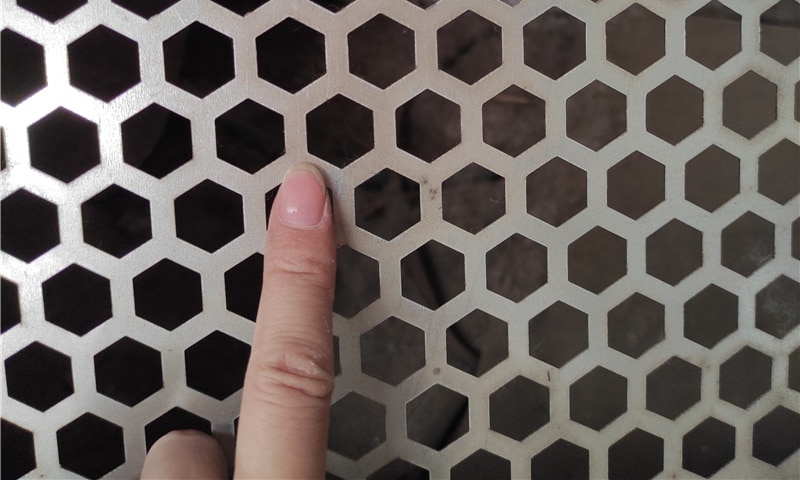
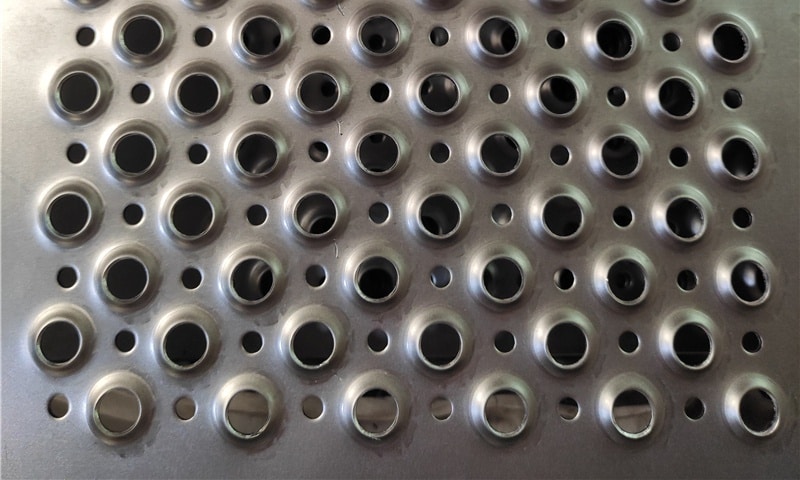
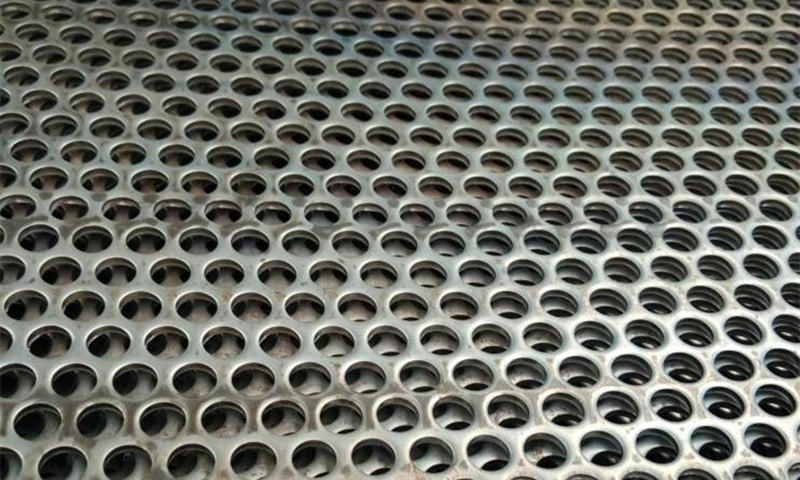
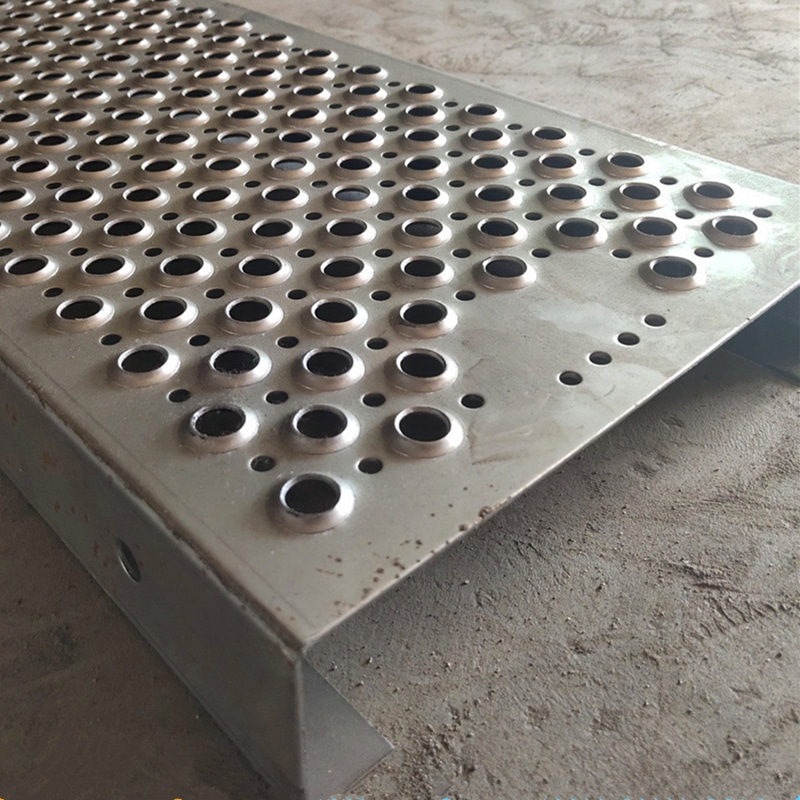
Choosing the right base material for a heavy perforated plate is not just a matter of buying “stronger steel.” Engineers and buyers must balance yield and tensile strength, ductility, fabrication cost, and how the plate will be punched, supported and maintained in service. Below is practical, engineer-oriented guidance you can apply when specifying a heavy perforated plate for conveyors, screens, wear liners or structural load-bearing panels.
Understand the material trade-offs: strength vs cost
Q355 is a low-alloy structural steel commonly specified where higher yield strength is needed without the premium of alloy steels. Compared with plain low-carbon (mild) steel, Q355 typically offers:
- higher yield and tensile strength per unit thickness (better load capacity for the same gauge)
- similar weldability and standard fabrication procedures as mild steel in most cases
- modest additional material cost versus mild steel, but potentially lower installed cost if gauge reduction is possible
Mild carbon steel remains the most economical choice when loads and wear are moderate, or when the design can rely on larger cross-sections rather than higher-strength material.

When to specify Q355 for a perforated plate
Specify Q355 when the application has one or more of the following requirements:
- sustained static or dynamic loads near or above typical mild-steel limits
- high impact or shock loading (screens under hoppers, crusher guards)
- long unsupported spans where reduced plate thickness is desirable to save weight or installation cost
- when you expect to reduce section thickness to save weight while maintaining strength
In these cases, a Q355 heavy duty perforated plate is often the better long-term choice despite a slightly higher material cost.
Tie material selection to thickness, hole pattern and flatness
Thickness (gauge) considerations
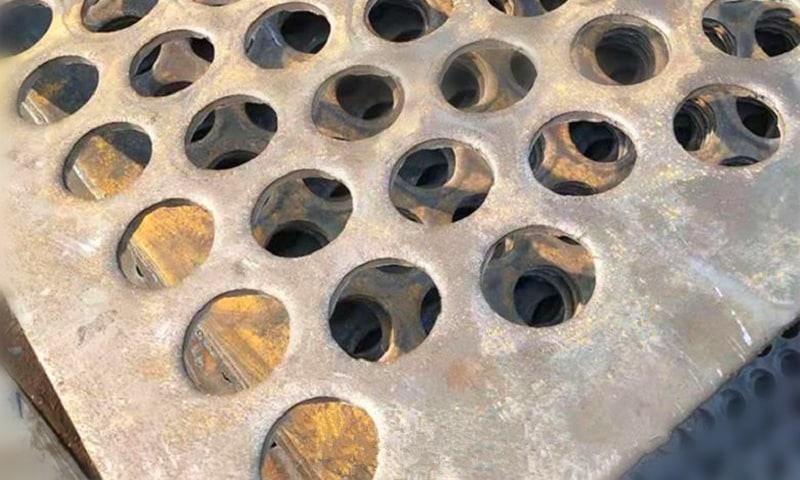
- Thickness determines the net section left after punching. Bigger holes or tighter pitch reduce the remaining cross-sectional area and therefore the effective capacity of the plate.
- If a design requires large open area, specify a thicker gauge or a stronger base steel to keep allowable stresses in an acceptable range.
- For very thick plates, punching forces and tooling life become significant; consider alternative cutting (laser, plasma, waterjet) or heavier duty punch tooling.
Hole type, pattern and orientation
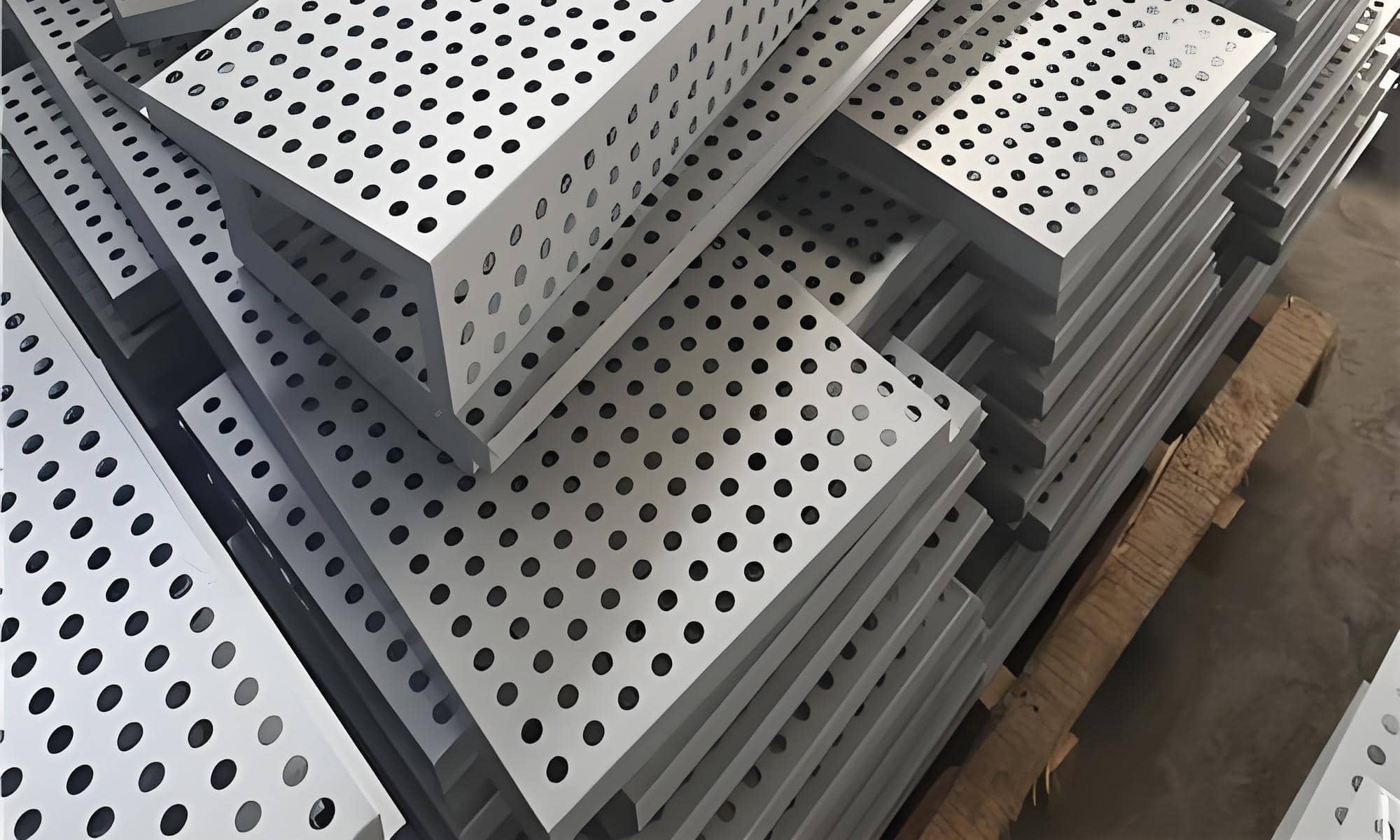
- Staggered (offset) patterns distribute load better than single-row layouts and reduce local stress concentrations.
- Round holes minimize stress risers compared with slots or square holes, but slot/rectangular holes may be required for flow or clearance — in that case increase thickness or use Q355.
- Hole pitch (center-to-center spacing) controls open area and affects stiffness; tighter pitch increases stiffness but reduces open area per hole.
Plate flatness, straightening and fabrication issues
- Thick perforated plates are prone to camber, warpage and local distortion from punching. Specify post-process leveling/flattening if flatness is critical for mounting or sealing surfaces.
- Ask the fabricator about straightening steps (press leveling, roller leveling) and residual stress relief; these will add cost but improve final fit and function.
- Edges and burrs: heavy punching on thicker gauges produces larger burrs — discuss deburring, edge conditioning, or chamfering with your supplier.
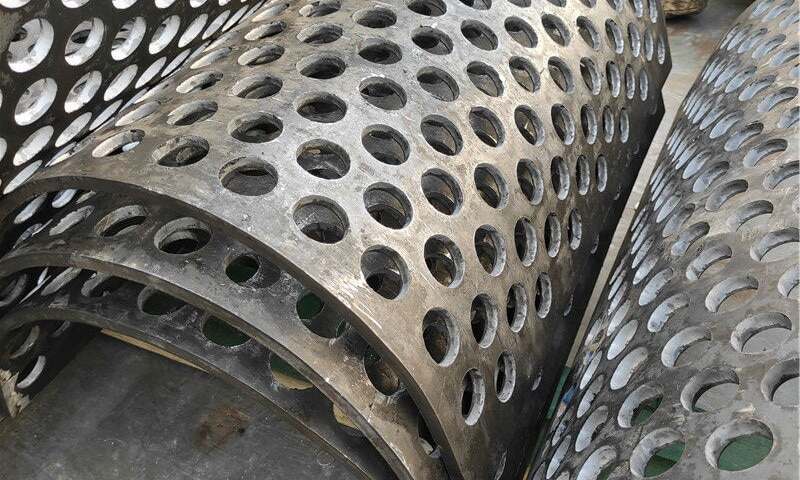
Practical specification checklist (quick reference)
- Define primary performance driver: load capacity, impact resistance, wear life, or open area requirement.
- Select target allowable stress and determine if mild steel or Q355 meets it at the chosen net section.
- Choose hole type & pattern to balance open area vs net section; for high open area, move to thicker gauge or Q355.
- Call out flatness tolerance and required post-punch leveling in the purchase spec.
- Specify fabrication treatments: deburring, edge trim, welding prep, and any heat-treatment if the design requires it.
Typical use cases where Q355 wins
- Heavy screening panels and feeder grates where impact and abrasion are frequent.
- Structural access platforms and ramps where thinner plates reduce weight but must still carry live load.
- Machine guards and crusher liners subject to repeated shock loads.
- Any perforated panel intended to be load-bearing with large open area.
When mild steel is preferable
- Short-life or disposable panels where initial cost dominates.
- Non-structural ventilation or decorative panels that do not carry mechanical loads.
- Situations where very large thicknesses are used and strength differential is less important.
Final notes on procurement and QA
- Request mill certificates and test data for yield/tensile strength if the structural performance is critical.
- Ask the vendor about expected tolerances for hole diameter, pitch, and finished flatness at your specified gauge.
- For heavy perforated plates where flatness, hole quality and long-term durability matter, consider specifying a heavy gauge perforated plate made from Q355 and require supplier acceptance samples or shop drawings.
By tying the material choice explicitly to gauge, hole pattern and flatness requirements up front you avoid the common mismatch between “material spec” and “how the part will actually be manufactured and used.” This reduces rework, field failures and wasted cost while ensuring the plate performs for its intended industrial service.