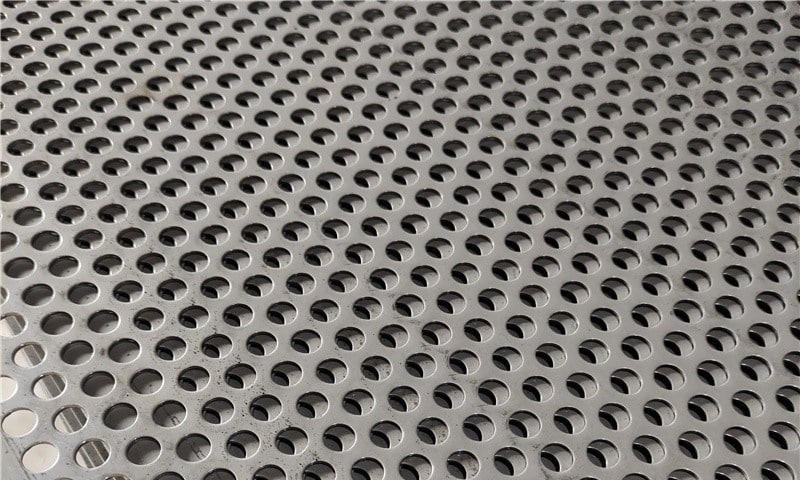
Perforated safety grating plates are a practical, high-load metal solution for industrial walkways, stair treads, platforms and ramps. This guide explains how to choose the correct perforated safety grating plate for engineered installations, focusing on material selection, load capacity, drainage / open area, fabrication tolerances, and a procurement checklist that procurement engineers and contractors actually use on site.
Application scope
- Industrial stair systems and stair treads for manufacturing plants, refineries, and utilities.
- Walkways and access platforms where slip resistance and liquid drainage are required.
- Ramps and catwalks in heavy-industry environments requiring corrosion-resistant finishes and repeatable manufacturing.
How to select: Key technical parameters
Material & finish
Choose the metal based on corrosion exposure, maintenance window, and budget:
- Carbon steel — economical for interior industrial areas; recommended with hot-dip galvanized finish for outdoor or humid environments.
- 304 / 316 stainless steel — when chemical resistance or frequent wash-down is required; 316 for chloride environments.
- Aluminum — for weight-sensitive platforms where corrosive exposure is limited and load requirements are moderate.
Always specify finish (hot-dip galvanized, powder coat, passivation) and clearly state any welding or machining that will affect the final corrosion performance.
Pattern, hole geometry and open area
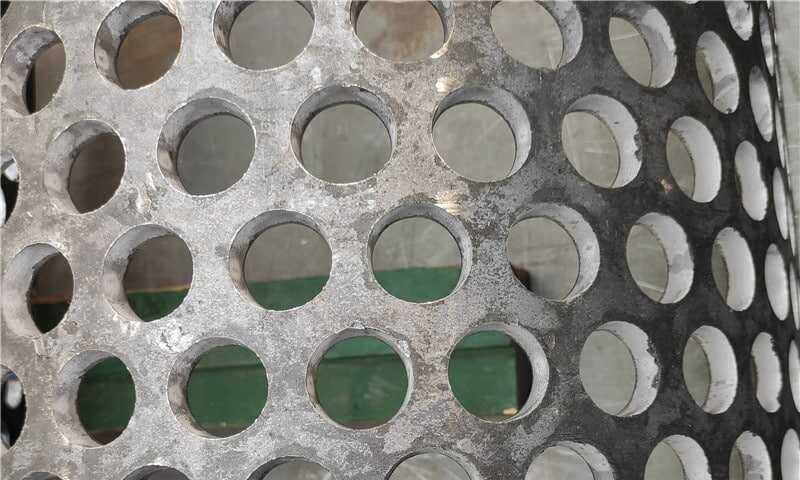
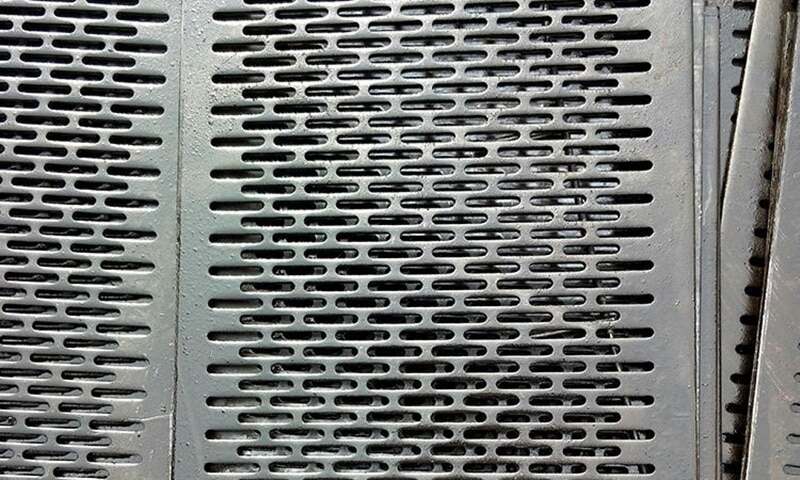
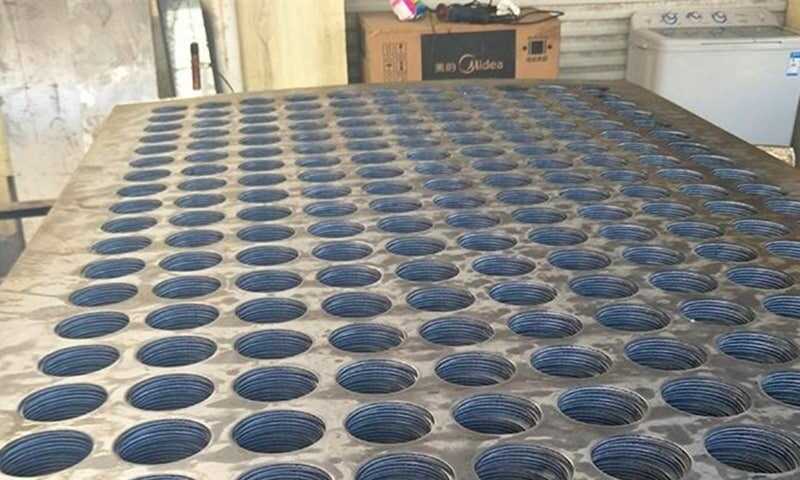
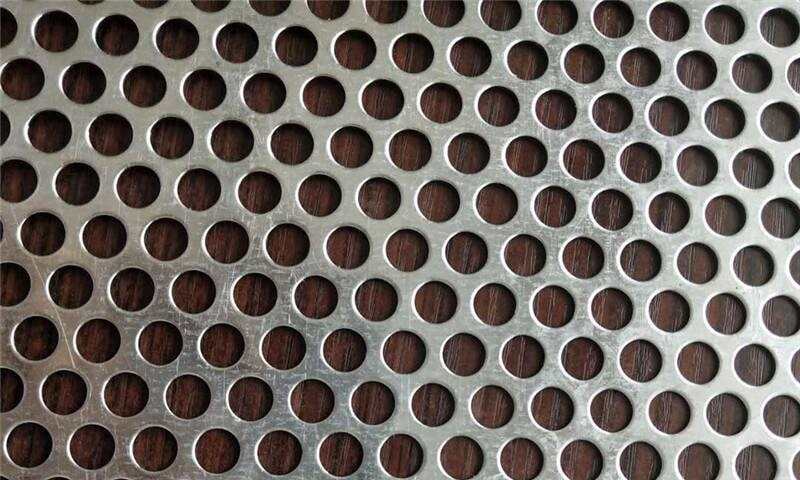
- Punch pattern (round, slotted, fish-eye) determines the open area and slip characteristics. Open area controls drainage and debris passage; more open area reduces standing liquids but affects structural stiffness.
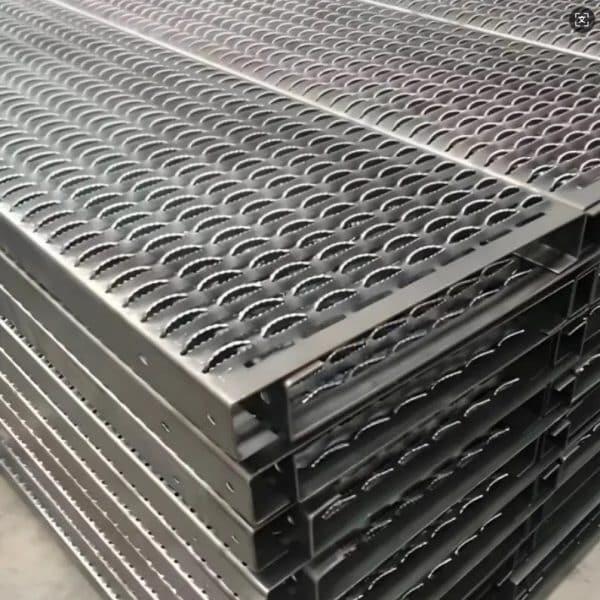
- For stair treads use closer punch spacing or elongated slots to maximize slip resistance while providing adequate drainage.
Load capacity, span and deflection
- Design around the expected live load and the required span between supports. Provide the manufacturer with the specified design load (psf or kN/m²), support spacing and allowable deflection (e.g., L/240 or L/360) so they can recommend thickness and stiffening (e.g., support channels or backing angles).
- Use bearing length and bearing edge details to determine whether the plate requires serrated edges, folded hems, or welded support angles.
Safety & slip resistance
- Specify the coefficient of friction (COF) or a recognized test method (ASTM or local standard) if the project requires quantitative slip resistance.
- For oily or wet environments prefer patterns with raised embossing or shark-tooth/high-traction profiles where applicable.
Fabrication, tolerances & installation
- Provide CAD drawings showing cutouts, bolt patterns, welds, and finished edges. Tolerance control is critical for retrofit stairs and modular platforms.
- Pre-punching locations for anchor bolts, counterbores or tapped holes reduces on-site rework. Ask supplier for edge treatment (folded hem, chamfer, welded frame) depending on installation detail.
- Specify whether plates should be supply-only or supply-and-fit (with field installation options and connection hardware included).
Inspection, maintenance & lifecycle
- Include a simple inspection schedule in the procurement spec: visual check for corrosion, fastener torque checks, and measuring remaining coating thickness for galvanized finishes.
- For wash-down areas specify passivation for stainless or re-coating intervals for carbon steel.

Procurement checklist (for RFQ / POs)
- Project name, installation point (stair/platform/ramp) and environment description.
- Required material & finish (e.g., 304 stainless, hot-dip galvanized carbon steel).
- Punch pattern, hole size and open area percentage.
- Design loads, support spacing, and deflection limits.
- Edge/fold/weld details and any pre-drilled or tapped holes.
- Required certifications, test methods for COF (if needed), and inspection criteria.
- Lead time, packaging, and shipping instructions.
Case note: Stair treads (selection tip)
For stair treads pick a plate thickness and pattern that balance traction and stiffness; often a perforated stair treads solution with integrated nosing or welded flange provides the cleanest installation for industrial steps.
Conclusion
A properly specified perforated safety grating plate solves slip, drainage and load demands for industrial installations while simplifying fabrication and installation. Provide precise load, span and environment data to suppliers to get accurate recommendations and a compliant quote.