Understanding Why Corrosion Is a Critical Issue in Perforated Metal Applications
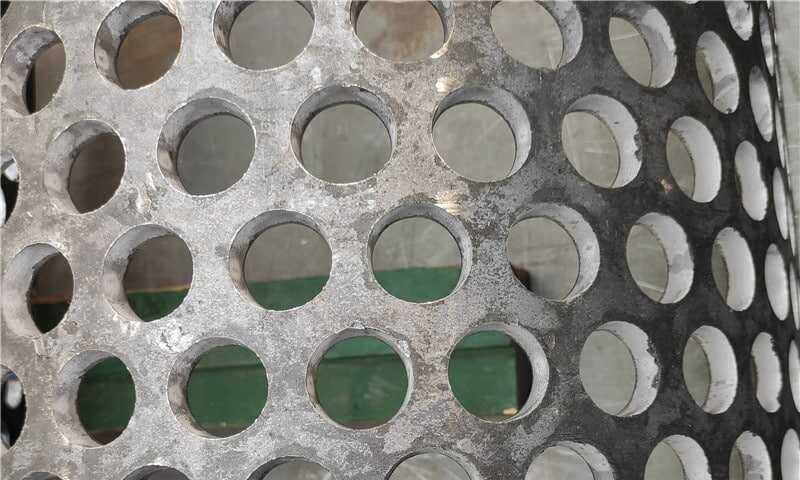
In many industrial environments, corrosion is not just a cosmetic issue—it directly impacts structural integrity, service life, and long-term operating costs. For perforated metal sheets, the challenge becomes even more complex. Each hole edge creates additional surface exposure, increasing the risk of localized corrosion such as pitting or crevice attack.
This is why material selection matters so much in demanding environments. When buyers search for marine grade perforated stainless steel, they are not simply looking for stainless steel—they are looking for reliability under corrosion-intensive conditions where standard grades may fail prematurely.
Among available options, 316L stainless steel perforated sheets stand out as a proven solution.

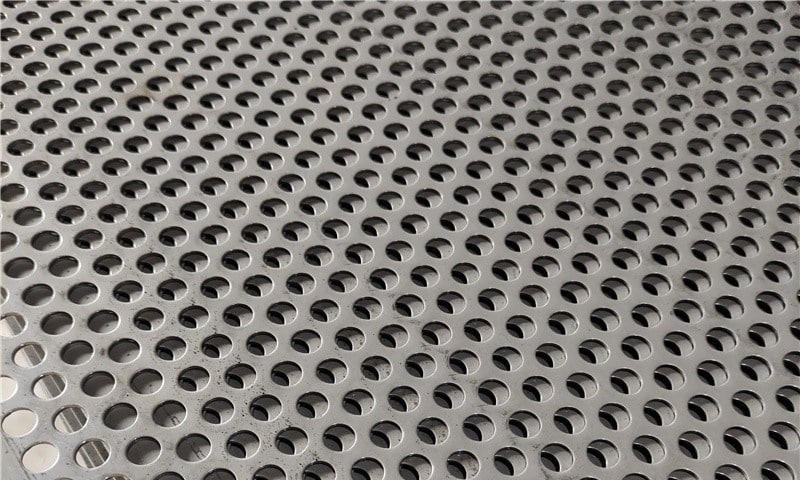
Stainless Steel Perforated Metal Sheets
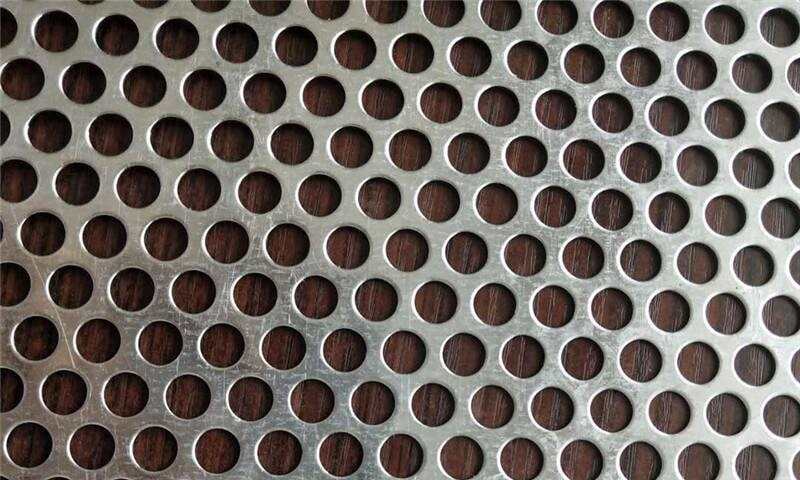
Stainless steel perforated sheet is a commonly used material in both architectural and industrial applications. It offers stable corrosion resistance and good fabrication flexibility.
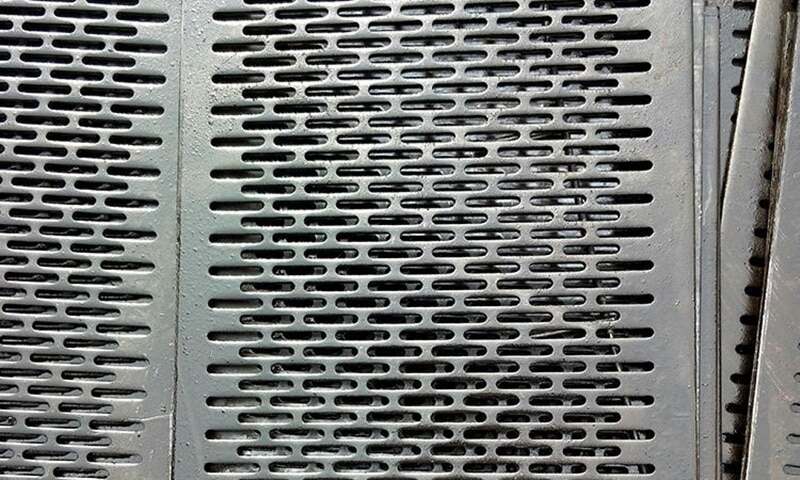
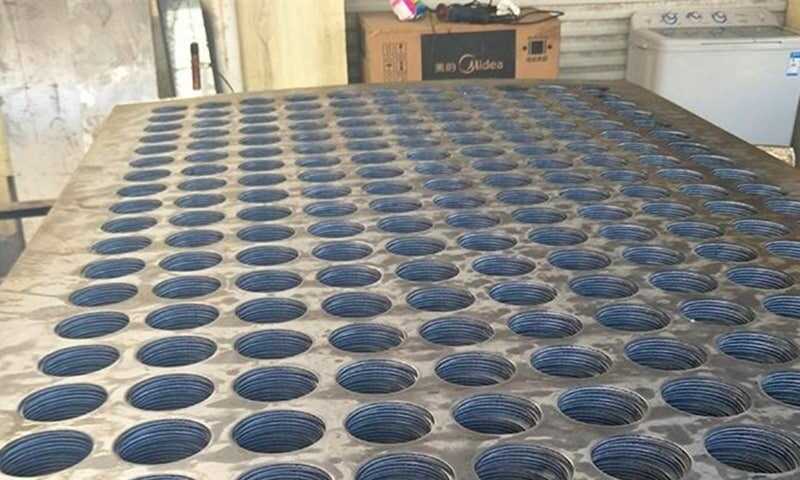
Hole patterns, open area, dimensions and surface finishes can all be customized according to project drawings. Typical uses include facades, ventilation and filtration, partitions and equipment protection.
Feel free to view the product details or contact us for samples and pricing information.
The Role of Molybdenum in 316L: Why It Makes a Difference
How Molybdenum Enhances Pitting Resistance
The key difference between 304-series stainless steel and 316L lies in one critical alloying element: molybdenum (Mo). Typically present at around 2–3%, molybdenum significantly improves resistance to localized corrosion, particularly pitting corrosion caused by chlorides.
In perforated metal sheets, this advantage is amplified. Hole edges and punched surfaces are more vulnerable to aggressive ions found in:
- Seawater and coastal air
- Salt spray and de-icing chemicals
- Chemical processing vapors
Molybdenum strengthens the passive oxide film on the steel surface, allowing 316L perforated sheets to maintain corrosion resistance even when minor surface damage occurs during forming, punching, or laser cutting.
316 vs 316L: Why Low Carbon Matters in Fabrication
Welding Performance and Sensitization Risk
While both 316 and 316L stainless steels offer excellent corrosion resistance, the lower carbon content in 316L plays a crucial role during welding and fabrication.
- 316 stainless steel contains up to 0.08% carbon
- 316L stainless steel limits carbon to 0.03% max
This reduction minimizes the risk of chromium carbide precipitation in the heat-affected zone (HAZ) during welding. For perforated metal sheets that require:
- Frame welding
- Structural assembly
- Edge reinforcement
316L provides more stable corrosion resistance without the need for post-weld heat treatment in most applications.
From a manufacturing perspective, this translates into fewer fabrication restrictions and more predictable long-term performance.

Typical Applications for 316L Stainless Steel Perforated Sheets
Marine and Salt Spray Environments
Coastal architecture, offshore platforms, and shipboard ventilation systems demand materials that can tolerate continuous chloride exposure. Marine grade perforated stainless steel made from 316L is commonly specified for:
- Ventilation panels
- Safety guards
- Acoustic cladding
Its resistance to salt-induced pitting gives engineers confidence in long service life with minimal maintenance.
Chemical Storage and Processing Equipment
Chemical plants often expose perforated metal components to acidic or alkaline vapors. 316L stainless steel perforated sheets are frequently used in:
- Chemical storage tank liners
- Vent covers and filtration screens
- Equipment protection panels
The molybdenum-enhanced alloy provides reliable resistance across a wide pH range.
Pharmaceutical and Filtration Systems
In pharmaceutical production, material purity and corrosion resistance go hand in hand. 316L perforated sheets are widely used in:
- Sterile filtration systems
- Drying trays
- Cleanroom air handling components
Low carbon content and excellent cleanability make 316L suitable for GMP-compliant environments.
Practical Acid and Alkali Resistance Testing Recommendations
How to Validate Material Performance Before Deployment
For critical projects, relying solely on material certificates may not be enough. Buyers and engineers often request practical corrosion testing tailored to their operating conditions.
Recommended approaches include:
- Salt spray testing (ASTM B117) to simulate marine exposure
- Immersion tests using diluted acids or alkalis representative of real processes
- Welded sample testing to verify corrosion resistance in heat-affected areas
Testing perforated sheets—not just solid coupons—is important, as hole geometry and edge finish can influence corrosion behavior.
Choosing 316L for Long-Term Value, Not Just Compliance
While 316L stainless steel perforated sheets typically cost more than standard grades, the long-term value is often underestimated. Reduced maintenance, extended service life, and lower risk of unexpected downtime make 316L a strategic choice for engineers and procurement teams alike.
For projects where corrosion failure is not an option, marine grade perforated stainless steel made from 316L is not an upgrade—it is a requirement.