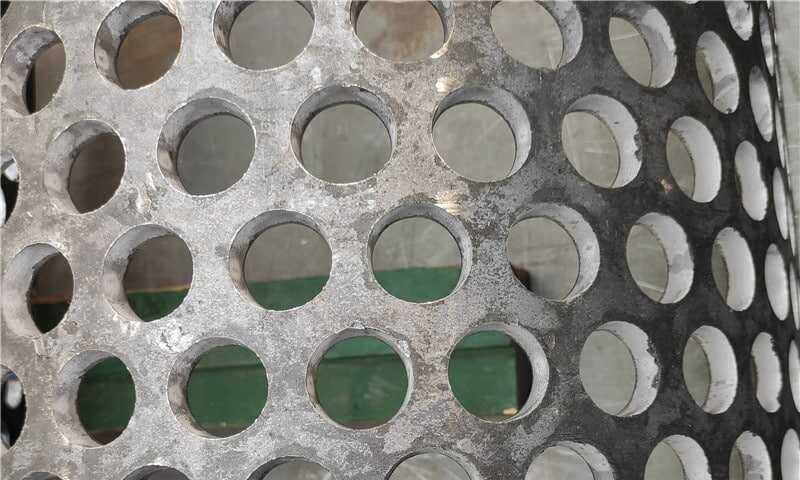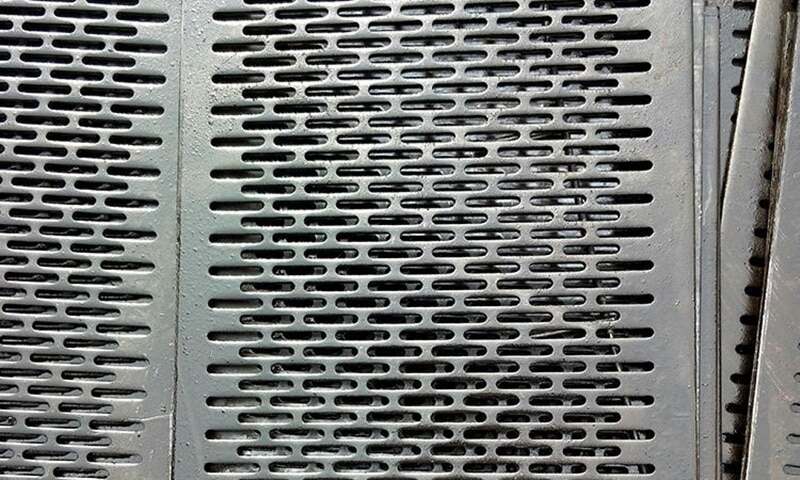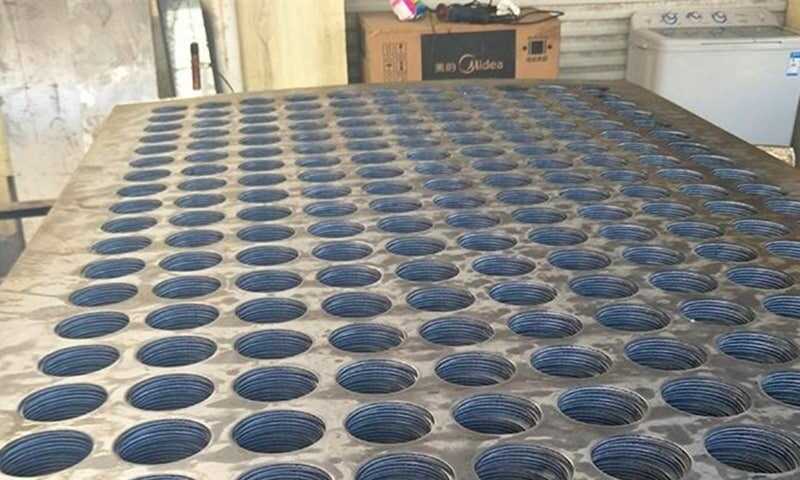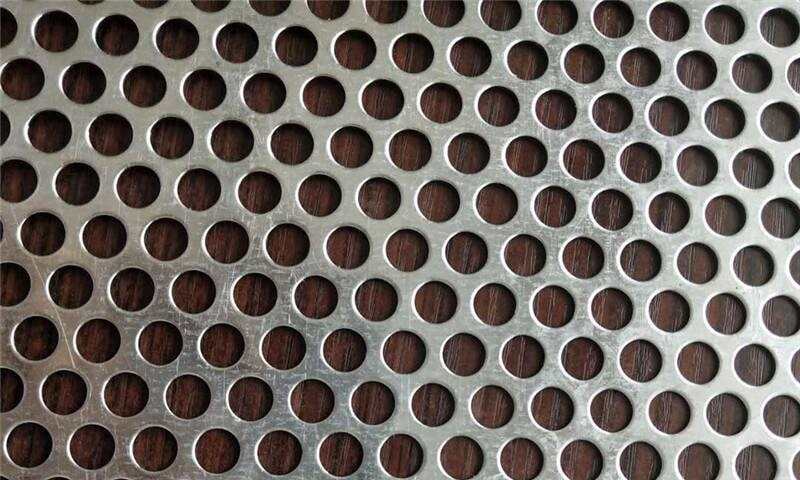
This article explains a shop-proven production workflow for manufacturing a cut-to-size thick perforated plate used in heavy-duty industrial and structural applications.
For thick-gauge and heavy plates, perforation, flatness correction, and final shape control must be handled as separate, purpose-driven steps rather than combined into a single process.

Heavy-duty press punching for thick perforated plates
For thick plates, perforation is typically done on heavy-duty mechanical or hydraulic punching presses, not light turret systems. These presses provide the tonnage and rigidity required to punch large-diameter holes through thick material without excessive tool deflection.
- nching maintains structural support during the operation.
- High tonnage ensures clean shear surfaces and consistent hole geometry.
- Tool life and hole repeatability are superior compared with cutting holes individually.
At this stage, the priority is hole pattern accuracy and throughput, not final outline precision. The punched plate will inevitably develop internal stress and localized deformation around the perforation zones.
Deformation after punching and why three-roll leveling is required
Thick perforated plates almost always experience distortion after punching due to:
- Uneven material removal
- Plastic deformation around punched holes
- Residual stress accumulation across the plate width
For most industrial applications, flatness is controlled within a practical tolerance range based on thickness and plate size. Tighter flatness requirements increase processing time and cost and should be specified only when functionally necessary.
Why laser cutting is used for final outer profile control
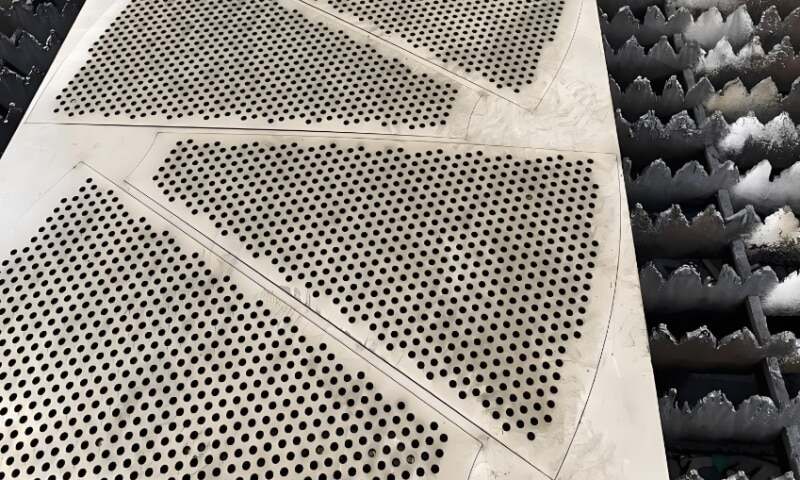
When customers require tight outer dimensions, controlled diagonals, or defined plate geometry, laser cutting is used after punching and leveling to standardize the final outline.
In thick perforated plates, laser cutting is not used to create the hole pattern. Instead, it is applied specifically for:
- Accurate outer dimensions to drawing
- Diagonal length control on rectangular or shaped plates
- Clean geometry for installation, bolting, or framing
- Shape correction where punching tolerances alone are insufficient
By laser cutting the perimeter last, any residual distortion from punching and leveling is removed, resulting in a part that meets both functional and dimensional requirements.
Drawing-to-production considerations for thick perforated plates
Translating engineering drawings into manufacturable parts requires understanding realistic process capabilities:
- Hole-to-edge distance: For thick plates, a minimum of 1.0–1.5× material thickness is commonly recommended to avoid edge cracking or deformation.
- Hole position tolerance: Heavy press punching typically achieves positional tolerances in the ±0.1–0.2 mm range depending on thickness and hole size.
- Outer dimension tolerance: Laser profiling allows tighter control of overall length, width, and diagonals compared with shearing or punching-only methods.
- Shape definition: For non-rectangular plates, laser cutting ensures repeatable contours that punching alone cannot guarantee.
Clear datums, tolerance priorities, and functional notes on the drawing help ensure the correct balance between cost and performance.
Deburring and edge finishing for heavy-duty applications
Thick perforated plates require proper edge treatment before delivery, especially when used in load-bearing or high-wear environments.
- Hole deburring to remove sharp edges from punching
- Laser-cut edge cleaning to remove dross
- Edge breaking or chamfering for handling safety
- Optional surface preparation for coating or further fabrication
For projects using heavy duty perforated plates, consistent edge finishing reduces stress concentrations and improves service life in demanding operating conditions.
Typical production sequence summary
- Heavy-duty press punching of full-size plate
- Three-roll leveling to restore flatness
- Inspection of flatness and hole pattern
- Laser cutting of final outer profile
- Deburring and edge finishing
- Final dimensional inspection and packing
Final notes
For thick perforated plates, process separation is key. Punching delivers efficient, high-quality hole patterns; three-roll leveling restores flatness; laser cutting ensures final shape accuracy.
Specifying this workflow upfront allows engineers and buyers to receive parts that install easily, perform reliably, and meet real-world industrial requirements without unnecessary cost escalation.