



Why Unperforated Margins Matter in Round Hole Punched Panels
When buyers source Custom Round Hole Punched Panels, the hole pattern usually gets most of the attention. Open area, hole diameter, pitch, and material thickness all matter. But in real-world fabrication, one detail often decides whether the panel installs cleanly or becomes a jobsite problem: the unperforated margin.
The margin is the solid border left around the punched area. It may look simple, but it plays a major role in mounting accuracy, edge strength, welding performance, and final fit-up. In industrial and architectural applications alike, a well-planned margin helps prevent expensive rework and avoids the kind of alignment issues that show up only after fabrication is complete.
What the Margin Actually Does
In practical terms, the margin gives fabricators and installers a reliable solid zone to work with. That solid border can support fasteners, welds, bends, frames, and trim details without weakening the panel edge.
For Custom Round Hole Punched Panels, this is especially important because the perforated area is intentionally full of openings. Without enough solid material around the perimeter, the panel may flex too much, crack during fabrication, or lose the clean edge needed for assembly.
A proper margin is not just a design preference. It is a functional requirement that supports manufacturing consistency.


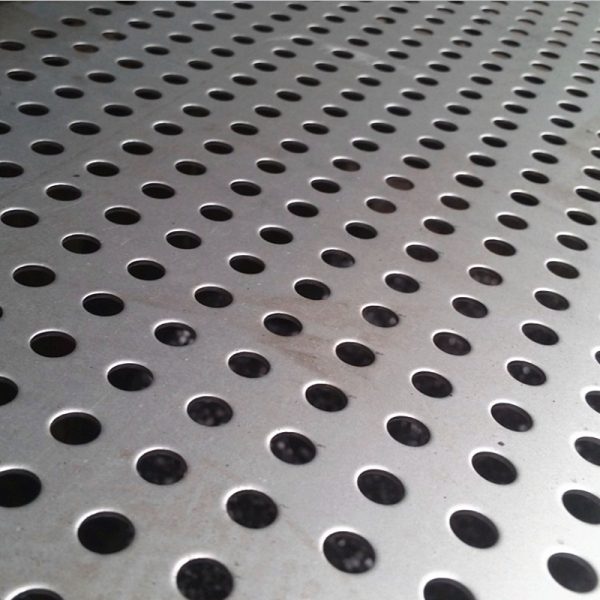
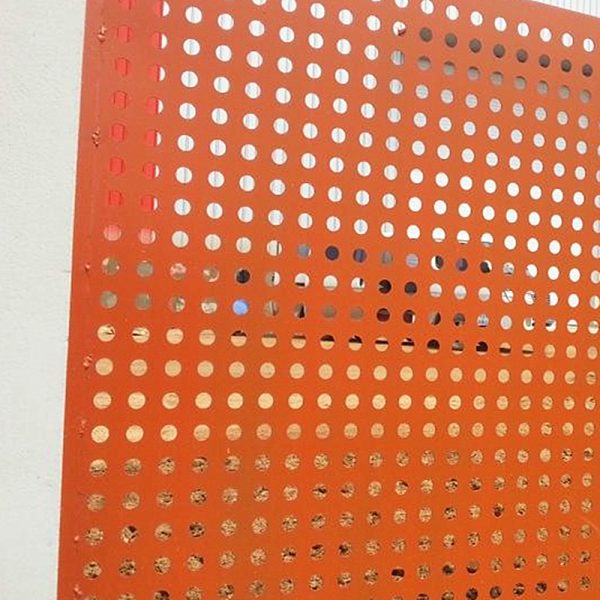
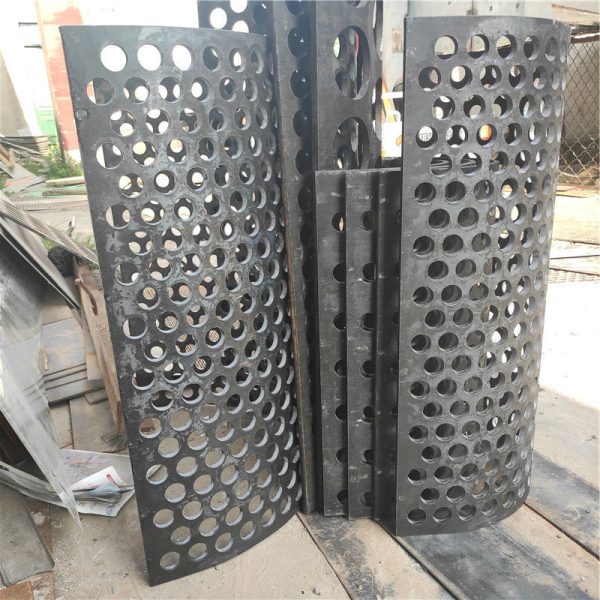

Round Hole Perforated Metal Sheets
Custom perforated metal sheets with precise hole patterns in various materials: stainless steel, aluminum, galvanized steel, carbon steel, copper, brass, and plastic. Durable and corrosion-resistant.
Perfect for architectural screens, machinery guards, acoustic panels, and decorative elements. Factory-direct pricing with cutting/bending services. Request quote or sample today.
How Margin Width Affects Installation and Hole Positioning
One of the biggest reasons to specify the right margin is installation accuracy. If the perforated field runs too close to the edge, there may not be enough material left for mounting holes, tabs, brackets, or frame attachment. That can create a chain reaction of problems during assembly.
For example, if a panel is being bolted into a cabinet, guard, enclosure, or architectural frame, the mounting points often need a stable solid border. When the margin is too narrow, the panel can distort when tightened, or the fasteners can interfere with the hole pattern itself. In some cases, the installer may have to shift the panel, add extra hardware, or remake the part entirely.
Hole positioning also becomes harder to control near the edge. A margin provides a buffer zone that helps maintain dimensional accuracy and reduces the risk of tearing or deformation during punching, cutting, or post-processing.
Why Margins Are Critical for Welding Quality
For welded assemblies, the margin becomes even more important. Welding directly into or too close to a perforated field can create inconsistent joints because the heat does not distribute evenly across the open areas. The result may be warping, burn-through, weak welds, or visible surface distortion.
A solid margin helps solve that problem by giving welders a clean, continuous area to work with. It improves weld quality and makes it easier to maintain alignment during fabrication. It also reduces the chance that heat from welding will affect the perforated section and compromise the appearance or structural integrity of the panel.
This is especially relevant for Custom Round Hole Punched Panels used in equipment guards, machine enclosures, ventilation covers, filtration housings, and architectural features where both appearance and performance matter.
The Hidden Cost of Choosing Too Little Margin
A narrow margin may save a small amount of material, but it can create much larger costs later. Buyers sometimes focus on maximizing open area or minimizing sheet waste, only to discover that the panel no longer fits the real assembly requirement.
Common issues include:
Mounting holes too close to the perforated zone
When fasteners are placed near the edge, the material may not have enough strength to hold tight under load.
Welding distortion
Too little solid border can cause visible warping and poor joint quality.
Frame interference
The panel may not seat correctly inside the intended frame or housing.

Coating and finishing problems
Powder coating, galvanizing, painting, and edge finishing all perform better when the margin is properly planned.
In short, the margin is part of the total fabrication strategy, not just a leftover strip of metal.
What Buyers Should Specify Up Front
The best way to avoid fit-up problems is to define the margin early in the quotation stage. Buyers should share more than just the hole pattern. A reliable supplier will want to know how the panel will be used, how it will be installed, and what secondary operations are required.
Key details include the mounting method, frame dimensions, welding requirements, coating process, and whether the panel will be bent, cut, or assembled after punching. For Custom Round Hole Punched Panels, these details help determine whether a standard margin is enough or whether a wider solid border is needed for production and installation.
If the panel will be welded, the supplier should also know the weld type and location. If the panel will be fastened mechanically, the supplier should know the fastener size and edge distance. Those details can make the difference between a smooth install and a costly field adjustment.
A Better Margin Means a Better Final Part
In metal fabrication, small design choices often have the biggest impact on the finished product. The unperforated margin is one of those details. It supports hole accuracy, protects weld quality, improves installability, and reduces downstream risk.
For engineers, buyers, and project managers sourcing Custom Round Hole Punched Panels, margin planning should be treated as a core specification, not an afterthought. A panel that looks correct on paper still has to survive fabrication, finishing, shipping, and installation. A proper margin helps it do exactly that.


