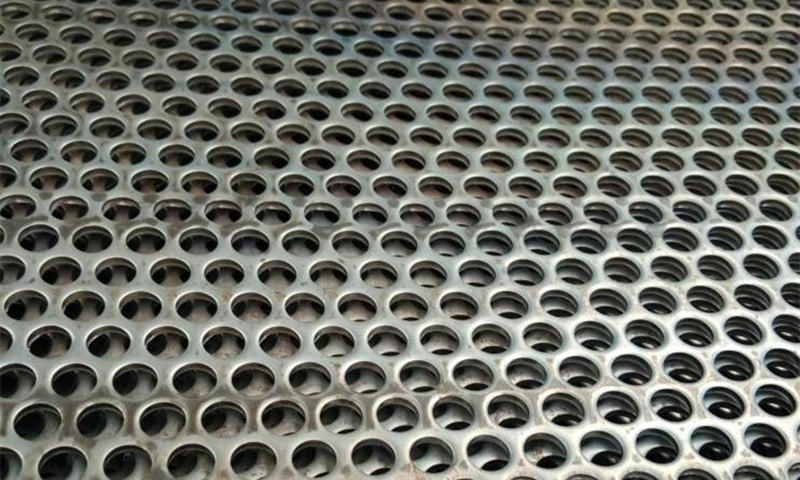
A round hole heavy duty perforated plate is often the first pattern engineers consider when a project needs strength, airflow, screening capacity, and long service life in one part. In thick-plate fabrication, the hole shape is not just a visual choice. It affects how the plate carries load, how material passes through the openings, how easily the surface can be cleaned, and how well the finished part holds up in abrasive or high-impact environments.
For many industrial buyers, round holes feel familiar because they are used almost everywhere: machine guards, ventilation panels, aggregate screens, grain processing equipment, hammer mill screens, protective covers, and heavy-duty architectural panels. But the real reason round holes remain popular is more practical. When punched or drilled into thicker steel plate, a round opening usually offers a good balance between structural stability and open area.
Why Round Holes Work Well in Heavy Duty Perforated Plate
A heavy duty perforated plate must do more than look accurate on a drawing. It has to survive real working conditions: vibration, impact, abrasion, loading, cleaning, and repeated handling during installation or maintenance.
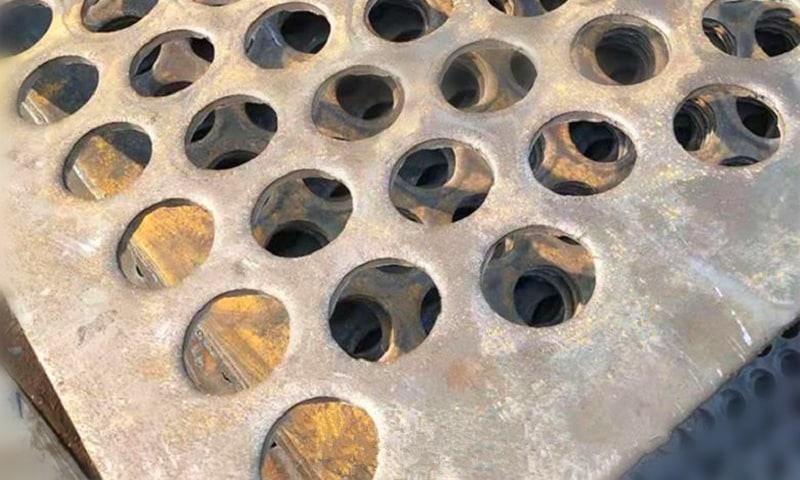
Round holes perform well because the hole shape distributes stress more evenly than sharp-cornered patterns. In thick steel plate, corners can become stress concentration points, especially when the plate is exposed to repeated vibration or impact. A circular opening has no sharp internal corner, which makes it a reliable choice when strength and durability matter.
This is one reason a round hole heavy duty perforated plate is commonly used in mining, quarrying, bulk material handling, and industrial ventilation systems. It can provide usable open area while helping the remaining steel bridge between holes maintain strength.


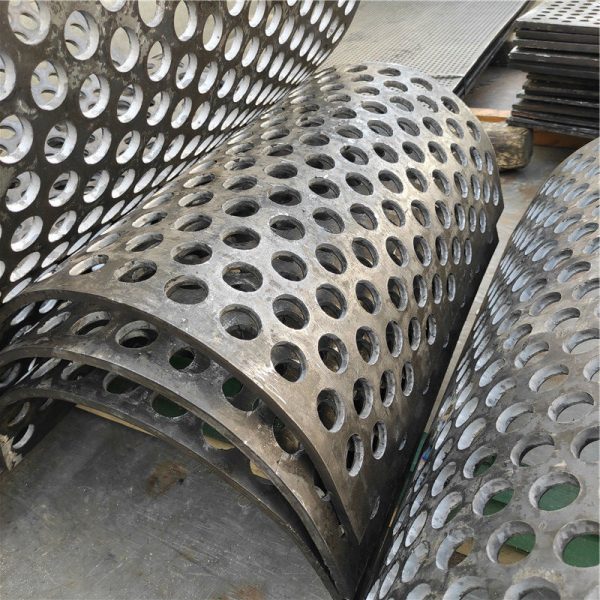
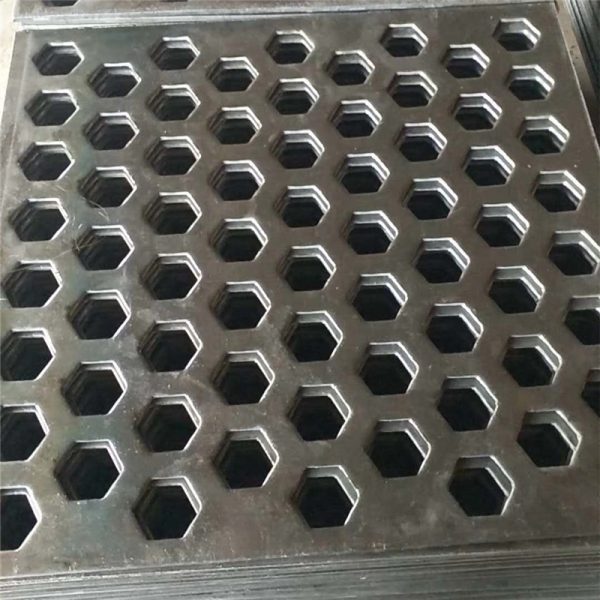


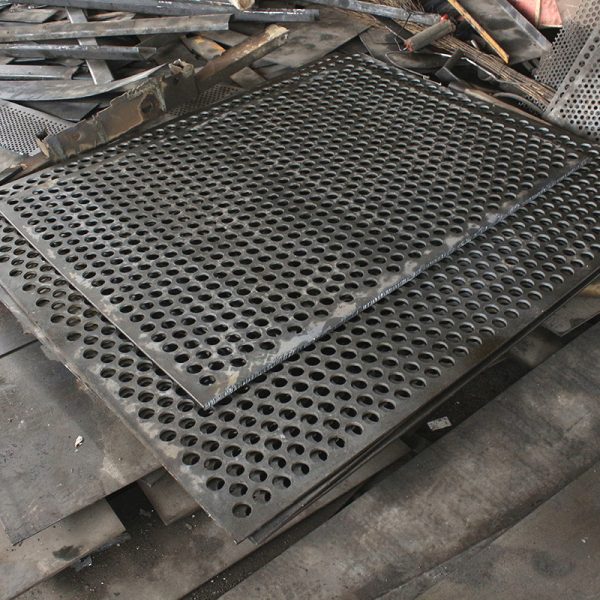
Heavy Duty Perforated Plates
Need a custom heavy-duty perforated plate?
We offer perforated plates with thickness ranging from 2.75mm to 30mm, and up to 6000×1500mm in size, available in round, square, hexagonal, and slotted patterns.
Additionally, we provide precise cutting, surface protection, and other processing services tailored to meet industrial installation requirements.
Feel free to contact us anytime, and we’ll provide a personalized solution that perfectly matches your project needs.
Strength: The Main Reason Buyers Choose Round Holes
When a customer asks for a thick perforated plate, strength is usually the first concern. The plate may need to support material weight, resist impact from stones or pellets, or hold its shape after welding, bending, or bolting.
Round holes help because the load around each opening is shared more evenly through the surrounding metal. Compared with patterns that have long slots or sharp corners, round holes generally reduce the risk of cracking from localized stress. This becomes more important as plate thickness increases.
Important Strength Factors to Check
For heavy-duty projects, the strength of the finished part depends on several design details:
- Plate thickness
- Hole diameter
- Hole pitch
- Open area percentage
- Margin distance from the plate edge
- Material grade
- Whether the plate will be flat, bent, rolled, or welded
- Direction of impact or material flow
A round hole heavy duty perforated plate with a very high open area may move more air or material, but it will also have less remaining steel. A lower open area may be stronger, but it may reduce ventilation or screening capacity. The right specification is usually a balance, not the biggest hole or the most open pattern.
Ventilation: Good Airflow Without Giving Up Too Much Structure
Round holes are also a practical choice for heavy-duty ventilation panels. In equipment guards, generator enclosures, compressor housings, and industrial machinery covers, the panel must allow air movement while still protecting the machine and operators.
Round openings are efficient for airflow because air can pass through smoothly from multiple directions. The pattern is also easy to inspect and clean, which matters in plants where dust, fibers, oil mist, or powder buildup can reduce performance over time.
For thicker panels, round holes are often easier to keep consistent across the full sheet compared with more complex patterns. Consistent hole diameter and pitch help engineers estimate airflow more accurately and help buyers maintain repeatable performance from batch to batch.
Material Flow: Why Round Holes Are Useful for Screening and Passing Materials
In screening and material processing, round holes can be a smart choice when the goal is controlled passage of particles. A round hole heavy duty perforated plate is often used where material needs to pass through cleanly without the plate wearing out too quickly.
Round holes are especially suitable when the screened material is roughly granular, pelletized, crushed, or rounded. Examples include aggregates, coal, grain, fertilizer, plastic pellets, wood chips, and some recycled materials.
When Round Holes Help Material Move Better
Round holes can be helpful when:
The material is not extremely long or stringy
Long or fibrous materials may bridge across round openings. But for granular or crushed materials, round holes often provide stable and predictable separation.
The plate needs strength between holes
In heavy-duty screening, the metal bridge between openings must resist wear and impact. A round hole pattern can maintain good ligament strength when the pitch is designed correctly.
Cleaning and maintenance matter
Round holes are generally easier to clean than narrow slots or complex shapes. This matters in dusty or sticky operating environments.
Application Examples for Round Hole Heavy Duty Perforated Plate
A round hole heavy duty perforated plate is not limited to one industry. It is used wherever a thick perforated steel part needs to combine opening performance with mechanical reliability.
Mining and Quarry Screening
In mining and quarry plants, thick perforated plates are used for separating crushed stone, ore, gravel, and similar bulk materials. Round holes are often selected when the material size is relatively uniform and the customer wants a durable screen surface with reliable opening accuracy.
For abrasive materials, carbon steel, wear-resistant steel, or manganese steel may be considered depending on the working condition. The hole pitch and plate thickness should be selected based on impact load, particle size, and expected service life.
Hammer Mill and Crusher Screens
Hammer mills and crushers often require perforated plates that can handle repeated impact and abrasion. Round holes are commonly used because they allow processed material to pass through while keeping the plate structure strong.
For this type of application, hole accuracy and flatness are important. If the plate is not flat, material flow can become uneven, and installation may become difficult. Burr direction should also be considered, because it can affect both material movement and wear behavior.
Industrial Machine Guards
Heavy-duty machine guards must provide protection without blocking necessary airflow or visibility. Round holes are a common choice for guards around motors, fans, moving equipment, and production machinery.
A thicker plate may be used when the guard needs higher impact resistance. In these cases, a round hole heavy duty perforated plate provides a clean appearance, strong structure, and reliable ventilation.

Ventilation Panels for Equipment Enclosures
Equipment enclosures need controlled airflow to prevent heat buildup. Round holes can provide enough ventilation while keeping the panel strong enough for outdoor, industrial, or mobile equipment applications.
For outdoor projects, galvanized steel, stainless steel, or post-fabrication surface treatment may be required. If the plate will be welded or formed after perforating, the fabrication sequence should be planned before production.
Walkways, Platforms, and Protective Covers
In some applications, heavy perforated plates are used as protective covers, inspection covers, or platform-related components. Round holes can reduce weight and allow drainage or airflow while keeping the plate strong.
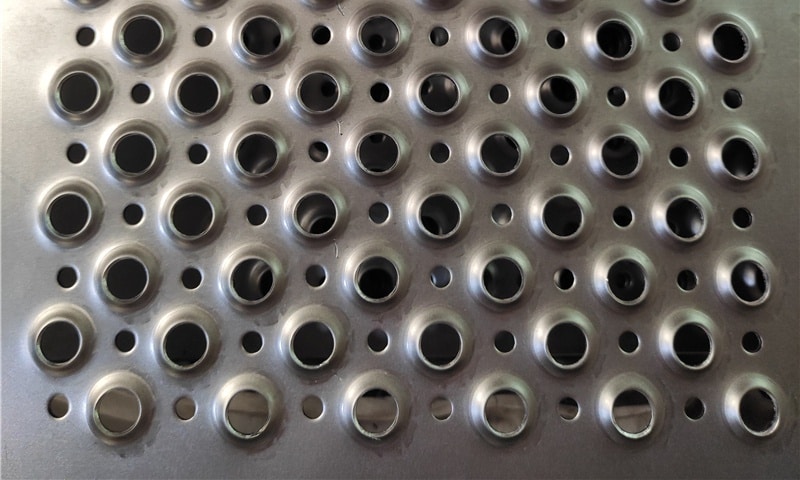
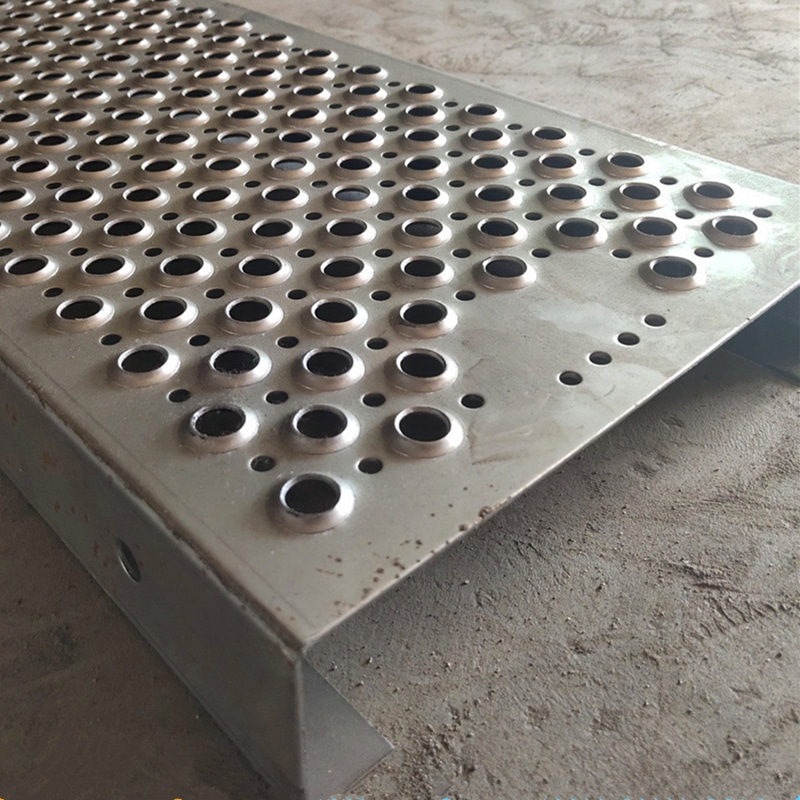
However, when the plate will be walked on, slip resistance and load rating must be evaluated carefully. In some cases, safety grating or raised anti-slip patterns may be better than a flat round-hole perforated plate.
Technical Design Notes Before Ordering
A good perforated plate specification should not only say “round holes.” It should clearly define the full pattern and the working requirement.
Before ordering, buyers should confirm:
Hole Diameter
The hole diameter should match the required airflow, particle size, visibility, or drainage function. For screening, the opening size is directly related to material separation.
Plate Thickness
Thicker plate improves rigidity and wear life, but it also affects punching difficulty, cost, weight, and lead time. For very thick plates or special materials, the fabrication method should be reviewed before quoting.
Pitch and Open Area
Pitch controls the distance between holes. Together with hole diameter, it determines open area. A higher open area improves flow but reduces remaining metal. For heavy-duty use, this balance is critical.
Material Selection
Common material choices include carbon steel, stainless steel, galvanized steel, and wear-resistant steel. The best material depends on abrasion, corrosion, temperature, and installation environment.
Edge Margin and Hole Layout
A poor edge margin can lead to cracking, weak mounting points, or difficult installation. Heavy plates should have enough solid border for bolting, welding, or framing.
Market Perspective: Why Round Holes Are Often the Safe Purchasing Choice
From a purchasing point of view, round holes are also practical. They are widely understood, easier to specify, and suitable for many industries. This reduces communication risk between the buyer, engineer, and manufacturer.
For custom projects, a round hole pattern can often be adjusted quickly by changing hole diameter, pitch, material, or thickness. That flexibility makes it easier to match budget, lead time, and performance requirements.
A round hole heavy duty perforated plate is not always the only possible solution, but it is often the most balanced one. It gives engineers a strong starting point when the application needs airflow, screening, drainage, guarding, or weight reduction without losing too much structural integrity.
When Round Hole May Not Be the Best Option
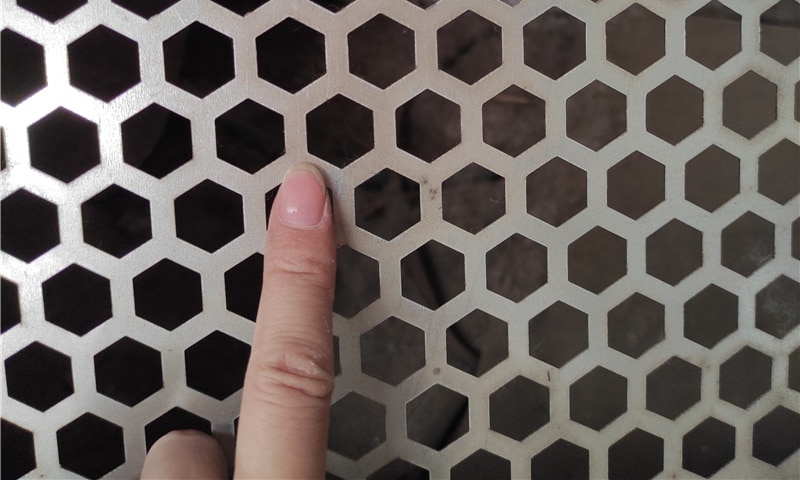
Round holes are versatile, but they are not perfect for every application. If the project requires maximum drainage in one direction, a slotted pattern may work better. If the material is long, fibrous, or irregularly shaped, slot openings may reduce plugging. If the design is mainly architectural, square, hexagonal, or decorative patterns may be preferred.
The best decision depends on what the plate must do in the field. A good manufacturer should ask about the application, not only the drawing. The working material, impact level, required open area, installation method, and maintenance conditions all affect the final recommendation.
Final Takeaway
A round hole heavy duty perforated plate is usually the best thick-plate choice when the project needs a dependable balance of strength, ventilation, material flow, and long-term durability. The circular opening helps reduce stress concentration, supports consistent airflow, and works well in many screening and guarding applications.
For industrial buyers, the key is not simply choosing a round hole pattern. The key is specifying the right hole diameter, pitch, thickness, material, edge margin, and fabrication process for the actual working environment. When those details are handled correctly, round hole heavy duty perforated plate can provide a strong, practical, and cost-effective solution for demanding industrial projects.